This article contains one affiliate link to a booking site. If you book through it, LOCAL SIDE JAPAN earns a small commission at no extra cost to you. Everything else in Shibamata costs between ¥0 and ¥500 and needs no booking. How this site is made →
TOKYO / KATSUSHIKA CITY / SHIBAMATA
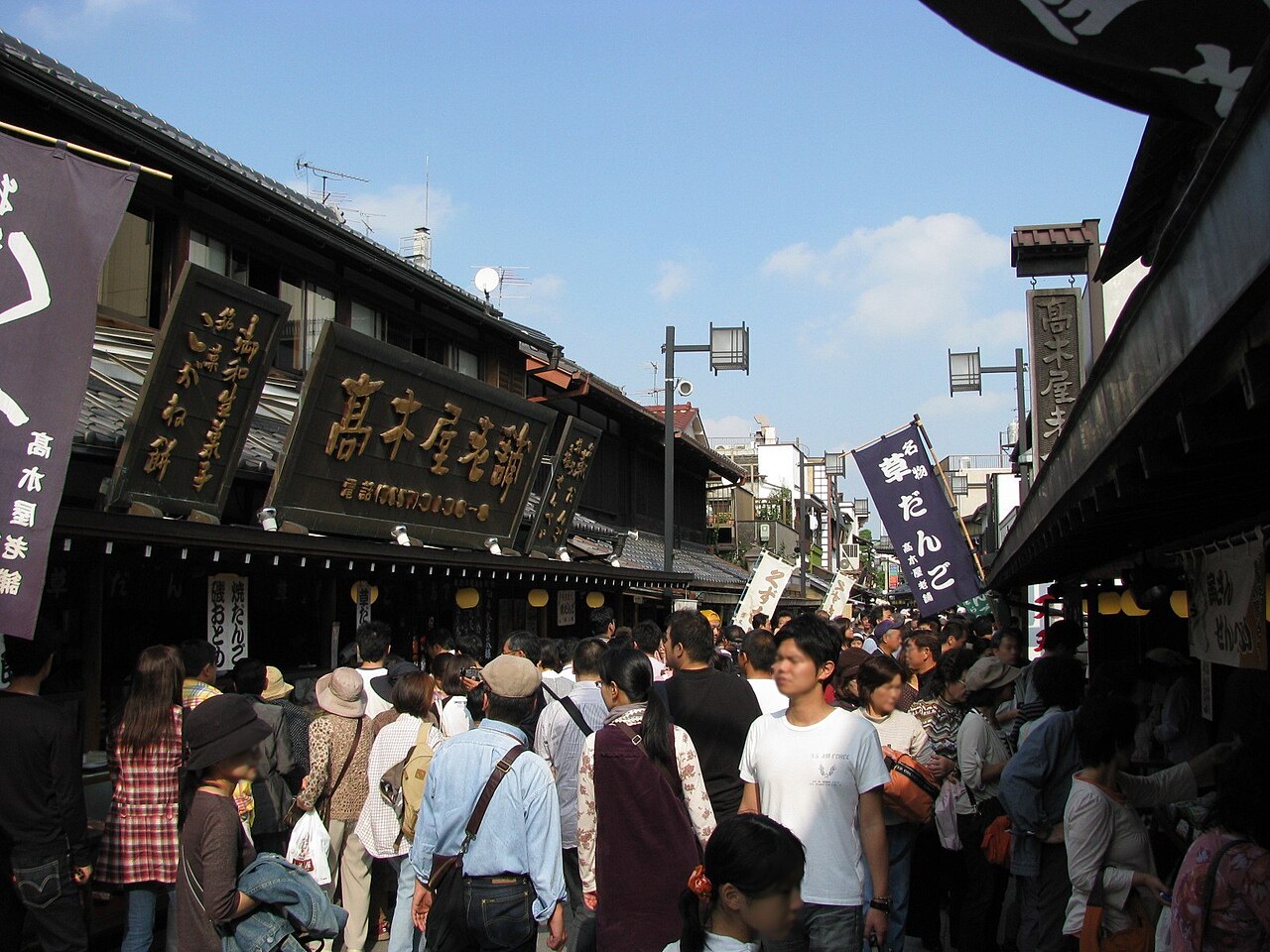
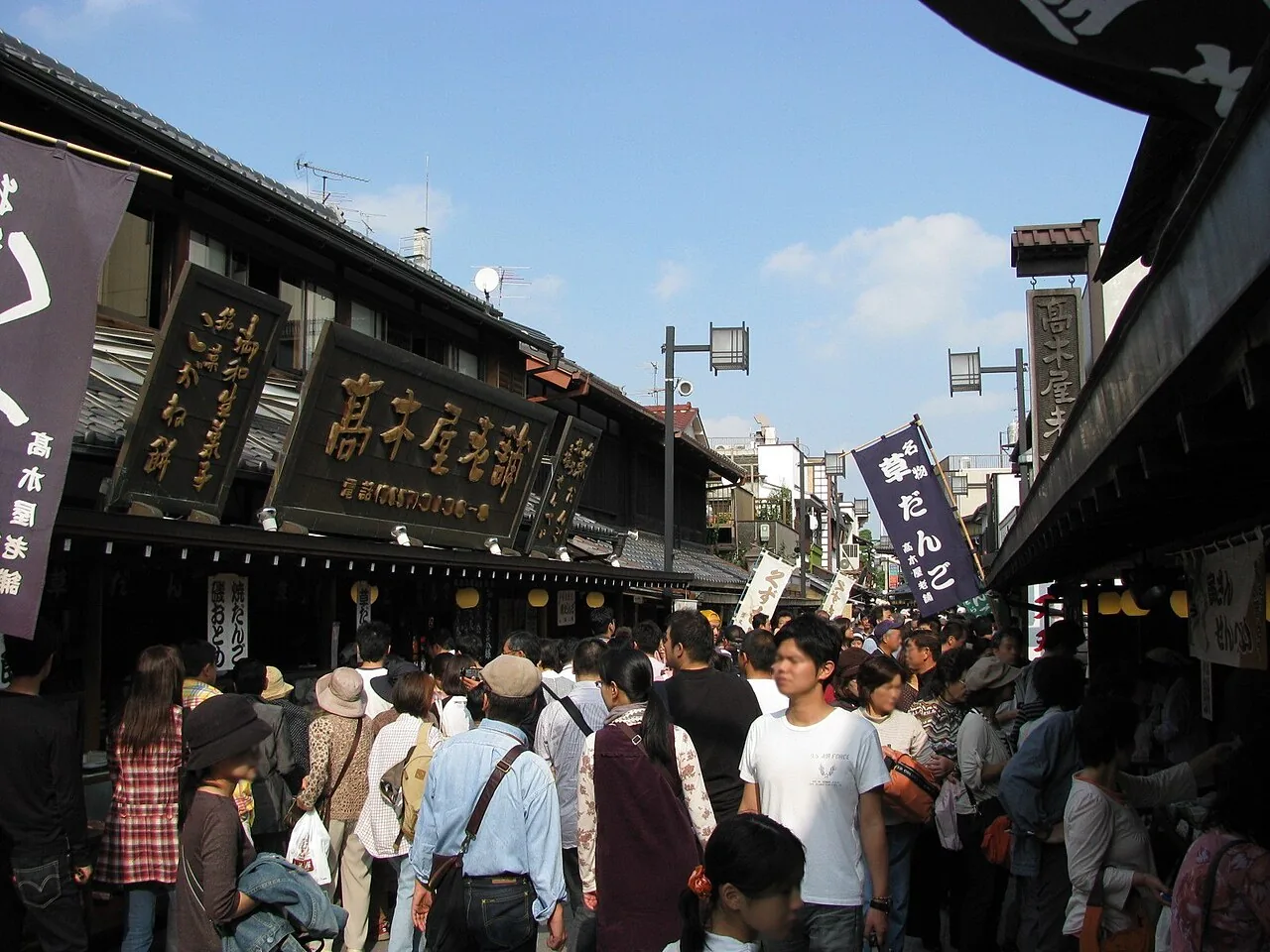
Shibamata is the last stop before Tokyo runs out. It sits on the Edo River, the border with Chiba, at the end of a two-station branch line that most Tokyo residents have never ridden. There is a temple whose walls are carved like a wooden Bible, a 200-meter street of rice-cracker and sweet-dumpling shops that has not changed its shopfronts in decades, a ferry that has been rowing people across the river since the 1600s, and a museum devoted to a fictional travelling salesman who is the most beloved character in Japanese cinema. It is the most complete old-Tokyo town left inside the city limits, and on a weekday you will share it with pensioners.
On this page
Getting there is half the point
Take the Keisei line to Keisei-Takasago (from Asakusa or Ueno, about 20 minutes on the Keisei Oshiage or Main Line; from Narita, it is on the way in). Change to the Kanamachi Line, a two-carriage shuttle that runs between three stations, and get off at Shibamata, the middle one. The station opened in 1912 and the platform has not been improved much since. Outside, a bronze statue of Tora-san, hat and suitcase, is looking back at the town as if he is about to leave it again. Everyone photographs it. Do it now and get it over with.
The loop (about three hours, mostly free)
- Taishakuten Sando, the 200-meter street from the station to the temple gate. Rice crackers grilled on the spot, kusa dango (mugwort dumplings with sweet bean paste, the local specialty), sweet-potato sweets, and a couple of old restaurants serving eel and carp. Shops open around 9:00 or 10:00. Eat your way down slowly; the whole street is a five-minute walk if you do not stop, and you will stop.
- Shibamata Taishakuten (Daikyo-ji), the temple at the end. The grounds and the main hall are free. Pay ¥400 for the two things worth paying for: the sculpture gallery, where the outer walls of the inner hall are carved, panel after panel, with scenes from the Lotus Sutra by ten master carvers between 1922 and 1934, and the Suikei-en garden, which you view from a covered wooden walkway. Hours 9:00–17:00 (to 18:00 on weekends and holidays).
- Yamamoto-tei, a few minutes past the temple: a 1920s merchant’s house that mixes a Japanese garden with a Western-style reception room, and serves tea looking onto the garden. Small entry fee. The most restful half hour in eastern Tokyo.
- Tora-san Museum and Yamada Yoji Museum, on the embankment side. ¥500 for both, 9:00–17:00, closed the third Tuesday of the month. See below for whether you should go in.
- Yagiri no Watashi, the ferry. Walk up onto the Edo River embankment behind the museum. A man in a wooden rowing boat takes you to the Chiba side and back for ¥200 each way. There is no timetable; he goes when there are enough people, and not at all in bad weather. It has been operating since the early Edo period and it is the last of Tokyo’s river crossings still worked by oar.
Who is Tora-san, and should you care
Between 1969 and 1995, director Yoji Yamada made 48 films about the same man: Torajiro Kuruma, a good-hearted, hopeless, itinerant peddler who comes home to his family’s dumpling shop in Shibamata, falls in love with a woman who does not love him back, and leaves again. Every film. For 26 years. It is the longest film series with a single actor in the world, and in Japan Tora-san is closer to a relative than a character. The dumpling shop in the films is on this street; the family’s house is the museum.
Should you go in the museum if you have never seen a film? Honestly, yes, for ¥500: it recreates the shop set, the trains he rode, and the town as it was in 1969, and the point is not the man but the Japan he kept coming back to. Twenty minutes is enough. If you have seen the films, you will be there an hour.
When to go
- Weekday morning, arriving by 10:00. The street is quiet, the crackers are fresh, and the ferry has fewer people waiting.
- Temple fair days: Taishakuten holds a fair on days with an 8 in them (the 8th, 18th, 28th). Stalls, crowds, more life; also more people. Good if you want the festival version.
- Skip: a rainy day, because the ferry will not run and the ferry is a third of the reason to come.
If you want it explained
Shibamata rewards knowing the stories, and there is only one bookable walk that covers it: Shibamata: Old Town Walk and Temple Culture (Viator), 90 minutes with a guide for around ¥13,500 per person, price varying by group size. That is expensive for a small town, and everything above can be done alone with this article in your pocket. Book it only if you are here for the films and want someone who can tell you which corner each scene was shot on. Otherwise spend the ¥13,500 on lunch and crackers and give the change to the ferryman.
On the way back
Shibamata is the far north-east corner of the city; it pairs naturally with the rest of the east side on the way home. Keisei-Takasago to Oshiage is fifteen minutes, which puts you at Daikokuyu for a bath before dinner, or at Kyojima for a second, smaller shopping street that nobody has made a film about.
Quick answers
How do I get to Shibamata from central Tokyo?
Take the Keisei line to Keisei-Takasago (about 20 minutes from Asakusa or Ueno), change to the two-carriage Kanamachi Line, and get off at Shibamata, the middle of its three stations. The temple street starts outside the station.
How much does Shibamata Taishakuten cost?
The temple grounds and main hall are free. The carved sculpture gallery and Suikei-en garden cost ¥400 together. Hours are 9:00–17:00 on weekdays and 9:00–18:00 on weekends and holidays.
How much is the Yagiri no Watashi ferry?
¥200 per adult and ¥100 per child each way, cash. There is no timetable: the boatman leaves when enough passengers have gathered, and does not run in bad weather. The landing is about ten minutes’ walk from Shibamata Station, on the Edo River embankment beyond the temple.
Is the Tora-san Museum worth visiting?
For ¥500 (which also covers the Yamada Yoji Museum), yes, even if you have never seen the films: it recreates the family dumpling shop and 1969 Shibamata. It is open 9:00–17:00 and closed on the third Tuesday of each month.
Practical notes
- Get there: Keisei to Keisei-Takasago, change to the Kanamachi Line, one stop to Shibamata.
- Costs: street and temple grounds free; sculpture gallery and garden ¥400; Tora-san and Yamada museums ¥500; ferry ¥200 each way. Cash for all of it.
- Hours: temple 9:00–17:00 (18:00 weekends); museums 9:00–17:00, closed 3rd Tuesday; shops from about 9:00–10:00.
- Time: three hours for everything, four with lunch. Weekday morning is best; fair days are the 8th, 18th and 28th.
- Worth booking: only the guided walk, and only if the films matter to you.
LOCAL SIDE JAPAN checked temple and museum admissions, hours and closing days against the Tokyo Convention & Visitors Bureau’s official listings (GO TOKYO) and the ferry fare against current visitor reports on September 15, 2026. Fares and hours may change; the ferry is weather-dependent.