Adachi City

  • What it is: The northernmost of Tokyo’s 23 special wards, on the far side of the Arakawa.
  • Area: 53.25 km² — the third largest of the 23 wards, after Setagaya and Ota.
  • Population: 693,223 in 371,942 households (Adachi City, 1 January 2024).
  • Borders: Saitama to the north, Katsushika across the Nakagawa to the east, Arakawa and Kita to the south.
  • Known for: Kita-Senju, the first post town on the road north out of Edo; cheap standing bars; Nishiarai Daishi temple.
  • Nearest hub: Kita-Senju Station — five lines, 10 minutes from Ueno, and the busiest station most visitors never use.

Where is Adachi City?

Adachi is the top of Tokyo. It sits north of the Arakawa, touching Saitama, and at 53.25 square kilometres it is the third largest of the 23 wards — nearly four times the size of Sumida. Almost 700,000 people live here, and it is comfortably the least visited large ward in the city. Kita-Senju, its southern hub, is ten minutes from Ueno on five different lines.

What is Adachi known for?

Drinking, mostly, and it is not an insult. Kita-Senju was the first post town on the Nikko road out of Edo — the place travellers stopped before the long walk north — and it has been feeding and watering people on their way through for four hundred years. Today that means the densest concentration of standing bars on the east side. The other two things worth the trip are Nishiarai Daishi, a temple founded in 826 that you reach on a two-station railway line, and Adachi Market, the only wholesale fish market in Tokyo that still opens its counters to the public on scheduled days.

What should I do in Adachi?

Is Adachi worth visiting?

If you are in Tokyo for three days, no. If you have been before, or you have a week, Kita-Senju is the single best evening on the east side and it costs almost nothing. Adachi has a reputation among Tokyoites for being rough, which is thirty years out of date and was never very true; what it actually is, is a working ward that has never been rebuilt for anyone’s benefit but its own.

How do I get to Adachi?

Kita-Senju is on the JR Joban line, the Tokyo Metro Hibiya and Chiyoda lines, the Tobu Skytree line and the Tsukuba Express — ten minutes from Ueno, fifteen from Akihabara. For Nishiarai Daishi, take the Tobu Skytree line to Nishiarai and change to the two-station Daishi line.

Every Adachi guide on this site

  • Sushi Making Classes in Tokyo by Area: Asakusa, Tsukiji, Shinjuku, Shibuya and the One for Kids (2026)

    Sushi Making Classes in Tokyo by Area: Asakusa, Tsukiji, Shinjuku, Shibuya and the One for Kids (2026)

    This article contains affiliate links to booking sites. If you book through them, LOCAL SIDE JAPAN earns a small commission at no extra cost to you. Classes are ranked by what you learn and eat for the money, not by what pays. How this site is made →

    TOKYO / EXPERIENCES / SUSHI CLASSES, BY AREA

    A sushi-making class in Tokyo costs between ¥6,000 and ¥20,000 and lasts between one hour and three, and the difference in price is almost never the sushi. It is whether you make nigiri or only rolls, whether the person teaching you has stood behind a sushi counter for a living, whether there are six of you or twenty, and whether the class comes with a fish-market walk or a matcha bowl or a samurai in the next room. Here are the classes you can book, by area, with what each one actually has you make, and which to choose depending on whether you want to learn, eat, entertain children, or take a photograph. Prices, meeting points and review counts were read on the booking sites on September 21, 2026.
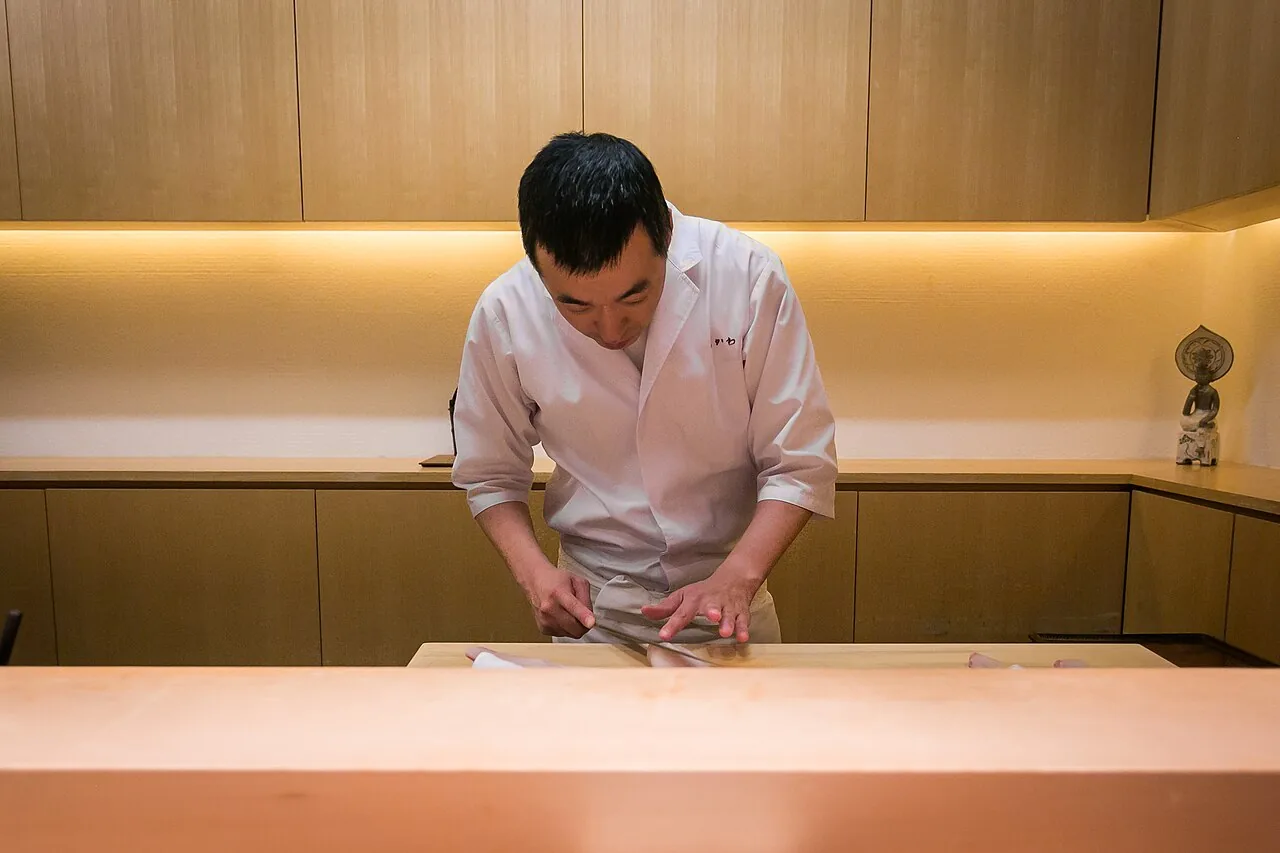
    Sushi chef in a white jacket slicing fish at a wooden counter
    The thing a class cannot teach in ninety minutes is the knife. What it can teach is the rice, and the rice is most of it. Photo: City Foodsters / Wikimedia Commons, CC BY 2.0.

    Fast facts

    • Price: ¥6,000 to ¥19,800 for a visitor class. Most sit at ¥9,000–¥11,000
    • Length: one to three hours. Ninety minutes is standard
    • Cheapest: ¥6,000, Asakusa, with sake. Most booked: ¥9,000, Asakusa, 5.0 from over 5,000
    • With children: Kita-Senju, ¥10,500, age 8 and up
    • The complaint that repeats everywhere: you shape the rice, the chef cuts the fish. Ask before booking if that matters
    • Becoming a sushi chef is a different thing entirely: ¥880,000 for five weeks. See below

    First, what a sushi class actually teaches

    Three things, in descending order of usefulness. Rice: how it is cooked, seasoned with vinegar, sugar and salt, cooled with a fan, and, above all, how little of it a piece of nigiri needs and how loosely it must be held. Everyone over-packs. Every class fixes this, and it is the one skill you will use at home. Rolls: maki on a bamboo mat, temaki hand rolls, temari ball sushi, the “Tokyo roll” invented for classes; easy, photogenic, and what the cheaper classes mostly do. Nigiri: the two-finger press that shapes rice and fish together, which is the thing sushi chefs spend years on and which a class can show you the shape of in an hour. If the listing does not say nigiri, you will be making rolls. None of the classes cut whole fish beyond a demonstration, and the ones that say “chef” mean a working or retired sushi chef, which is worth paying for; the ones that say “instructor” mean a cooking teacher, which is fine for rolls.

    Sushi classes in Tokyo, area by area

    Asakusa: the most-booked class in Japan, and the fun one

    Sushi Making Tokyo: Roll and Authentic Japanese Sushi Class, three minutes from Asakusa Station by Kaminarimon: one hour forty, about ¥9,000, rolls and temari and nigiri, and 5.0 from over 5,000 reviews, which makes it the most-reviewed cooking class in the country. It is a production line in the best sense: a big bright room, staff who have done this ten thousand times, and everyone leaves with a plate they made and a photograph of it. Not the deepest class here; the safest. Popular Sushi Making Class in Asakusa, ninety minutes, about ¥9,900, 5.0 from about 370 reviews, is the same format from the operator with the Tokyo Tower branch. The fun one is Sushi Making with Matcha and Unlimited Sake in Hanakawado by the river: ninety minutes, from about ¥6,000, a sushi-chef jacket to wear, a matcha bowl at the end and, as the name says, the sake, 5.0 from about 80 reviews. Cheapest in the district and the right choice for an evening rather than a lesson. At the top end, Sushi Making and Samurai Dining is two hours and about ¥15,000 with a samurai-themed room; you are paying for the theater.

    Tsukiji: with a real chef, and with the market

    Sushi Making Class in Tsukiji with a Professional Chef is the one for people who want to learn: ninety minutes, about ¥11,000, a working sushi chef, fish preparation and knife technique demonstrated, nigiri and rolls made, 5.0 from about 1,500 reviews. A little dearer than Asakusa’s ¥9,000, and more serious. The same operator’s Tsukiji Market Tour and Sushi Class adds a two-hour walk through the outer market first, four hours in all, about ¥15,700, 4.9 from 987 reviews. Think before you add the walk. The class on its own has 7 reviews below four stars in 1,502; the version with the market tour bolted on has 32 in 987 — six times the rate — and the complaints are about the walk, not the class. The market is also closed on Sundays, Wednesdays and holidays, and reviewers who booked those days report no substitute. The numbers are below. The short, cheap option is the one-hour Sushi Bento class, about ¥7,300, 5.0 from about 75 reviews, where you make a box to carry away rather than a plate to eat.

    Shinjuku and Shimbashi: the small groups and the long class

    Three-Hour Small-Group Sushi Class at Cooking Sun, in Shinanomachi between Shinjuku and Yotsuya: the longest class in the city, three hours, about ¥11,000 with group pricing, California rolls and tekka rolls and nigiri from scratch, 5.0 from about 175 reviews. The one that comes closest to a real cooking lesson. In Shimbashi, Tokyo Sushi Making Experience and Japanese Cooking Class does maki, temari and nigiri with tuna, salmon and flying-fish roe in ninety minutes for about ¥9,000, 5.0 from about 190 reviews, in a room that takes up to fifteen; good if you are staying around Ginza or Shiodome.

    Shibuya, Sasazuka and Nishi-Azabu: the Michelin ones

    Sushi Making and Sake Tasting at a Michelin-Listed Standing Sushi Bar in Sasazuka, ten minutes by train from Shinjuku: ninety minutes, about ¥14,000 with group pricing, you make nigiri yourself and eat pieces made by the chef with better fish, 4.9 from 77 reviews. The best fish on this page and a real counter. Confirm the piece count and the finish time when you book: in April 2026 a guest reported getting seven pieces rather than fourteen and finishing in an hour rather than ninety minutes, and the operator replied in public acknowledging the discrepancy and promising to review the description. Hand-Rolled Sushi Class in Shibuya with a Master is the cheaper Shibuya option, ninety minutes, about ¥7,700, new with a couple of dozen reviews. And the one for people who want a private lesson from someone who cooks at the top: Private Sushi Making with a Sushi Master in Nishi-Azabu, one hour forty-five, about ¥19,800, held in a Michelin-starred restaurant’s kitchen, slicing raw fish and choosing seasonal ingredients, 5.0 from about 100 reviews.

    Tokyo Tower

    Popular Sushi Making Class near Tokyo Tower: ninety minutes, about ¥9,900, 4.9 from about 250 reviews, the same format as the Asakusa branch for people staying in Roppongi or Hamamatsucho.

    The east side: Kita-Senju, and the one for children

    The only sushi class east of the river is also the best one for families. Kid-Friendly Sushi Making Class in Tokyo meets at the east exit of Kita-Senju Station at 10:30: two and a half hours, about ¥10,500, a small group, four kinds of sushi from the rice up, a quiz on sushi etiquette, and a relaxed teacher who takes children from eight. 5.0 from about 35 reviews. Do it in the morning, then spend the afternoon in the post town and let the adults have the evening in the standing bars. For the other kind of sushi morning on the east side, the public open days at Adachi Market, where you eat at the wholesalers’ counters at 8:00, are in the same guide.

    What does a sushi chef course in Tokyo cost?

    People search for this and land on pages about ninety-minute tourist classes, which is not the same product and not the same order of money. If what you mean is training to work behind a counter, here is the real number.

    Tokyo Sushi Academy runs the English-language professional courses, from its Tsukiji campus. Its published fees:

    CourseLengthFee
    International Sushi Chef Course5 weeks, 25 days, Mon–Fri 9:30–15:30¥880,000 incl. tax
    ISC Advanced Sushi Master Course2 weeks, 10 days¥550,000
    Both, booked together7 weeks, 35 class days¥1,320,000 (saves ¥110,000)
    Published on the school’s English site and read on October 11, 2026. Tuition excludes accommodation; tools and uniform are charged separately. The school notes that the Advanced course’s content, schedule and fees are still being finalised.

    Three things worth knowing before you picture yourself doing it. No professional experience is required and the five-week course is open from beginner level, so it is not gatekept. You must be eighteen and legally in Japan for the whole period, which for most visitors means a visa question, not a money question. And there is no one-day or weekend version in English with a published price — the shortest English course is the two-week Advanced one, and that is built for chefs who already work with fish. The Japanese-language courses are cheaper per week (¥165,000 admission plus ¥803,000 tuition for the two-month intensive) but require Japanese good enough to follow the teaching.

    So the honest comparison is ¥9,000 against ¥880,000, and they are not competing for the same decision. A ninety-minute class teaches you the rice, which is the part you will actually use at home. Five weeks teaches you to break down a fish and shape nigiri at speed, for a job. If you want something in between on a holiday, it does not exist in English at a published price — the closest is the three-hour small-group class further up this page.

    Which sushi class to book

    If you wantBookAreaAbout
    To actually learnSushi Making Class with a Professional ChefTsukiji¥11,000 · 90 min · 5.0 (1,503)
    The safe, famous oneSushi Making Tokyo: Roll and Authentic SushiAsakusa¥9,000 · 100 min · 5.0 (5,081)
    A market walk as wellTsukiji Market Tour and Sushi ClassTsukiji¥15,700 · 4 h · 4.9 (987) · read the reviews first
    An evening, not a lessonSushi, Matcha and Unlimited SakeAsakusa¥6,000 · 90 min · 5.0 (83)
    The longest, most thoroughThree-Hour Small-Group Class, Cooking SunShinanomachi¥11,000 · 3 h · 5.0 (175)
    The best fishMichelin-listed standing sushi barSasazuka¥14,000 · 90 min · 4.9 (77)
    Private, top chefPrivate Sushi Making with a Sushi MasterNishi-Azabu¥19,800 · 105 min · 5.0 (102)
    With childrenKid-Friendly Sushi ClassKita-Senju¥10,500 · 2.5 h · 5.0 (34) · age 8+
    Only an hourTsukiji Sushi Bento ClassTsukiji¥7,300 · 1 h · 5.0 (77)

    Questions worth asking before you book

    • Nigiri or only rolls? The listings above say which. If you want the two-finger press, it must say nigiri.
    • Is it a meal? Most classes are: you eat what you make, and it is enough for lunch. The one-hour bento class is a box to take away.
    • Vegetarian, halal, allergies: the big Asakusa and Tsukiji operators handle all three with notice; the Michelin ones are fish-only by definition.
    • Raw fish and children: every class has cooked or vegetable options; the Kita-Senju class is built around them.
    • Group size: Asakusa and Shimbashi run rooms of fifteen to twenty; Cooking Sun, Sasazuka and Kita-Senju keep it under ten; Nishi-Azabu is private.

    What the reviews say, and what they mean

    The fourteen listings on this page carry about 9,040 reviews between them — more than any other article in this series, and more than the ramen, crafts and food-tour pages combined. On 2 October 2026 I read every review rated three stars or below on the listings deep enough to show a pattern, and the operators’ replies. Eight of the fourteen have no review below four stars at all.

    Where the low reviews are

    ListingReviewsRated 3★ or below
    Asakusa, Sushi Making Tokyo5,08146 (0.9%)
    Tsukiji, with a professional chef1,5027 (0.5%)
    Tsukiji, market tour + class98732 (3.2%)
    Asakusa, Popular Sushi Making3701 (0.3%)
    Tokyo Tower2515 (2.0%)
    Shimbashi1872 (1.1%)
    Cooking Sun, three hours1750
    Nishi-Azabu, private master1020
    Samurai dining880
    Matcha and unlimited sake830
    Tsukiji bento, one hour770
    Sasazuka, Michelin-listed773 (3.9%)
    Kita-Senju, children340
    Shibuya, hand rolls260

    Two listings stand out, and they are the two this page recommended most warmly. Both recommendations above have been rewritten.

    The complaint that repeats everywhere: you never touch the fish

    This is the one thing reviewers say across different operators, different prices and different parts of the city. At the 5,081-review Asakusa class: “I was expecting more about the cutting of the fish which is the essence of sushi making”, and the rolling technique was “shown via video, not live” (a reviewer on Viator, April 2025). At the Michelin-listed bar: “We were expecting more than forming a 10g riceball onto a piece of fish. Do not expect to learn to slice and prepare the fish” (May 2026). At the Tsukiji market tour, that the ingredients were already laid out and it was “just an assembly task” (April 2024).

    This page warns about it in its first section and the warning stands: none of these classes cut whole fish beyond a demonstration. What the reviews add is how often people book anyway and are disappointed — and the Michelin operator has now publicly conceded that “our course description could be clearer”. If handling fish is the point for you, only the Nishi-Azabu private class does it, and the reason it costs ¥19,800 is in the next section.

    The Tsukiji market walk is where the complaints are, not the sushi

    The same Tsukiji operator sells the class on its own (¥11,000) and the class with a two-hour guided walk through the outer market (¥15,700). The class alone has 7 low reviews in 1,502. The version with the walk has 32 in 987. Six times the rate, for ¥4,700 more.

    And the complaints are almost all about the walk. Four of the six I read say some version of the same thing — that a guide is not needed to eat your way down an outer market, and that the stops were the ones every other tour makes. The sushi half draws separate criticism for being assembly in a crowded room, one reviewer counting thirty people in it (January 2026).

    The avoidable one is the closing days. A May 2026 reviewer found the market shut and no substitute arranged: the detail is in the listing’s fine print and, by that account, nobody in the group had seen it. Tsukiji’s outer market closes on Sundays, holidays and designated Wednesdays — the same trap the food tours page found on this operator’s other Tsukiji product. Book Monday, Tuesday, Thursday, Friday or Saturday, or book the class without the walk.

    The operator answers every critical review at length and said in one reply that it has now opened its own premises for the sushi half in order to control the experience. The ¥11,000 class is the part that works.

    Sasazuka: three low reviews, three different broken promises

    Seventy-seven reviews and three below four stars is a high rate for a small listing, and there is no single repeating fault — but all three are the same kind of fault. A booking in September 2025 arrived to find the restaurant closed, which the operator admitted was “an internal oversight on our part”. A May 2026 guest expected to learn to slice fish and did not. An April 2026 guest was billed ninety minutes and finished in sixty, and counted seven pieces where fourteen had been advertised — and the operator replied acknowledging “a discrepancy between the advertised program and your actual experience regarding the duration and the number of pieces served”.

    The fish is still the best on this page and the chef is praised in all three. Confirm the piece count, the finish time and that the booking has actually been passed to the restaurant.

    Where no complaint repeats

    Cooking Sun’s three-hour class, the Nishi-Azabu private lesson, the samurai dining room, the sake evening in Hanakawado, the Tsukiji bento hour, the Kita-Senju children’s class and the Shibuya hand-roll class have no review below four stars between them — 591 reviews with nothing under four. The Tsukiji chef class has seven in 1,502. There is no pattern to report in any of them.

    Which of these are made for foreigners

    This is the first category in this series where the answer is clearly no. The Japanese-language sushi classes cost the same or more.

    Tsukiji Tamasushi, an Edomae sushi company founded a century ago, sells a sushi-making experience to Japanese customers at three tiers (checked 2 October 2026): ¥11,000 including tax for six nigiri, a hand roll, a wasabi tasting and a tamagoyaki demonstration with the meal; ¥16,500 for the tier that adds a fish-butchering demonstration; and ¥27,500 for the one that adds knife technique. None of the three is offered in English — the page says Japanese only, bring a translator.

    Read those numbers against the complaint above and the whole thing reframes. The fish work is not being withheld from visitors; it is the expensive tier in the Japanese market too, at a 50% to 150% premium over the entry course. The one listing on this page that actually slices fish — the Nishi-Azabu private class at ¥19,800 — is priced exactly where a Japanese sushi company prices the same thing. And the entry-level tourist classes at ¥6,000 to ¥9,900 undercut Tamasushi’s ¥11,000 entry course.

    The best value we found anywhere is Japanese, and it takes foreign visitors at the same price. Tokyo Sushi School in Ikebukuro — a vocational school that trains sushi chefs — runs a half-day taster at ¥12,000 including tax for two hours, in which you make eighteen or more kinds across three servings, materials and food included. The school states that the same price applies to everyone and that, because it is almost entirely hands-on, you can do it without Japanese; supplementary materials are provided. The catches: it runs 13:30–15:30 on weekdays and Saturdays only, it is a training school rather than a hospitality product, and the language support is “you will manage” rather than a guide at your elbow.

    So the honest summary for this category: pay the tourist price for English, a fixed date and a room by Kaminarimon, and know that you are not paying a premium for being foreign. The money question on this page is not nationality. It is whether to add ¥4,700 for a guided walk round a market you can walk round yourself.

    Where this joins the rest of the east side

    The Kita-Senju class is the east side’s one entry; the ward’s fish is otherwise eaten, not made, at Adachi Market’s open days and at Toyosu, on the Koto City list. The other experiences compared by area are tea ceremony and kintsugi and kimono rental, plus ramen classes, sorted by who lets you make the noodles, , general Japanese cooking classes sorted by which kind of kitchen you stand in, and food tours, sorted by how much of the food is in the price — including the Tsukiji market walks. The knife you will want after the class is on Kappabashi — where the ¥6,900 noodle studio also is.

    Quick answers

    How much does a sushi chef course in Tokyo cost?

    Tokyo Sushi Academy’s English-language International Sushi Chef Course is ¥880,000 including tax for five weeks (25 days) at its Tsukiji campus, and its two-week Advanced Sushi Master Course is ¥550,000; both together are ¥1,320,000. Tuition excludes accommodation, tools and uniform. No professional experience is needed, but you must be 18 and legally in Japan for the whole course. A ninety-minute tourist sushi class, by contrast, costs ¥6,000 to ¥19,800.

    What is the best sushi making class in Tokyo?

    To learn, the Tsukiji class with a professional sushi chef (about ¥11,000, 90 minutes, 5.0 from about 1,500 reviews). The most-booked is the Asakusa roll-and-nigiri class near Kaminarimon (about ¥9,000, 5.0 from over 5,000 reviews). For the best fish, the Michelin-listed standing sushi bar in Sasazuka (about ¥14,000).

    How much does a sushi making class cost in Tokyo?

    About ¥6,000 to ¥10,000 for a 60 to 100-minute class where you make rolls and nigiri and eat them; ¥11,000 to ¥16,000 for three-hour classes or ones that include a Tsukiji market tour; ¥14,000 to ¥20,000 for classes at Michelin-listed restaurants or private lessons with a master.

    Is there a sushi making class in Tokyo for kids?

    Yes. The Kid-Friendly Sushi Making Class meets at Kita-Senju Station, takes children from age eight, runs two and a half hours in a small group for about ¥10,500, and includes cooked and vegetable options. The big Asakusa classes also take children with adults.

    Sushi class in Asakusa or Tsukiji?

    Tsukiji if you want to learn from a working chef and see the market; Asakusa if you want a fun, well-run class near Senso-ji with the most reviews in Japan, or an evening version with sake. Both run about 90 minutes at ¥8,000 to ¥10,000.

    Do you make nigiri or just rolls in a Tokyo sushi class?

    It depends on the class. The Tsukiji chef class, Cooking Sun, the Sasazuka and Nishi-Azabu classes and the Asakusa and Shimbashi classes all include nigiri; the one-hour bento class and some cheaper classes are rolls and temari only. Check the listing for the word nigiri.

    Is there a sushi making class in east Tokyo?

    One: the kid-friendly small-group class at Kita-Senju in Adachi, about ¥10,500 for two and a half hours. It is the only bookable sushi class east of the Sumida River.


    LOCAL SIDE JAPAN read the prices, durations, meeting points, inclusions and review counts of every class above on Viator on September 21, 2026. Prices are approximate and move with the exchange rate; several use group pricing. This is a researched comparison of the listings and their reviews, not a firsthand report on each kitchen, and the article says so here rather than pretending otherwise. Nothing was provided free by an operator.
    Written by Kizuku. I run the Sunamachi Ginza Sumo Stable, a sumo experience in Koto City, and I write about the east side of Tokyo I live and work in. More about this site →

  • Kita-Senju: The Post Town, the Fish Market and the ¥1,000 Drunk

    Kita-Senju: The Post Town, the Fish Market and the ¥1,000 Drunk

    This article contains one affiliate link to a booking site. If you book through it, LOCAL SIDE JAPAN earns a small commission at no extra cost to you. Everything else in Kita-Senju is free or costs the price of a drink, and is described first. How this site is made →

    TOKYO / ADACHI CITY / KITA-SENJU

    Kita-Senju is where Tokyo stops pretending. Five train lines cross here and a million people a day pass through the station, and almost none of them are visitors, because there is nothing here that a guidebook would call a sight. What there is: the first post town on the old road north out of Edo, still laid out along its original street; the bridge where Basho set off on the journey that became The Narrow Road to the Deep North; the only fish market in Tokyo that still opens its gates to the public; a bathhouse with a garden; and, after dark, the densest run of cheap standing bars in the eastern half of the city. It is a place to spend an afternoon and an evening, in that order.

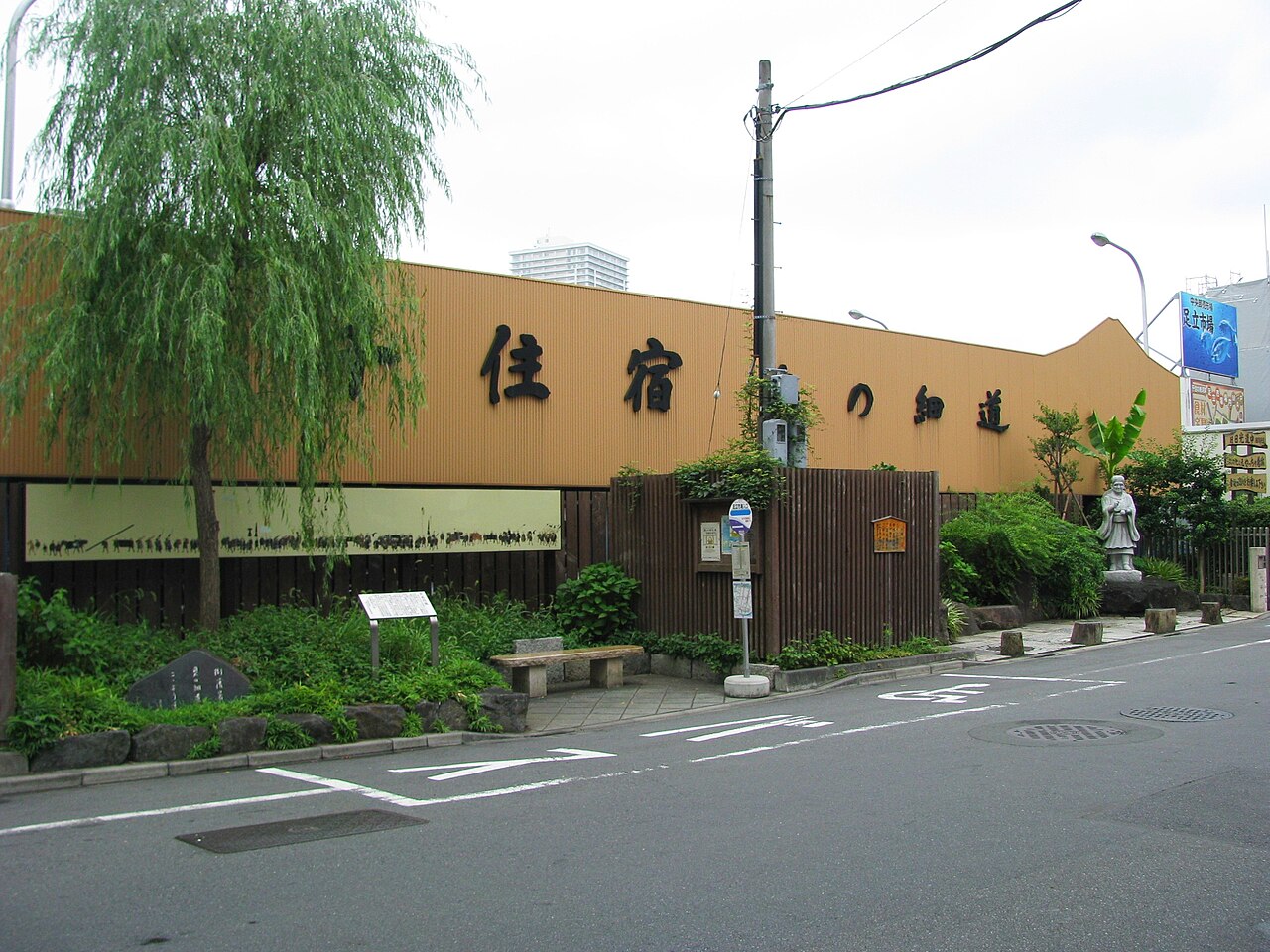
    Senju-juku Oku no Hosomichi wall with Basho statue beside Adachi Market, Kita-Senju, Tokyo
    The “Senju-juku, Narrow Road to the Deep North” wall and Basho’s statue, outside Adachi Market. Photo: Aimaimyi / Wikimedia Commons, CC BY-SA 3.0.

    Fast facts

    • Where: Adachi City, north Tokyo, on the Sumida River. Ten minutes from Ueno.
    • Station: Kita-Senju — five lines (Hibiya, Chiyoda, JR Joban, Tobu Skytree, Tsukuba Express). Use the west exit for everything on this page.
    • Cost: the post town and the market are free; a bathhouse is ¥600; an evening in the standing bars is about ¥1,000–¥3,000.
    • Cash: the bars, the bath and the market are cash only. Bring ¥10,000 in small notes.
    • Adachi Market public days: 2nd Saturday of every odd-numbered month (3rd Saturday in January), 09:00–11:00, canteens from 08:00. Free.
    • Closed: Takara-yu on Fridays; Ohashi on Sundays and holidays.

    What is Kita-Senju?

    Kita-Senju is a station and a neighbourhood in Adachi City, at the top of Tokyo, ten minutes north of Ueno. Five railway lines meet there, which makes it one of the busiest interchanges in the country and one of the least visited by anyone who is not changing trains.

    Before the railways it was Senju-juku, the first post town on the Nikko and Oshu highways — the roads running north out of Edo. The Senju Ohashi bridge, first built in 1594, was for decades the only fixed crossing of the Sumida, so everyone heading north came through here and most of them stayed the night. By the 1800s it was the largest post town near Edo, with around ten thousand people in it.

    What is left of that is not a preserved street but an ordinary shopping street that never stopped being used, and — because this was always a place where travellers ate and drank before a long walk — the densest run of cheap standing bars on Tokyo’s east side.

    What is there to see in Kita-Senju?

    Senju-juku was the first stop on the Nikko and Oshu highways, the roads that ran north from Nihonbashi to the shogun’s mausoleum and beyond. The Senju Ohashi bridge across the Sumida, first built in 1594, was the only fixed crossing of the river for decades, so everyone heading north crossed it and most of them spent the night here; by the 1800s it was the biggest post town near Edo, with around ten thousand people. The street it grew along is now called Shukubamachi-dori, and it runs north from the station’s west exit as an ordinary shopping street, which is the point: it was never preserved, it just never stopped being used.

    • Yokoyama residence, the one Edo-period merchant house left on the street. It was Matsuya, a wholesaler of handmade paper, and the deep tiled roof and the lattice front are what the whole street looked like. Exterior only, free; a plaque explains it.
    • Nagura Clinic, a bone-setting practice that has been in the same family, in this spot, since about 1770. Patients used to come from across Japan; in Edo the word “Nagura” meant “bone-setter” the way “Hoover” means “vacuum”. It still operates, in a wooden building behind a gate, and you can look from the street.
    • Senju-juku Historical Terrace, a small free room in a relocated storehouse that shows maps and finds from the post town. Ten minutes.
    • The street itself: the lamp posts carry the crests of the daimyo who marched through, the pavement has tiles set into it with scenes of the road, and a few of the shop shutters are painted with the same. Look down and up rather than straight ahead.

    When is Adachi Market open to the public?

    Walk south from the station instead, fifteen minutes, and you reach the river. On May 16, 1689, Matsuo Basho stepped off a boat here, said goodbye to his friends, and started walking north on a journey of five months and 2,400 kilometers. The book he wrote about it is the most famous piece of travel writing in Japanese, and it begins in Senju. There is a statue of him by the river and a long mural wall with his opening lines, the one in the photograph above, which happens to be the wall of the Adachi Market.

    The market is Tokyo’s only wholesale market dealing in fish alone, a smaller and rougher cousin of Toyosu, and unlike Toyosu it lets the public in: on the second Saturday of every odd-numbered month (third Saturday in January), from 9:00 to 11:00, the wholesalers sell to anyone who walks in, and the market canteens open at 8:00. Entry is free. The next open days after this was written are November 14, 2026 and January 16, 2027. Sushi for breakfast at a market counter, paid for in cash, at a quarter of the Toyosu queue, is the best cheap morning on the east side; plan the whole visit around it if the dates fit.

    Is there a good sento in Kita-Senju?

    Takara-yu, twenty minutes’ walk north-west of the station or a short bus ride to Senju-Sakuragicho, is the sento people in Tokyo call “the king of the veranda”. Behind the bath is a real Japanese garden with a pond and carp, and a wooden veranda you sit on afterwards in your towel with a bottle of milk. The water is well water heated with wood, and there is a different medicinal bath each day. ¥600, open 15:00 to 23:30, closed Fridays. Bring your own towel or buy one at the counter. Tattoos: Takara-yu is listed as tattoo-friendly on the Japanese bath directories, though it does not print a policy itself; if you want it in writing, the baths in this list say yes in writing.

    Where should I drink in Kita-Senju?

    From about 17:00 the alleys around the west exit fill up. This is the senbero district, from sen (a thousand yen) and bero-bero (drunk): the idea is a beer and two or three plates for ¥1,000, standing, and then the next place (the word, the rules and the other districts are explained here). Two to know:

    • Ohashi, founded in 1877, one long counter, no menu you can read, and one dish everyone orders: niku-dofu, beef and tofu simmered in soy, for a few hundred yen. Point at the pot. It is one of the oldest izakaya in Tokyo still run as one, and the regulars have been coming for forty years. Queue outside at 17:00 opening.
    • Tenshichi, a standing kushi-katsu counter where the skewers are fried in front of you and cost around ¥100 to ¥200 each; dip once in the shared sauce, never twice. Loud, fast, and nobody stays more than forty minutes.

    Neither has an English menu and neither needs one. Cash, a few words of Japanese, and the willingness to stand next to a stranger are the entry requirements. The alleys are safe, the drunks are cheerful, and the last Hibiya line train to central Tokyo leaves after midnight.

    Where to eat in Kita-Senju, beyond the bars

    • Ohashi, the 1877 izakaya above, also does lunch, and lunch is the way to get a seat without the queue: the niku-dofu and a bowl of rice for well under ¥1,500.
    • Bird Court, a yakitori counter a few minutes from the west exit that sits at the top of the Japanese review sites for the whole ward; reservations only, evenings, and worth planning a night around if you like chicken cooked with care over charcoal.
    • Tsunahachi, on the ninth floor of the Marui department store at the station, is a branch of the 1924 Shinjuku tempura house: a tempura set at lunch for around ¥2,000, a window over the tracks, English menu.
    • A sushi class: the only one east of the river meets at the east exit at 10:30, small-group, takes children from eight, about ¥10,500; it is compared with the rest of Tokyo’s in Sushi Making Classes in Tokyo by Area.
    • The market canteens at Adachi Market, on an open Saturday, for sushi at 8:00 with the wholesalers; see above for the dates.
    • Shukubamachi-dori itself for everything else: the old post-town street has ramen, curry, a kissaten or two and a bakery, and nothing on it is a tourist restaurant.

    The one thing worth paying a guide for

    There is no Kita-Senju walking tour on the booking sites, and the post town above does not need one. What Senju has quietly become, though, is one of Tokyo’s roasting neighborhoods, with small artisan roasters in the back streets that you would never find, and one guide who lives here has built a tour around them:

    • Senju Specialty Coffee and Cafe Culture Walking Tour (Viator): three hours from the west exit with a former teacher who has lived in Japan fifteen years, three tastings (a light roast, a Showa-era dark roast from a shop that has been roasting since the 1950s, and a technical pour-over), a snack with each, and you choose green beans and watch them roasted to take home. Maximum six people. About ¥13,000, everything included, no extra spending on the day. Expensive for coffee, but it is the only English-language way into the neighborhood’s back streets and the six reviews so far are all five stars. Book it for the morning and do the post town and the bars yourself afterwards.

    Is Kita-Senju worth visiting?

    Not on a three-day first trip. Yes on a second one, and it is the best cheap evening on the east side. There is no famous sight here: no temple anyone photographs, no tower, no museum you have heard of. What there is, is a working neighbourhood where an evening costs about ¥2,000 and nobody is selling you anything.

    Three things make the trip worth making. The standing bars, which do the thing Tokyo is supposed to do and do it for a tenth of Ginza prices. Takara-yu, a bathhouse with a real garden behind the glass. And, six Saturdays a year, the fish market opening its counters to the public — sushi for breakfast at a quarter of the Toyosu price, with no queue.

    If the market dates fit your trip, plan around them. If they do not, come for the evening and arrive at about five.

    And one thing you can book in Senju itself: the only cooking class on this side of the city is here — udon, in a house behind a temple, rather than in a studio near a station. Tokyo cooking classes by area, and what each kitchen actually is →

    Where this joins the rest of the east side

    Kita-Senju is the gateway to Adachi, the ward at the top of the east side: the two-stop train to Nishiarai Daishi leaves from the next station up the Tobu line. South across the Senju Ohashi is Minami-Senju in Arakawa, with the Kozukappara execution ground and Jokanji, the “throw-in temple” of the Yoshiwara courtesans, both a fifteen-minute walk from the bridge. The Sumida River walk starts at the Skytree, one stop and a change away. No company runs a food tour here, which is looked at in food tours by area — the guided equivalents are all in Shinjuku and Ueno, and cost six to sixteen times what a night here does.

    Quick answers

    Is Kita-Senju worth visiting?

    Yes, for an afternoon and evening rather than a day. The old Nikko highway post town (Shukubamachi-dori), the Basho departure point by the Senju Ohashi bridge, the Takara-yu bathhouse garden and the standing-bar alleys around the west exit are all free or cost the price of a drink.

    When can the public visit Adachi Market?

    On the second Saturday of every odd-numbered month (third Saturday in January), 9:00 to 11:00, with the canteens open from 8:00. Entry is free and cash is needed. After September 2026 the next dates are November 14, 2026 and January 16, 2027.

    What is senbero in Kita-Senju?

    Senbero means getting pleasantly drunk for ¥1,000: a drink and a couple of small plates at a standing bar, then moving on. The alleys by Kita-Senju’s west exit are the best-known senbero district in east Tokyo. Ohashi (est. 1877, niku-dofu) and Tenshichi (standing kushi-katsu) are the two classic stops. Cash only, no English menus.

    How much is Takara-yu and when is it open?

    ¥600 for adults, open 15:00 to 23:30, closed Fridays. It is the bathhouse famous for its Japanese garden and veranda, about 20 minutes on foot north-west of Kita-Senju Station or by bus to Senju-Sakuragicho.

    Where did Basho start The Narrow Road to the Deep North?

    At Senju, on May 16, 1689, after arriving by boat up the Sumida. A statue of Basho and a mural wall with the opening lines stand beside the Senju Ohashi bridge and Adachi Market, about 15 minutes’ walk south of Kita-Senju Station.

    The big halls by the west exit are pachinko; if the noise and the queue at the little window round the corner make no sense, this is how pachinko works, three-shop system and all.


    Practical notes

    • Getting there: Kita-Senju Station, on the Hibiya line (from Ginza, Roppongi, Ueno), Chiyoda line, JR Joban line, Tobu Skytree line and Tsukuba Express. Use the west exit for everything in this article.
    • Order of the day: post town 14:00–16:00 → river and Basho 16:00 → Takara-yu 17:00 → bars from 18:30. On a market Saturday, start with the market at 8:00 and reverse the rest.
    • Money: the bars, the bath and the market are cash. Bring ¥10,000 in small notes.
    • Bar manners: order a drink first, then food; do not linger after you finish; pay at the counter; no tipping.
    • Closed: Takara-yu Fridays; Ohashi Sundays and holidays; check Tenshichi’s hours on the day.

    LOCAL SIDE JAPAN checked the Adachi Market open-day schedule against the market’s own site, Takara-yu’s price and hours against the Tokyo Sento Association (adult fare ¥600 from August 1, 2026), the post town details against Adachi City’s cultural-property pages, and the tour price and inclusions on Viator, on September 18, 2026. Prices are approximate and change with the exchange rate. Nothing here was provided free by an operator.
    Written by Kizuku. I run the Sunamachi Ginza Sumo Stable, a sumo experience in Koto City, and I write about the east side of Tokyo I live and work in. More about this site →

  • Tokyo’s Two-Stop Train to a Temple Nobody Talks About

    Tokyo’s Two-Stop Train to a Temple Nobody Talks About

    This article contains affiliate links to booking sites. If you book through them, LOCAL SIDE JAPAN earns a small commission at no extra cost to you. The place itself is free and is described first. How this site is made →

    TOKYO / NISHIARAI / LOCAL TEMPLES

    Tokyo has built entire railway lines for commuters, suburbs, airports and shopping districts.

    It also has one that travels a single kilometer to a temple.

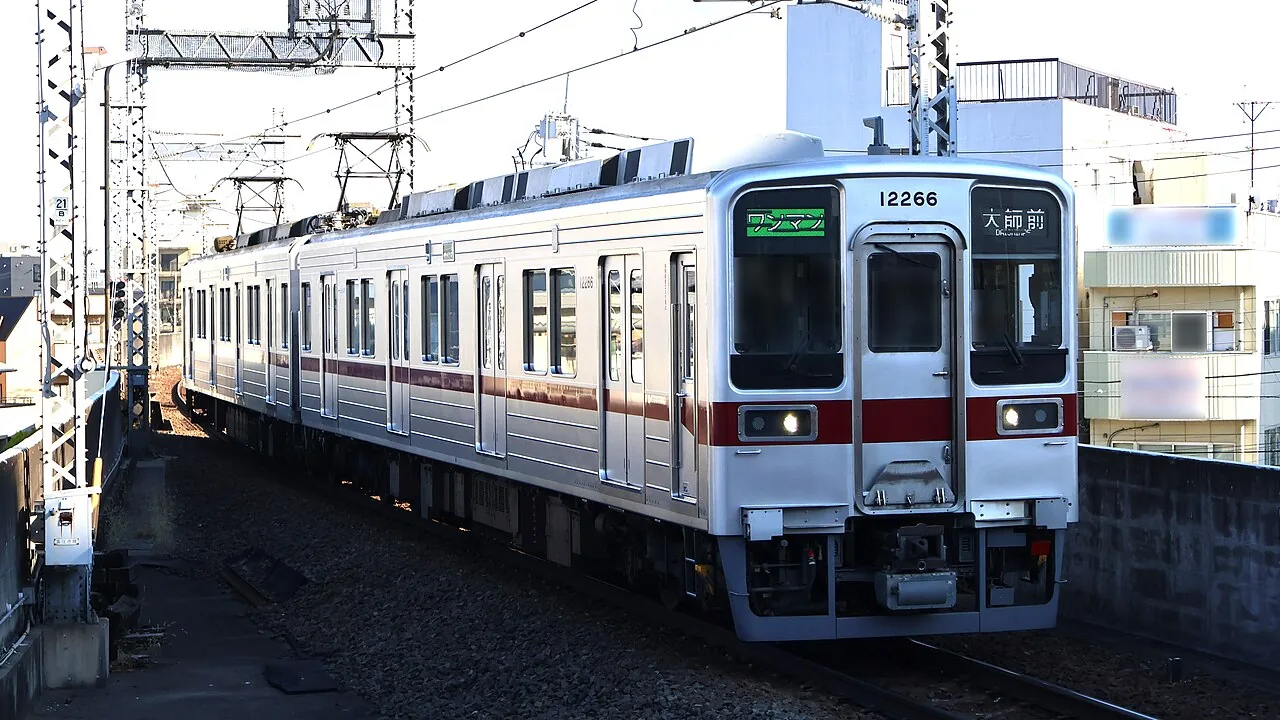
    The Tobu Daishi Line connects only two stations: Nishiarai and Daishimae. The ride is so short that sitting down can feel unnecessarily ambitious.

    At the end is Nishiarai Daishi, a major Buddhist temple surrounded by an old-fashioned neighborhood that receives far fewer international visitors than Tokyo’s famous temple districts.

    A two-car Tobu Daishi Line train approaching Daishimae Station in Tokyo
    Tobu-railway-11266F-20260102-123355.jpg, photographed by LERK, Wikimedia Commons, CC BY-SA 4.0.

    Fast facts

    • Admission: Entry to the general grounds is usually free; individual prayers or activities may have fees
    • Address: 1-15-1 Nishi-Arai, Adachi City, Tokyo
    • Nearest: Daishimae Station, the terminus of the two-station Tobu Daishi line from Nishiarai
    • Time needed: About 2 to 3 hours for the temple and the approach

    A railway line that knows exactly what it is for

    Start at Nishiarai Station and follow the signs for the Daishi Line. According to Tobu Railway, the entire route is one kilometer long. There are no difficult decisions: the next station is also the last station.

    The two-car train runs back and forth between Nishiarai and Daishimae. It feels less like crossing Tokyo and more like being personally delivered to the temple.

    The line is a surviving fragment of a much larger railway idea. Daishimae Station originally opened as part of a proposed connection between Tobu’s eastern and western networks. The grand connection never arrived. The tiny temple train stayed.

    Tokyo is full of infrastructure designed for millions of people. This one feels designed for you and six local grandmothers.

    The station opens into a different rhythm

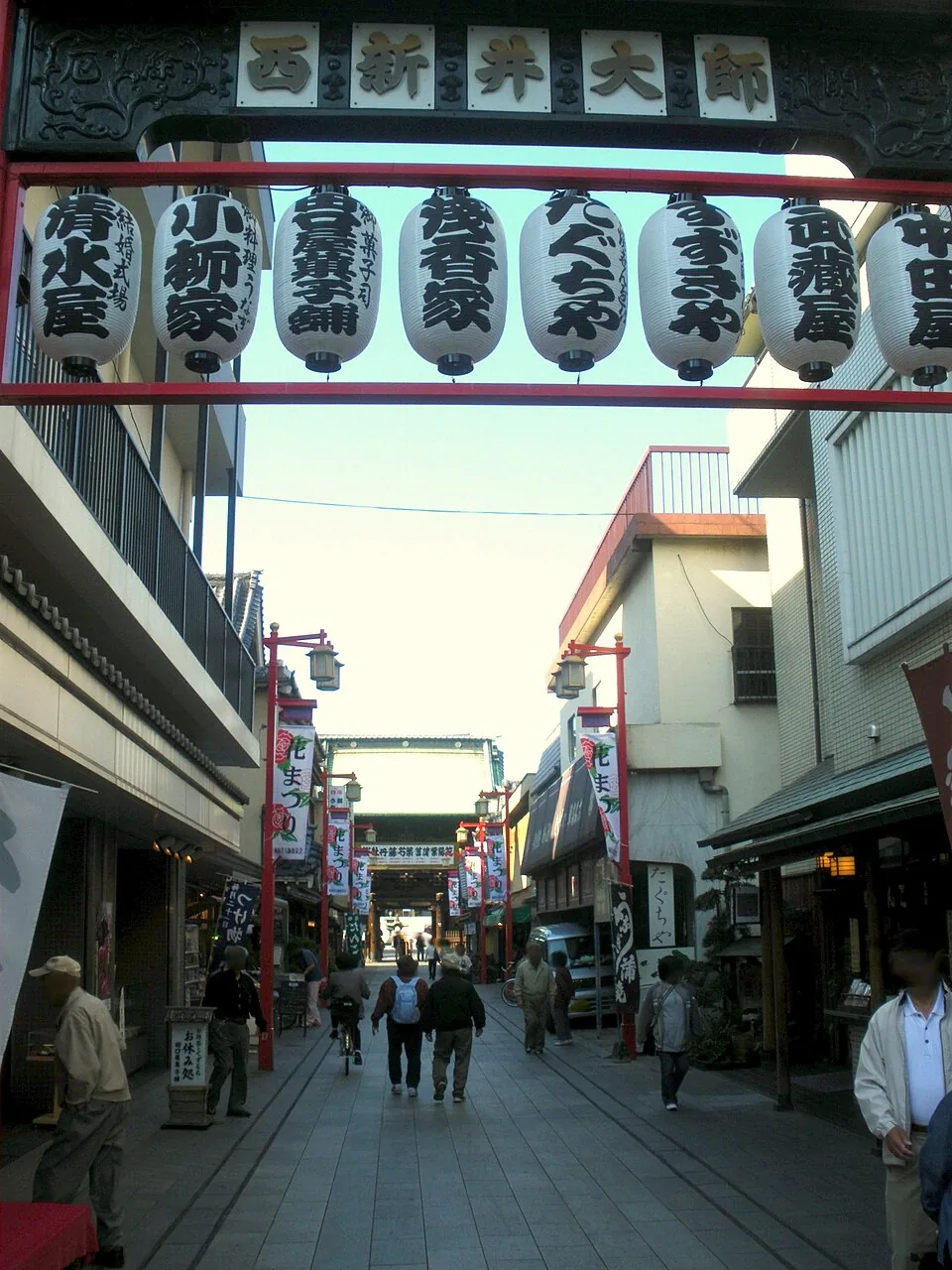
    Daishimae Station does not release you into neon, giant screens or a scramble crossing. You emerge beside a neighborhood of low buildings, small shops and signs pointing toward the temple.

    The walk to Nishiarai Daishi takes only a few minutes. Along the way, look for shops selling kusa dango—chewy rice dumplings colored and lightly flavored with Japanese mugwort. They are served with sweet red-bean paste and have long been associated with temple visits here.

    This is not a carefully manufactured “old Tokyo” district. The shops close when they close. The street may be quiet. A bicycle may be parked exactly where your photograph would have looked perfect.

    That is the point.

    The traditional approach leading to Nishiarai Daishi temple in Adachi, Tokyo
    The approach to Nishiarai Daishi. Photo: Kentin / Wikimedia Commons, CC BY-SA 3.0.

    A temple founded to fight an epidemic

    Nishiarai Daishi’s official history dates its foundation to 826. According to temple tradition, the Buddhist monk Kukai—also known as Kobo Daishi—encountered villagers suffering during an epidemic.

    He carved sacred images and performed prayers for 21 days. Water then appeared from a dry well west of the hall, and the villagers recovered. The “new well” on the west side is said to have given the area its name: Nishi-arai.

    In 2026, the temple marked 1,200 years since its founding. The grounds remain active rather than frozen as a historical exhibit. People come for prayer, memorial services, seasonal flowers and family ceremonies.

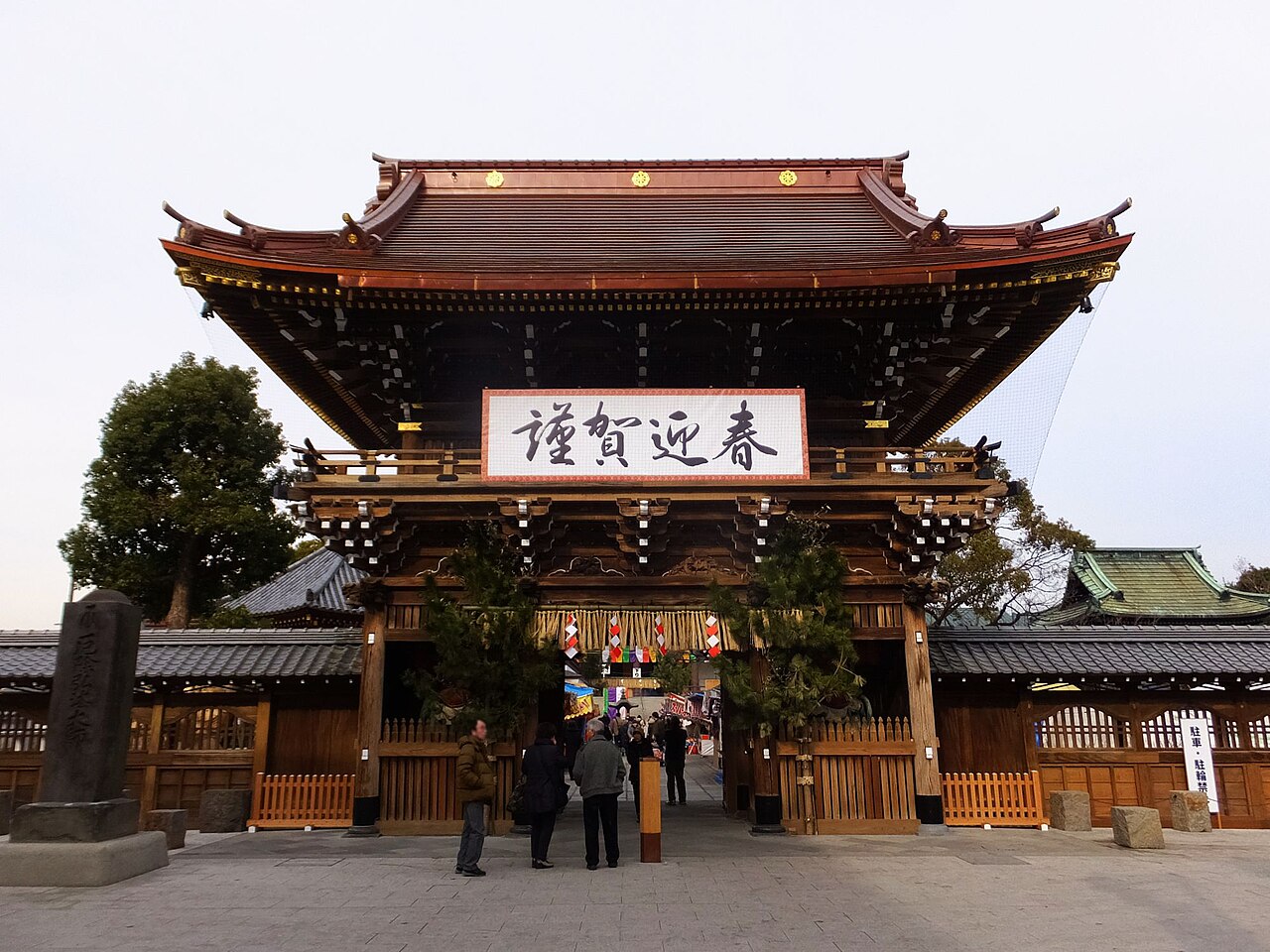
    Enter through the large wooden Sanmon gate, slow down and remember that you are visiting a place of worship.

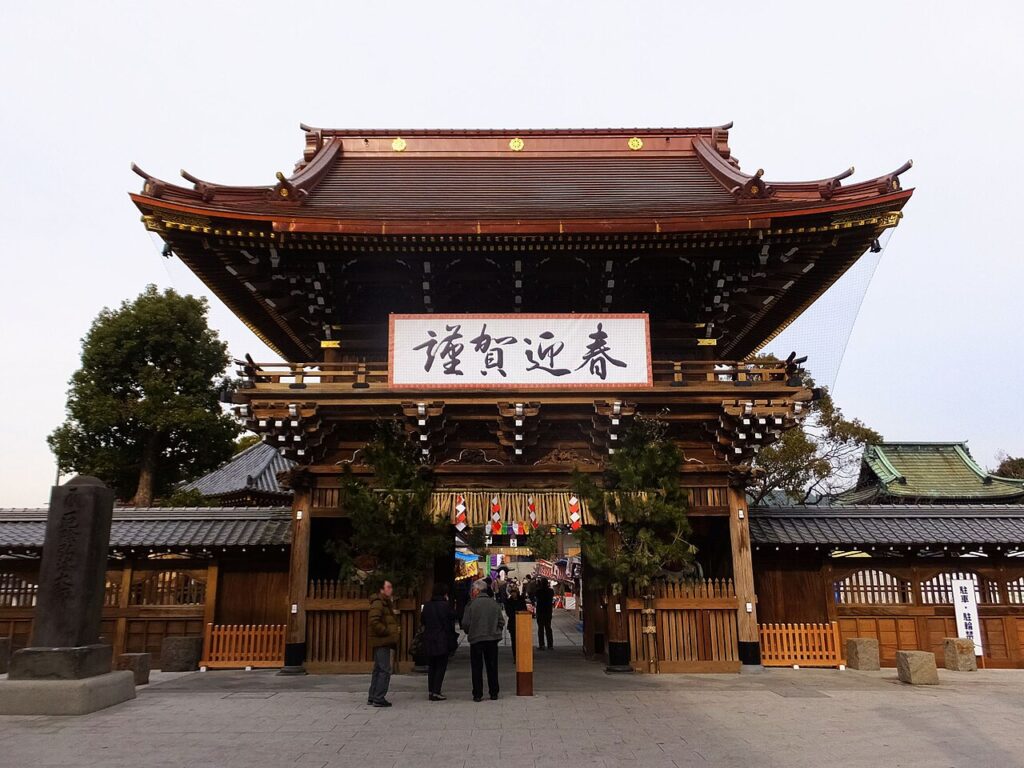
    The Sanmon gate
    The Sanmon gate. Photo: Tak1701d / Wikimedia Commons, CC BY-SA 3.0.

    The statue slowly disappearing under salt

    Just inside the gate is one of the temple’s strangest sights: the Shio Jizo, or Salt Jizo.

    The statue can look less like a carved figure and more like a small geological event. It is covered in salt left by worshippers.

    A local custom says the Jizo may help with warts and other skin troubles. Traditionally, a visitor takes some salt, rubs it on the affected area and, if the prayer is answered, returns twice as much salt.

    This is a living folk practice, not a challenge to see how much seasoning one statue can survive. Observe respectfully, follow posted instructions and do not remove anything unless the temple currently permits it.

    The main hall without the international tour groups

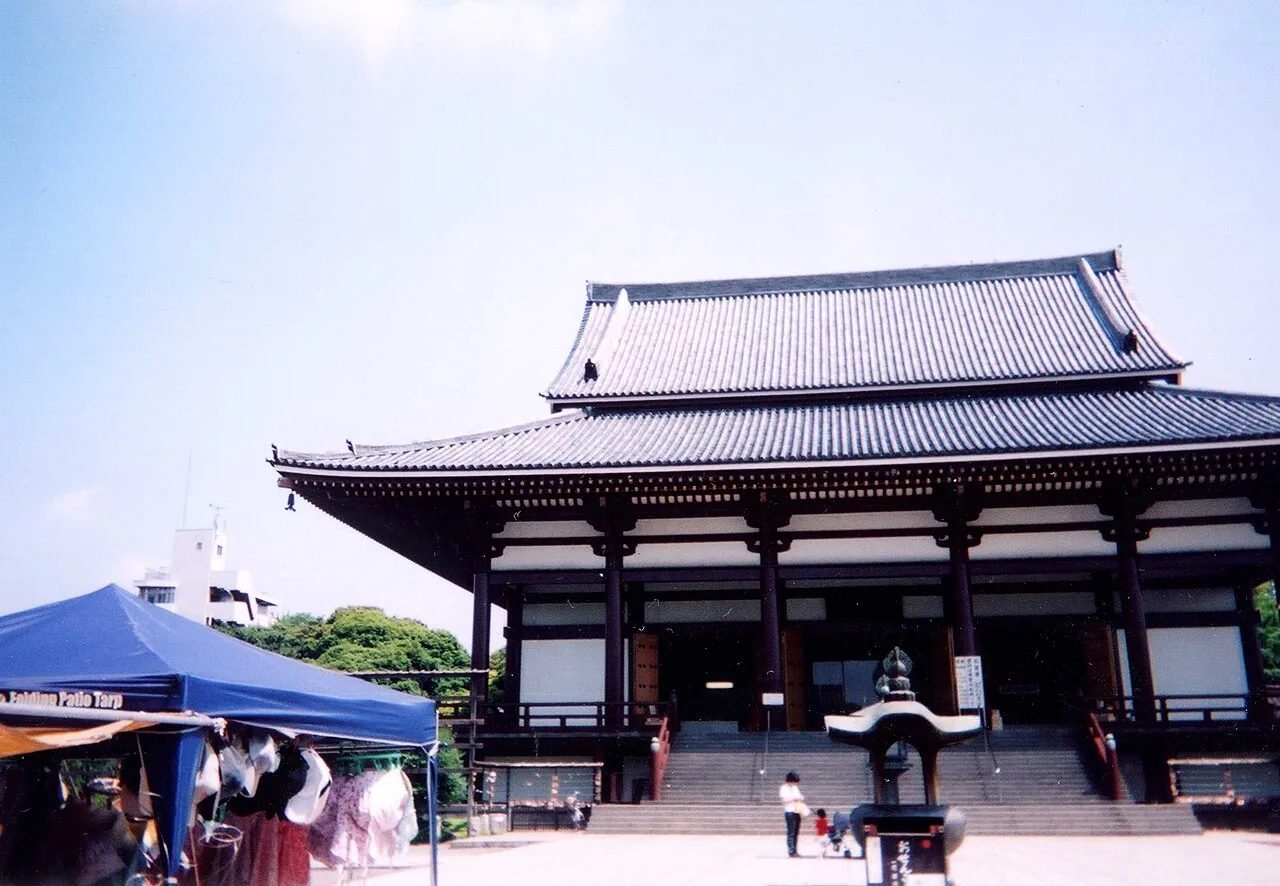
    The main hall is large enough to make you wonder why Nishiarai Daishi appears on so few first-time Tokyo itineraries.

    On ordinary weekdays, the spacious grounds can feel remarkably calm. Incense drifts across the courtyard. Local visitors stop briefly, bow, pray and continue with their day.

    Come during New Year or a major festival and the atmosphere changes completely. The temple is also known for seasonal events, including a summer wind-chime festival and a February ceremony in which used daruma dolls are ritually burned.

    If quiet is the goal, choose a normal weekday and avoid major event dates.

    The main hall and open courtyard of Nishiarai Daishi temple in Tokyo
    The main hall of Nishiarai Daishi. Photo: Kentin / Wikimedia Commons, CC BY-SA 2.1 Japan.

    Eat the local temple snack

    After visiting the grounds, return to the approach and order kusa dango.

    The flavor of mugwort is grassy and slightly herbal. The red-bean paste brings the sweetness. It is not a dessert designed by a global brand’s Tokyo marketing department. It is the kind of food that makes sense because people have eaten it in this place for generations.

    Different shops have different schedules and may sell out, so treat the choice as part of the walk rather than arriving for one guaranteed item.

    A simple half-day route

    1. Nishiarai Station — transfer to the Tobu Daishi Line.
    2. Ride to Daishimae — enjoy all one kilometer of it.
    3. Temple approach — browse the local shops on the way in.
    4. Sanmon gate and Shio Jizo — enter quietly and look for the salt-covered statue.
    5. Main hall and temple grounds — allow 45–60 minutes.
    6. Kusa dango — finish with the neighborhood’s traditional sweet.

    Allow two to three hours. The area works well as a slow morning before continuing to Kita-Senju, or as an afternoon escape from central Tokyo.

    Before you go

    • Location: 1-15-1 Nishi-Arai, Adachi City, Tokyo.
    • Nearest station: Daishimae Station on the Tobu Daishi Line.
    • Temple admission: Entry to the general grounds is usually free; individual prayers or activities may have fees.
    • Best time: A non-festival weekday morning for the quietest experience.
    • Photography: Follow signs and never photograph private ceremonies without permission.
    • Current information: Check the temple and railway websites before visiting, as opening arrangements and transport facilities can change.

    Nishiarai Daishi is not a secret. Local people have known it for twelve centuries.

    It is only a secret to the version of Tokyo that tourists are usually shown.

    The train to Nishiarai leaves from the line that starts at Kita-Senju, and Kita-Senju itself, the old post town with the standing-bar alleys, is the natural other half of the day.


    Researched using current information from the official Nishiarai Daishi website, Tobu Railway, GO TOKYO and Adachi City, checked September 11, 2026. This is a researched neighborhood guide, not a firsthand visit report. Conditions may change.

    The one tour nearby: there is no guided visit to Nishiarai Daishi, and it needs none. If you want a guide for the afternoon, the Tobu line starts at Kita-Senju, where a local roaster runs a three-hour specialty coffee walk (Viator, about ¥13,000, everything included, 5.0 from a handful of reviews); the temple in the morning and the coffee in the afternoon make a whole day out of Adachi. Kita-Senju, the post town →

    If you want to do something in Adachi rather than only look at it: the ward has the only cooking class on the east side — udon in a house behind a temple in Senju, two stops away on the same line. Tokyo cooking classes by area →

    Where this joins the rest of the east side

    The Daishi line starts one stop up from Kita-Senju, the post town with the standing bars, which makes the natural second half of the day. The other temple-and-shrine oddities of the north are Akabane Hachiman and the Tokyo Daibutsu. If Shibamata’s Taishakuten is on your list, it is a direct bus from Kameari.

    Quick answers

    How do I get to Nishiarai Daishi?

    Take the Tobu Skytree line to Nishiarai Station, change to the Tobu Daishi line, a one-kilometer, two-station shuttle, and get off at Daishimae, the terminus. The temple is a few minutes’ walk. Entry to the grounds is free.

    What is the Salt Jizo at Nishiarai Daishi?

    A Jizo statue inside the gate that worshippers cover in salt, a folk remedy for warts and skin troubles: rub salt on the affected spot, and if the prayer is answered return twice as much.

    How old is Nishiarai Daishi?

    Temple tradition dates it to 826, when the monk Kukai (Kobo Daishi) prayed for villagers during an epidemic and a new well appeared, giving the area its name. The temple marked 1,200 years in 2026.

    What should I eat at Nishiarai Daishi?

    Kusa dango, chewy rice dumplings flavored with mugwort and served with sweet bean paste, sold at shops on the approach from Daishimae Station.

    Written by Kizuku. I run the Sunamachi Ginza Sumo Stable, a sumo experience in Koto City, and I write about the east side of Tokyo I live and work in. More about this site →