This article contains affiliate links to booking sites. If you book through them, LOCAL SIDE JAPAN earns a small commission at no extra cost to you. The class recommended first costs ¥2,500 and the most expensive one here costs ten times that. How this site is made →
TOKYO / EXPERIENCES / JAPANESE COOKING CLASSES, BY AREA
Japanese cooking classes in Tokyo run from ¥2,500 to ¥24,000, and the dish in the title is the least useful thing to choose on. Karaage is karaage. What the price actually buys is the kitchen you stand in: a commercial studio near a station, a professional chef’s classroom, or somebody’s actual flat in Nerima or Adachi with their own knives and their own kettle. Those are three different afternoons, and only one of them tells you anything about how people here really eat. This page sorts every general Japanese cooking class in Tokyo by kind and by area, with what each includes. Prices, inclusions, meeting points and review counts were read on the booking sites on September 25, 2026.
Fast facts
- Price: ¥8,000–¥14,500 in a studio, ¥12,000–¥13,000 with a supermarket run, more in a private home
- What you cook: a whole meal — a main, rice, soup and a vegetable side — not a single dish
- The technique that matters: dashi. Ask whether the class makes it from kombu and bonito or opens a packet
- On the east side: three — Iriya (Taito), Nishi-Nippori (Arakawa) and Senju (Adachi)
- Language: English throughout at the studios
- For groups: a rented studio takes a party; somebody’s flat does not
On this page
- You are choosing a kitchen, not a dish
- What dishes are taught in a Tokyo cooking class?
- The cheapest hour worth having
- The east side: Iriya, Nishi-Nippori, Senju
- The studios: Shinanomachi, Yoyogi, Akasaka
- Somebody else’s flat
- Which one to book
- Before you book
- What the reviews say, and what they mean
- Is a Tokyo cooking class worth it?
- Where this joins the rest of the east side
You are choosing a kitchen, not a dish
- The studio, ¥8,000–¥14,500. A rented kitchen near a station with eight induction hobs and matching aprons. Efficient, reliably good, English throughout, and the same room whether you are making bento or kaiseki. Best for a group, for children, and for anyone short on time.
- The teaching studio with a market run, ¥12,000–¥13,000. The same thing with a supermarket walk bolted on the front, and the supermarket walk is consistently the part people remember. Knowing what is in a Japanese shop aisle, and what to do with it, is the only part of any of this that survives the flight home.
- Someone’s home, ¥13,780–¥24,155. A host, a domestic kitchen, four people maximum, their pots. This is where a cooking class becomes a visit. It is also a journey into residential Tokyo — Nerima, Adachi, Setagaya — so add forty minutes each way to the price in your head.
A note on the ¥20,000 classes: two of them make katsu curry and a seven-dish home meal respectively, and katsu curry is a ¥900 lunch anywhere in Tokyo. That is not a criticism — you are buying a private studio, hotel pickup and an instructor’s whole afternoon — but be clear that the price is for the setting and not for the difficulty of the food.
What dishes are taught in a Tokyo cooking class?
Almost none of them teach one dish. They teach the shape of a Japanese meal: a main, rice, a soup and a vegetable side, cooked together so you see how the parts are timed. That is the single most useful thing about them, and it is also why the menu on the listing matters less than people think.
What comes up again and again, across the classes on this page:
- Dashi — stock from kombu and dried bonito. Everything else rests on it, and it is the one thing worth checking before you book: a class that makes it from scratch teaches more than one that opens a packet.
- Miso soup, built on that dashi. Nearly universal.
- A rolled omelette (tamagoyaki) — the technique test, and the dish most people get wrong at home.
- Rice, washed and cooked properly, often with a seasoned dish built on it.
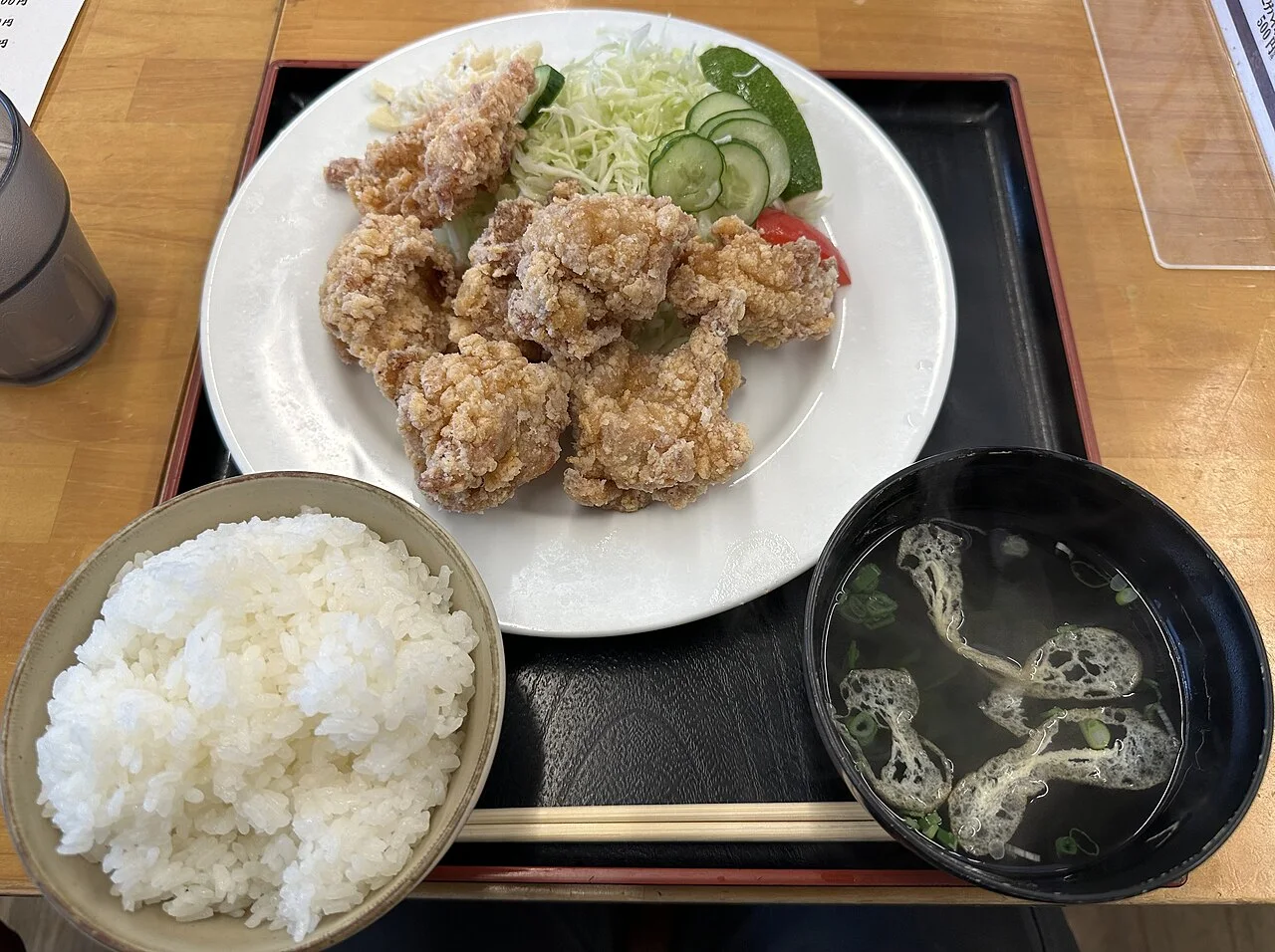
- One recognisable main: karaage, gyoza, teriyaki, tonkatsu or a simmered dish, depending on the kitchen.
- A vegetable side — an ohitashi or a dressed salad, which is where seasonal produce shows up.
- Noodles, where the class is built around them: the Senju class makes udon from flour, by hand.
If you are booking for a group, the dish list is the wrong thing to compare. Compare the kitchen: a rented studio with eight hobs will take your party and run to time; somebody’s flat will not, however good the food is. The seven-dish class in Nishi-Nippori is the most food for the money on this page, and it reaches dashi through the rolled omelette, which is the right way round.
The cheapest hour worth having
The matcha-making class in Asakusa costs about ¥2,500 for an hour and is rated 5.0 from over 1,350 reviews — the best value of anything in this whole experiences series. Two minutes from Kaminarimon at 2-17-9, you learn to whisk matcha properly and eat wagashi with it. It is not a meal and it does not pretend to be; it is the one thing on this page that costs less than lunch and teaches a skill you will use.
If you want the ceremony around the tea rather than the whisking, that is a different product and it is compared in tea ceremony by area. And for sweets, a private mochi and dango class in a home in Sangenjaya is about ¥10,000, often discounted to ¥8,500, 5.0 from about 110 reviews, two hours with tea at the end.
The east side: Iriya, Nishi-Nippori, Senju
Iriya, Taito: the supermarket class
The four-hour washoku class from market to table is the best all-rounder on the east side: about ¥13,000, 5.0 from about 370 reviews, meeting at a FamilyMart in Shitaya by Iriya Station, one stop from Ueno. You shop a local supermarket with the guide first — how to read a Japanese shelf, which soy sauce, which miso — then make sushi rolls, miso soup and tamagoyaki, with sake tasting at the end. Four hours is long, and it is the listing where the length is clearly doing something.
The same kitchen runs an evening izakaya-style class — about ¥12,000, three hours, 5.0 from about 170 — where you cook a multi-course tavern meal: sushi rolls, chicken meatballs with shiso, aubergine with miso. If you have already eaten in an izakaya and wondered how the aubergine is done, this is the answer, and it pairs with the senbero explainer.
Nishi-Nippori, Arakawa: the private studio
YUZU WASHOKU STUDIO at 1-58-4 Nishi-Nippori runs two classes, both about ¥20,000 and both including hotel pickup. The seven-dish home meal class is the one to take: onigiri, miso soup, tonkatsu, teriyaki fish, dashimaki tamago made with real dashi, and a seasonal vegetable side. That is the actual architecture of a Japanese meal rather than one photogenic dish, and dashimaki tamago alone is worth a lesson. The katsu curry class, 5.0 from about 35 reviews, is the crowd-pleaser version. Both are a few minutes from the Yanaka walk, which is the right way to spend the rest of the day.
Senju, Adachi: udon in a house behind a temple
A private home cooking and udon class with Masako is the most unusual booking in this article and the one furthest into the real city: two and a half hours, about ¥24,155, 5.0 from about 35 reviews, at a house by Chouenji temple at 4-27-5 Senju — Kita-Senju, the old post town at the top of the east side. You knead and cut udon by hand and eat everything you make. It is the most expensive class here and the only one where the address itself is the reason to go: nobody runs anything for visitors in Senju, and this is someone’s home in a neighbourhood that has never been on a tour bus. Do the standing bars afterwards.
The studios: Shinanomachi, Yoyogi, Akasaka
Cooking Sun Tokyo in Shinanomachi is the most polished operation in the city: three hours of kaiseki-style cooking built around wagyu beef, Japanese vegetables and traditional seasonings, seven dishes, about ¥11,000, 5.0 from about 200 reviews. For the money this is the most food and the most technique on the page, and it is the class to book if you cook at home already.
A home-style class in a Yoyogi kitchen studio makes three or four everyday dishes in two and a half hours for about ¥14,500, 5.0 from about 20 — the emphasis is on things Japanese households actually cook on a Tuesday. The character bento class in Akasaka — two hours, about ¥8,000 and frequently discounted, 5.0 from about 160 — is the one to book with children: you build a panda out of rice and take the box away. Nobody needs this skill and everybody enjoys it.
Further out, a class in Todoroki pairs an appetiser, main and dessert with a walk through the only river gorge inside the Tokyo city limits: about ¥17,800 for two and a half hours, 5.0 from about 100, main chosen in advance so the ingredients are there. And adjacent but worth knowing: a sake masterclass in Shinjuku, eight-plus varieties with a certified sommelier and food pairings, about ¥10,900, 5.0 from about 390.
Somebody else’s flat
Emi’s private class in Nerima — three hours, about ¥13,780, 5.0 from about 135 reviews — is the best-reviewed home class in Tokyo and the cheapest private one: three home-cooked dishes, tailored to what your group wants and can eat, at your own pace in a domestic kitchen. Nerima is forty minutes from the east side, which is the real cost.
Private home cooking in Yanaka, about ¥18,500 and 5.0 from about 180 reviews, is the closest version to the east side, two hours, ingredients and tools provided, lunch afterwards, meeting at the Yanesen information centre. Between the two, Emi’s is better value and Yanaka’s is in a better neighbourhood; pick on that rather than on the menu, which both will adjust.
Which one to book
| If you want | Book | Area | About |
|---|---|---|---|
| The cheapest thing worth doing | Matcha-making class | Asakusa | ¥2,500 · 1 h · 5.0 (1,350) |
| The best all-rounder, east side | Washoku, market to table | Iriya, Taito | ¥13,000 · 4 h · 5.0 (373) |
| The most technique for the money | Cooking Sun, wagyu and 7 dishes | Shinanomachi | ¥11,000 · 3 h · 5.0 (201) |
| How a Japanese meal is built | Seven-dish home meal, YUZU | Nishi-Nippori, Arakawa | ¥20,000 · pickup included |
| A private home, best value | Emi’s class | Nerima | ¥13,780 · 3 h · 5.0 (134) |
| A private home, best located | Home cooking in Yanaka | Yanaka | ¥18,500 · 2 h · 5.0 (181) |
| Somewhere nobody goes | Udon with Masako | Senju, Adachi | ¥24,155 · 2.5 h · 5.0 (36) |
| Children | Character bento class | Akasaka | ¥8,000 · 2 h · 5.0 (162) |
| An evening, not a lesson | Izakaya-style dinner class | Iriya, Taito | ¥12,000 · 3 h · 5.0 (172) |
| Sweets | Private mochi and dango class | Sangenjaya | ¥10,000 · 2 h · 5.0 (113) |
| To drink, not cook | Sake masterclass, 8+ varieties | Shinjuku | ¥10,900 · 2 h · 5.0 (393) |
| Gluten free | Gluten-free gyoza and karaage | Setagaya | ¥16,000 · rice-flour wrappers |
Before you book
- Check whether the supermarket visit is included. It is the most transferable hour of any cooking class in Tokyo and only a few listings have it.
- Home classes are in residential Tokyo. Nerima, Adachi and Setagaya are thirty to fifty minutes from the sightseeing. Look the meeting point up on a map before you book, not after.
- Dashi is the lesson. If a listing mentions making dashi from kombu and katsuobushi — the YUZU seven-dish class does, through its dashimaki tamago — that is the technique everything else in Japanese home cooking rests on. A class that opens a packet of granules is teaching you less.
- You eat what you cook, and it is lunch or dinner. Three hours and seven dishes is a meal. Do not book a restaurant either side of it.
What the reviews say, and what they mean
This is the safest category on this website. The fifteen listings above carry about 2,967 reviews between them and, across all of them, roughly nine are rated three stars or below. That is about 0.3%, and nine of the fifteen listings have no low review at all. Checked 3 October 2026.
The numbers, listing by listing
| Listing | Reviews | Rated 3★ or below |
|---|---|---|
| Matcha and wagashi, Asakusa | 1,365 | 3 (0.22%) |
| Izakaya cooking, Shinjuku | 397 | 2 (0.5%) |
| Home cooking with a Tokyo family | 375 | 0 |
| Cooking Sun, three hours | 201 | 1 (0.5%) |
| Private class in Yanaka | 181 | 1 (0.6%) |
| Home cooking, second plan | 176 | 1 (0.6%) |
| Washoku class | 167 | 0 |
| Bento class | 136 | 0 |
| Mochi making near Shibuya | 113 | 0 |
| Small-group home class | 98 | 0 |
| Four smaller listings | 14–36 each | 0 |
| One 20-review listing | 20 | 1 (5%) |
There is no repeated complaint to report, because there is no complaint that repeats. Nine low reviews spread across fifteen businesses and three thousand bookings is noise, not a pattern, and it would be dishonest to shape it into one.
Why this category is different
It is worth asking why, because the contrast with the rest of this series is stark. Resold attraction tickets run at 29%. Dinner boats run at 9%. Cooking classes run at 0.3%.
The difference is that almost nothing sits between you and the thing you booked. There is no gate with a QR code, no timed slot you can miss by a minute, no pier on an industrial quay, no resale middleman. Most of these classes are someone’s kitchen or a small studio, with a host who meets you, a group of six or fewer, and a meal at the end that you eat sitting down. The failure modes that wreck other categories do not have anywhere to happen.
The practical consequence: on this page you can book largely on what you want to cook and where you will be that day, rather than on the rating. That is not true anywhere else in this series.
Which of these are made for foreigners
Yes, clearly — and this is the category where that is easiest to defend.
ABC Cooking Studio, the largest cooking school chain in Japan, charges ¥1,870 including tax for a 150-minute trial lesson — a demonstration, hands-on cooking in groups of four, and a tasting (checked 3 October 2026). Its twelve-lesson basics course works out around ¥6,300 a lesson. The classes on this page run roughly ¥10,000 to ¥20,000 for two to three hours.
So the headline gap is five to ten times. But these are genuinely different products, more so than anywhere else in this series:
- ABC teaches in Japanese, in a mall studio, to members who come back every month. It is a hobby subscription, not an afternoon.
- What this page sells is a private or six-person class in a Japanese home, in English, including the food, often with a market or supermarket walk attached — and for a visitor the kitchen and the host are most of the value. There is no Japanese-market equivalent, because Japanese people do not pay to visit a Japanese kitchen.
- The one directly comparable number is the matcha and wagashi hour in Asakusa at about ¥2,500, which is in the same bracket as the ABC trial and has 1,365 reviews with three low ones. If what you want is a cheap, well-run hour rather than a day in someone’s home, that is the honest pick.
The conclusion for this page is unusually simple: you are paying a lot more than a Japanese person would, you are getting something a Japanese person cannot buy, and the delivery is more reliable than anything else on this site. Of all the categories compared here, this is the one where the money is hardest to argue with.
Is a Tokyo cooking class worth it?
Of everything compared on this site, this is the category where the money is hardest to argue with. You pay five to ten times what a Japanese person pays for a cooking lesson — and you are buying something a Japanese person cannot buy: two or three hours in someone’s kitchen, in English, with the food included and often a market walk attached. There is no domestic equivalent, because Japanese people do not pay to visit a Japanese home.
It is also the safest booking in Tokyo. Nine low reviews across 2,967, and nine of the fifteen listings have none at all. Nothing sits between you and the thing you booked: no gate, no timed slot, no pier, no reseller.
When it is not worth it: if what you want is to understand matcha or a single dish rather than to spend an afternoon with a host, the ¥2,500 matcha and wagashi hour in Asakusa teaches you the same amount for a fifth of the money. Book the home kitchen for the kitchen, not for the recipe.
Where this joins the rest of the east side
The single-dish classes have their own comparisons: ramen and soba and sushi. To eat rather than cook, see food tours by area and, without a guide, Sunamachi Ginza and senbero. The knives are on Kappabashi, fifteen minutes from the Iriya class. The wagashi and mochi classes sit in the quiet crafts comparison along with calligraphy and ikebana. The other experiences compared by area are tea ceremony, kintsugi, kimono rental and samurai and ninja. Everything bookable is on the Experiences page, and the area is in the east side guide.
Quick answers
What is the best Japanese cooking class in Tokyo?
For value, the ¥2,500 matcha-making class in Asakusa, 5.0 from over 1,350 reviews. For a full lesson, the four-hour washoku class from market to table near Iriya, about ¥13,000, which includes a supermarket walk. For the most technique, Cooking Sun in Shinanomachi, seven kaiseki-style dishes around wagyu for about ¥11,000. For a private home, Emi’s class in Nerima, about ¥13,780.
How much does a cooking class in Tokyo cost?
About ¥2,500 for a one-hour matcha class, ¥8,000 to ¥14,500 for a two to three hour class in a commercial kitchen studio, ¥12,000 to ¥13,000 if a supermarket visit is included, and ¥13,780 to ¥24,155 for a private class in someone’s home. The dish being taught barely affects the price; the kind of kitchen does.
Are Japanese cooking classes in Tokyo in English?
Yes, essentially all of the ones sold to visitors are taught in English, including the home-based private classes. The listings compared here all state English instruction, and several send a digital recipe afterwards so the measurements come home with you.
Which Tokyo cooking class includes a supermarket visit?
The four-hour washoku class from market to table near Iriya Station in Taito, about ¥13,000, and YUCa’s ramen and gyoza class in Nishiogu, Arakawa, about ¥18,500. The supermarket hour — reading a Japanese shelf, choosing soy sauce and miso — is the part most people say they use again at home.
Is a private cooking class in a Japanese home worth it?
If you want a visit rather than a lesson, yes. Four people maximum, a domestic kitchen and a host who adjusts the menu to you. The trade-off is location: the home classes are in Nerima, Adachi and Setagaya, thirty to fifty minutes from central Tokyo, so budget the travel as part of the cost.
What do you actually learn in a Japanese cooking class?
Most teach the shape of a meal rather than one dish: a main, rice, soup and a vegetable side. The technique that matters most is dashi — stock from kombu and dried bonito — because everything else rests on it. A class that makes dashi from scratch, as the seven-dish class in Nishi-Nippori does through its rolled omelette, teaches more than one that opens a packet.
Is there a cooking class on the east side of Tokyo?
Yes, three good ones. The four-hour washoku class near Iriya in Taito, about ¥13,000. YUZU Washoku Studio in Nishi-Nippori, Arakawa, about ¥20,000 with hotel pickup, teaching a seven-dish home meal. And a private udon class in a house by a temple in Senju, Adachi, about ¥24,155 — the only visitor experience of any kind in that neighbourhood.
LOCAL SIDE JAPAN read the price, inclusions, duration, meeting point and review record of every listing above on Viator on September 25, 2026. Prices are approximate, move with the exchange rate, and several use group pricing or were on temporary offer. This is a researched comparison of the listings and their reviews, not a firsthand report on each kitchen, and the article says so here rather than pretending otherwise. Nothing was provided free by an operator.