This article contains affiliate links to booking sites. If you book through them, LOCAL SIDE JAPAN earns a small commission at no extra cost to you. The workshop recommended first costs ¥5,300 and the most expensive one here costs three times that. How this site is made →
TOKYO / EXPERIENCES / CALLIGRAPHY, IKEBANA AND SWEETS, BY AREA
Calligraphy, flower arranging, wagashi, papermaking, pottery: the quiet hour. They all run sixty to ninety minutes and most cost between ¥4,000 and ¥16,500, which makes the price nearly useless for choosing between them. The question that actually sorts them is the one no listing answers: what do you walk out holding? Calligraphy gives you a sheet of paper. Papermaking gives you paper you made. Pottery gives you nothing that day — the firing takes weeks and shipping is extra. Ikebana gives you a photograph, because the flowers stay behind. None of that is a reason not to book; it is a reason to know first. This page sorts every quiet craft in Tokyo by that question and by area. Prices, inclusions, meeting points and review counts were read on the booking sites on September 25, 2026.
On this page
What you walk out holding
- A finished object, same day: calligraphy (a sheet, sometimes mounted), washi paper, a coin ring, an origami lamp, a mizuhiki belt.
- Something you eat there: wagashi, mochi, nerikiri. Most include matcha with it.
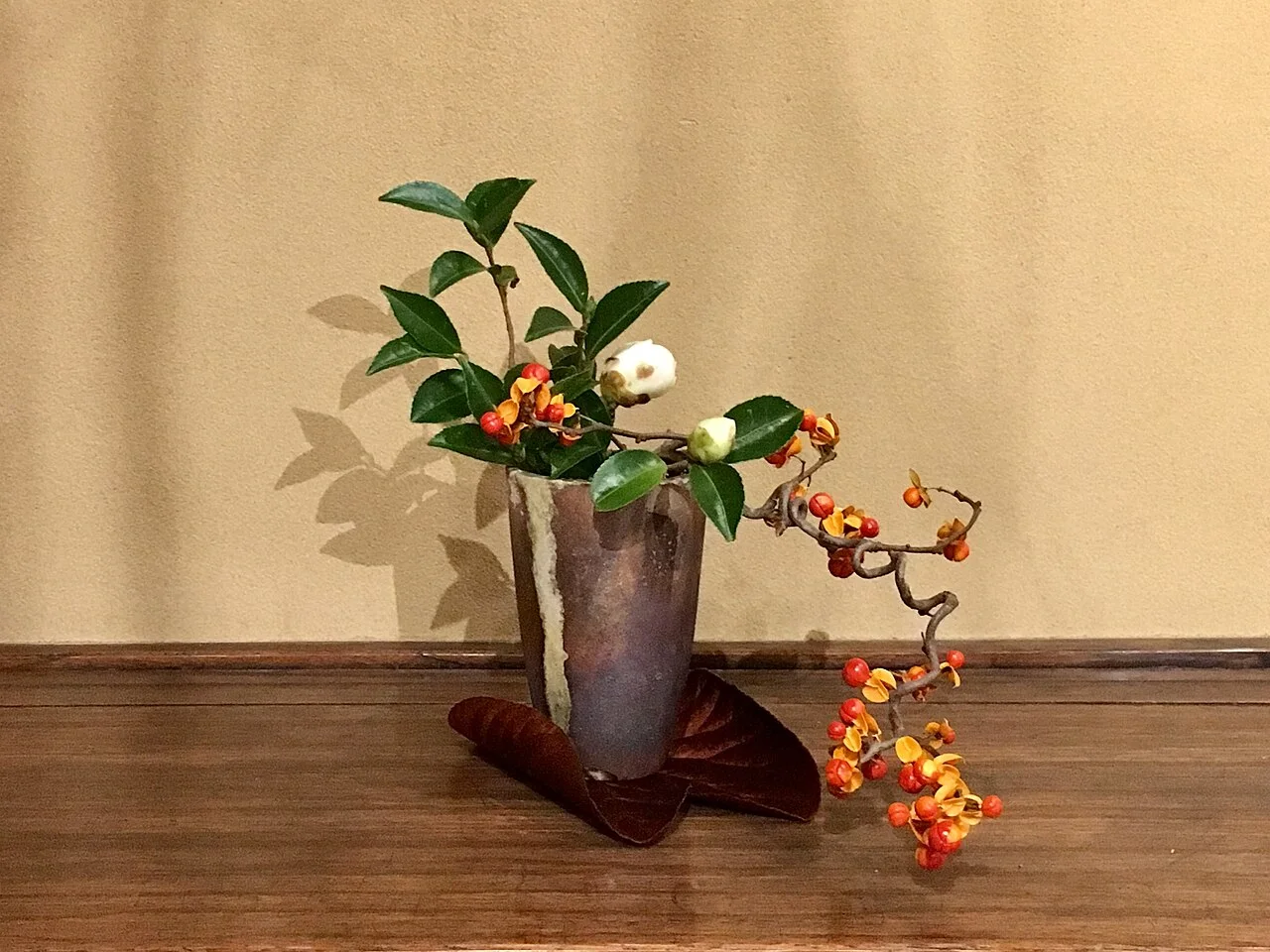
- Nothing you can carry: ikebana. The arrangement stays in the studio’s vase. One listing near Shinjuku gets around this with a paper vase you take away, and one in Shirokanedai gives a beginner’s certificate; the rest give you photographs, which is fine as long as you expected it.
- Something posted to you later: pottery. The ¥4,047 class in Shiba includes the firing fee, but EMS shipping is an optional extra and the piece follows you home weeks afterwards. Ask the cost before you throw a large bowl.
The second question worth asking: is the person teaching you a practitioner or a host? Some of these are run by clubs and studios where people train every week, some by tourist lounges that run six activities a day. Both can be good hours. Only one of them will correct your grip.
Calligraphy: the ¥5,300 one, and the room it happens in
The shodo workshop at Tokyo Iriya Shodo Club is the cheapest taught calligraphy on the booking sites: about ¥5,300 for ninety minutes, 5.0 from 73 reviews, in Iriya in Taito, one stop from Ueno and fifteen minutes’ walk from Senso-ji. Brush grip, ink, stroke order, and the correct order matters more than the shape. Reviewers are unanimous about the teaching. Be clear about the setting before you book: the class is held on the second floor of Hostel Bedgasm at 2-29-2 Iriya, in shared space, and two reviewers describe hostel residents cooking and passing through during the lesson. There are stairs and the listing is marked not wheelchair accessible. The reviews are broken down below.
The alternatives are all decent and all cost more. The Asakusa workshop at the Tokyo Tourist Lounge, five floors above Kaminarimon, is about ¥8,100, 5.0 from about 180 reviews — the best-reviewed in the city and the easiest to slot into a Senso-ji morning. A private hour in Shibuya is about ¥5,000, 5.0 from about 65, and grinds the ink on a real inkstone rather than pouring it from a bottle, which is a small thing that turns out to matter. A private class by Tsukiji Hongwanji, about ¥7,800, pairs neatly with a morning at the market (see food tours).
And the one with an actual souvenir: calligraphy plus a printed T-shirt in Nishi-Asakusa, about ¥8,800, 5.0 from about 65 — you write the characters and wear them home. Slightly daft, genuinely popular, and the only listing here where the object is not made of paper.
Ikebana, and the thing about the flowers
The private ikebana workshop in Yanaka is the best version of this in Tokyo, and the reason is the shopping: you choose your own flowers at a Yanaka flower shop before the lesson, then arrange them with a master. About ¥16,500 for ninety minutes, 5.0 from about 70 reviews, meeting at the Yanesen information centre. Note that the flowers are not in the price — the listing asks you to bring ¥1,000 to ¥2,000 in cash for them. Budget ¥18,000 and do the Yanaka walk afterwards; it is the one part of Tokyo where buying flowers on a shopping street is still a normal thing to do.
Cheaper and further out: a two-hour class at Mitsugon-in temple in Ota City, about ¥12,500, 5.0 from about 40 reviews, flowers and tools provided, in an actual temple. The Nakano “wellness” session, about ¥15,000 (it was ¥11,000 when this page was first written in September 2026), 5.0 from about 25, is ninety minutes in a tatami room and is the only one that solves the souvenir problem: a paper mini vase you take away with the arrangement in it. An ikebana hour at a shrine in Shirokanedai is about ¥9,000, often discounted to ¥7,200, new and unreviewed, and includes a beginner’s certificate.
Wagashi and mochi
Two different sweets. Nerikiri is the sculpted, seasonal, tea-ceremony kind — white bean paste coloured and shaped into a camellia or a maple leaf, and the reason wagashi classes photograph well. Mochi is pounded rice, chewier and more everyday. Most classes do one or both and finish with matcha.
The Ginza wagashi class is the cheap way in: fifty minutes, about ¥5,400, ingredients and matcha included, two minutes from Ginza Station. It is new with few reviews. Mochi making in a chef’s own home in Meguro, about ¥13,000 for two hours, 5.0 from about 80 reviews, is the best-reviewed sweets class and a home rather than a studio. A private mochi and nerikiri class in Ota, about ¥12,500 and 5.0 from about 35, makes three kinds of mochi in someone’s house fifteen minutes from the centre. The Komaba wagashi class at about ¥15,000 is the expensive one and includes an English recipe and hotel pickup, but it is new and unreviewed, which at that price is worth weighing.
Cheaper again, and covered in the cooking classes comparison: the ¥2,500 matcha-making hour in Asakusa comes with wagashi, and a private mochi and dango class in Sangenjaya runs about ¥10,000.
Paper, clay and metal
Washi papermaking, Asakusa. An hour at “watashino” at 1-32-11 Asakusa, about ¥5,900, 4.9 from 205 reviews. You pull sheets of paper out of a vat by hand and take them with you. Per yen and per hour this is the most object-for-money on the page, and it is five minutes from Senso-ji. Not wheelchair accessible.
Origami, two ways, both in Taito. Taro’s Origami Studio in Asakusa is about ¥4,500 for 45 minutes, 4.8 from 49, maximum six people — bring socks, the studio asks for them. It is self-guided: you are given paper and a tablet to follow, and the operator states plainly in its review replies that the session “isn’t taught by a staff member”. Taught private lessons exist but are arranged separately by email. Worth knowing before you book it for a child who wants to be shown. At the other end, Washi Lab Tokyo near Okachimachi is a two-and-a-half-hour private workshop making a folded washi lampshade and a mizuhiki knot belt, about ¥16,500 — the most ambitious object in this article and the only one you will still be using in five years.
Pottery, Shiba. A one-hour trial class at about ¥4,047, 5.0 from about 60 reviews, wheelchair accessible, firing fee included. Remember that the piece is fired afterwards and EMS shipping is charged separately, so this is a class you finish by email.
Rings from old coins, Asakusa. The coin ring workshop — about ¥2,500 for an hour, 5.0 from over 930 reviews — hammers a Japanese coin into a ring you wear out of the door. It is the cheapest craft in Tokyo and among the most reviewed of anything in this series. Rarer coins, a polished finish and special shapes are all charged extra, so the real price is ¥3,000–¥5,000 once you are in the room.
Which one to book
| If you want | Book | Area | You leave with |
|---|---|---|---|
| Calligraphy, taught properly | Iriya Shodo Club | Iriya, Taito | ¥5,300 · your sheet · 5.0 (73) |
| Calligraphy, easiest to slot in | Asakusa calligraphy workshop | Kaminarimon | ¥8,106 · your sheet · 5.0 (179) · no review under 4★ |
| Ikebana, the best version | Private workshop in Yanaka | Yanaka | ¥16,500 + ¥1–2,000 flowers · photos |
| Ikebana you can take away | Nakano wellness session | Nakano | ¥15,000 · paper vase · 5.0 (27) |
| Most object per yen | Washi papermaking at watashino | Asakusa | ¥5,900 · paper you made · 4.9 (205) |
| The cheapest craft in Tokyo | Vintage coin ring workshop | Asakusa | ¥2,500 + coin extras · 5.0 (959) |
| Sweets, best reviewed | Mochi making in a chef’s home | Meguro | ¥13,000 · you eat it · 5.0 (79) |
| Sweets, cheapest | Wagashi class in Ginza | Ginza | ¥5,400 · 50 min · with matcha |
| Something to use for years | Origami lamp and mizuhiki belt | Taito | ¥16,500 · a lampshade |
| Children | Taro’s Origami Studio | Asakusa | ¥4,500 · 45 min · self-guided |
| Pottery | Trial class in Shiba | Minato | ¥4,047 · posted later, EMS extra |
Three things to check
- The extras. Flowers at the Yanaka ikebana, shipping at the pottery, better coins and polishing at the ring workshop. All three are stated in the listings and all three are missed.
- Whether the ink is ground. A calligraphy class that grinds ink on a suzuri is teaching the whole thing; one that pours it from a bottle is teaching half.
- Group size. These are hours where being one of four rather than one of twelve changes everything. The private listings say so; the lounges do not.
What the reviews say, and what they mean
This page compares eighteen listings. Between them they carry about 1,690 reviews on Viator, and the reviews are not spread evenly: three listings hold 1,343 of them, eight have fewer than forty, and one has none at all. On 29 September 2026 I read every review rated three stars or below across all eighteen — ten reviews — plus most of the four-star reviews on the two with the deepest records, and the operators’ public replies. Two of the things I found contradict what this page said before today. Both are corrected above, and both are set out below.
How much the ratings are actually worth
| Listing | Reviews | Rated 3★ or below |
|---|---|---|
| Coin ring, Asakusa | 959 | 1 (0.1%) |
| Washi at watashino | 205 | 1 (0.5%) |
| Calligraphy at the Asakusa lounge | 179 | 0 |
| Mochi in a chef’s home, Meguro | 79 | 0 |
| Calligraphy at Iriya | 73 | 2 (2.7%) |
| Ikebana in Yanaka | 71 | 0 |
| Pottery in Shiba | 61 | 3 (4.9%) |
| Origami at Taro’s | 49 | 3 (6.1%) |
| The other ten listings | 0–40 each | — |
Almost everything here shows 5.0, which is worth less than it looks. Two of the listings in this article have two reviews each and one has none. They may be excellent — nobody knows yet, including us. A 5.0 from two people is not a rating, it is two people.
The complaint that repeats: the coin is the extra
The coin ring workshop has the cleanest record of anything this site has looked at — one review below four stars in 959. But of the twenty-three four-star reviews, eight say the same thing: ¥2,500 buys the workshop and a coin from one of a hundred-odd countries, and the Japanese coins cost more. “The free ones are all foreign coins,” as the single one-star review puts it (a reviewer on Viator, September 2026). One four-star reviewer reports that ring prices changed partway through the session (June 2026); another that the extra fees for a Japanese coin and for polishing were not visible beforehand (May 2026).
Eight out of twenty-three is a pattern, and it means the honest figure for what most people actually want is ¥3,000–¥5,000, not ¥2,500. Whether that is unreasonable is a separate question, and the answer is below.
Iriya: everyone praises the teacher, nobody likes the room
This is a correction. Until today this page recommended the Iriya workshop as the one that is “in a club, not a lounge”, taught in a room where people practise on the other days of the week. Its two sub-four-star reviews say otherwise, and they are right. “The class is in the kitchen of an hostel,” one wrote (a reviewer on Viator, October 2025), with residents eating and coming through; the other (May 2024) describes being constantly interrupted by people who live in the space, cooking and doing laundry. Both praise the teacher without reservation.
Viator’s own meeting-point text confirms the setting: the address is 2-29-2 Iriya, “the second floor of Hostel Bedgasm”. There are stairs, and the listing is marked not wheelchair accessible.
Seventy-one of seventy-three reviewers still gave it five stars and nobody criticised the instruction. It remains the cheapest taught calligraphy on the booking sites and the teaching is the reason to go. But book it for the teacher, not the room — and not at all if stairs are a problem. The section above has been rewritten to say so.
Taro’s Origami: there is no teacher
The second correction. All three sub-four-star reviews say the studio gives you paper and a tablet and leaves you to it, and the operator confirms it in its public replies in as many words: the session “isn’t taught by a staff member”, and is “a self-guided, tablet software origami activity”. Taught private lessons exist but are arranged separately by email.
That is a fair thing to sell for ¥4,500, and reviewers who knew what they were buying enjoyed it. It is not what our “Children” recommendation implied. This article opens by asking whether the person teaching you is a practitioner or a host; here there is a third answer, and the listing above now says so.
Washi: an hour with a wait in the middle of it
One review below four stars in 205, and it is about time: thirty-five minutes, fifteen of them spent waiting for the paper to dry (May 2025). The operator replied that a drying period is unavoidable in handmade washi and that its handling of that time needed improving. Two of the seven four-star reviews separately say the class felt short for the price, and one that adding a colour design costs a small extra.
It is listed as one hour. Expect a real interval inside it.
Where no complaint repeats
Ikebana in Yanaka: seventy-one reviews, every one of them five stars. Mochi in a chef’s home in Meguro: seventy-nine, three fours, nothing lower. The calligraphy workshop at the Asakusa lounge: 179 reviews, one four-star and nothing at all below it — the best record of any listing this site has examined. Pottery in Shiba has three low reviews and they say three unrelated things. There is no pattern to report in any of these, and we are not going to invent one.
Which of these are made for foreigners
Ikebana is the clearest case, because the school publishes both prices itself. The Ichiyo School of Ikebana, whose headquarters is in Nakano, charges ¥3,500 for a one-hour trial lesson with the flowers included — ¥2,500 on a Tuesday afternoon — and ¥8,000 for the same hour billed as a tourist experience, with an English-speaking instructor at no extra charge (一葉式いけ花, checked 29 September 2026). The listings on this page start at ¥15,000, and the one recommended above is ¥16,500 plus the ¥1,000–¥2,000 you hand over for the stems.
The gap buys a private lesson rather than a class, a booking you can make in English from abroad, and in the Yanaka case the flower-shopping, which is genuinely the best part of it. That is a real product. But if what you want is to arrange flowers once in Tokyo under a teacher, a Japanese school will do it for ¥3,500 — and even the same school’s own tourist rate is less than half the Viator price.
Calligraphy is a smaller gap and an easier one to defend. A calligraphy school in Shinjuku publishes a ¥2,000 trial lesson, and ¥13,750 a month for four seventy-five-minute lessons with all materials — about ¥3,400 a lesson (宮崎書道教室, checked 29 September 2026). The Asakusa lounge is ¥8,106 for ninety minutes. But the ¥2,000 is a recruiting price: the school expects a ¥5,000 enrolment fee and then months of attendance, which is no use on a ten-day trip, and the lesson is conducted in Japanese. What the extra buys is English and a one-off.
The coin ring runs the other way entirely. A Japanese-language coin ring workshop a few streets away in Asakusa, sold to Japanese customers, charges ¥6,500 for a ring and ¥7,500 for a ring plus a charm, sixty to ninety minutes (RAGTIME COIN FACTORY, checked 29 September 2026). The Viator listing is ¥2,500 before extras and ¥3,000–¥5,000 after them. Even at the top of that range it undercuts the Japanese-market price.
Which puts the coin complaint in its proper light. The ¥6,500 is roughly what this craft costs to deliver; the ¥2,500 is an entry price with the coin unbundled from it. That is a pricing decision people are entitled to dislike, and eight reviewers did — but it is not a tourist markup. It is the reverse of one.
And the buildings. Three of the listings above sit on an upper floor of a multi-tenant building with nothing on the street to tell you: the coin ring on the eighth floor, the lounge calligraphy on the fifth, the washi studio on the second. This is ordinary in Tokyo and it is the most common way visitors lose fifteen minutes, because Japanese addresses number blocks rather than streets and the tenant board is usually inside the lobby rather than outside it. Take the building name and the floor number from your confirmation email before you set off, and search the building name in Google Maps rather than the address.
Where this joins the rest of the east side
Four of the best of these — calligraphy in Iriya, papermaking and origami and coin rings in Asakusa — are inside a twenty-minute walk of each other, and the seven hours ranked head to head are in Asakusa Workshops: Which Hour Is Worth ¥7,000. The crafts with their own comparisons are kintsugi and Edo Kiriko cut glass in Sumida, and the knives are on Kappabashi. To cook instead, see Japanese cooking classes, ramen and sushi; to sit still, tea ceremony. Everything bookable is on the Experiences page, and the area is in the east side guide.
Quick answers
Where can you try Japanese calligraphy in Tokyo?
The cheapest and most serious is Tokyo Iriya Shodo Club in Taito, about ¥5,300 for 90 minutes, 5.0 from about 70 reviews — a calligraphy club rather than a tourist attraction, one stop from Ueno. The best-reviewed is the Asakusa workshop at the Tokyo Tourist Lounge above Kaminarimon, about ¥8,100, 5.0 from about 180.
How much does a calligraphy or ikebana class in Tokyo cost?
Calligraphy runs ¥5,000 to ¥8,800 for 60 to 90 minutes. Ikebana runs ¥9,000 to ¥16,500 for 90 minutes, and at the Yanaka workshop the flowers are extra — the listing asks you to bring ¥1,000 to ¥2,000 in cash. Wagashi and mochi classes are ¥5,400 to ¥15,000, papermaking about ¥5,900, pottery about ¥4,047 and a coin ring about ¥2,500.
Do you keep what you make in an ikebana class?
Usually not. The arrangement stays in the studio’s vase and you leave with photographs. Two exceptions: the Nakano session includes a paper mini vase you take away with the arrangement, and the Shirokanedai shrine class gives a beginner’s certificate. Everything else on this page — calligraphy, washi paper, a coin ring, an origami lamp — you carry out.
Can you take your pottery home the same day in Tokyo?
No. The one-hour trial class in Shiba includes the firing fee, but the piece has to be fired after you leave and EMS shipping is charged as an optional extra, so it reaches you weeks later. Ask the shipping cost before you make anything large.
What is the cheapest craft workshop in Tokyo?
The vintage coin ring workshop in Asakusa, about ¥2,500 for an hour and rated 5.0 from over 930 reviews, where a Japanese coin is hammered into a ring you wear out of the shop. Rarer coins, polishing and special shapes cost extra, so budget ¥3,000 to ¥5,000. Washi papermaking nearby at ¥5,900 is the best value if you want something handmade rather than struck.
What is the difference between wagashi and mochi?
Nerikiri wagashi are sculpted seasonal sweets made from white bean paste, shaped into flowers or leaves and served with matcha at tea ceremonies. Mochi is pounded glutinous rice, chewier and eaten year round, often filled with red bean. Most Tokyo classes teach one or both and finish with a bowl of matcha.
Are there craft workshops on the east side of Tokyo?
Most of the good ones are. Calligraphy at the Iriya shodo club in Taito, washi papermaking and origami and coin rings in Asakusa, ikebana in Yanaka, an origami lamp workshop near Okachimachi, plus kintsugi and Edo Kiriko cut glass which have their own guides. Four of them are within a twenty-minute walk of each other.
LOCAL SIDE JAPAN read the price, inclusions, exclusions, duration, meeting point and review record of every listing above on Viator on September 25, 2026. Prices are approximate, move with the exchange rate, and several use group pricing or were on temporary offer. This is a researched comparison of the listings and their reviews, not a firsthand report on each studio, and the article says so here rather than pretending otherwise. Nothing was provided free by an operator.