Kita & Itabashi

Kita and Itabashi are the northern arc of the east side, strung along the old Nakasendo highway and the Keihin-Tohoku line. Nothing here is on a first-timer’s list, which is the point: Oji has a fox shrine, a river park under the station and a free two-minute monorail up a shogun’s cherry hill; Akabane has a Shinto shrine with a bullet train running beneath it; Itabashi Station has the grave of the Shinsengumi’s commander beside the ticket gates; and out in Akatsuka a 13-meter bronze Buddha sits in a temple garden with a collection of Edo-period stone demons. All free, all reachable in twenty minutes from Ueno or Ikebukuro.

  • A Bullet Train Runs Beneath This Tokyo Shrine

    A Bullet Train Runs Beneath This Tokyo Shrine

    This article may contain affiliate links to booking sites. If you book through them, LOCAL SIDE JAPAN earns a small commission at no extra cost to you. How this site is made →

    LOCAL TOKYO · AKABANE, KITA CITY

    Akabane is famous for cheap drinks and crowded railway platforms. But climb the hill behind the station and Tokyo performs a much stranger trick: a bullet train disappears beneath the grounds of an old Shinto shrine. At Akabane Hachiman, sacred history and high-speed infrastructure occupy the same slope—without either one feeling like a museum exhibit.
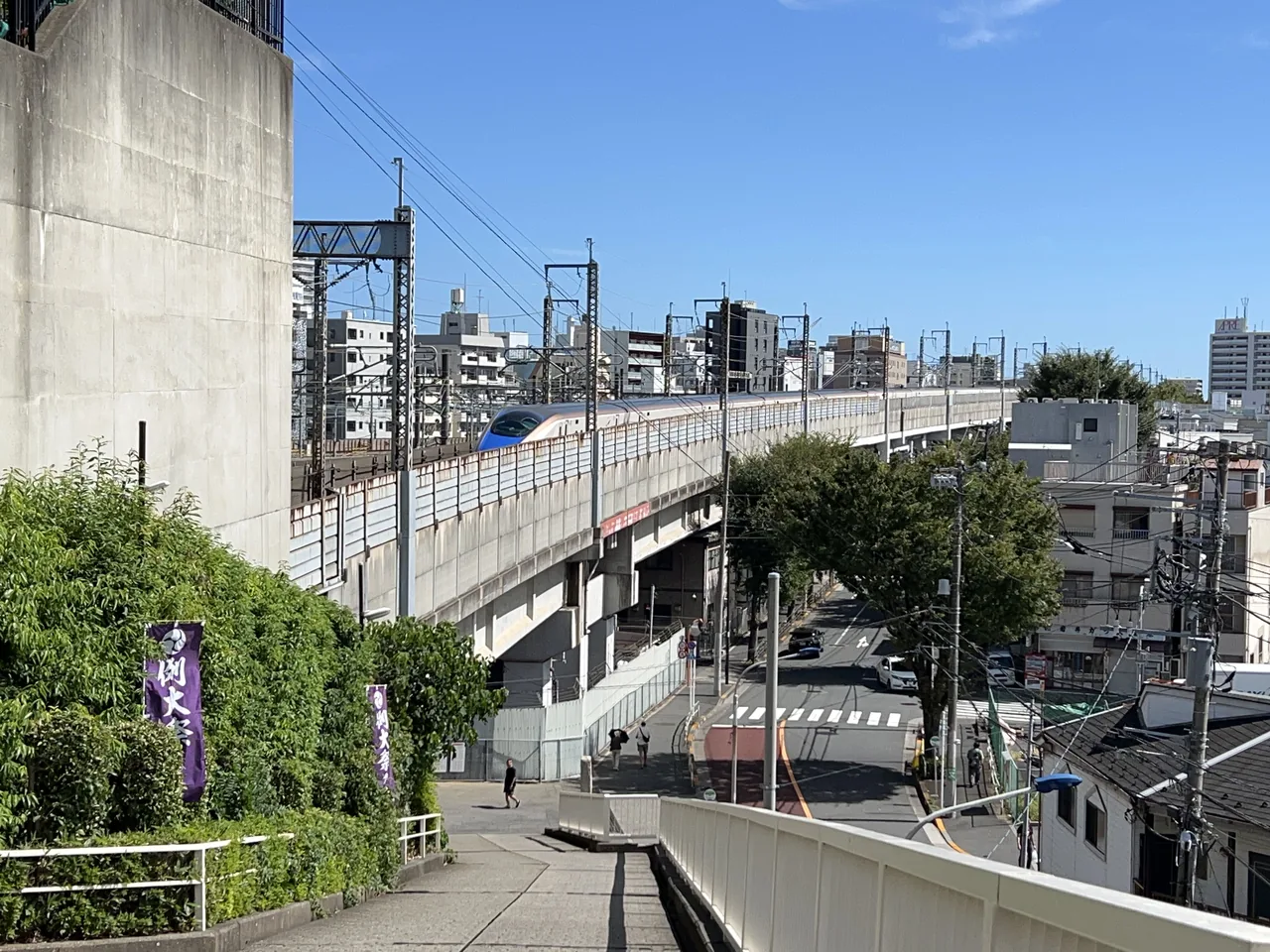
    An E7 Series Shinkansen entering Akabanedai Tunnel below Akabane Hachiman Shrine
    An E7 Series Shinkansen enters Akabanedai Tunnel beneath the shrine grounds. Photo: Asanagi / Wikimedia Commons / CC0.

    Fast facts

    • Admission: Free for normal worship visits
    • Address: 4-1-6 Akabanedai, Kita City, Tokyo
    • Nearest: JR Akabane Station, about 10 minutes on foot
    • Terrain: The shrine stands on a hill; the approach includes slopes and stone steps
    • Time needed: About 30 to 45 minutes

    The train vanishes into a sacred hill

    From the southern edge of Akabane Hachiman Shrine, trains appear between apartment blocks and railway equipment, then slip into a dark portal directly below the precinct. One moment an E7 or E5 Shinkansen is visible in full daylight; seconds later, it is beneath your feet.

    The railway line is not merely close to the shrine. The Tōhoku Shinkansen and Saikyō Line pass through Akabanedai Tunnel under part of its grounds. Trains heading toward the Tōhoku, Jōetsu and Hokuriku networks use the high-speed tracks, while ordinary commuter services continue beside them. Other major lines run through the corridor below the hill, making this one of northern Tokyo’s busiest transport gateways.

    Yet the atmosphere above is remarkably calm. Bells sound, worshippers pause before the hall and trees soften the mechanical noise. The attraction is not simply “a shrine where you can photograph trains.” It is the physical layering of Tokyo: belief above, engineering below and daily life moving through both.
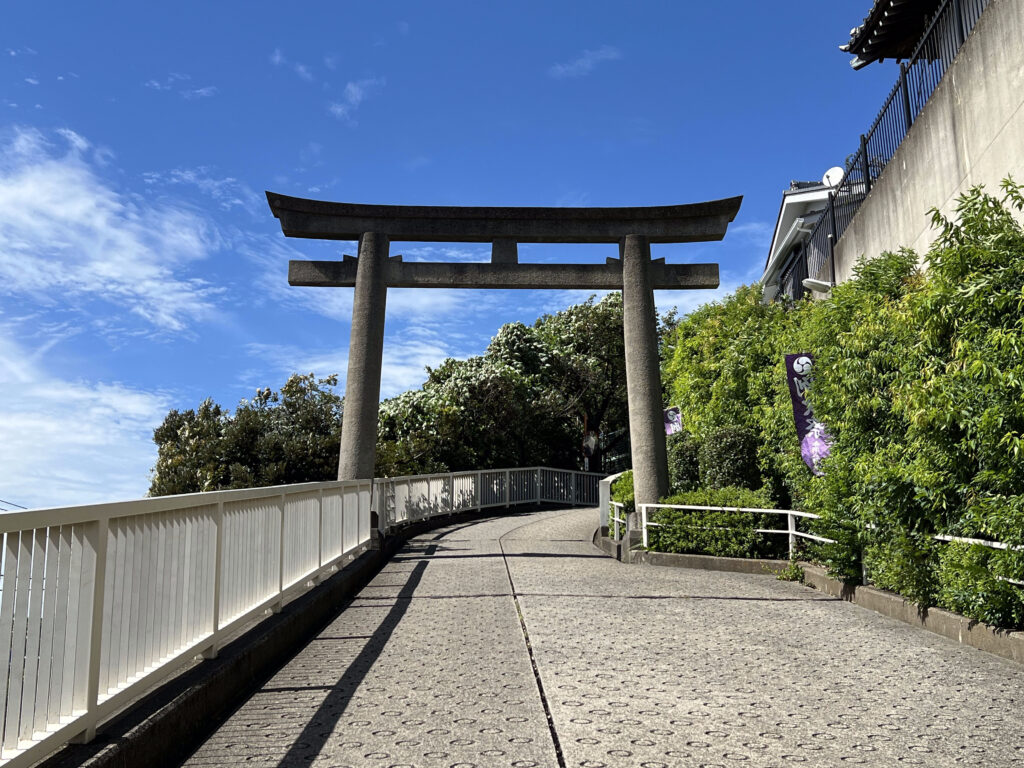
    The western approach, with the Akabanedai Tunnel portal beside the shrine hill
    The western approach, with the Akabanedai Tunnel portal beside the shrine hill. Photo: Asanagi / Wikimedia Commons / CC0.

    Why is a Shinkansen running beneath a shrine?

    The shrine occupies the northeastern edge of the Musashino terrace, a raised piece of ground overlooking the lowlands. That position once gave the site a natural sense of protection and command. Centuries later, the same narrow geography became a difficult problem for railway planners extending the Shinkansen toward Ueno.

    The solution was Akabanedai Tunnel. The railway passes beneath the edge of the sacred precinct rather than through the main sanctuary itself. The arrangement is less dramatic than the internet sometimes suggests—there is no bullet train roaring directly under the altar—but it is more interesting. A living religious institution and an essential national railway were made to coexist within a few metres of one another.

    As Shinkansen services expanded during the 1990s, more destinations became connected to the tracks below the shrine. Today a small tunnel entrance in Akabane carries trains that may continue hundreds of kilometres into northern and central Japan. Above it, local residents still arrive for an ordinary prayer.

    The shrine’s history begins with a warrior legend

    According to shrine tradition, Akabane Hachiman was founded in 784, when the military commander Sakanoue no Tamuramaro stopped here during an eastern campaign and enshrined Hachiman. As with many foundation stories from early Japan, this should be understood as sacred tradition rather than a modern documentary record.

    Later accounts connect the shrine to the warrior Minamoto no Yorimitsu and Minamoto no Yorimasa. In 1469, Ōta Dōkan—the samurai commander associated with the construction of Edo Castle—rebuilt it after land was donated by his father, Ōta Dōshin. During the Edo period, the third Tokugawa shogun, Iemitsu, granted the shrine land valued at seven koku, a privilege continued by later shoguns.

    Akabane Hachiman historically served as a guardian shrine for several surrounding communities, including old Akabane, Shimo, Fukuro, Iwabuchi-juku and Inatsuki. It was not a remote mountain sanctuary. It belonged to the settlements and roads of northern Edo long before the district became a railway hub.
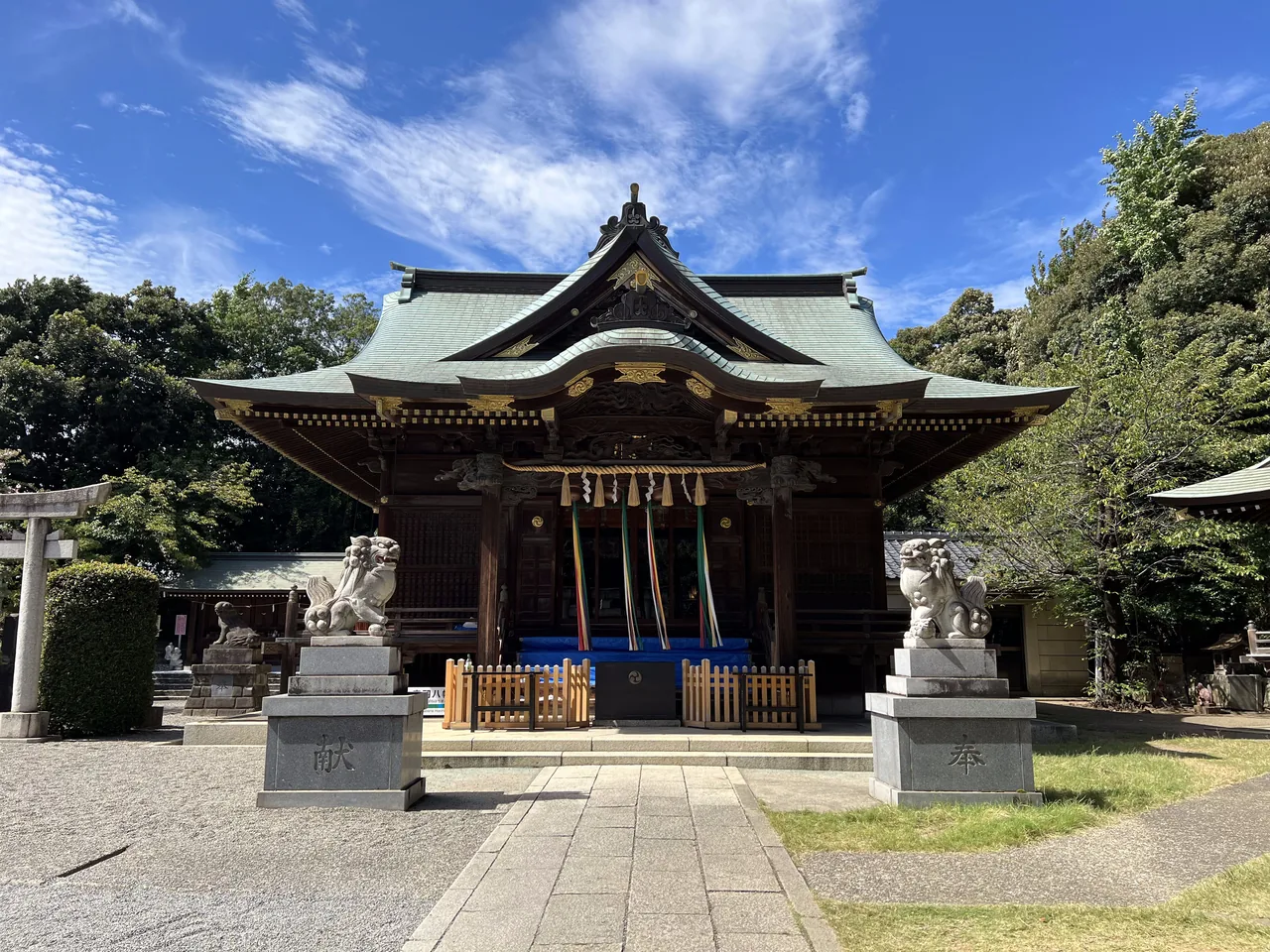
    The worship hall of Akabane Hachiman Shrine surrounded by trees in northern Tokyo
    The shrine’s worship hall above the busy railway corridor. Photo: Asanagi / Wikimedia Commons / CC0.

    A place to pray for victory

    Hachiman is closely associated with warriors and protection. That connection has not disappeared; it has simply changed form. Students come to pray before examinations, and athletes ask for success in competition. The shrine’s official history describes it as a place for victory prayers, linking modern ambitions to its old military associations.

    The present worship hall was completed in 1931. The main sanctuary was rebuilt and repaired in 1988, after the railway works had transformed the ground below. Look around and the shrine reveals several historical layers at once: old stone monuments, twentieth-century buildings, smaller subsidiary shrines and the infrastructure of contemporary Tokyo.

    One object worth finding is the nade-ushi, or “stroking ox.” Visitors traditionally touch the ox figure while making a wish for health or relief from illness. It is a quiet, tactile ritual far removed from the speed and scale of the trains below.

    The climb explains the place

    Do not treat the slope as an inconvenience. The approach is the key to understanding why the shrine feels different. Akabane Station begins in dense, noisy, commercial Tokyo. Walk west and the road starts to rise. Stairs and sloping paths pull you above the tracks until the towers, platforms and railway lines sit below the trees.
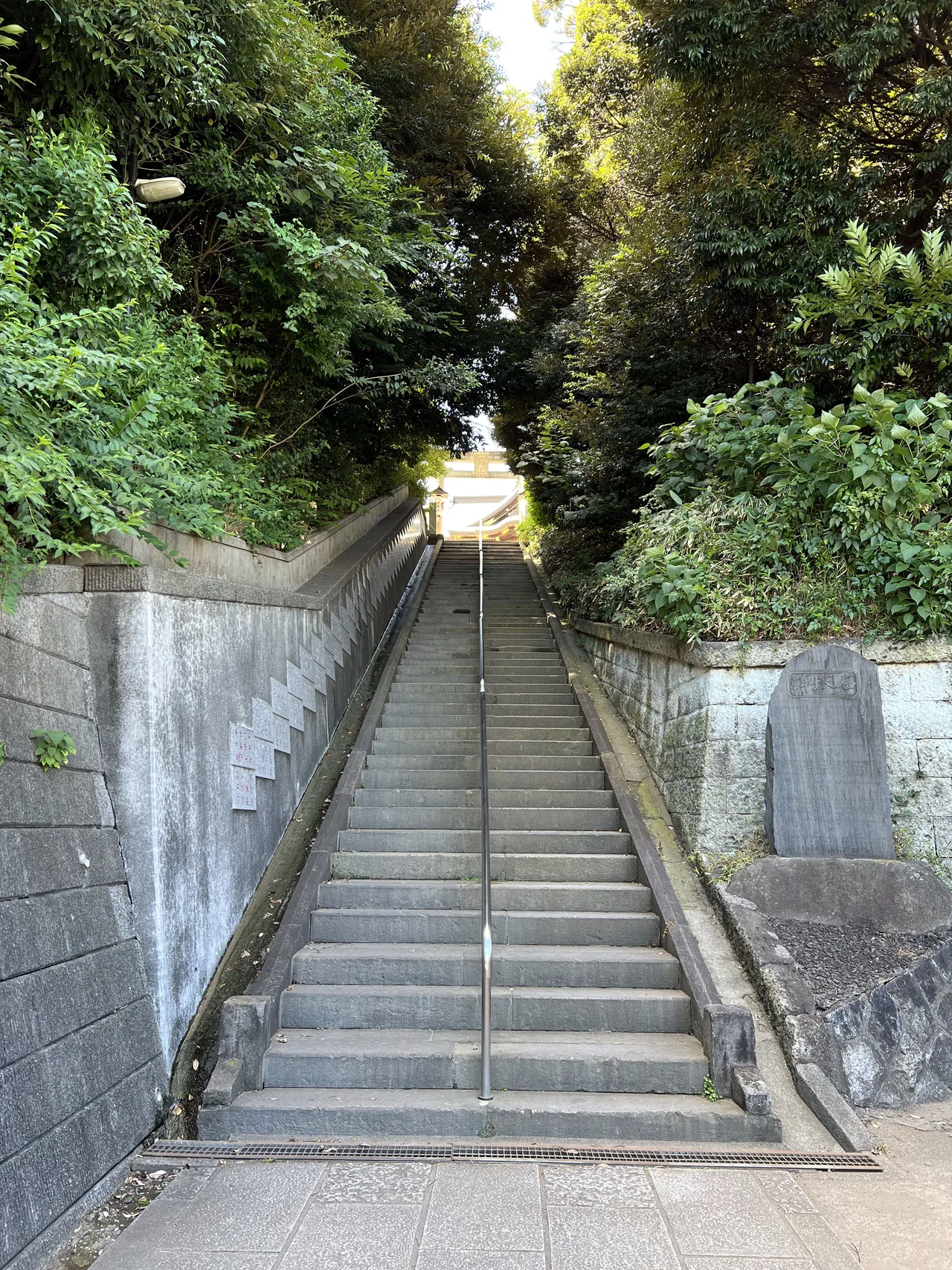
    Stone steps climbing the wooded approach to Akabane Hachiman Shrine
    Stone steps climb from the modern railway district toward the shrine precinct. Photo: Asanagi / Wikimedia Commons / CC0.

    At the top, the city has not vanished. You can still hear it and see fragments of it through the grounds. That tension is the experience: Akabane Hachiman does not offer an escape from Tokyo, but a view into how Tokyo is assembled.

    Where to watch the trains

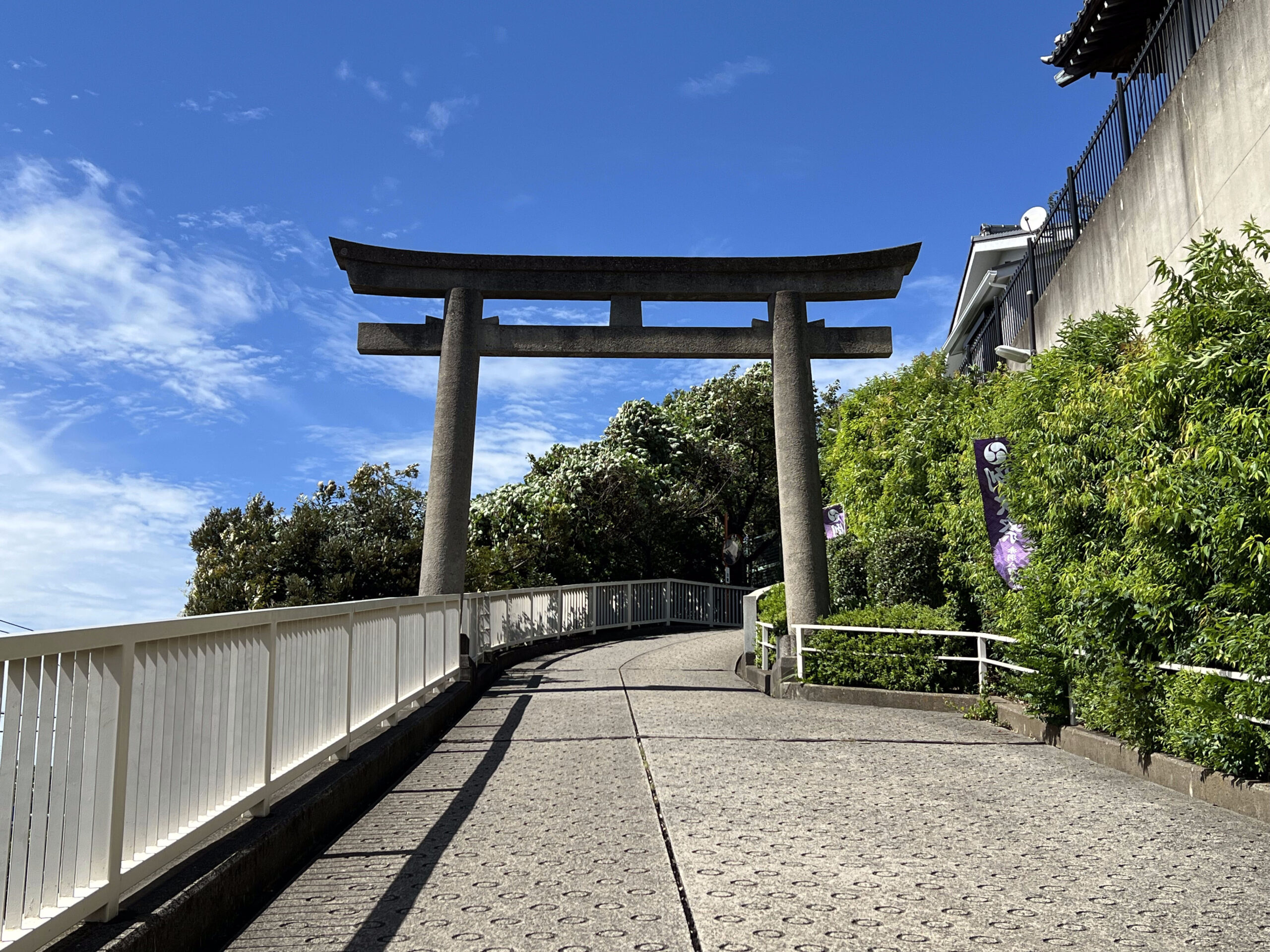
    The most direct view is near the southern and western side of the grounds, where the Shinkansen and Saikyō Line tracks approach the tunnel. The western worshipper’s path also makes the relationship between the torii, slope and tunnel especially clear. Trains pass frequently, so there is usually no need to wait long in daylight.

    This remains a shrine, not a railway observation deck. Stay behind fences and barriers, keep paths clear, avoid large tripods and never lean toward railway property for a better angle. If a ceremony or group of worshippers is present, put the camera away and give them space.

    Build a local Akabane half-day

    1. Start at JR Akabane Station. Leave the shopping streets slowly and notice how quickly the terrain changes west of the tracks.
    2. Climb to Akabane Hachiman. Visit the worship hall before heading to the railway-viewing edge.
    3. Watch one Shinkansen disappear. The moment is brief, but the contrast makes more sense after seeing the shrine first.
    4. Return through Akabane’s local streets. The izakaya alleys east of the station show a completely different layer of the same neighbourhood.
    5. Continue south to Ōji. For another northern Tokyo landscape shaped by old belief, follow our guide to Ōji’s fox shrines and hidden local streets.

    Before you go

    • Name: Akabane Hachiman Shrine (Akabane Hachiman Jinja)
    • Address: 4-1-6 Akabanedai, Kita-ku, Tokyo
    • Access: About 10 minutes on foot from JR Akabane Station
    • Admission: Free for normal worship visits
    • Best time: Daylight, when the approaches and railway view are easiest to see
    • Terrain: The shrine stands on a hill; the approach includes slopes and stone steps
    • Time needed: About 30–45 minutes
    • Train view: Services are frequent, but exact train types and times vary
    • Etiquette: Bow at the torii, keep voices low, do not photograph worshippers without permission and follow all signs around the railway boundary.

    Where this joins the rest of the east side

    Akabane is the top of the east side’s northern arc. One stop south is Oji, the fox town, with its free hillside railway; JR Itabashi, two stops away, has the Shinsengumi memorial beside the station. Akabane’s own reputation is for cheap drinking (senbero, explained), and the same standing-bar culture runs east along the Joban line to Kita-Senju.

    Quick answers

    Where is Akabane Hachiman Shrine and how do I get there?

    On the hill directly behind JR Akabane Station in Kita City, north Tokyo, about five minutes on foot up the slope. Akabane is on the JR Keihin-Tohoku, Saikyo, Utsunomiya and Takasaki lines; the Namboku subway line stops at Akabane-Iwabuchi nearby.

    Does a Shinkansen really run under Akabane Hachiman Shrine?

    Yes. The Tohoku Shinkansen and the Saikyo Line pass through Akabanedai Tunnel beneath the edge of the shrine grounds. Trains are visible entering the portal from the southern side of the precinct; the tunnel runs under part of the grounds, not under the main hall.

    How old is Akabane Hachiman Shrine?

    Shrine tradition dates its founding to 784, when the general Sakanoue no Tamuramaro is said to have enshrined Hachiman here. It was rebuilt by Ota Dokan in 1469 and received land grants from the Tokugawa shoguns. The present worship hall dates from 1931.

    Is Akabane Hachiman free to visit?

    Yes. The grounds are open and free. It is an active shrine, so keep voices down and do not set up tripods on the approach; the best train-watching spot is the southern edge of the precinct.

    LOCAL SIDE JAPAN checked historical, access and railway information against Akabane Hachiman Shrine, Kita City and official railway-viewing materials on September 12, 2026. Shrine-office hours, ceremonies and access arrangements may change. Foundation dates from the eighth century are presented as shrine tradition.
    Written by Kizuku. I run the Sunamachi Ginza Sumo Stable, a sumo experience in Koto City, and I write about the east side of Tokyo I live and work in. More about this site →

  • Tokyo Has a Giant Buddha—and Almost Nobody Visits It

    Tokyo Has a Giant Buddha—and Almost Nobody Visits It

    This article may contain affiliate links to booking sites. If you book through them, LOCAL SIDE JAPAN earns a small commission at no extra cost to you. How this site is made →

    ODD TOKYO · AKATSUKA, ITABASHI

    Tokyo has a giant Buddha. Not a fragment in Ueno, not a day trip to Kamakura—a complete, 13-metre bronze Amida sitting on a wooded hill in an ordinary Itabashi neighbourhood. Most visitors to Japan never hear about it. Even better, the Buddha shares its temple with an ogre trained to endure pain and an old woman who strips the dead at the river to the afterlife.

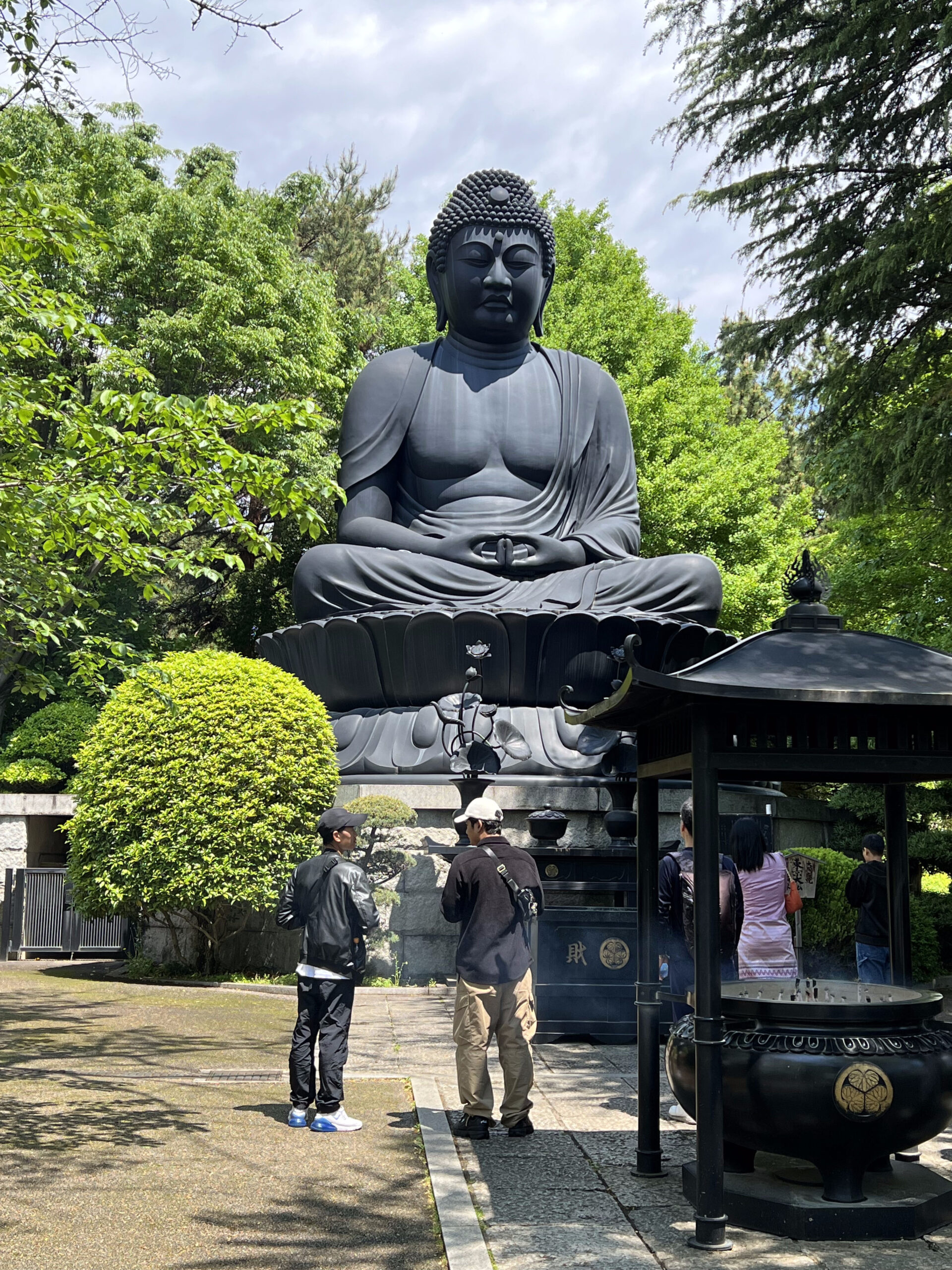
    Tokyo Daibutsu at Jōrenji
    Tokyo Daibutsu at Jōrenji. Photo: Asanagi / Wikimedia Commons / CC0.

    Fast facts

    • Admission: No standard fee for normal worship visits
    • Hours: Opens 9:00; last entry 15:45; closes 16:00
    • Address: 5-28-3 Akatsuka, Itabashi City, Tokyo
    • Nearest: Shimo-akatsuka Station, about 20 minutes on foot; or about 5 minutes from the Akatsuka 8-chōme bus stop
    • Time needed: About 45 to 60 minutes

    A giant Buddha with no tourist district around it

    The journey is part of the surprise. Jōrenji is not beside a bullet-train stop or packaged inside a famous temple town. From central Tokyo you travel into the northwestern suburbs, then take a local bus or walk through Akatsuka’s residential streets. The rooftops stay low. Vegetable plots and patches of older Tokyo appear between houses. Nothing announces that a figure as tall as a four-storey building is waiting ahead.

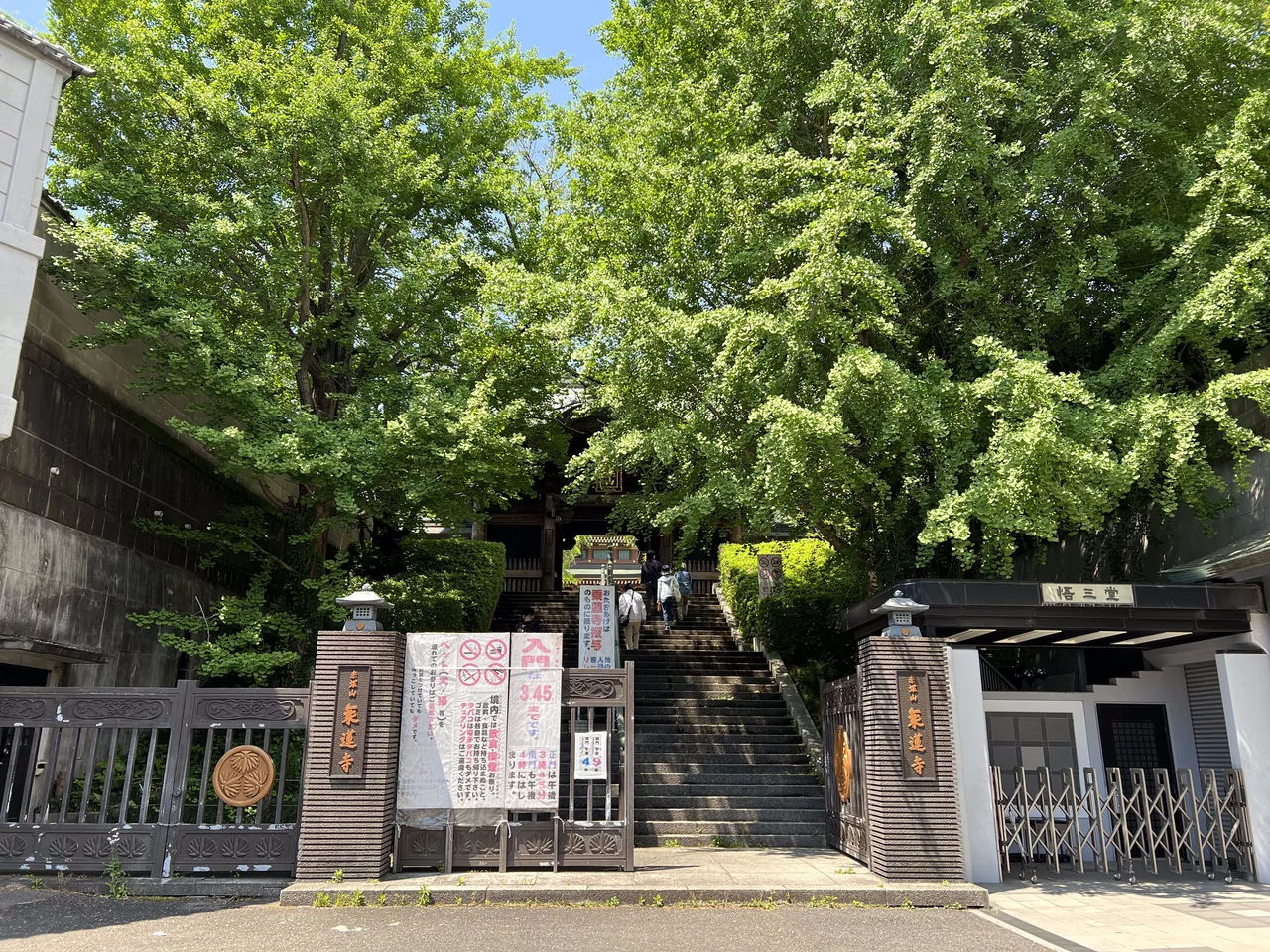
    Pass through Jōrenji’s gate, climb toward the main precinct and the Buddha finally rises above the courtyard. The setting makes the scale work. There is enough space to step back, but not so much that the statue becomes a distant landmark. You stand close enough to see the bronze surface, the folds of the robe and the calm expression looking over the temple grounds.

    Entrance to Jorenji temple in the quiet residential district of Akatsuka, Itabashi
    The entrance to Jōrenji in Akatsuka. Photo: Asanagi / Wikimedia Commons / CC0.

    It looks ancient. It was built in 1977.

    The Buddha’s stillness can make it feel centuries old, but Tokyo Daibutsu was completed in 1977. It is a bronze seated image of Amida Nyorai, the Buddha of Infinite Light central to Jōdo Buddhism. Measured from its base, the monument is 13 metres high; the head alone is about three metres. The bronze structure weighs approximately 32 tonnes.

    When completed, it was described as Japan’s third-largest seated bronze Buddha. Rankings have changed as newer statues have appeared, so the historical wording matters. Its significance was never simply a size competition.

    Jōrenji’s 24th head priest, Wakabayashi Ryūdō, initiated the project after reflecting on the destruction of the 1923 Great Kantō Earthquake and the 1945 bombing of Tokyo. The statue was built as a prayer that the city would not again suffer such disaster and war. A monument that first appears to be a suburban curiosity is, in fact, a peace memorial.

    That origin gives the Buddha’s expression a different weight. It does not celebrate Tokyo’s power. It asks the city to remember how quickly streets, homes and lives can disappear.

    The temple is six centuries older than its famous statue

    Jōrenji traces its foundation to the Ōei era, between 1394 and 1428. The temple originally stood elsewhere in Itabashi and later became associated with the old Nakasendō post town. Tokugawa Ieyasu granted it land valued at ten koku in 1591, and later shoguns continued the grant. During falconry excursions, it served as a resting place for Tokugawa shoguns.

    The temple moved to the present Akatsuka site during the 1970s as road development transformed its former location. That relocation explains an unusual visual contradiction: a temple with medieval origins, Tokugawa connections and Edo stonework arranged around a monumental Buddha of postwar Japan.

    Meet the demon whose job is to endure

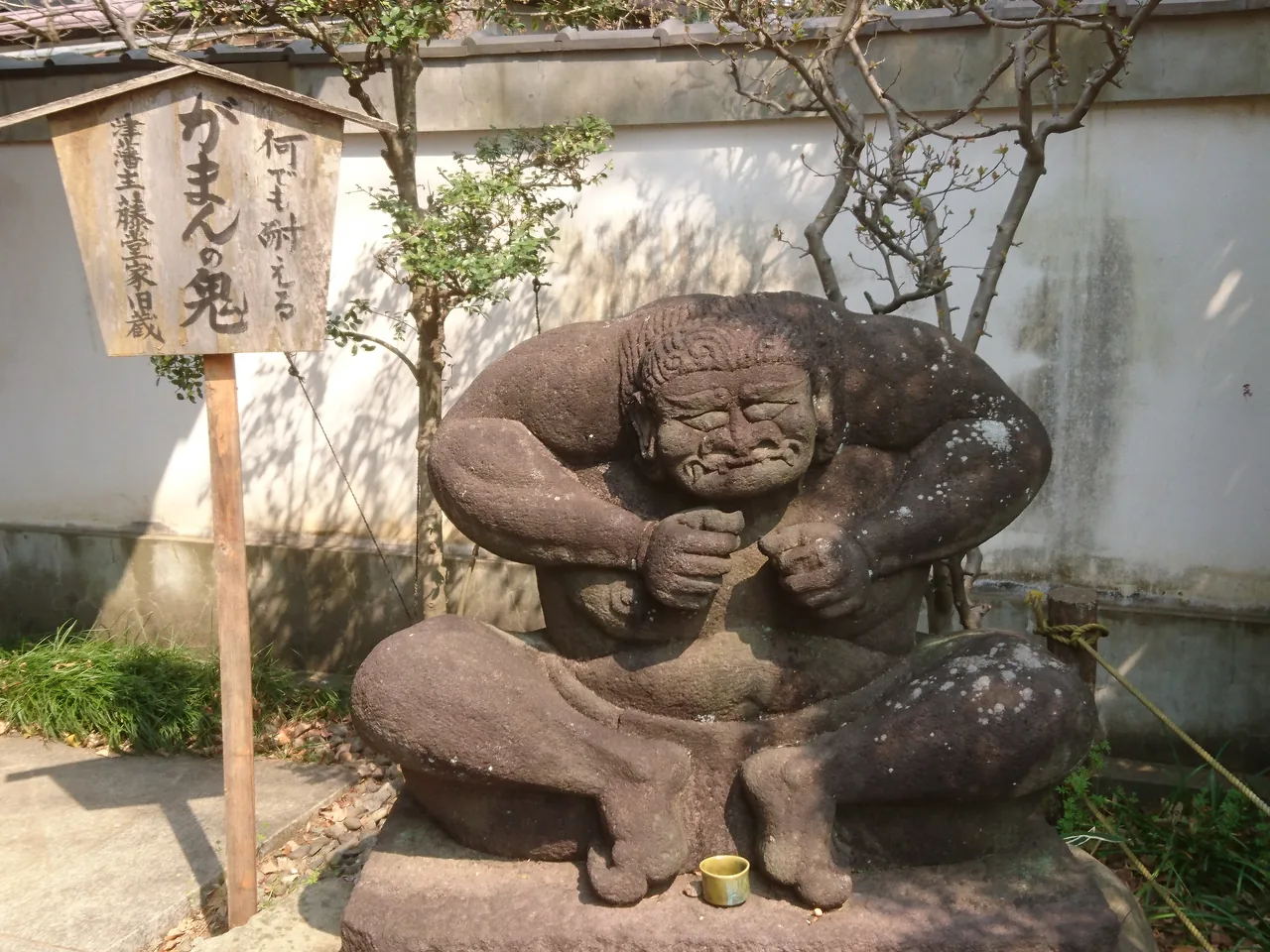
    Do not leave after photographing the Buddha. Among Jōrenji’s strangest objects is the Gaman no Oni—the “enduring ogre.” The crouching figure carries an immense stone burden while grimacing beneath its weight. Its popular name turns the usually threatening Japanese demon into a symbol of patience and endurance.

    The Gaman no Oni stone ogre carrying a heavy burden at Jorenji temple
    Gaman no Oni, the “enduring ogre.” Photo: 李桃桃内 / Wikimedia Commons / CC BY-SA 4.0.

    The ogre did not originate at Jōrenji. It belonged to a group of stone figures once kept at the Somei estate of the Tōdō family, lords of the Tsu domain, around present-day Komagome. Documents from 1818 depicted the collection, while an 1842 text already described the figures as unusually shaped curiosities.

    After passing through other hands, eight surviving figures were transferred to Jōrenji in 1967 and later moved with the temple to Akatsuka. They are rare not because nobody knows what an oni looks like, but because written records connect these exact eccentric sculptures to the private world of an Edo-period daimyō residence.

    The old woman waiting at the river of the dead

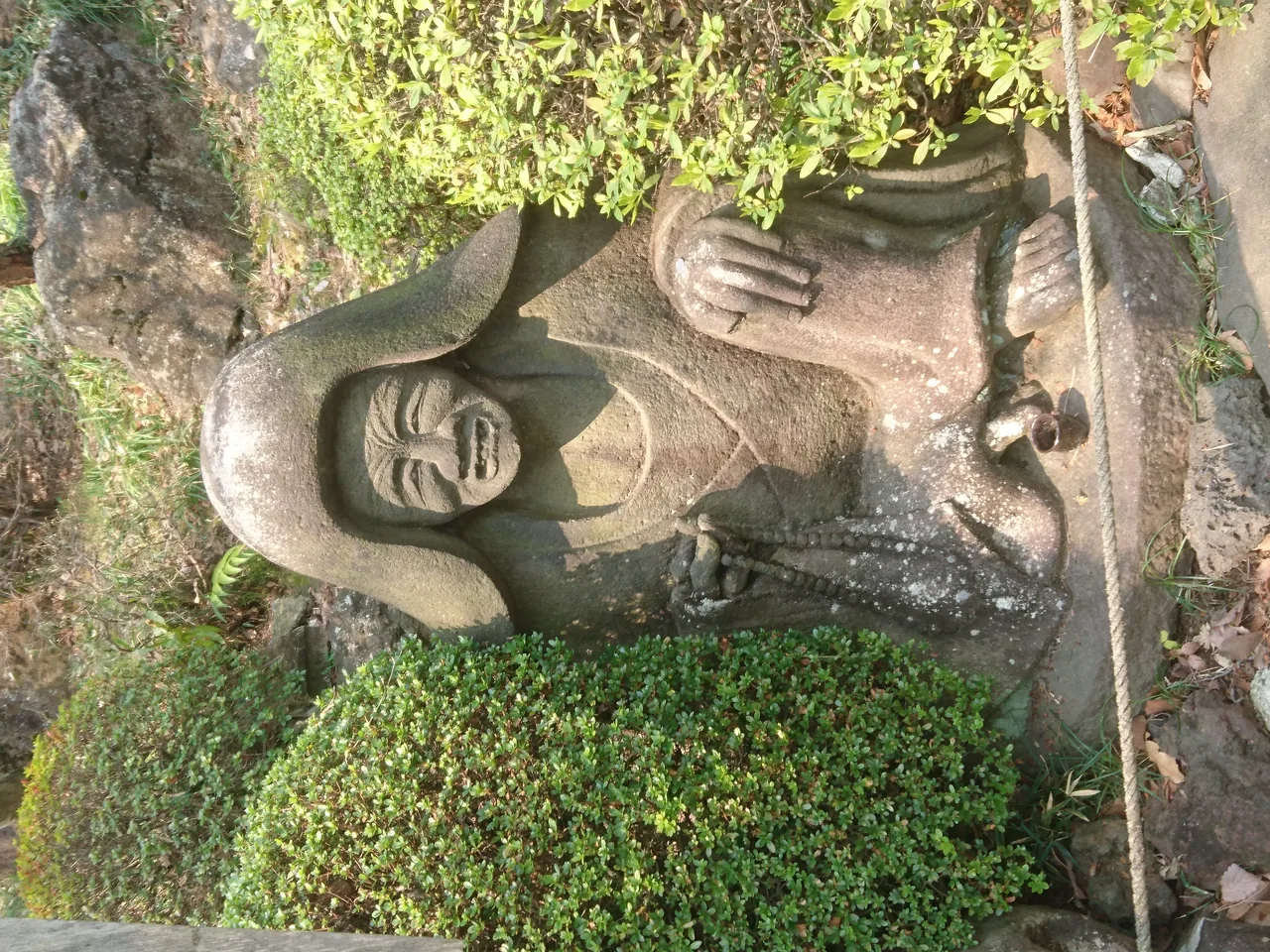
    Nearby sits an even stranger figure: Datsueba. In Japanese Buddhist folklore, this old woman waits beside the Sanzu River, the boundary between the living world and the afterlife. She strips the clothes from the dead, allowing their deeds to be judged by the weight of the garments.

    Stone statue of Datsueba, the old woman of the Buddhist underworld, at Jorenji
    Datsueba, once part of the Tōdō family’s Somei estate collection. Photo: 李桃桃内 / Wikimedia Commons / CC BY-SA 4.0.

    She is frightening, comic and oddly human at the same time—the opposite of the Buddha’s controlled symmetry. Together, the figures make Jōrenji feel less like a single-attraction temple and more like a compact museum of Japanese attitudes toward salvation, punishment, fear and persistence.

    Build a half-day around old Akatsuka

    The distance from the railway station is a feature, not a defect. Akatsuka sits on the edge of Tokyo’s Musashino uplands, where slopes, temple grounds, parks and remaining farmland break up the dense city. A slow approach allows the neighbourhood to establish the scale of the surprise.

    1. Start from Narimasu or Shimo-akatsuka. Walk if the weather is comfortable, or use the bus from Narimasu to Akatsuka 8-chōme.
    2. Enter Jōrenji before mid-afternoon. The final admission time is earlier than many Tokyo attractions.
    3. See the main hall before the Buddha. Let the temple reveal the giant statue gradually.
    4. Circle the grounds. Find Gaman no Oni, Datsueba and the other former Tōdō estate figures rather than leaving after one photograph.
    5. Continue to Akatsuka Botanical Garden or Itabashi Historical Museum. Both help turn a single temple visit into a quiet local half-day.

    If you want to follow Itabashi’s history toward the end of the samurai age, continue another day with our guide to Kondō Isami’s execution site and Shinsengumi memorial beside Itabashi Station.

    Before you go

    • Name: Jōrenji / Tokyo Daibutsu
    • Address: 5-28-3 Akatsuka, Itabashi-ku, Tokyo
    • Opening: 9:00 a.m.
    • Final entry: 3:45 p.m.
    • Complete closing: 4:00 p.m.
    • Admission: No standard admission fee for normal worship visits
    • Access: About 20 minutes on foot from Shimo-akatsuka Station; approximately five minutes on foot from the Akatsuka 8-chōme bus stop after taking a bus from Narimasu
    • Time needed: About 45–60 minutes inside the temple
    • Etiquette: Jōrenji is an active place of worship. Keep voices low, avoid photographing ceremonies or worshippers, and obey signs around restricted areas.

    Where this joins the rest of the east side

    Itabashi is the far end of the east side’s northern arc. On the way back, JR Itabashi Station has the grave of Kondo Isami and the Shinsengumi beside the ticket gates, and Akabane has the shrine with a bullet train underneath it. If a temple with a train is what you want, Nishiarai Daishi in Adachi has its own one-kilometer railway.

    Quick answers

    How big is the Tokyo Daibutsu?

    The seated bronze Amida at Jorenji is 13 meters high including its base, with a head about three meters tall, and weighs roughly 32 tonnes. When it was completed in 1977 it was described as Japan’s third-largest seated bronze Buddha.

    How do I get to Jorenji and the Tokyo Daibutsu?

    Jorenji is in Akatsuka, Itabashi City, in Tokyo’s north-west suburbs. Take the Tobu Tojo line to Shimo-Akatsuka or the Mita subway line to Nishi-Takashimadaira, then walk about 20 to 25 minutes or take a local bus; there is no station beside the temple.

    Is the Tokyo Daibutsu free to visit?

    Yes. Jorenji’s grounds and the Buddha are free and open during daytime hours. It is an active temple, so behave as you would at any place of worship.

    Why was the Tokyo Daibutsu built?

    The temple’s 24th head priest, Wakabayashi Ryudo, commissioned it in memory of the 1923 Great Kanto Earthquake and the 1945 bombing of Tokyo, as a prayer that the city would not suffer such disaster again. The temple itself dates from 1394-1428 and moved to Akatsuka in the 1970s.

    LOCAL SIDE JAPAN checked historical, opening and access information against Jōrenji, Itabashi City and the Itabashi Tourism Association on September 12, 2026. Opening times and access arrangements may change for New Year events, ceremonies or temple circumstances.

    Written by Kizuku. I run the Sunamachi Ginza Sumo Stable, a sumo experience in Koto City, and I write about the east side of Tokyo I live and work in. More about this site →

  • Tokyo Executed a Samurai Legend Beside This Station.

    Tokyo Executed a Samurai Legend Beside This Station.

    This article may contain affiliate links to booking sites. If you book through them, LOCAL SIDE JAPAN earns a small commission at no extra cost to you. How this site is made →

    HIDDEN HISTORY · ITABASHI, TOKYO

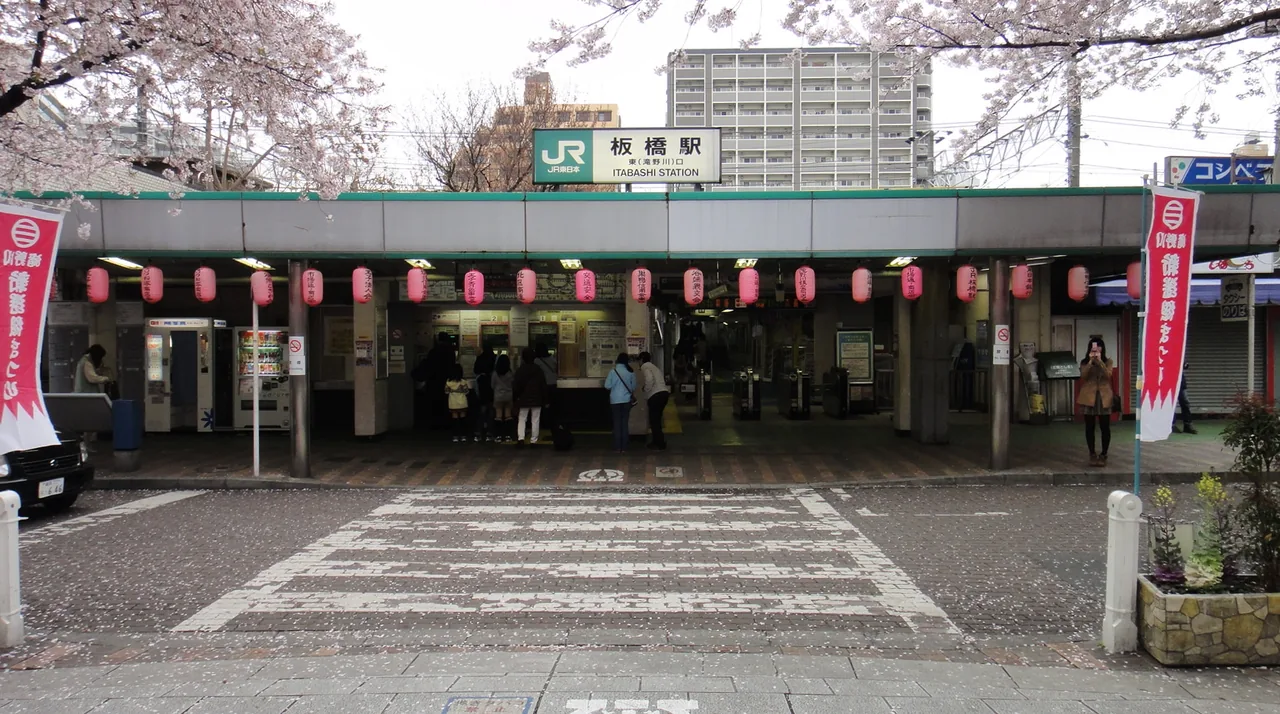
    Leave JR Itabashi Station by the east exit and you are immediately surrounded by the practical Tokyo of ticket gates, bicycles and apartment buildings. Yet only a few steps away stands a small cemetery for Kondō Isami and the Shinsengumi. Somewhere within this ordinary station landscape, the commander of Japan’s most famous samurai police force spent his final hours.

    The east entrance of JR Itabashi Station near the execution site and memorial of Kondo Isami
    Itabashi Station’s east entrance, a short walk from the memorial. Photo: DAJF / Wikimedia Commons / CC BY-SA 3.0.

    Fast facts

    • Admission: Free
    • Where: The detached cemetery of Jutokuji, beside the east (Takinogawa) exit of JR Itabashi Station. Technically in Kita City
    • Nearest: JR Itabashi Station (Saikyō line), a few steps from the east exit
    • Note: The cemetery is close to, not on, the exact location of the execution ground

    The station exit that opens onto the end of the samurai age

    Itabashi is not where most visitors go looking for the Shinsengumi. The group is usually associated with Kyoto: pale-blue haori coats, the Ikedaya Incident and sword fights in the final years of the Tokugawa shogunate. But the story of its commander ends here, on what was then the northern approach to Edo.

    In 1868, the old political order was collapsing into the Boshin War. After defeat at Toba–Fushimi, Kondō and surviving allies continued resisting the new imperial government. He reorganised his men as the Kōyō Chinbutai and later established a position at Nagareyama, northeast of Tokyo. There he was captured—or surrendered, depending on how the episode is framed—and taken to the new government army’s headquarters at Itabashi-juku.

    Kondō had used the name Ōkubo Yamato, but former opponents identified him. On the 25th day of the fourth month of Keiō 4—May 17, 1868 in the modern calendar—he was executed near the old Hirawo milestone. He was 33 by Western age counting, although Japanese sources traditionally describe him as 35 by the historical kazoedoshi system.

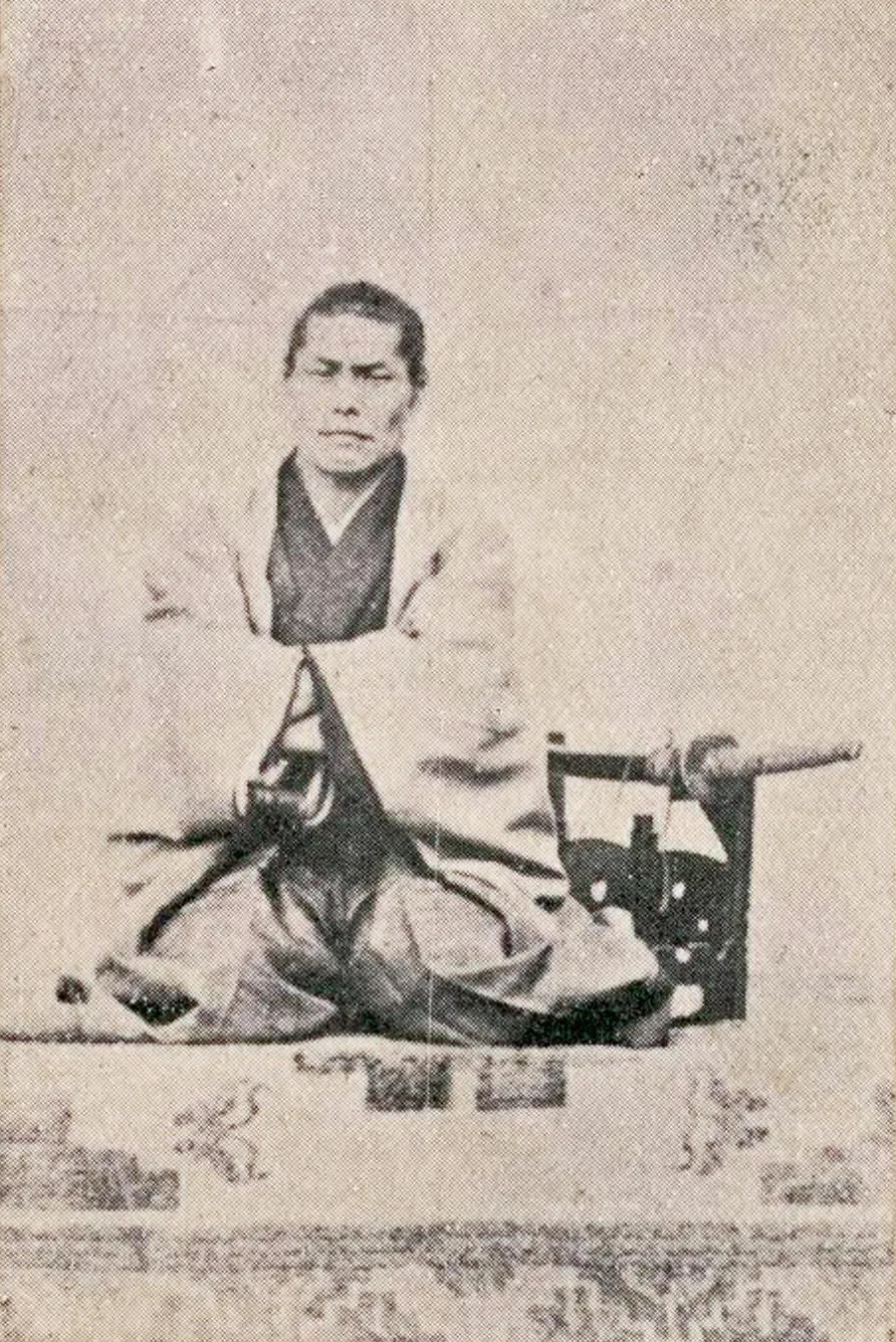
    Historical portrait of Shinsengumi commander Kondo Isami
    Kondō Isami (1834–1868). Source: National Diet Library Digital Collections via Wikimedia Commons / Public domain.

    There is no preserved execution ground

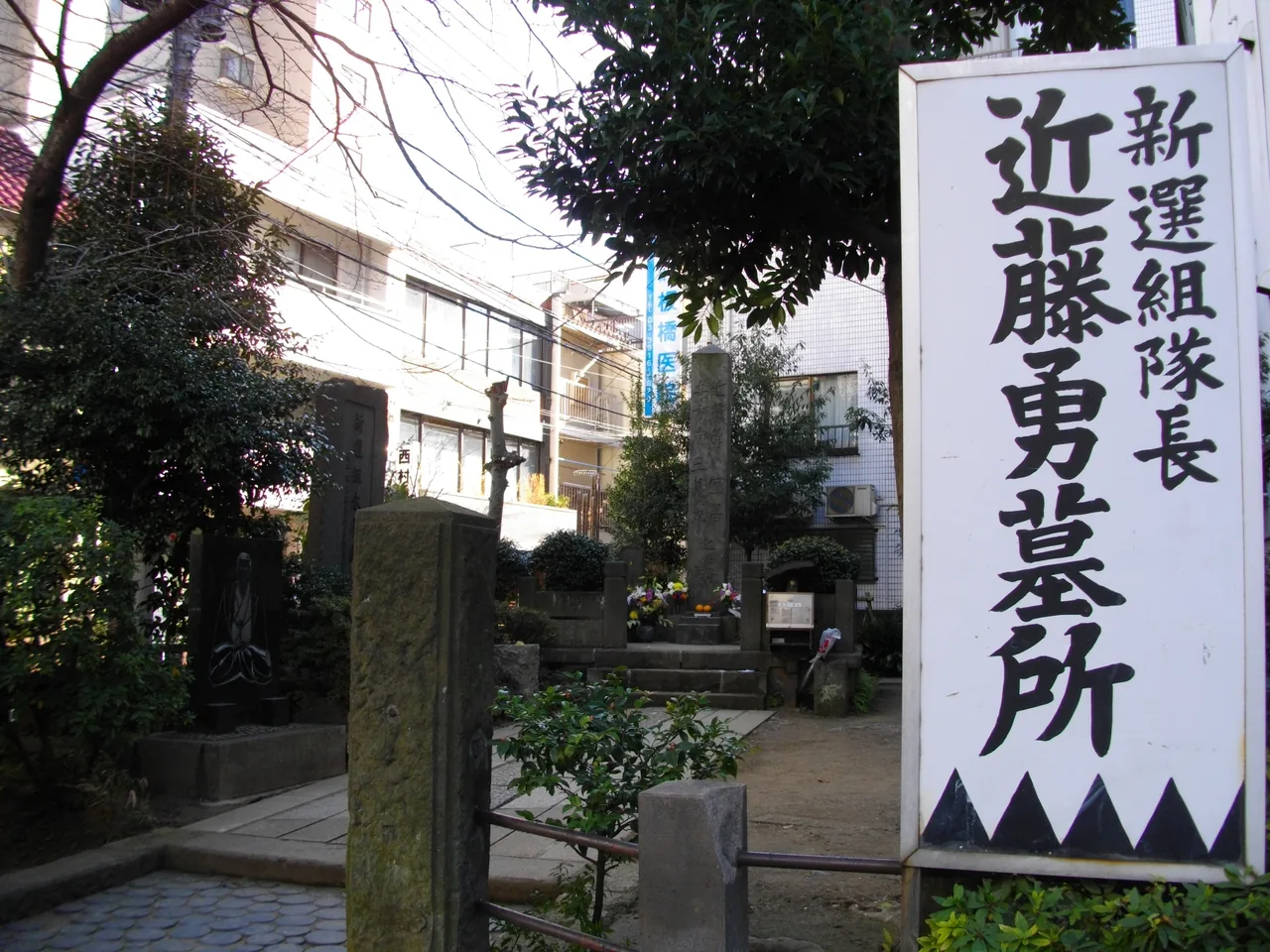
    Visitors expecting a fenced historical site will not find one. Roads, railway facilities and later construction transformed the ground. A stone marker identifies the former Itabashi execution site, but the surrounding city gives no visual warning about what happened here.

    This distinction matters: the cemetery beside the station is close to the execution site, not a perfectly preserved patch of the scaffold itself. Even the old place-name can confuse modern travellers. The memorial stands in today’s Kita City, although it is beside Itabashi Station and historically connected with Itabashi-juku.

    Stone sign marking the former Itabashi execution grounds near JR Itabashi Station
    Marker for the former Itabashi execution grounds. Photo: Abasaa / Wikimedia Commons / Public domain.

    The lack of scenery is precisely what makes the place powerful. A visitor can arrive without ceremony, cross from the station and suddenly face the violent transfer of power that created modern Japan. The distance between “history” and “Tuesday morning commute” is only a few metres.

    A grave built by the comrade who survived

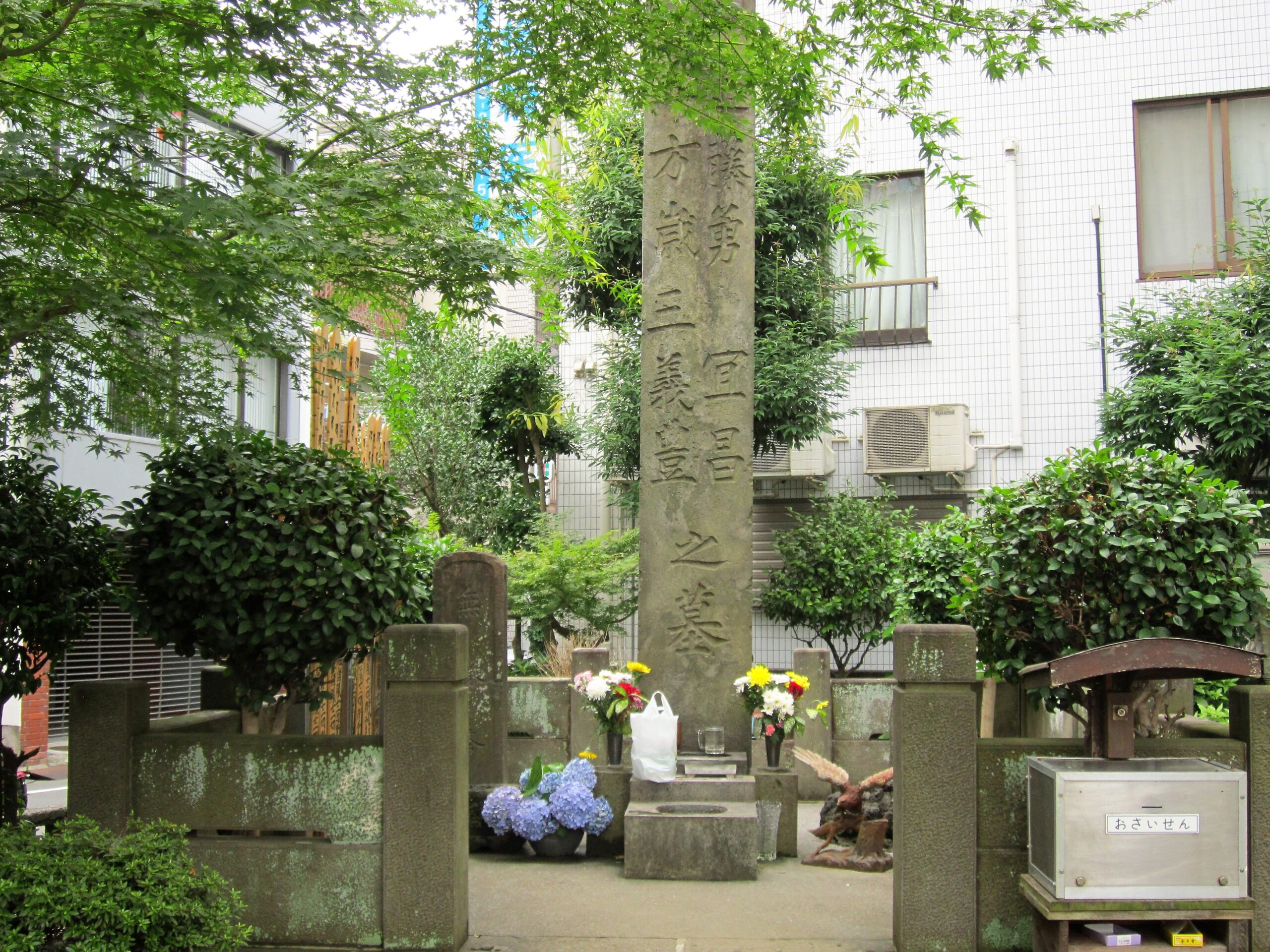
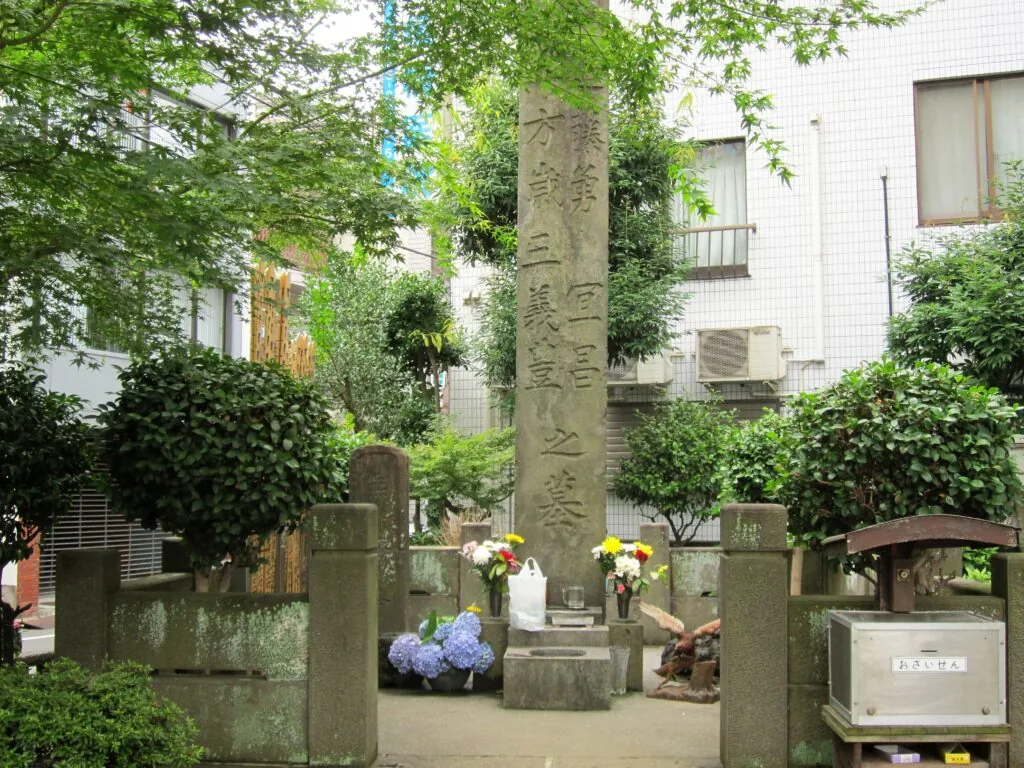
    The present memorial was not waiting here when Kondō died. It was erected in 1876, eight years after the execution, through the efforts of former Shinsengumi member Nagakura Shinpachi, with support from Matsumoto Ryōjun, a doctor who had served the shogunate.

    The monument commemorates Kondō, vice-commander Hijikata Toshizō and other members of the Shinsengumi. The names of 110 people connected with the force are carved on its sides. That makes it more than the grave of one famous swordsman: it is among the earliest memorials created specifically for the Shinsengumi.

    The Kondō Isami and Shinsengumi memorial at the detached cemetery of Jutokuji
    The Kondō Isami and Shinsengumi memorial at the detached cemetery of Jutokuji. Photo: Suikotei / Wikimedia Commons / CC BY-SA 4.0.

    Calling it simply “Kondō’s grave” also hides a complicated story. Kita City’s official account says his head was displayed at Sanjō riverbank in Kyoto and his torso was buried in an unmarked mound at Takinogawa. Other locations in Japan maintain their own Kondō burial traditions. The Itabashi site is therefore best understood as both a grave and a collective memorial—a place where survivors and later admirers gave the defeated a name again.

    Who was Kondō Isami?

    Kondō was not born into the elite rank suggested by later samurai legend. Born Miyagawa Katsugorō in 1834 to a farming family in Tama, west of Edo, he entered the Tennen Rishin-ryū school of swordsmanship, was adopted into its Kondō line and eventually led the Shieikan dojo.

    In 1863, he travelled to Kyoto with the group that became the Shinsengumi. Officially charged with maintaining order, its members defended the Tokugawa side in an increasingly fractured capital. To supporters they were disciplined loyalists. To enemies they were a feared political police force. Popular culture turned them into romantic heroes, but their real history includes factional killings, rigid internal rules and lethal street violence.

    Itabashi strips away the costume-drama glamour. Kondō did not fall during a cinematic sword duel. He was a prisoner of a new government, executed in public as the shogunate he served disappeared. Within months, Edo itself would be renamed Tokyo.

    The strange afterlife of “the god of fever”

    Local tradition gives the site an unexpected second life. According to an account preserved by Kita City, a woman opened a shop without knowing that it stood on the former execution ground. When she developed recurring fever or chills—called okori—a local elder advised her to pray at Kondō’s grave. She recovered, the story says, and Kondō gained a folk reputation as an okori no kamisama, a deity who could relieve the illness.

    This is folklore, not medical advice and not a verified supernatural event. But it shows how communities metabolise difficult places. An executed enemy of the state became a memorialised commander, then a neighbourhood guardian. Tokyo did not preserve the scaffold; it preserved a relationship with the dead.

    How to visit without turning it into a costume set

    1. Exit JR Itabashi Station on the east, or Takinogawa, side. The cemetery is almost immediately visible.
    2. Read the historical signs before photographing. They clarify the relationship between the memorial, the station and the former execution site.
    3. Look around the entire monument. The inscriptions for other Shinsengumi members are essential to understanding it as a collective memorial.
    4. Continue toward old Itabashi-juku. A walk along the former Nakasendō road helps restore the geography that modern railways have obscured.

    Keep voices low and do not lean equipment against graves. The location may be famous among Shinsengumi fans, but it remains the detached cemetery of Jutokuji and an active place of remembrance.

    For another Tokyo site where railway lines sit against the memory of state execution, read our guide to the Kozukappara execution ground in Minamisenju. The two places reveal opposite ends of Edo—and how modern Tokyo absorbed both into ordinary neighbourhoods.

    Where can you actually hold a sword?

    Somewhere else. This is a working cemetery with a stone in it, and twenty minutes here is the whole visit. If part of what brought you to Kondō Isami is the sword itself, it is worth knowing what the city actually sells under that heading, because the gap between the options is wide.

    The Shinsengumi and samurai attractions around Asakusa and Shinjuku are costume and photography: you are given hakama, a blunt alloy replica and a photographer. Nothing is wrong with that, but the listings do not always say that the blade is not sharp and there is no tatami-mat cutting, which is the one thing most people picture. If that is what you were expecting, you will be disappointed at the door.

    The nearer thing to what Kondō did for a living is a dojo. A two-hour kendo session in a real dojo in Arakawa City, armour and shinai provided, ends in a mock tournament and runs about ¥18,000; an hour of Mugai-ryū iaido in Kuramae — drawing the sword, which is the discipline people mean when they picture a samurai — is about ¥23,000 with a named school and an English-speaking instructor. Both are east-side, both are an order of experience away from posing. The four things Tokyo sells as a samurai experience, and what each one is →

    Do the dojo on a different day from this one. Walking out of a cemetery and into a costume hour in the same afternoon is the thing the section above is asking you not to do.

    Before you go

    • Official name: Grave of Kondō Isami and Shinsengumi members
    • Location: Detached cemetery of Jutokuji, 7-8-10 Takinogawa, Kita-ku, Tokyo
    • Nearest station: JR Itabashi Station, East/Takinogawa Exit
    • Walking time: About one minute from the station exit
    • Suggested visit: 20–30 minutes for the memorial; 60–90 minutes if combined with old Itabashi-juku
    • Best time: Daylight hours
    • Annual remembrance: A memorial service is generally held around April 25, with a local Shinsengumi festival held in spring; confirm the year’s dates before travelling
    • Etiquette: Treat the grounds as a cemetery, not a film location. Do not enter closed sections or photograph mourners without permission.

    Where this joins the rest of the east side

    The end of the shogunate is scattered across the north of the east side: Yoshida Shoin and other Ansei Purge victims lie at Ekoin beside the Kozukappara execution ground in Minamisenju. Two stops north of Itabashi, Akabane Hachiman has a Shinkansen under it; one stop south, Oji has the foxes.

    Quick answers

    Where is Kondo Isami’s grave?

    Beside the east exit of JR Itabashi Station (Saikyo line), in the detached cemetery of Jutokuji. The memorial is technically in Kita City, a few steps from the station. It is free and open.

    When and why was Kondo Isami executed?

    On May 17, 1868, during the Boshin War, after he was captured at Nagareyama and identified by former opponents at the new government’s Itabashi headquarters. He was 33. His head was displayed in Kyoto; the Itabashi memorial is both a grave and a collective monument.

    Who built the Kondo Isami memorial?

    Former Shinsengumi member Nagakura Shinpachi, with the doctor Matsumoto Ryojun, erected it in 1876. It commemorates Kondo, Hijikata Toshizo and 110 people connected with the Shinsengumi, and is among the earliest memorials to the group.

    Is the Itabashi execution ground preserved?

    No. A stone marker identifies the former site, but roads and railway works transformed the ground. The cemetery beside the station is close to, not on, the scaffold’s exact location.

    LOCAL SIDE JAPAN checked location and historical information against official materials from Itabashi City, Kita City and the Tokyo Metropolitan Government on September 12, 2026. Historical accounts differ over the location and contents of Kondō Isami’s burials; the article distinguishes the locally documented memorial from broader burial traditions.

    Written by Kizuku. I run the Sunamachi Ginza Sumo Stable, a sumo experience in Koto City, and I write about the east side of Tokyo I live and work in. More about this site →

  • Tokyo’s Fox Town: A Strange Little Day in Oji

    Tokyo’s Fox Town: A Strange Little Day in Oji

    This article may contain affiliate links to booking sites. If you book through them, LOCAL SIDE JAPAN earns a small commission at no extra cost to you. How this site is made →

    TOKYO / OJI / FOX LEGENDS

    Tokyo has a fox town.

    It has a shrine reached by creatures in disguise, a tiny free “mountain railway,” one of the city’s last streetcars and a river park hidden below the station.

    It is called Oji. Most visitors pass through without getting off. That is their mistake—and your quieter afternoon.

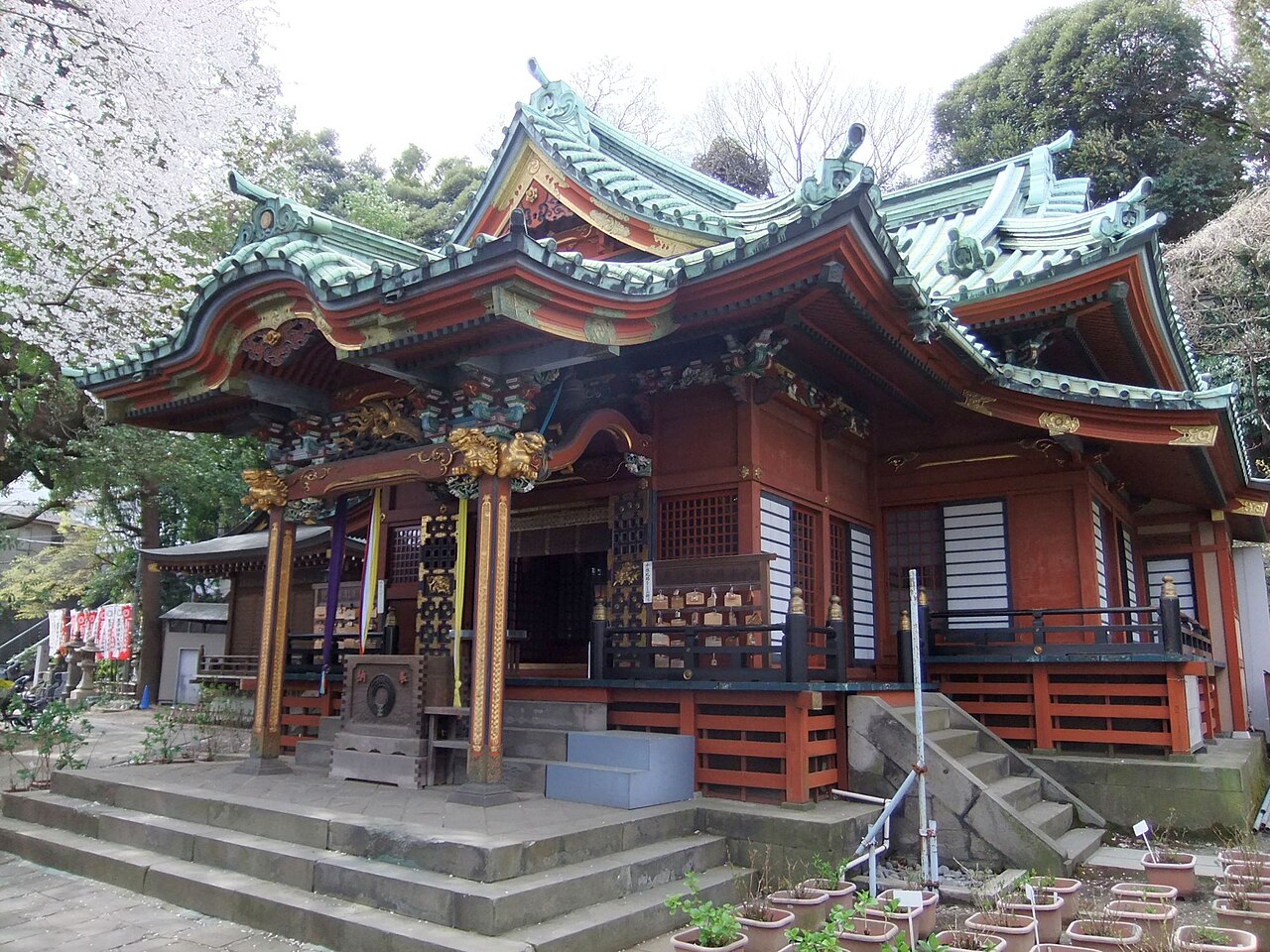
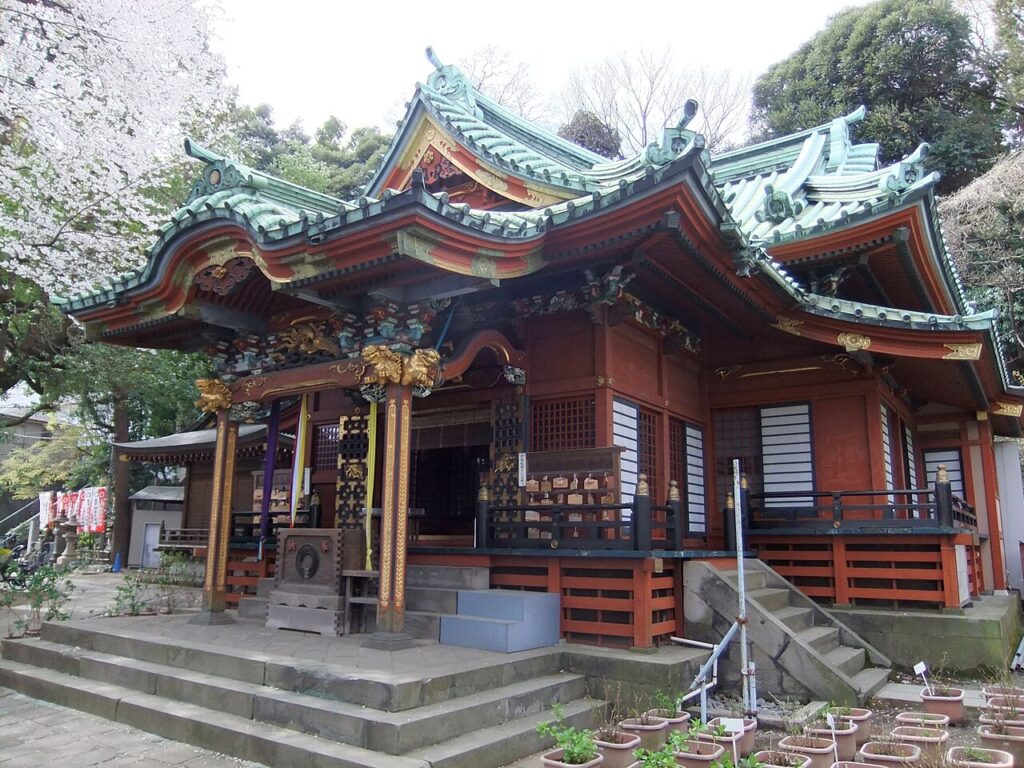
    Oji Inari Shrine
    Oji Inari Shrine. Photo: Tak1701d / Wikimedia Commons, CC BY-SA 3.0.

    A Tokyo neighborhood with a fox problem

    Not a real fox problem. A legendary one.

    An old story says that foxes from across the Kanto region gathered beneath a large hackberry tree on New Year’s Eve. There, they dressed themselves before visiting Oji Inari Shrine for the first prayer of the year.

    Utagawa Hiroshige turned the scene into a famous woodblock print: foxes under a dark tree, surrounded by small flames. The lights were said to be kitsunebi—fox fire.

    The legend is still part of the neighborhood. On New Year’s Eve, people wearing fox masks and traditional clothing carry lanterns from Shozoku Inari Shrine to Oji Inari Shrine. For the rest of the year, the streets are much calmer. The foxes, presumably, are working remotely.

    Start beside the station, below street level

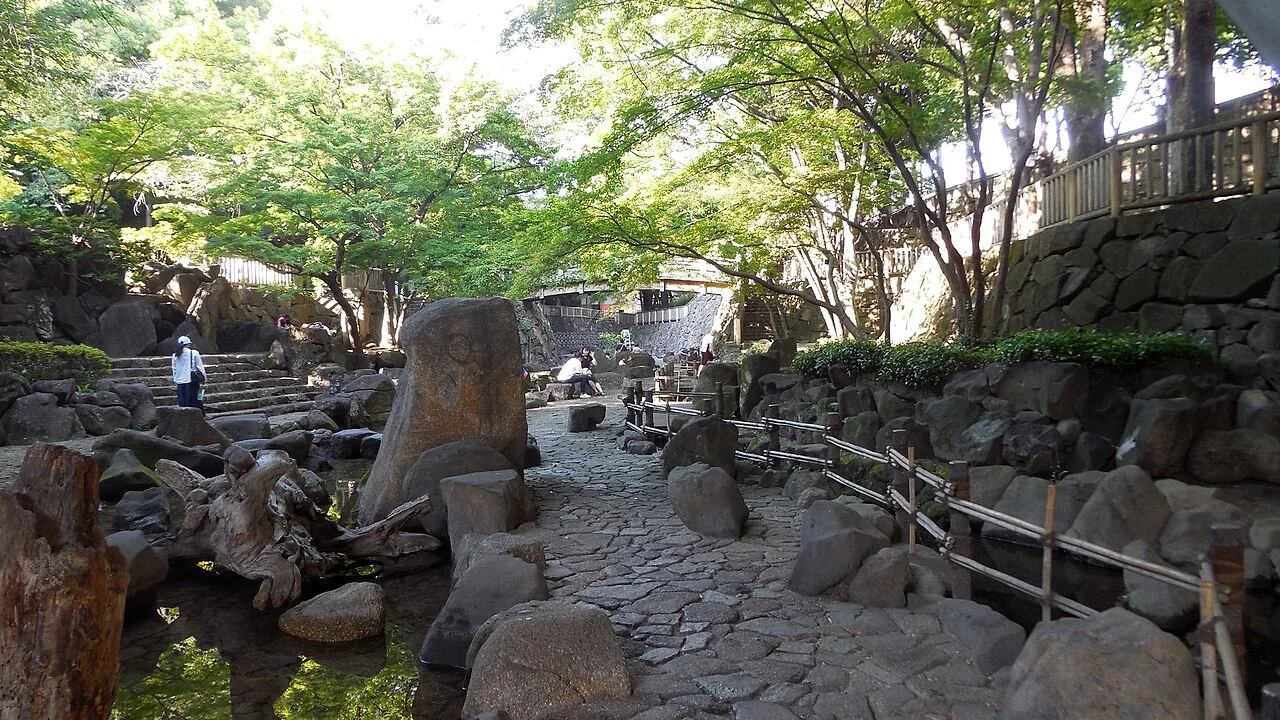
    Leave Oji Station and look for Otonashi Shinsui Park. It sits in the old course of the Shakujii River, tucked below the roads and railway tracks.

    Wooden bridges, stone banks and a waterwheel give it the atmosphere of a miniature riverside village. Trains pass close by, but down here the city seems to lower its voice.

    In spring, cherry blossoms frame the water. In summer, the shade makes it a useful escape from Tokyo’s impression of a reasonable temperature.

    A wooden bridge and stone-lined stream in Otonashi Shinsui Park, Oji
    Otonashi Shinsui Park, just beside Oji Station. Photo: Souka Kinmei / Wikimedia Commons, CC0.

    Follow the foxes to Oji Inari Shrine

    From the station, Oji Inari Shrine is roughly an eight-minute walk. Its vermilion buildings sit above a residential street, away from Tokyo’s usual sightseeing conveyor belt.

    The shrine has deep roots and was historically regarded as an important center of Inari worship in the Kanto region. Inari is associated with rice, prosperity and business; foxes are considered the deity’s messengers, not the deity itself.

    That distinction may not help when you are standing among fox statues, fox plaques and fox imagery. The neighborhood has committed to the theme.

    Visit quietly and remember that this is an active place of worship, not a film set. Opening arrangements can change, especially around events, so check the latest information before making a special trip.

    A waterfall garden with very little publicity

    A short walk away is Nanushinotaki Park, a landscape garden built around a natural slope and waterfalls.

    It feels oddly detached from the surrounding city: stone paths, dense trees, ponds and the sound of falling water. You may encounter local walkers, someone reading on a bench and almost nobody attempting to sell you a “samurai experience.”

    The park has gates and operating hours, and parts of the water features may occasionally be suspended for maintenance. Check Kita City’s current notice before visiting.

    Ride Tokyo’s tiny free mountain railway

    Back near Oji Station, cross to Asukayama Park. The hill has been a public leisure spot since the time of the eighth Tokugawa shogun, Yoshimune, who had cherry trees planted here for ordinary Edo residents to enjoy.

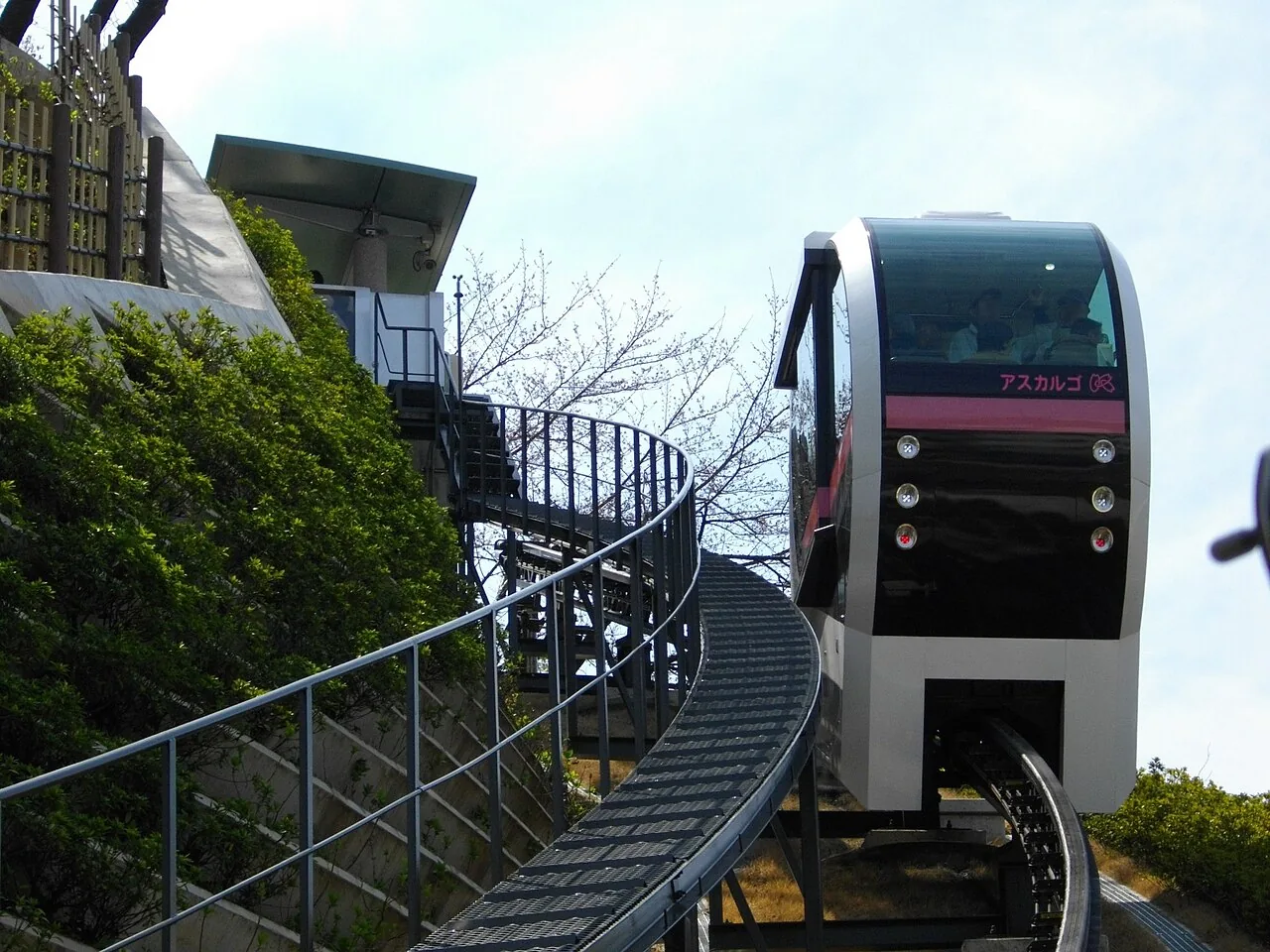
    You can walk up. Or you can take the Asuka Park Rail, affectionately called the Ascargot.

    The free, driverless car travels only 48 meters, climbs about 18 meters and takes roughly two minutes. It looks like a snail and moves with the confidence of one.

    Is it necessary? No. Is it delightful? Completely.

    The Ascargot monorail climbing the slope at Asukayama Park in Oji
    The two-minute Ascargot ride to Asukayama Park. Photo: Abasaa / Wikimedia Commons, public domain.

    End the walk with a streetcar

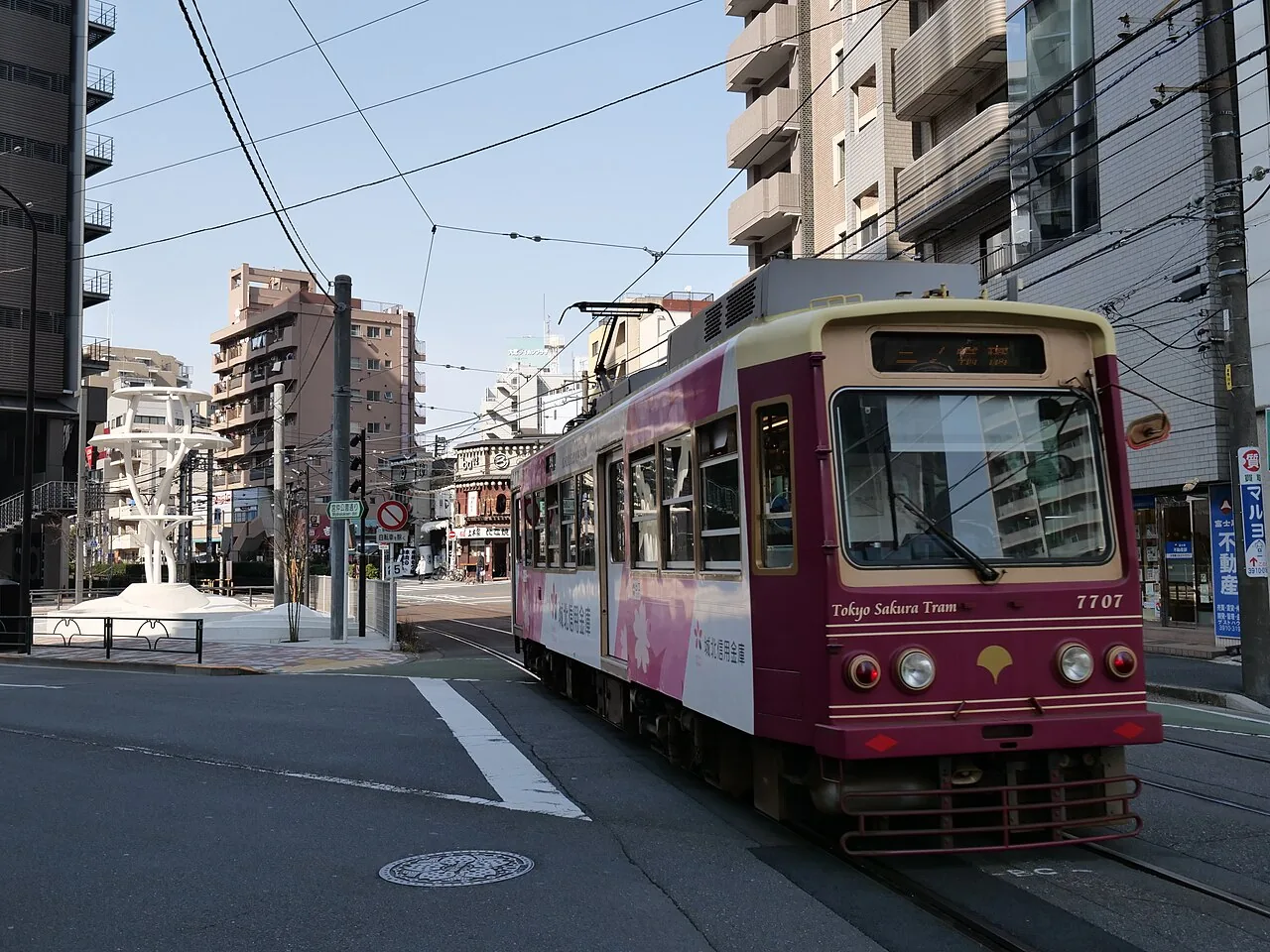
    Tokyo once had an enormous tram network. Most of it disappeared as cars and subways took over, but the Tokyo Sakura Tram—also known as the Toden Arakawa Line—survived.

    At Oji, the little tram emerges into regular traffic and runs beside Asukayama Park. Board at Oji-ekimae or Asukayama and continue the day toward old-school neighborhoods such as Kajiwara, Arakawa or Minowa.

    It is public transport, not a theme-park ride. That is exactly why it belongs in this story.

    A Tokyo Sakura Tram traveling along the Toden Arakawa Line
    Tokyo Sakura Tram, one of Tokyo’s last surviving streetcar lines. Photo: Drivephotographer / Wikimedia Commons, CC0.

    A simple Oji walking route

    1. Oji Station — start from the JR or Tokyo Metro station.
    2. Otonashi Shinsui Park — 15–25 minutes.
    3. Oji Shrine — a quick, quiet stop beside the park.
    4. Oji Inari Shrine — follow the neighborhood’s fox story.
    5. Nanushinotaki Park — allow 20–30 minutes when open.
    6. Asukayama Park and the Ascargot — return toward the station.
    7. Tokyo Sakura Tram — ride onward instead of retracing your steps.

    Allow around three hours at an easy pace, longer if you visit one of Asukayama Park’s museums or stop for lunch.

    Before you go

    • Best for: local history, unusual transport, shrines and slow neighborhood walks.
    • Nearest station: Oji Station on the JR Keihin-Tohoku Line and Tokyo Metro Namboku Line.
    • Cost: The parks, shrine grounds and Ascargot are generally free; tram fare and museum admission are separate.
    • Best time: Weekday mornings or late afternoons. Cherry-blossom season is beautiful but no longer qualifies as quiet.
    • Important: Check current opening times, closures and event restrictions on official websites.

    Oji is not hidden because it is difficult to reach. It is hidden because Tokyo gives visitors so many louder instructions.

    Ignore them for an afternoon. Follow the foxes instead.


    Researched using current information from GO TOKYO, GO TOKYO’s Oji Inari Shrine guide, Tokyo Metropolitan Bureau of Transportation and Kita City, checked September 11, 2026. This is a researched neighborhood guide, not a firsthand visit report. Conditions may change.

    Where this joins the rest of the east side

    Oji is one stop from Akabane Hachiman and its Shinkansen tunnel and one from JR Itabashi, where Kondo Isami’s grave is beside the station. The Toden streetcar from Oji runs east to Minowa, for Jokanji and the edge of Yoshiwara.

    Quick answers

    What is there to do in Oji, Tokyo?

    Oji Inari Shrine (the fox shrine of Hiroshige’s print), Otonashi Shinsui Park in the old riverbed beside the station, Nanushinotaki waterfall garden, Asukayama Park with its free ‘Ascargot’ hillside railway, and the Toden Arakawa streetcar. All free.

    How do I get to Oji?

    JR Keihin-Tohoku line or Namboku subway line to Oji Station, about 15 minutes from Tokyo Station or Ueno. The Toden Arakawa tram also stops at Oji-ekimae.

    What is the Asukayama monorail?

    The Asuka Park Rail, nicknamed Ascargot, a free driverless car that climbs 18 meters over 48 meters of track in about two minutes from beside Oji Station to the top of Asukayama Park.

    When is the Oji fox parade?

    On New Year’s Eve, when people in fox masks carry lanterns from Shozoku Inari Shrine to Oji Inari Shrine, re-enacting the legend of the foxes gathering under the hackberry tree.

    Written by Kizuku. I run the Sunamachi Ginza Sumo Stable, a sumo experience in Koto City, and I write about the east side of Tokyo I live and work in. More about this site →