This article may contain affiliate links to booking sites. If you book through them, LOCAL SIDE JAPAN earns a small commission at no extra cost to you. How this site is made →
HIDDEN HISTORY · MINAMISENJU, TOKYO
Step out of Minamisenju Station and Tokyo looks entirely ordinary: railway tracks, apartment blocks, bicycles and convenience stores. Then, a few minutes away, you meet a stone Buddha nearly four metres tall. It stands beside the remains of one of Edo’s principal execution grounds—and the place where a grim encounter helped change Japanese medicine.
On this page
- A place Tokyo did not erase—only build around
- The “Beheading Jizo” was built for mercy, not execution
- The execution ground that opened an anatomy book
- Ekoin: graves, remembrance and the Kanzo memorial
- A one-hour walk through the buried edge of Edo
- Before you go
- Where this joins the rest of the east side
- Quick answers
A place Tokyo did not erase—only build around
The name is Kozukappara, sometimes written Kozukahara. During the Edo period, this northern edge of the city was used as an execution ground, while Suzugamori served a similar role on Edo’s southern approach. Punishment here was deliberately public: the location stood near a major road into the capital, turning state power into something travellers could see.
Local history describes a site of roughly 2,000 tsubo—about 6,600 square metres—that continued operating until July 1873. You may see claims that more than 200,000 people died here. That figure is repeated in local accounts, but surviving records are incomplete, so it is better understood as a traditional estimate than a precise count.
Modern infrastructure cut through the former grounds. Railway construction altered the landscape, and the great stone figure was moved from its earlier position south of the freight line. That is what makes the area so unsettling today. There is no dramatic ruin and no theatrical entrance. The city simply continued—tracks beside graves, homes beside memorials, commuters passing a place of punishment without necessarily knowing its name.
The “Beheading Jizo” was built for mercy, not execution
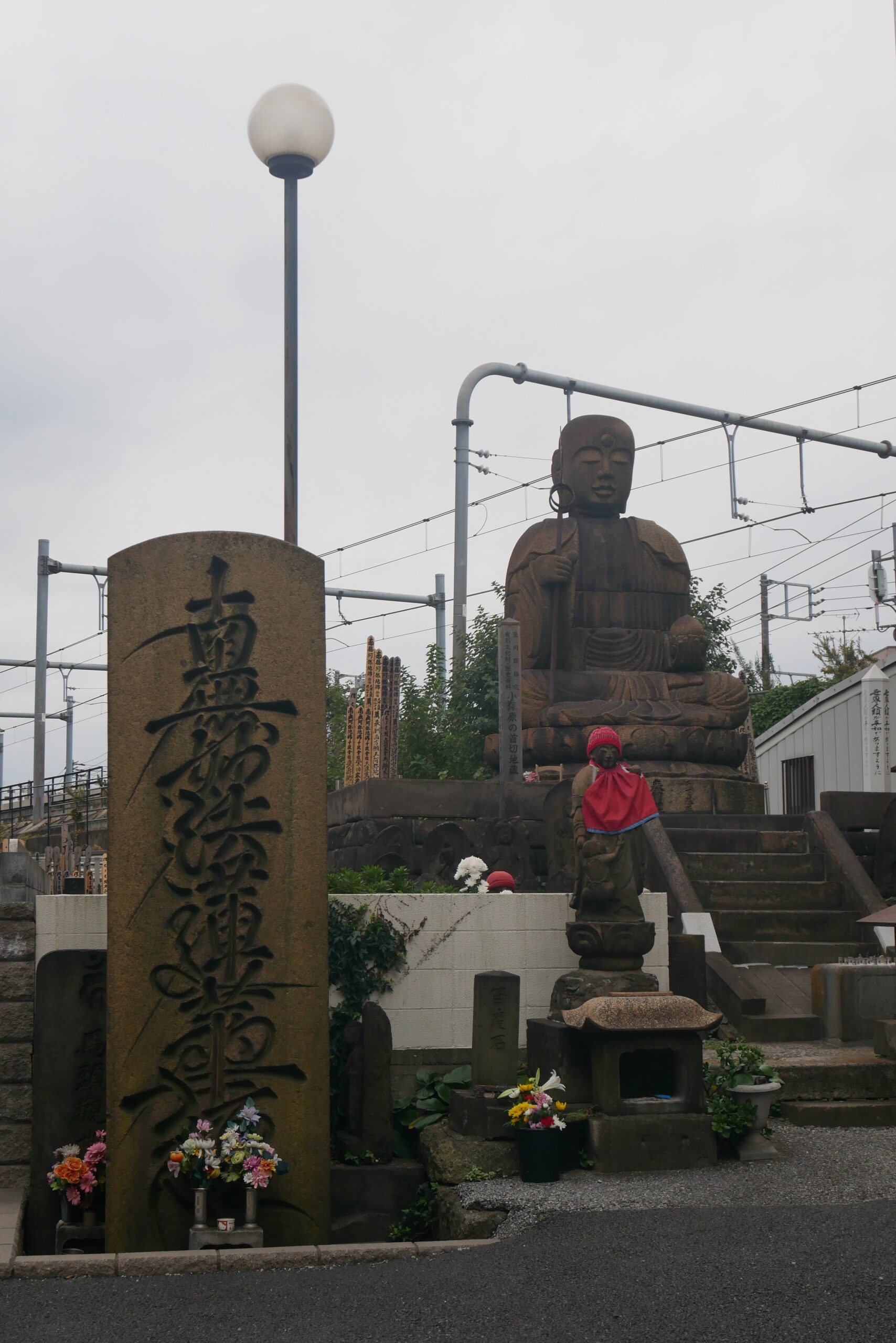
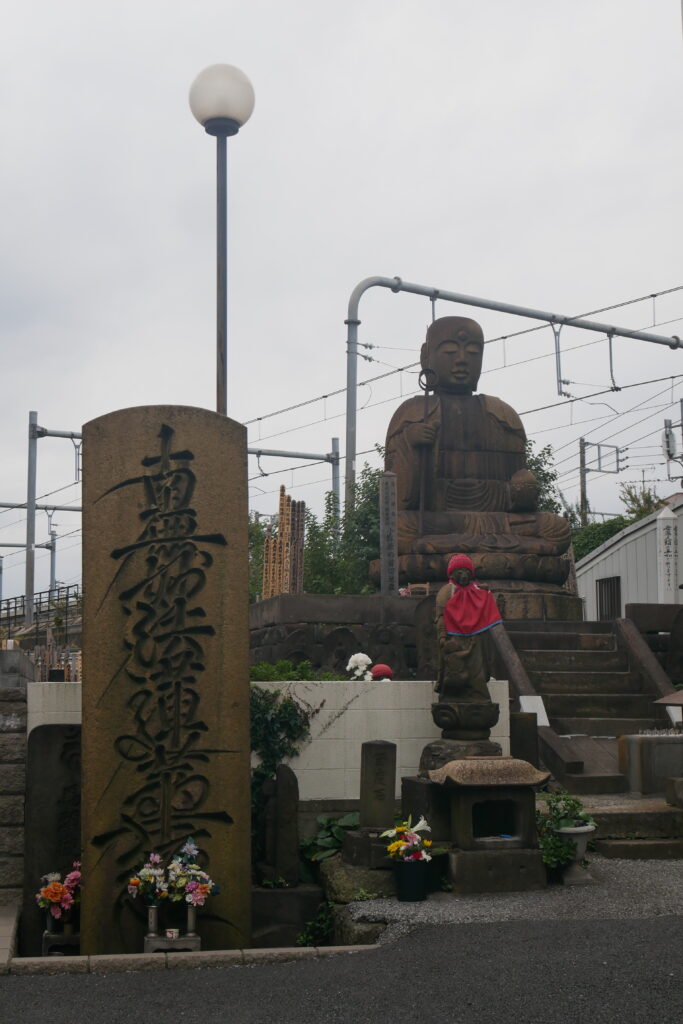
The most visible survivor is at Enmeiji: Kubikiri Jizo, usually translated as “Beheading Jizo.” The nickname easily creates the wrong impression. The statue was not an instrument of punishment. It was erected in 1741 to console those who had been executed and those who died without anyone to tend their graves.
Almost four metres high and assembled from 27 pieces of granite, the seated figure has a physical weight that photographs barely communicate. It does not look toward a scenic garden. Railway steel, utility wires and the compact geometry of the neighbourhood surround it. That collision—compassion carved in stone, framed by everyday transport—is the real image of Kozukappara.
Pause here rather than treating it as a checklist stop. Enmeiji is a working Buddhist temple and this is a memorial to real people, many of whose names are gone. Quiet voices, discreet photography and a small bow are more appropriate than ghost-hunting poses.
The execution ground that opened an anatomy book
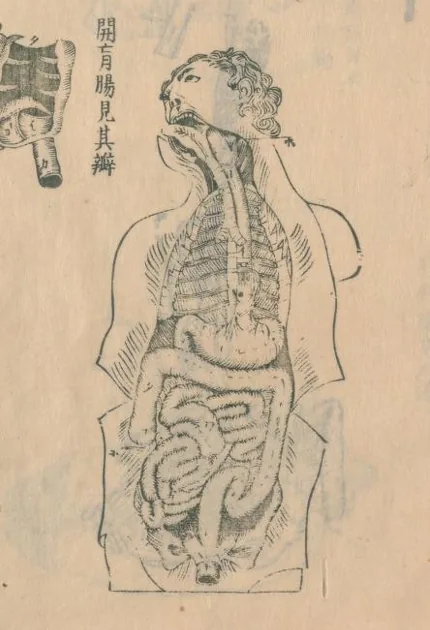
Kozukappara also holds an extraordinary place in the history of Japanese medicine. In 1771, physicians including Sugita Genpaku, Maeno Ryotaku and Nakagawa Jun’an attended the dissection of an executed person here. They brought a Dutch anatomy book—commonly known in Japan as Tafel Anatomia—and compared its illustrations with the body before them.
The accuracy of the European anatomical images convinced them that the text had to be translated. The task was formidable: their command of Dutch was limited, specialist dictionaries were scarce and the medical vocabulary they needed often did not yet exist in Japanese. Their work eventually produced Kaitai Shinsho in 1774, a landmark Japanese translation of Western anatomy.
The story should not be polished into an uncomplicated tale of scientific progress. New knowledge came through the body of a person killed by the state, whose identity is often omitted when the episode is retold. Kozukappara forces those two histories—medicine and punishment—into the same frame.
Ekoin: graves, remembrance and the Kanzo memorial
On the other side of this fragmented historical landscape is Ekoin. The temple was established here in 1667 by the better-known Ekoin in Ryogoku to pray for prisoners who died in jail and people executed at Kozukappara.
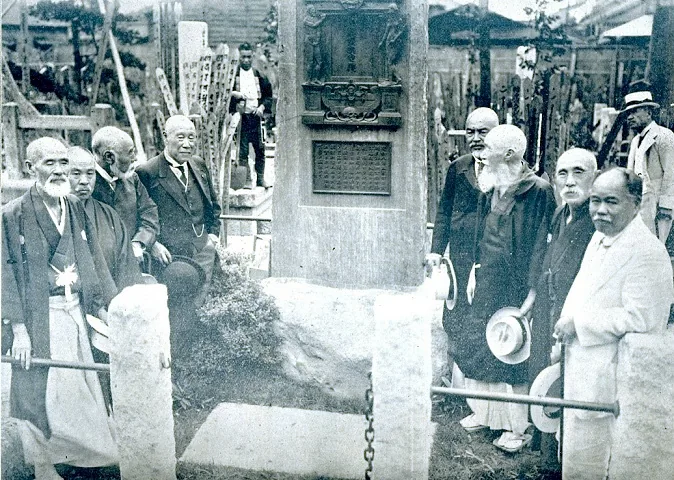
Its grounds contain graves connected with the political upheavals at the end of the Tokugawa shogunate, including those of Yoshida Shoin and Hashimoto Sanai, both executed during the Ansei Purge. Near the main hall stands the Kanzo memorial, commemorating the 1771 dissection witnessed by Genpaku and his colleagues.
Do not assume every cultural property is always accessible. Ekoin remains an active religious site, some objects are not normally open to the public, and ceremonies take priority. The reward is not a collection of spectacular objects. It is the rare sensation of standing where several versions of Japanese history overlap: criminal justice, Buddhism, political dissent, translation and medicine.
A one-hour walk through the buried edge of Edo
- Start at Minamisenju Station. The JR Joban Line, Tokyo Metro Hibiya Line and Tsukuba Express all stop here.
- Walk to Enmeiji. Find Kubikiri Jizo and notice how tightly the temple, road and railway occupy the former execution-ground landscape.
- Continue to Ekoin. Look for the Kanzo memorial and the registered graves that are accessible without entering restricted areas.
- Finish by walking the ordinary streets. The absence of a preserved “historic district” is part of the story: modern Minamisenju grew directly across the old boundary of Edo.
If you want to continue deeper into eastern Tokyo, pair this visit with the extraordinary disaster-planning architecture of the Shirahige-Higashi firewall apartments. Together, the two places show how Tokyo hides difficult history inside structures that still serve daily life.
Before you go
- Area: Minamisenju, Arakawa City, Tokyo
- Nearest station: Minamisenju Station
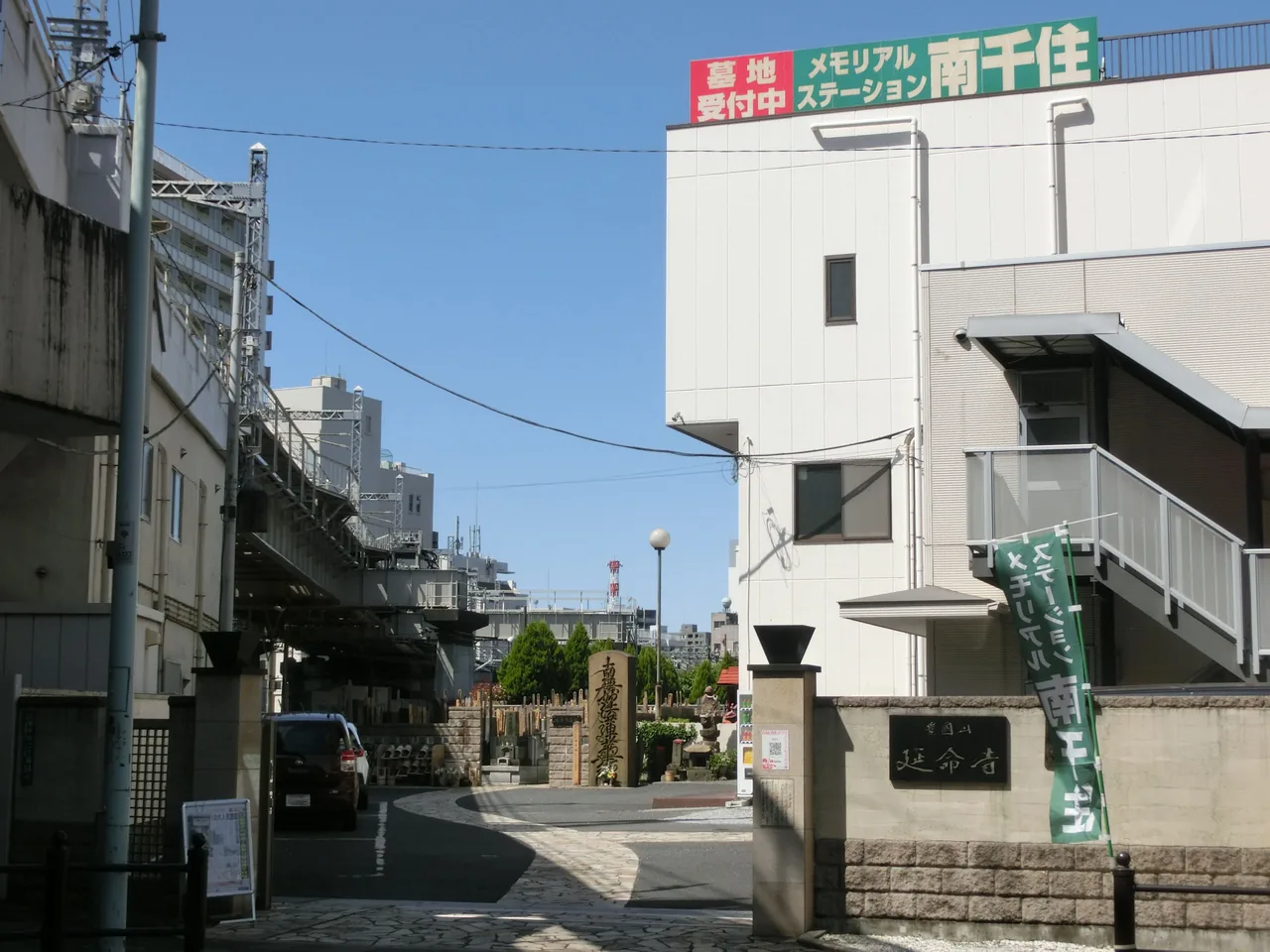
- Enmeiji: 2-34-5 Minamisenju, Arakawa-ku, Tokyo
- Ekoin: 5-33-13 Minamisenju, Arakawa-ku, Tokyo
- Time needed: About 45–75 minutes for both temples and the surrounding streets
- Best time: Daylight hours; avoid arriving near closing time
- Cost: No standard admission fee for the publicly accessible grounds; do not enter closed or private areas
- Etiquette: These are active temples and memorial spaces. Keep voices low, do not photograph worshippers or ceremonies without permission, and never stage “scary” photos beside graves.
Related: Kappabashi, fifteen minutes south: how to buy a Japanese knife without getting it wrong.
Related: Yanaka on a weekday: the free loop from Nippori to Nezu.
Where this joins the rest of the east side
Ten minutes’ walk away is Jokanji, where the women of Yoshiwara were buried. Across the Senju Ohashi to the north is Kita-Senju, the first post town on the road these condemned prisoners were paraded along. The other Shinsengumi-era grave on the east side is Kondo Isami’s at Itabashi.
Quick answers
Where is the Kozukappara execution ground?
In Minamisenju, Arakawa City, a few minutes from Minamisenju Station (Hibiya line, Tsukuba Express, JR Joban line). The main surviving landmarks are the Kubikiri Jizo at Enmeiji beside the tracks and Ekoin temple across the road. Both are free.
How many people were executed at Kozukappara?
Local accounts repeat a figure of over 200,000 between the 1600s and 1873, but surviving records are incomplete and the number is a traditional estimate rather than a count. The site was about 6,600 square meters.
What is the Kubikiri Jizo?
A seated stone Jizo almost four meters high, assembled from 27 granite pieces, erected at Enmeiji in 1741 to console the executed and the unclaimed dead. Despite the nickname ‘Beheading Jizo’ it was built for mercy, not punishment.
What happened at Kozukappara in 1771?
Physicians Sugita Genpaku, Maeno Ryotaku and Nakagawa Jun’an watched the dissection of an executed person here and compared it with a Dutch anatomy book. The accuracy convinced them to translate it, producing Kaitai Shinsho in 1774, a landmark of Japanese medicine.
LOCAL SIDE JAPAN checked historical and access information against Arakawa City materials on September 12, 2026. Temple access and visible areas can change for ceremonies, maintenance or local circumstances. Historical totals for executions are estimates and are identified as such above.