
This article may contain affiliate links to booking sites. If you book through them, LOCAL SIDE JAPAN earns a small commission at no extra cost to you. How this site is made →
TOKYO / EDOGAWA / BURIED INFRASTRUCTURE
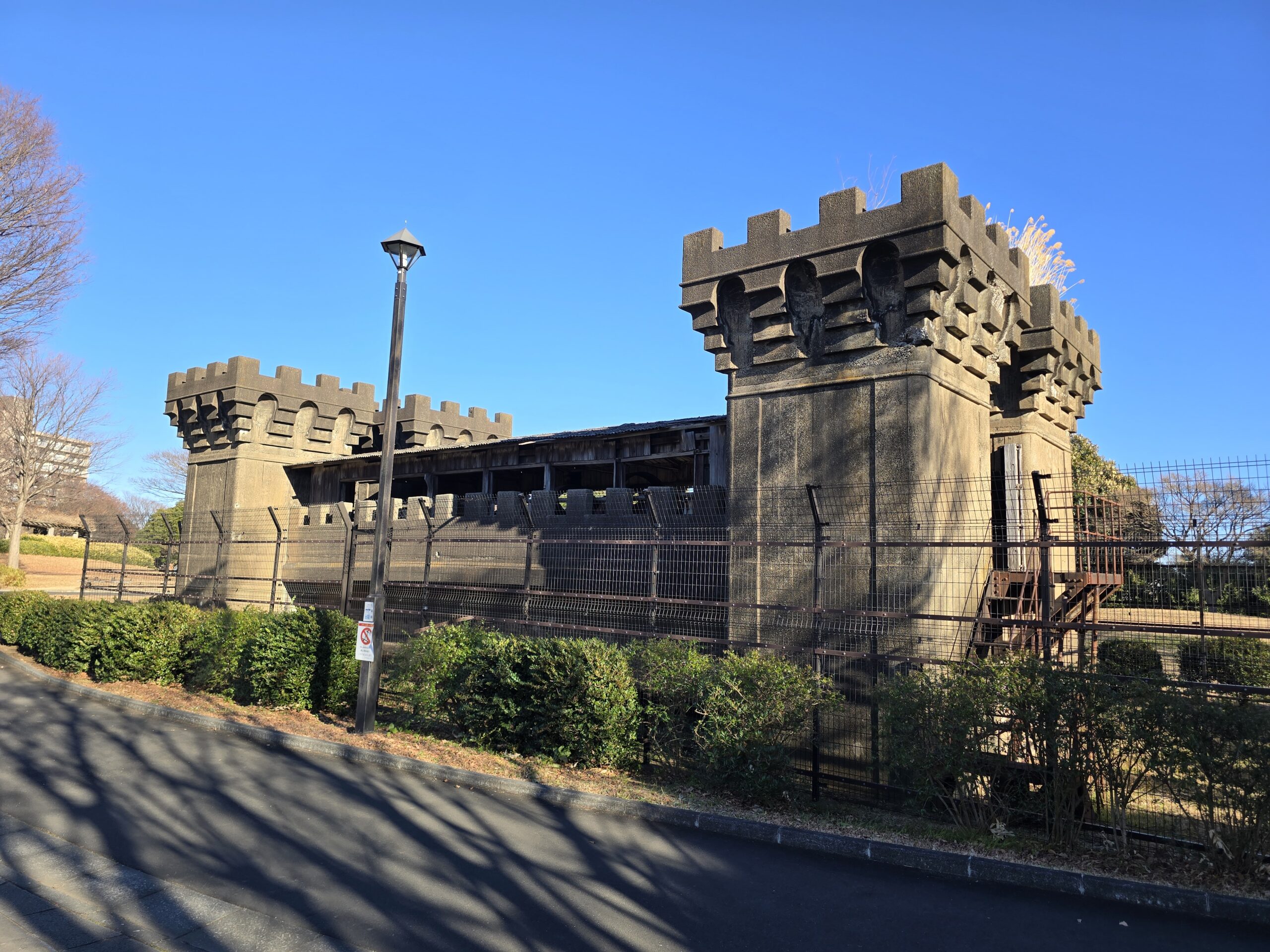
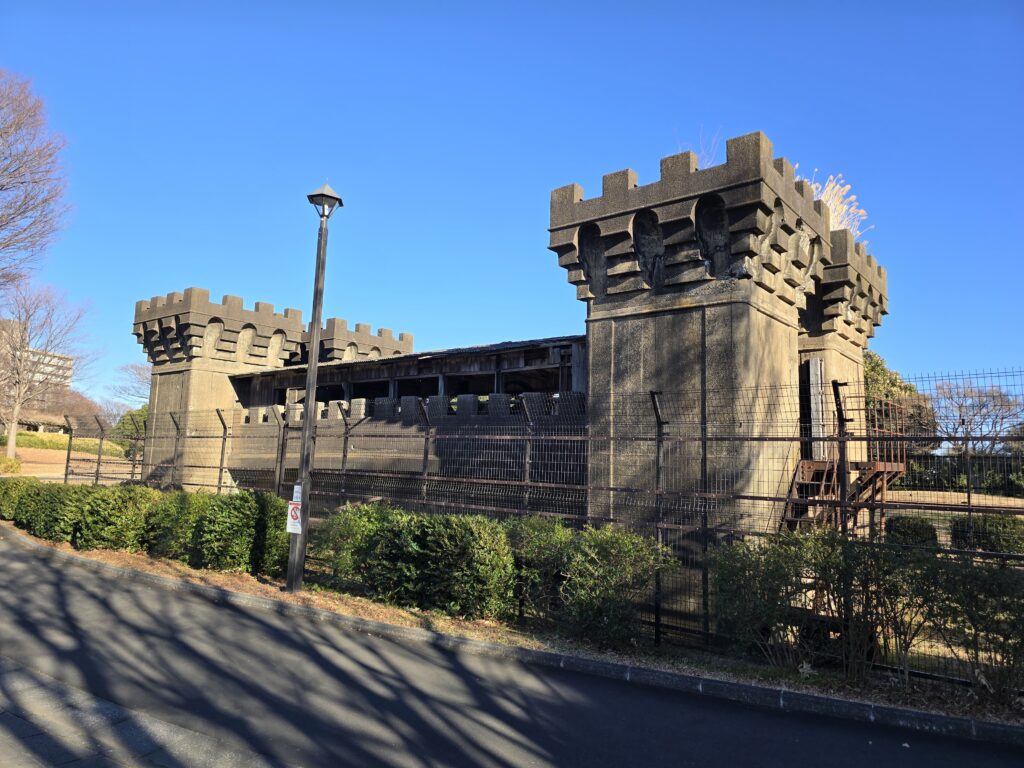
There is a giant concrete gate buried inside an ordinary Tokyo park.
It does not open. It does not lead anywhere. There is no canal in front of it and no boat can pass through it.
Only its upper section rises above the grass, like the entrance to a building that Tokyo forgot to finish digging out.
This is the Old Komatsugawa Lock. It once lifted and lowered working boats between waterways with different water levels. After it closed, redevelopment raised the surrounding ground and swallowed most of the structure.
Tokyo did not demolish the lock. It buried it standing up.
On this page
- A ruin without the usual signs of a ruin
- What exactly is a lock?
- Tokyo created a flood-control problem—and engineered around it
- Then Tokyo stopped needing the gate
- The park itself is emergency infrastructure
- The emperor came to look at it
- Walk from the dead lock to its living replacement
- A deep-east Tokyo walking route
- Before you go
- Where this joins the rest of the east side
- Quick answers
A ruin without the usual signs of a ruin
You find it in the Wind Plaza of Ojima-Komatsugawa Park, a few minutes from Higashi-ojima Station.
The surroundings are aggressively normal. Joggers pass. Children play nearby. Apartment towers rise beyond the trees. Then a heavy concrete arch appears from the lawn.
Its metal mechanisms are still attached. The curved top resembles part of an industrial fortress, but the base disappears directly into the earth.
There is no dramatic entrance fee, abandoned tunnel or guided tour. The strange thing is simply standing there, exposed and unexplained unless you stop to read.
Most visitors to the park are not visiting it at all.
What exactly is a lock?
A lock is a water elevator for boats.
When two rivers or canals have different surface levels, a boat enters a chamber between two gates. One gate closes. Water is added or released until the chamber matches the level on the other side. The second gate then opens and the boat continues.
The principle is the same one used at the Panama Canal, reduced here to the scale of Tokyo’s working waterways.
Before trucks and expressways took over, boats moved rice, salt, soy sauce, timber, fuel and other heavy goods through eastern Tokyo. The canals were not decoration. They were roads made of water.
Tokyo created a flood-control problem—and engineered around it
Eastern Tokyo has always lived with water. Rivers brought trade, but they also brought devastating floods.
In the early twentieth century, engineers cut the Arakawa Floodway to carry floodwater safely toward Tokyo Bay. The river now commonly called the Arakawa is largely the result of that enormous project.
The new channel protected the city, but it created a practical problem. The Arakawa and the connected Old Nakagawa and Onagi River did not share the same water level. Boats could no longer move easily between them.
The Komatsugawa Lock was completed in 1930 to solve that problem. Its chamber had gates at both ends, controlling water so vessels could cross between the great floodway and Tokyo’s inner canal network.
It was infrastructure built to repair the side effect of other infrastructure.
Then Tokyo stopped needing the gate
The lock belonged to a city where freight moved by boat.
Postwar Tokyo chose roads. Trucks became faster and more flexible, canal traffic declined and the old lock lost its purpose. It was closed in the late 1970s.
Normally, obsolete infrastructure disappears. Tokyo tears it down, builds over it and gives the new development a polished name.
Komatsugawa received a stranger ending.
Large-scale redevelopment transformed this low-lying district into a disaster-prevention park and raised the ground level. Of the lock’s two gates, only the rear gate on the Old Nakagawa side was preserved. The new earth covered much of it.
The visible arch is therefore not a small monument shaped like the old structure. It is the real structure, continuing below your feet.
The park itself is emergency infrastructure
Ojima-Komatsugawa Park looks like open recreational space, but its emptiness has a job.
The park spans parts of Edogawa and Koto wards and was developed as a large disaster-prevention site. In a major earthquake or urban fire, its broad lawns provide evacuation space away from dense streets and buildings.
This creates a remarkable stack of Tokyo history.
At the bottom is an old industrial waterway. Above it stands a 1930 lock built for cargo boats. Around the buried lock is a modern park designed to protect residents from a different kind of disaster. Beyond that are high-rise housing blocks created through redevelopment.
One piece of land is doing several generations of urban work at once.
The emperor came to look at it
Here is an odd measure of how hidden this place is.
In May 2023, Emperor Naruhito inspected the Old Komatsugawa Lock, the modern Arakawa Lock Gate and the Nakagawa Funabansho Museum as part of a visit focused on the history of water transport and flood control.
The official park page mentions the imperial visit. Yet many Tokyo residents have never heard of the structure, and most overseas travel guides ignore it completely.
It is simultaneously important enough for an emperor and obscure enough to have no queue.
Walk from the dead lock to its living replacement
Do not travel across Tokyo only to photograph the old gate for five minutes. The better experience is to follow the water system.
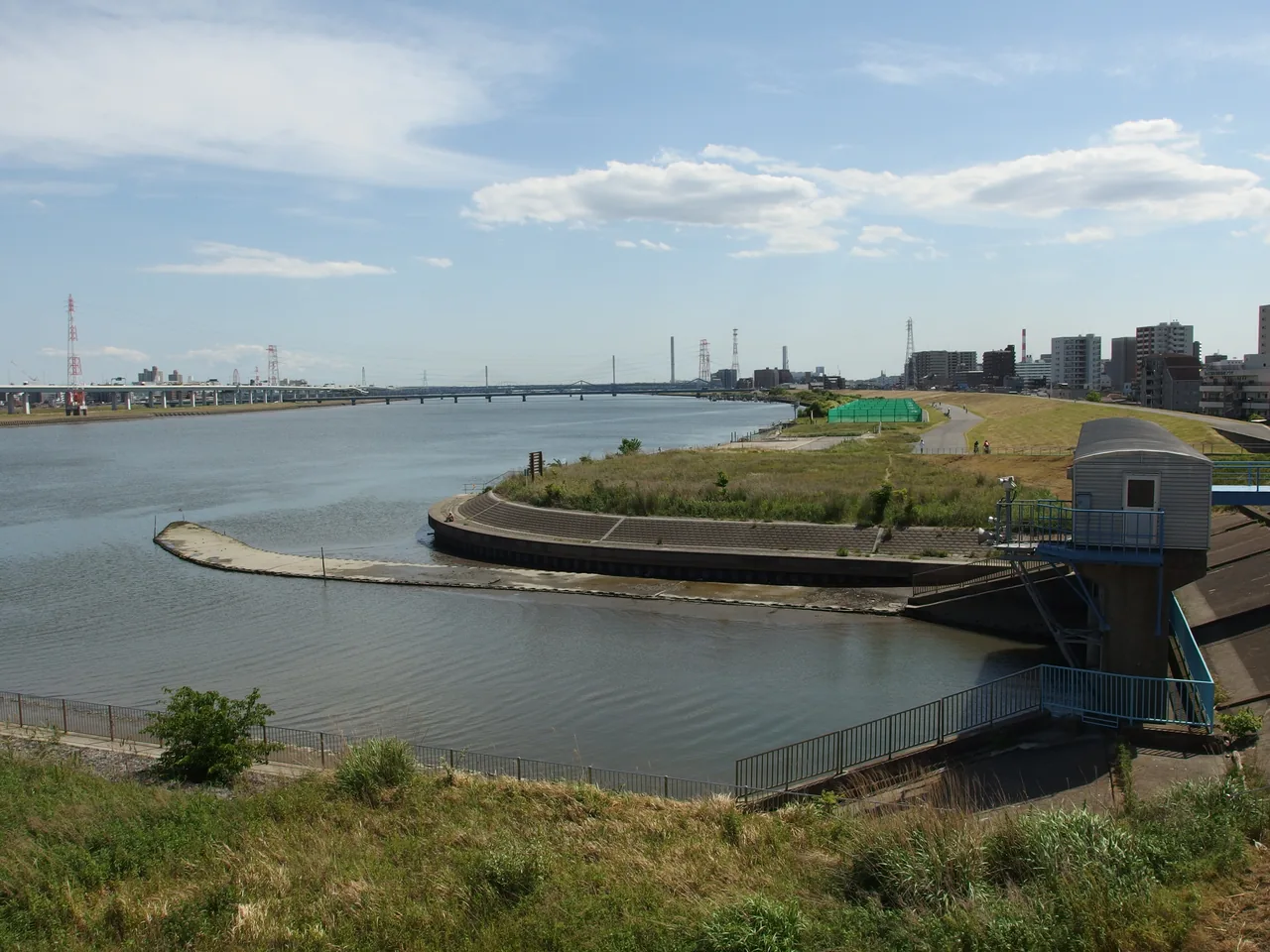
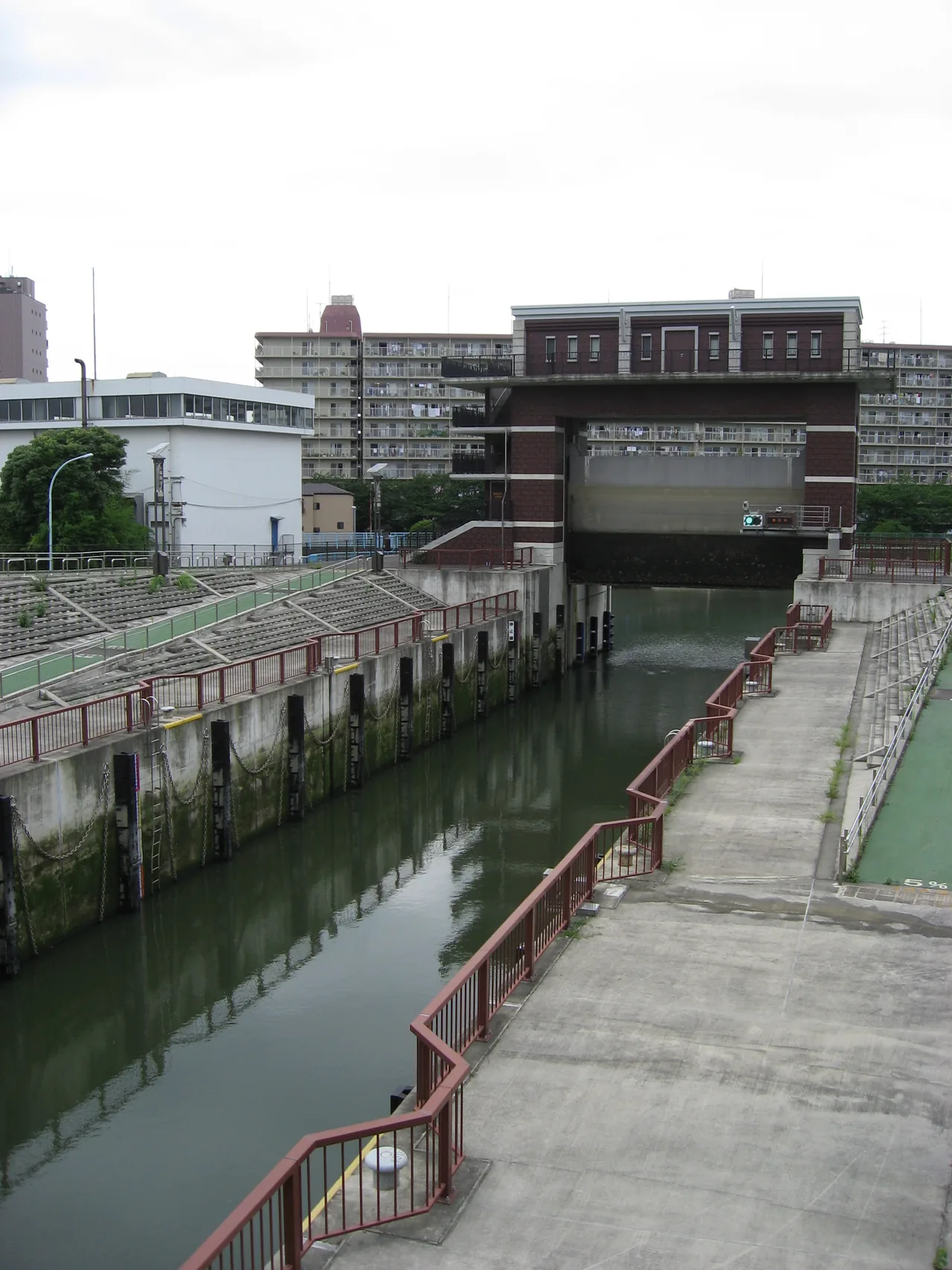
From the buried lock, walk south beside the Old Nakagawa toward the modern Arakawa Lock Gate, completed in 2005.
The modern structure performs essentially the same trick. It adjusts a water-level difference of up to about 3.1 meters between the Arakawa and Old Nakagawa, allowing boats to pass. The trip through the chamber takes roughly twenty minutes.
Its purpose is not only transport. If roads and railways fail after a major earthquake, the connected waterways can carry relief supplies, equipment and evacuees into eastern Tokyo.
The old lock moved the commercial life of the city. The new one waits for the day it may have to help save it.
A deep-east Tokyo walking route
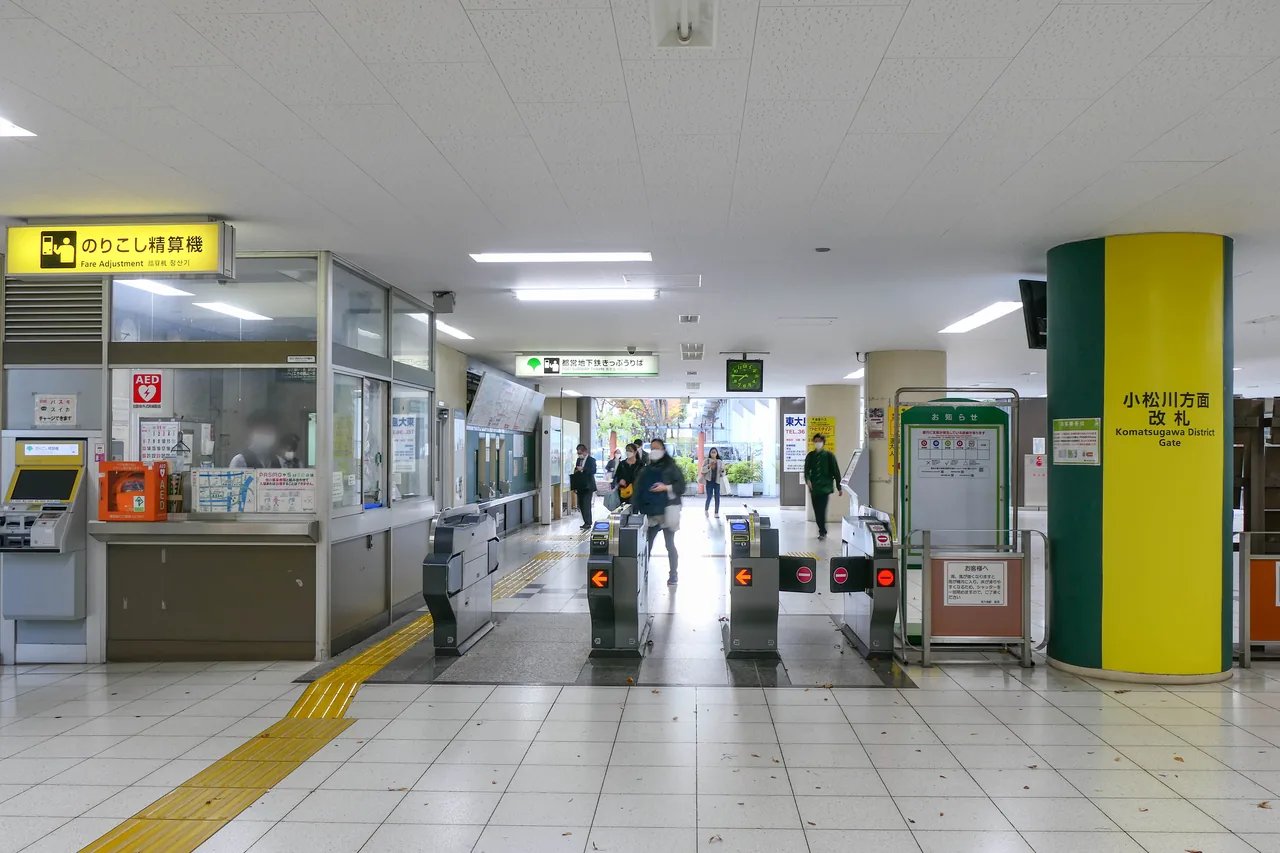
- Higashi-ojima Station, Komatsugawa Exit — the station itself crosses the Old Nakagawa and sits on the border between two wards.
- Old Komatsugawa Lock — inspect the machinery and imagine the missing chamber beneath the park.
- Old Nakagawa riverside — follow the quiet water south rather than returning to the station.
- Arakawa Lock Gate — compare the buried ruin with its functioning modern successor.
- Nakagawa Funabansho Museum — learn how officials inspected boats and cargo entering Edo through the Onagi River.
For the wider story of this water network, read our guide to the lost boat checkpoint that controlled cargo entering Edo.
You can also continue west through Koto City toward the river park where local residents still travel by hand-pulled boat.
Before you go
- Name: Old Komatsugawa Lock / 旧小松川閘門.
- Location: Wind Plaza, Ojima-Komatsugawa Park, 1-1 Komatsugawa, Edogawa City, Tokyo.
- Nearest station: Higashi-ojima Station on the Toei Shinjuku Line.
- Exit: Use the Komatsugawa Exit, then cross the park toward Wind Plaza.
- Admission: Free.
- Opening hours: The outdoor monument is in a public park and can be viewed without museum admission.
- Time needed: Ten minutes for the structure; two to three hours for the full riverside route.
- Best light: Late afternoon makes the concrete texture and buried shape more visible.
- Accessibility: Park paths are generally broad, but routes and gradients vary around the raised areas.
- Respect the site: Do not climb on the gate or enter planted and restricted sections.
Tokyo usually displays history behind glass.
Here, history is under the lawn.
The gate survived because the city built a new city around it—higher ground, new apartments, a disaster park and a different transport system.
Stand beside it and remember that the strange concrete crown is only the visible fraction.
The rest of old Tokyo is still down there.
Researched using current information from the Tokyo Historic Architecture Project, Edogawa City and the official Ojima-Komatsugawa Park guide, checked September 12, 2026. This is a researched cultural guide, not a firsthand visit report. Access conditions may change.
Where this joins the rest of the east side
The lock is one end of a waterway day: the Onagi River and the Nakagawa boat checkpoint are next door, the ¥100 boats on the Yokojukken are twenty minutes south, and Kiyosumi-Shirakawa is where the canals reach the old city.
Quick answers
Where is the Old Komatsugawa Lock?
In the Wind Plaza of Ojima-Komatsugawa Park, a few minutes from Higashi-Ojima Station (Toei Shinjuku line), on the border of Edogawa and Koto cities. Use the Komatsugawa exit. The park is free and always open.
Why is the Komatsugawa Lock buried?
It closed in the late 1970s when freight moved from canals to trucks. Redevelopment then raised the ground level of the low-lying district to create a disaster-prevention park, covering most of the structure. Only the upper part of the rear gate on the Old Nakagawa side is visible.
What did the Komatsugawa Lock do?
Completed in 1930, it lifted and lowered boats between the new Arakawa floodway and the Old Nakagawa and Onagi rivers, which had different water levels. It was infrastructure built to fix a side effect of Tokyo’s flood-control works.
Is there anything else to see nearby?
The modern Arakawa Lock Gate and the Nakagawa Funabansho Museum, both inspected by Emperor Naruhito in 2023, are a short walk along the river. The park itself is an evacuation site with wide lawns.