This article contains affiliate links to booking sites. If you book through them, LOCAL SIDE JAPAN earns a small commission at no extra cost to you. The place itself is free and is described first. How this site is made →
TOKYO / KOTO CITY / LOCAL WATERWAYS
Tokyo has a park where you can row a wooden boat, pass a tiny rice field and pay just ¥100 for half an hour on the water.
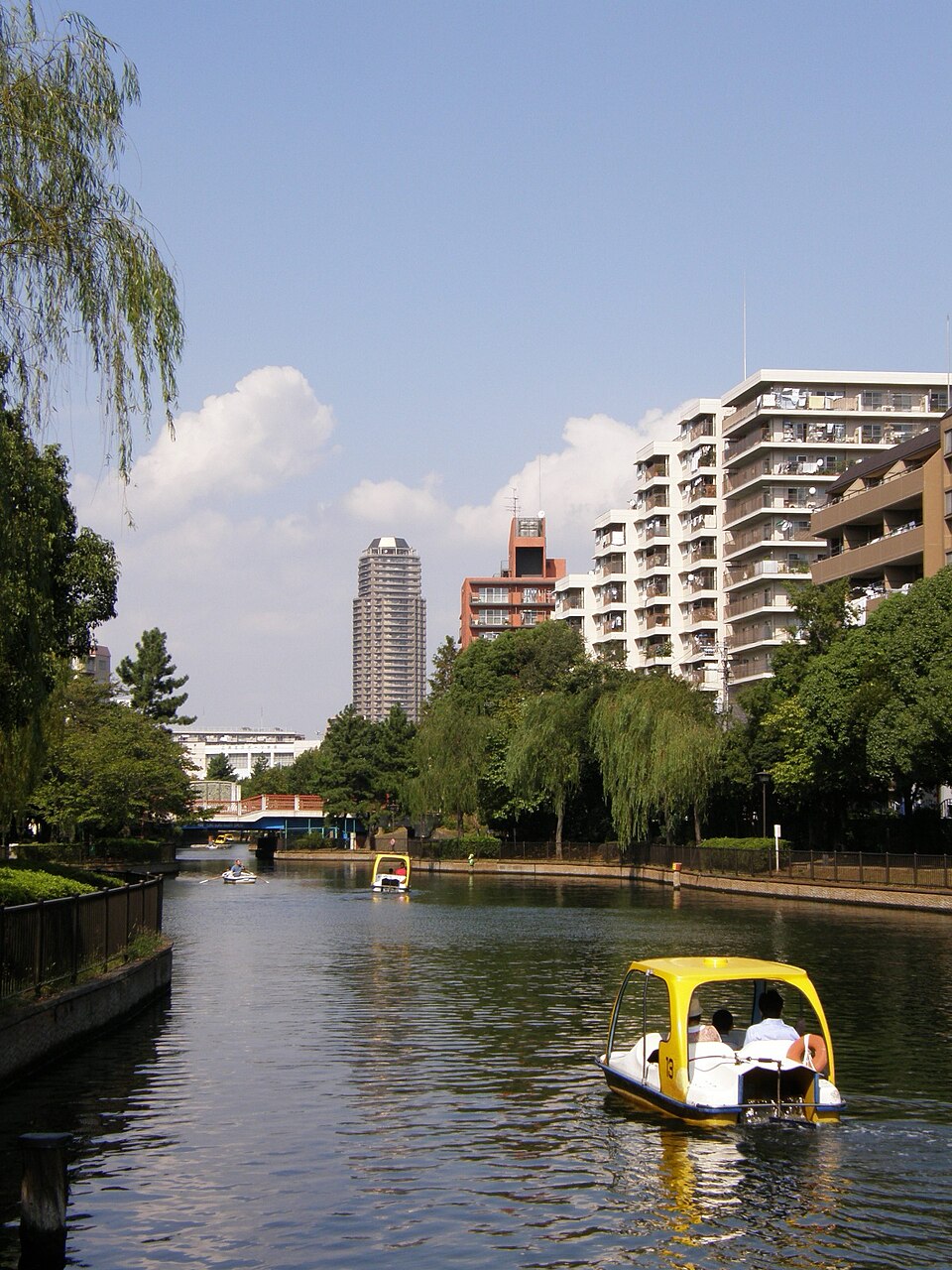
It is not beside Mount Fuji. It is not in a preserved village. It is wedged between apartment blocks, local roads and the everyday neighborhoods of Koto City.
This is Yokojukken-gawa Shinsui Park—a 1.9-kilometer waterside park close to Sunamachi Ginza, built from part of an old canal.
Come here after eating your way through the shopping street. Tokyo will suddenly become slower, greener and slightly harder to explain.
On this page
- A river turned into a neighborhood park
- The strange luxury of ¥100 boating
- A wooden boat from another version of Tokyo
- The view that explains eastern Tokyo
- Yes, Tokyo has a rice field here
- Important: the water obstacle course is closed
- Make it a Sunamachi half-day
- Before you go
- Where this joins the rest of the east side
- Quick answers
Fast facts
- Admission: The park is free
- Rowing and pedal boats: ¥100 per boat for 30 minutes. Cash only and no change is given — bring ¥100 coins
- Traditional wooden boat: About 20 minutes, free, on scheduled days, no reservation needed
- Closed: The aquatic obstacle course is closed until the end of April 2027 for bridge reconstruction
- Where: Between Ogibashi and Toyo, Koto City, Tokyo
- Nearest: Toyocho Station, about 10 minutes on foot to the southern section; Minami-Sunamachi or Nishi-Ojima, 10 to 15 minutes
A river turned into a neighborhood park
Yokojukken-gawa means roughly “the river ten ken wide.” A ken was an old Japanese unit of length; ten of them is about 18 meters. The name is refreshingly practical. Edo-era branding departments were apparently busy elsewhere.
The canal once formed part of the dense water network that moved people and goods through eastern Tokyo. After decades of industrialization and flood-control work, part of it was reshaped into a public waterside park.
Koto City describes the theme as “a waterfront for residents.” That phrase explains the place better than “tourist attraction.” People walk dogs, children look for fish, older residents sit under trees, and almost nobody is performing Tokyo for an audience.
The strange luxury of ¥100 boating
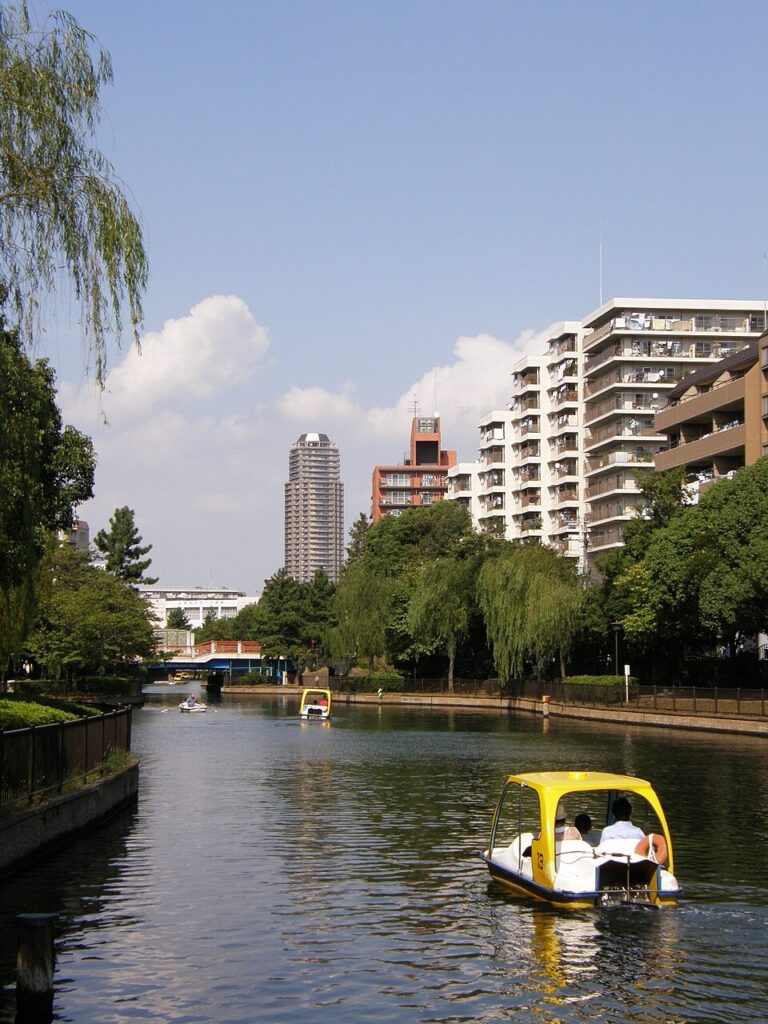
At the park’s boat area, the current official price is ¥100 per boat for 30 minutes. There are rowing boats and pedal boats, subject to the operating calendar, weather and availability.
One hundred yen in central Tokyo usually buys you almost nothing. Here, it buys temporary command of a very small vessel.
The route is calm and contained. You are not launching into Tokyo Bay or navigating behind a container ship. You pedal or row past trees, bridges and residential buildings while local life continues on both banks.
Bring ¥100 coins or other accepted cash denominations because the facility does not provide change. Children of elementary-school age or younger must ride with a guardian, and bad weather can close the boats without much ceremony.
A wooden boat from another version of Tokyo
The park’s most unusual experience is the traditional Japanese wooden boat ride.
Koto City owns seven wooden boats, with six kept at Yokojukken-gawa Shinsui Park. Volunteers from Wasen Tomo no Kai operate them to preserve the traditional skill of steering with a long wooden oar.
On scheduled operating days, individuals can register at the Umibe boarding point without advance reservations. The ride lasts about 20 minutes and is currently free. Visitors may also be offered the chance to try working the oar.
It is not a theme-park reconstruction with recorded shamisen music. The boat is real, the technique is real, and the apartment buildings in the background are also extremely real.
Operation depends on the official calendar, rain, wind and heat conditions. Check the Koto City schedule on the morning of your visit. Do not build an international itinerary around one small volunteer boat without checking first.
The view that explains eastern Tokyo
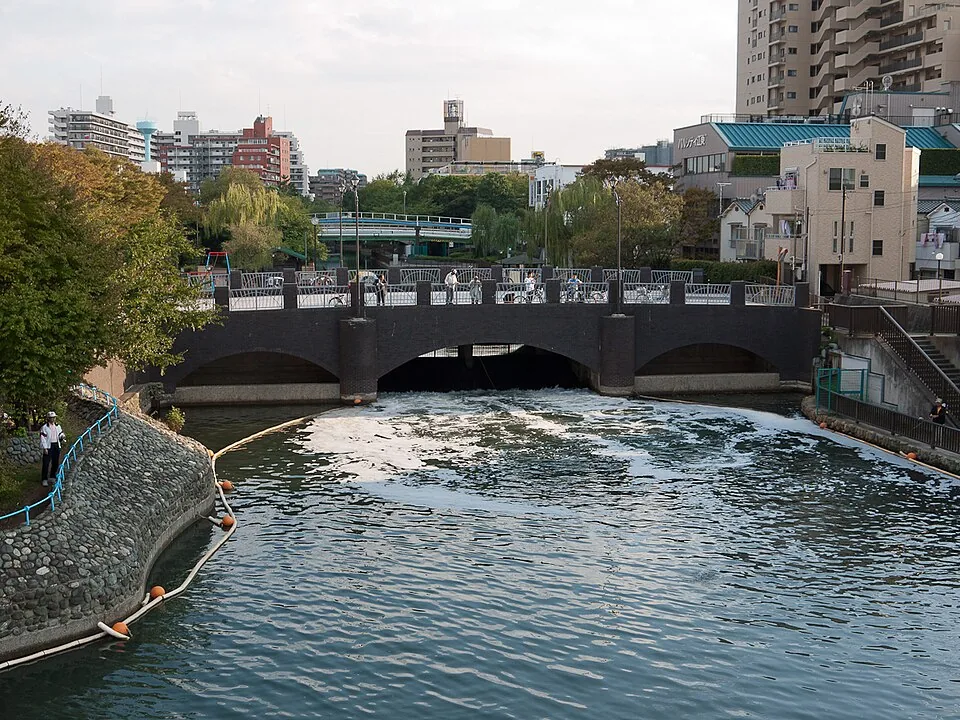
At the northern end, the Yokojukken River meets the Onagi River near Onagigawa Clover Bridge. The X-shaped pedestrian bridge connects all four corners of the crossing.
From here, you can see the canal running through ordinary residential Tokyo, with the Tokyo Skytree rising beyond the rooftops. It is a useful reminder that the tower did not land in an empty sightseeing district. It stands above neighborhoods with waterways, workshops, public housing and shopping streets.
If you read our guide to the Onagi River and Nakagawa boat checkpoint, this is where the two stories connect: one canal carried Edo’s cargo; the other has become a place where locals spend a quiet Sunday.
Yes, Tokyo has a rice field here
Continue south and the park becomes a collection of small ecological zones: a bird island, iris beds, ponds and a community rice field.
The rice field is not large enough to threaten Japan’s agricultural statistics. That is not the point. It lets neighborhood children see planting, growing and harvesting inside one of the world’s biggest cities.
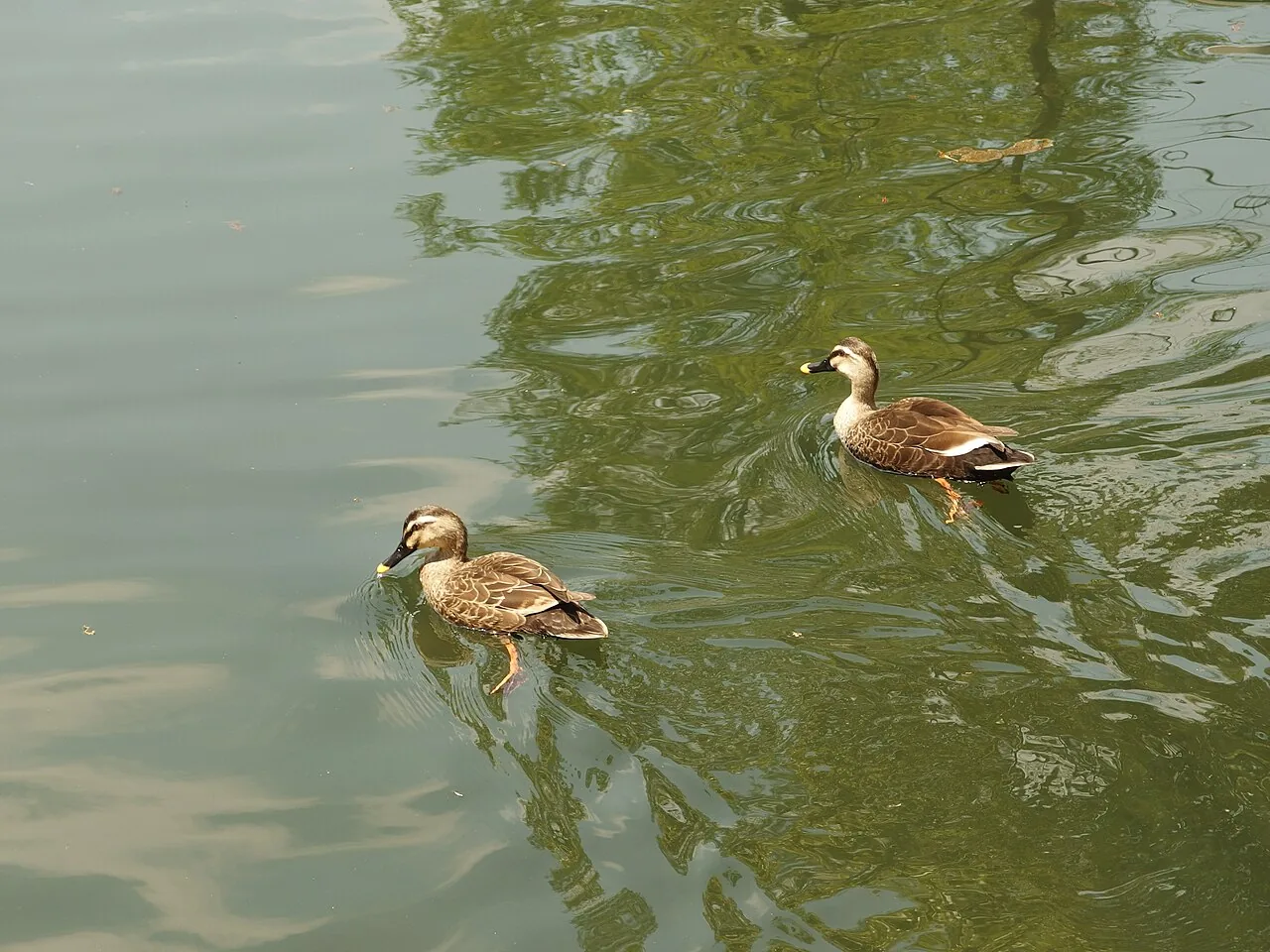
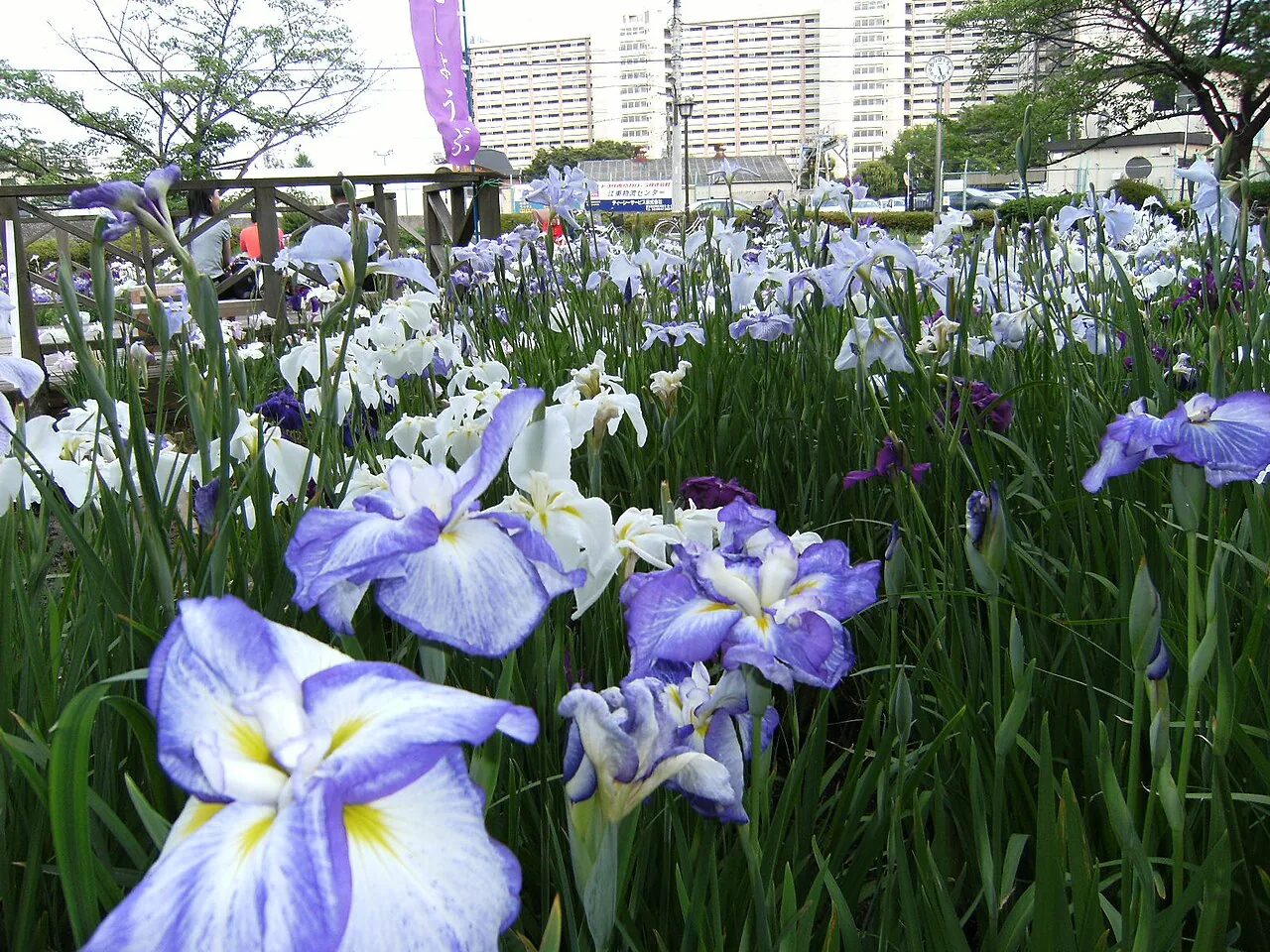
In early summer, the Japanese irises add deep purple and white around the water. At other times, the attraction is quieter: ducks, turtles, reeds, insects and—if you are lucky—a kingfisher.
This part works best when you stop trying to “complete” the park. Sit down. Watch the water. Accept that the next major attraction may be a duck doing absolutely nothing.
Important: the water obstacle course is closed
Older articles may show children crossing floating bridges and rope obstacles at the park’s aquatic playground.
Do not arrive in swimwear based on a five-year-old blog post. Koto City currently lists the aquatic obstacle course as closed until the end of April 2027 because of bridge reconstruction work.
The rest of the park, the walking route and activities shown as operating on their current calendars can still be enjoyed. Conditions change, so always check the official pages before visiting.
Make it a Sunamachi half-day
- Sunamachi Ginza Shopping Street — start with yakitori, tempura, dumplings or whatever has the longest local queue.
- Walk toward Yokojukken-gawa Shinsui Park — allow roughly 15–25 minutes depending on where you leave the shopping street and which park entrance you use.
- Traditional boat or ¥100 boat — check the operating schedule before visiting.
- Walk south through the park — look for the bird habitat, rice field and seasonal flowers.
- Finish at Toyocho Station — the southern part of the park is about a ten-minute walk from the station.
Allow three to four hours including food. The route is easy to combine with our Onagi River guide, but doing both properly turns it into a full day.
Before you go
- Official name: Yokojukken-gawa Shinsui Park / 横十間川親水公園.
- Area: Between Ogibashi and Toyo in Koto City, Tokyo.
- Admission: The park itself is free.
- Rental boats: Currently ¥100 per boat for 30 minutes; operating days vary.
- Traditional wooden boat: About 20 minutes and currently free on scheduled days; individuals do not need advance reservations.
- Traditional boat reception: 10:00–14:15 at the Umibe boarding point on operating days.
- Weather: Boats may stop because of rain, strong wind or dangerous heat.
- Aquatic obstacle course: Closed until the end of April 2027 as currently announced.
- Access: About ten minutes on foot from Toyocho Station to the park’s southern section; buses stop closer to other sections.
Tokyo does not always need to be spectacular.
Sometimes it is better when lunch costs a few hundred yen, the boat costs one coin, and the biggest event of the afternoon is discovering a rice field between apartment buildings.
That is the local side.
Related: How to actually get a sumo ticket in Tokyo (and what it really costs). Outside the three tournament months, the nine sumo experiences in Tokyo compared — one of them a few minutes from this park, on the shopping street.
Researched using current information from Koto City’s park guide, its traditional wooden boat guide, rental boat information and aquatic playground closure notice, checked September 12, 2026. This is a researched neighborhood guide, not a firsthand visit report. Schedules and conditions may change.
If you want the shopping street explained: a two-hour guided walk of Sunamachi Ginza exists on Viator, rated 5.0, from about ¥17,000 for a private group. It is a lot of money for a street you can eat your way down alone for ¥1,500, and that is the honest recommendation; book it only if you want the shopkeepers talked to on your behalf. The boats and the wooden-boat rides above are free or ¥100 either way.
Where this joins the rest of the east side
Make it a canal day: lunch on Sunamachi Ginza, the boats, then the Onagi River to the Nakagawa checkpoint museum, or south to the buried lock at Komatsugawa. The evening version of being on Tokyo’s water is a yakatabune dinner boat from Asakusa.
Quick answers
How much are the boats at Yokojukken River Water Park?
¥100 per boat for 30 minutes, for rowing or pedal boats, cash only with no change given. Children of elementary age or younger must ride with an adult. Boats stop in bad weather and follow a seasonal calendar.
Where is Yokojukken-gawa Shinsui Park?
In Koto City, a 1.9-kilometer waterside park running north from near Sunamachi Ginza shopping street to the Onagi River. Nearest stations: Minami-Sunamachi or Nishi-Ojima (Toei Shinjuku line), then 10 to 15 minutes on foot, or a bus from Kinshicho.
Are the wooden boat rides free?
Yes. Volunteers from Wasen Tomo no Kai operate Koto City’s traditional wooden boats on scheduled days from the Umibe boarding point; the 20-minute ride is free, no reservation, and you may be offered the oar. Check Koto City’s calendar on the morning of your visit.
What else is near the boat park?
Sunamachi Ginza shopping street for lunch, the Onagi River ‘Salt Road’ walkway, and the X-shaped Clover Bridge at the northern end with a view of the Skytree over the rooftops.