This article contains affiliate links to booking sites. If you book through them, LOCAL SIDE JAPAN earns a small commission at no extra cost to you. The walk itself is free and is described in full. How this site is made →
TOKYO / SUMIDA & TAITO / THE RIVER
Most people do the Skytree and Senso-ji as two separate stops joined by a train. They are 1.5 kilometers apart with a river in between, and the river is the best part. This is the walk from the base of the tower to the temple gate along the Sumida, on the east bank going north and the west bank coming back if you want it, past two shrines nobody visits, a bridge shaped like an X, and the cherry trees a shogun planted three hundred years ago to give the townspeople somewhere to go. It takes an hour if you walk and a morning if you do it properly.
On this page
Fast facts
- Cost: ¥0. The route is public and signposted; the shrines are free.
- Distance: About 3 km using both banks.
- Time: 60–90 minutes walking, a morning if you stop.
- Start: Oshiage / Tokyo Skytree Station. End: Asakusa Station.
- Best time: 07:00–09:00 or dusk. Avoid the last Saturday of July unless you are there for the fireworks.
- Booking: none needed. Guided versions exist at about ¥6,600–¥7,500.
Can you walk from Tokyo Skytree to Senso-ji?
Yes, and it is the best free hour in east Tokyo. It is about three kilometres from the foot of the tower to the temple gate, 60 to 90 minutes at a walking pace, entirely on public paths, and signposted most of the way. You cross the Sumida River on a pedestrian deck bolted to the side of a railway bridge, and the tower is behind you the whole way.
Almost everybody takes the train instead, which is one stop and takes four minutes. The train is the mistake. The walk is the part of Tokyo the two attractions are standing in, and it costs nothing.
What is the Sumida River walk route?
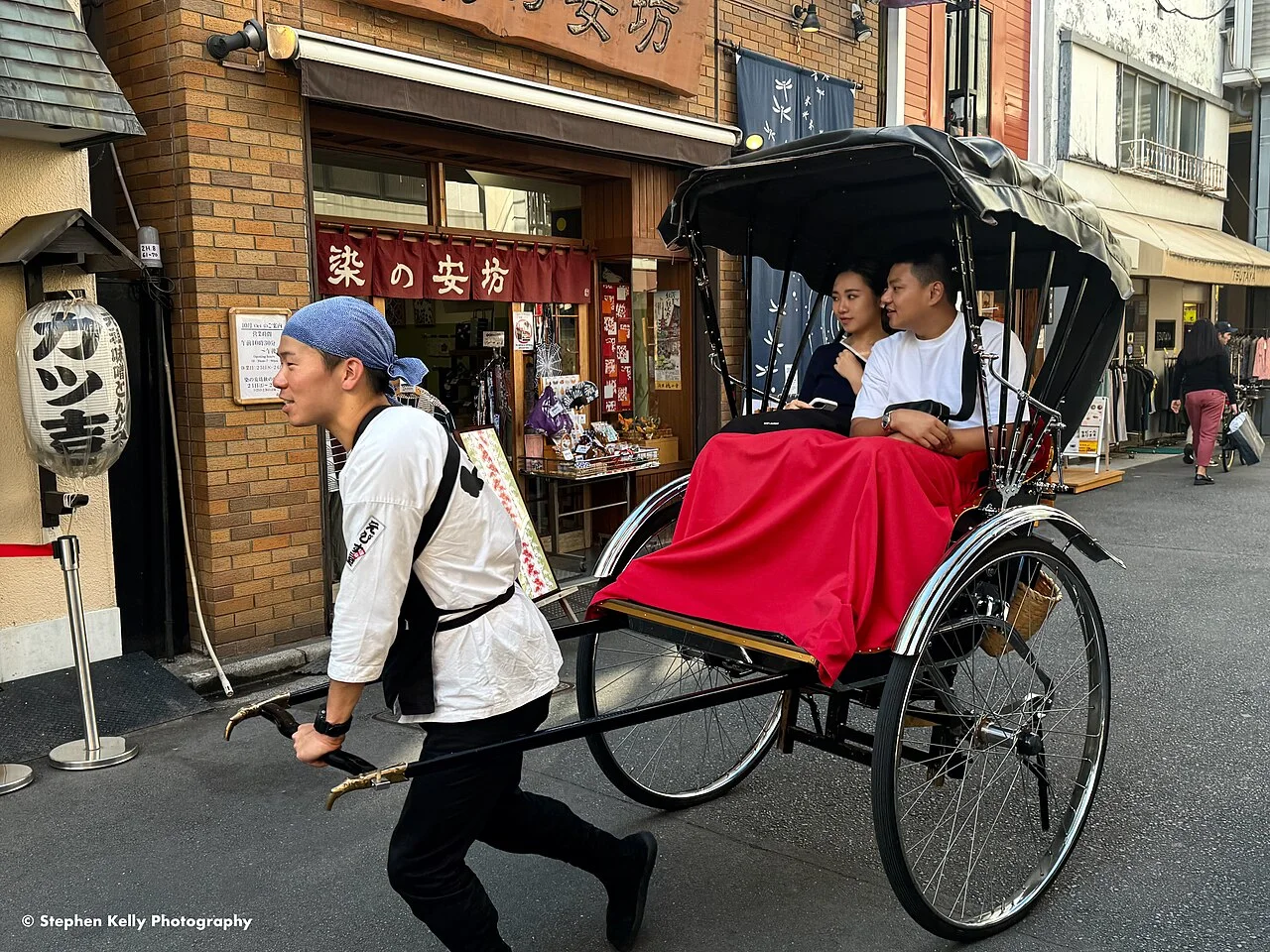
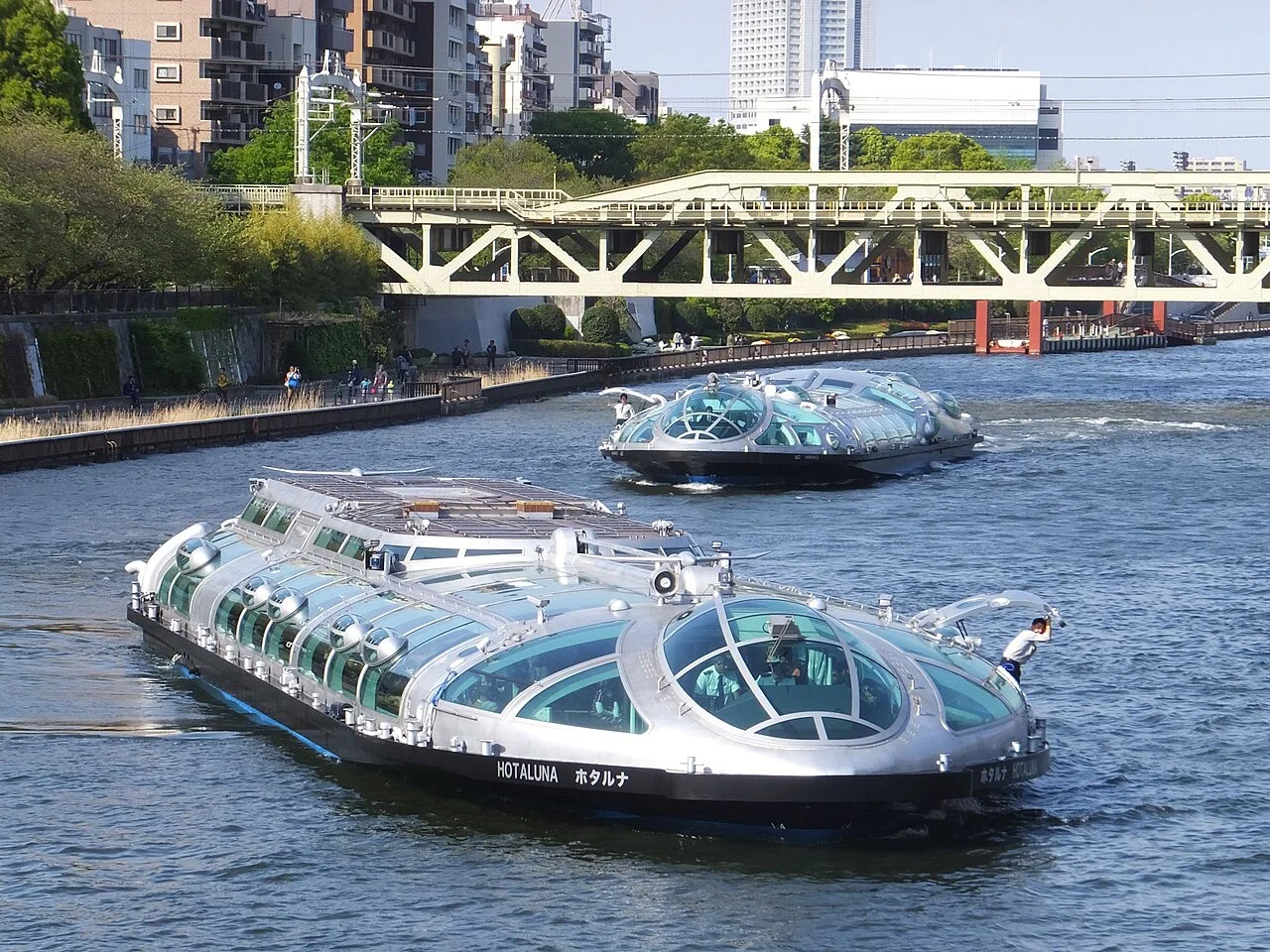
- Start under the Skytree (Oshiage or Tokyo Skytree Station). You can ride back down this same river afterwards for ¥1,000 on the water bus from Asakusa, or see the district from a rickshaw or a ¥2,000 guided walk. Do not go up the tower; that is a different day, and when you do, buy the ticket from the official site — the marketplaces charge up to twice as much, and there is a free lift hall in Sumida City Office that looks straight at it. Walk west along the Kitajukken River, the narrow canal at the tower’s foot, on the path called Tokyo Mizumachi: a row of small shops and cafés built into the railway arches. Five minutes.
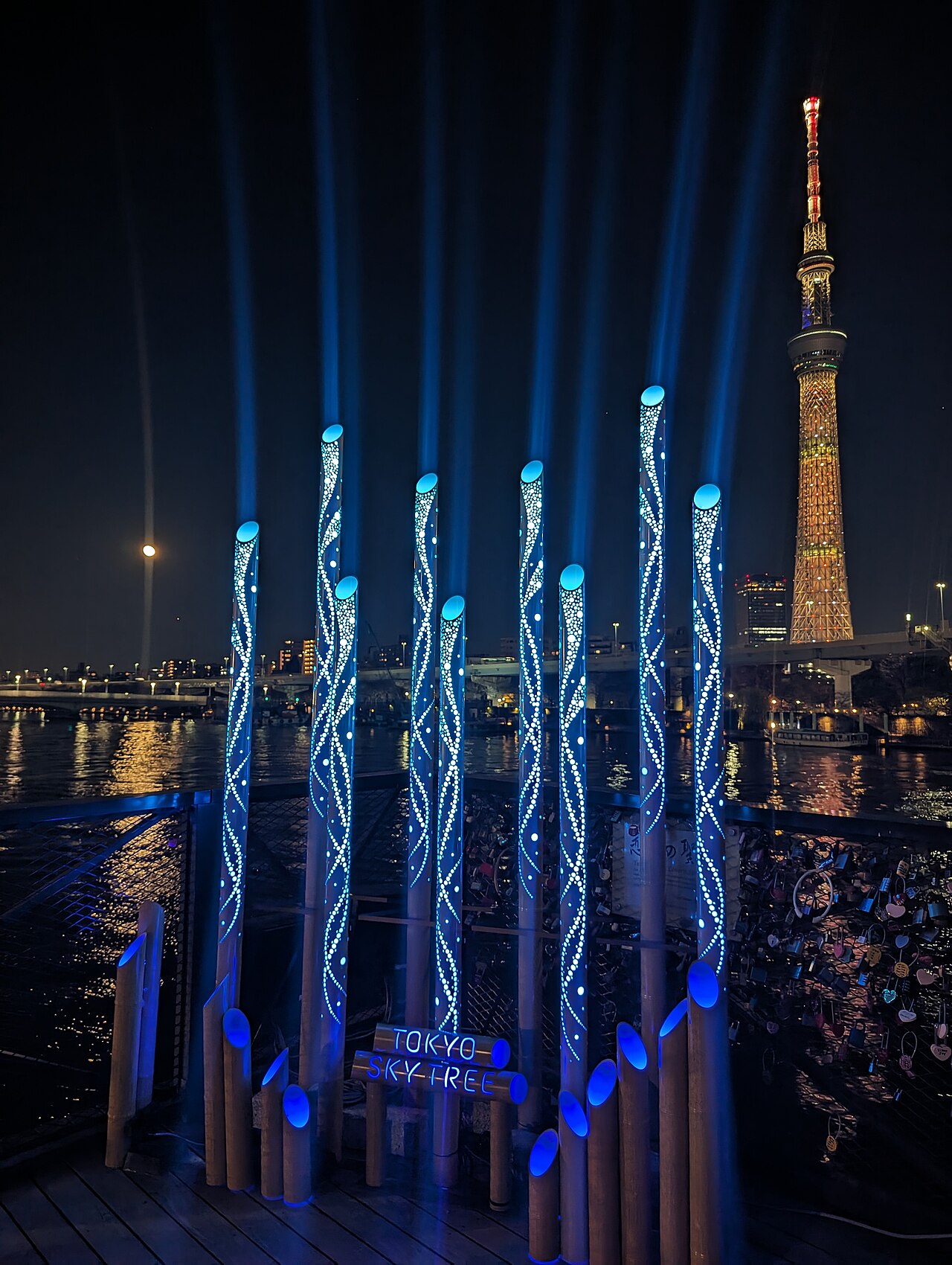
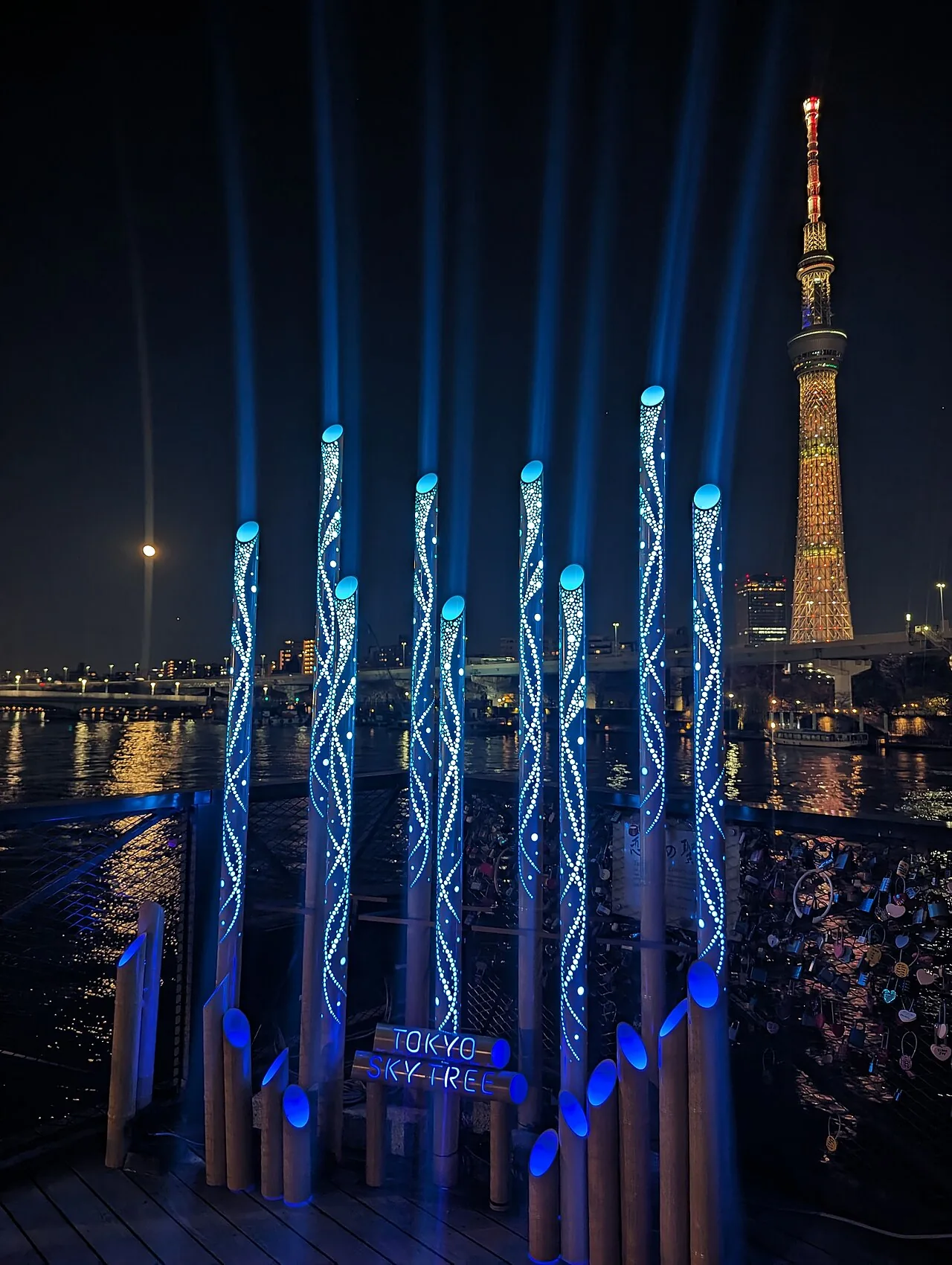
- Sumida River Walk. Where the canal meets the river, a pedestrian deck hangs off the side of the Tobu railway bridge. It opened in 2020 and is the only place you can cross the Sumida with trains passing a few meters above your head and the Skytree filling the sky behind you. Cross it, look back, and cross back; it is short and the view is the point.
- Sumida Park, east side. Stay on the Sumida ward bank and walk north. This stretch of park is the quiet one. The cherry trees along here descend from the ones the eighth shogun, Yoshimune, had planted in the 1710s so that ordinary Edo people would have a place for outings; it is one of the oldest deliberate public parks in the city.
- Ushijima Shrine, set back from the river in the park. A shrine with a bronze cow you stroke to cure whatever hurts (rub the cow’s leg, then your own). The three-legged torii, with a small extra gate on each side, is unusual enough that people who know shrines come here just to see it. Free, always open.
- Sakurabashi, the X-shaped footbridge further north, built for pedestrians only in 1985 to join the two halves of the park. Cross it to the Taito side. At cherry blossom time this is the most crowded 200 meters in east Tokyo; the rest of the year it is a bridge with a good view of the tower.
- Sumida Park, west side, walking south now toward Asakusa. This is the busier bank, with the river terrace at water level, the boat pier, and the golden flame on the Asahi building across the water. Come off the terrace at Azumabashi, the red bridge, and you are two minutes from Kaminarimon.
- Senso-ji, if you have not been. If you have, walk instead to Imado Shrine a few minutes north, which claims to be the home of the beckoning cat and is where locals come to pray for a partner.
Total: about 3 kilometers, 60 to 90 minutes without stops. Everything is free. There are public toilets in both halves of the park and convenience stores at both ends.
When is the best time to walk the Sumida River?
- Early morning, 7:00 to 9:00, any season: joggers, dog walkers, a man doing tai chi, and the tower with the sun behind it. The Mizumachi cafés open around 8:00 or 9:00.
- Dusk: the tower lights come on, the yakatabune boats start leaving Azumabashi with their lanterns lit, and the river terrace fills with people who live here. Bring a can from the convenience store; drinking on the terrace is normal.
- Late March: the cherry blossom on both banks is the reason the park exists. Expect the crowds that come with that.
- Last Saturday of July: the Sumida River Fireworks, seen by around a million people. Not a walk that day; a standing event.
Do I need a guide for the Sumida River walk?
You do not need a guide for this walk. Two exist that follow roughly the same water, and both are cheap enough to be reasonable if you would rather have someone explain the shrines than read about them:
- Sumida Riverside Walk: Garden & Temple Ritual (Viator): three hours in the morning, a small group, a garden and a temple visit with the etiquette explained, around ¥7,500. New and small, which is why it is rated 5.0 by a handful of people.
- Asakusa Walking Tour: Sumida River to Senso-ji (Viator): ninety minutes, the west-bank half of the route above ending at the temple, around ¥6,600. The one to take if you are short on time and want Senso-ji explained properly at the end.
If you would rather be on the water than beside it, the public water bus runs from the pier at Azumabashi down to Hinode and Odaiba for the price of a train ticket, and the evening version of the river is the yakatabune dinner boat, which leaves from the same pier.
Where this joins the rest of the east side
From the Skytree end, Daikokuyu is ten minutes’ walk for a bath afterwards and Kyojima twenty. From the Asakusa end, Kappabashi is fifteen minutes west and the workshops in the streets behind Senso-ji are right there, along with the kimono rental shops, compared by what each price includes. Further up the same river, past where this walk ends, is the kilometer-long apartment wall built to stop fire, which is what the Sumida bank looks like when nobody is trying to make it pretty.
The rest of the ward, in order, is in Things to Do in Sumida Beyond the Skytree: 10 Places.
Quick answers
How far is the walk from Tokyo Skytree to Senso-ji?
About 1.5 kilometers direct, or around 3 kilometers if you follow the river through both halves of Sumida Park and cross at Sakurabashi. Allow 60 to 90 minutes without stops. The route is flat and free.
What is the Sumida River Walk?
A pedestrian deck attached to the Tobu railway bridge between Tokyo Skytree and Asakusa, opened in 2020. It lets you cross the Sumida River on foot with trains passing overhead and a full view of the Skytree, and connects to Tokyo Mizumachi, the shops built under the railway arches.
Is Sumida Park worth visiting outside cherry blossom season?
Yes. The east bank is quiet year-round, with Ushijima Shrine and its bronze cow, and the west bank has the river terrace with views of the Skytree and the Asahi building. Early morning and dusk are the best times.
Do I need a tour to walk the Sumida River?
No. The route is signposted and entirely public. Guided options exist for around ¥6,600 to ¥7,500 if you want the shrines and Senso-ji explained, but the walk itself needs no booking.
Practical notes
- Start: Oshiage / Tokyo Skytree Station. End: Asakusa Station. About 3 km via both banks, 60–90 minutes.
- Cost: ¥0. Shrines free. Cafés at Mizumachi from about ¥500.
- Best time: 7:00–9:00 or dusk. Avoid the last Saturday of July unless you are there for the fireworks.
- Worth booking: only if you want the shrines and the temple explained; both guided walks are under ¥8,000.
LOCAL SIDE JAPAN checked the Sumida River Walk, Mizumachi and Sumida Park details against Tobu Railway’s and Sumida City’s public information on September 18, 2026. Tour prices are from the booking sites on that date.