This article may contain affiliate links to booking sites. If you book through them, LOCAL SIDE JAPAN earns a small commission at no extra cost to you. How this site is made →
ODD TOKYO · AKATSUKA, ITABASHI
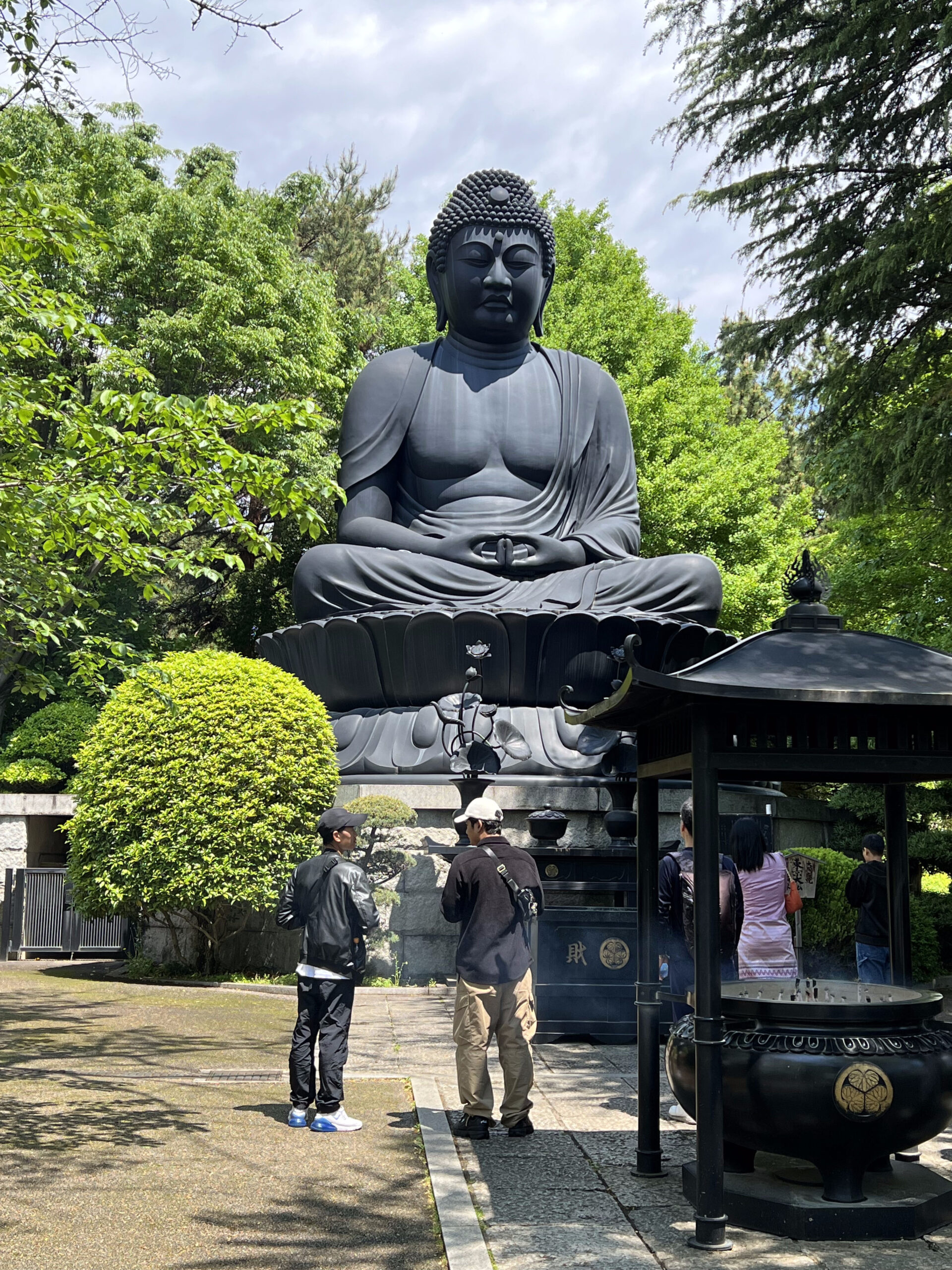
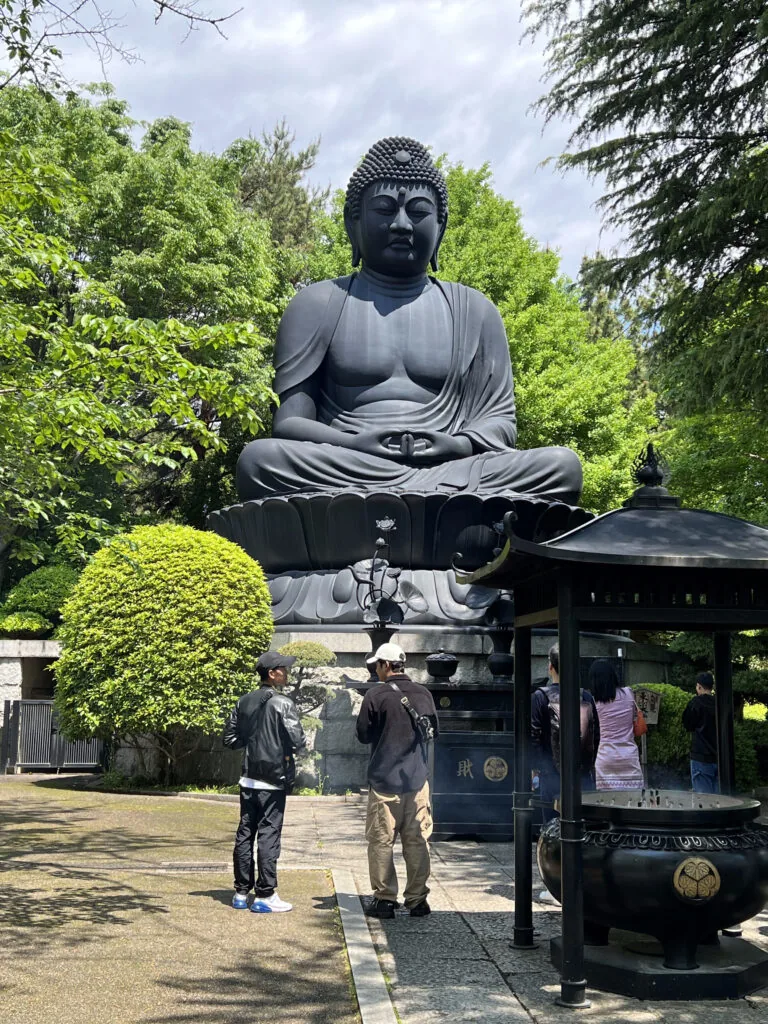
Tokyo has a giant Buddha. Not a fragment in Ueno, not a day trip to Kamakura—a complete, 13-metre bronze Amida sitting on a wooded hill in an ordinary Itabashi neighbourhood. Most visitors to Japan never hear about it. Even better, the Buddha shares its temple with an ogre trained to endure pain and an old woman who strips the dead at the river to the afterlife.
On this page
- A giant Buddha with no tourist district around it
- It looks ancient. It was built in 1977.
- The temple is six centuries older than its famous statue
- Meet the demon whose job is to endure
- The old woman waiting at the river of the dead
- Build a half-day around old Akatsuka
- Before you go
- Where this joins the rest of the east side
- Quick answers
Fast facts
- Admission: No standard fee for normal worship visits
- Hours: Opens 9:00; last entry 15:45; closes 16:00
- Address: 5-28-3 Akatsuka, Itabashi City, Tokyo
- Nearest: Shimo-akatsuka Station, about 20 minutes on foot; or about 5 minutes from the Akatsuka 8-chōme bus stop
- Time needed: About 45 to 60 minutes
A giant Buddha with no tourist district around it
The journey is part of the surprise. Jōrenji is not beside a bullet-train stop or packaged inside a famous temple town. From central Tokyo you travel into the northwestern suburbs, then take a local bus or walk through Akatsuka’s residential streets. The rooftops stay low. Vegetable plots and patches of older Tokyo appear between houses. Nothing announces that a figure as tall as a four-storey building is waiting ahead.
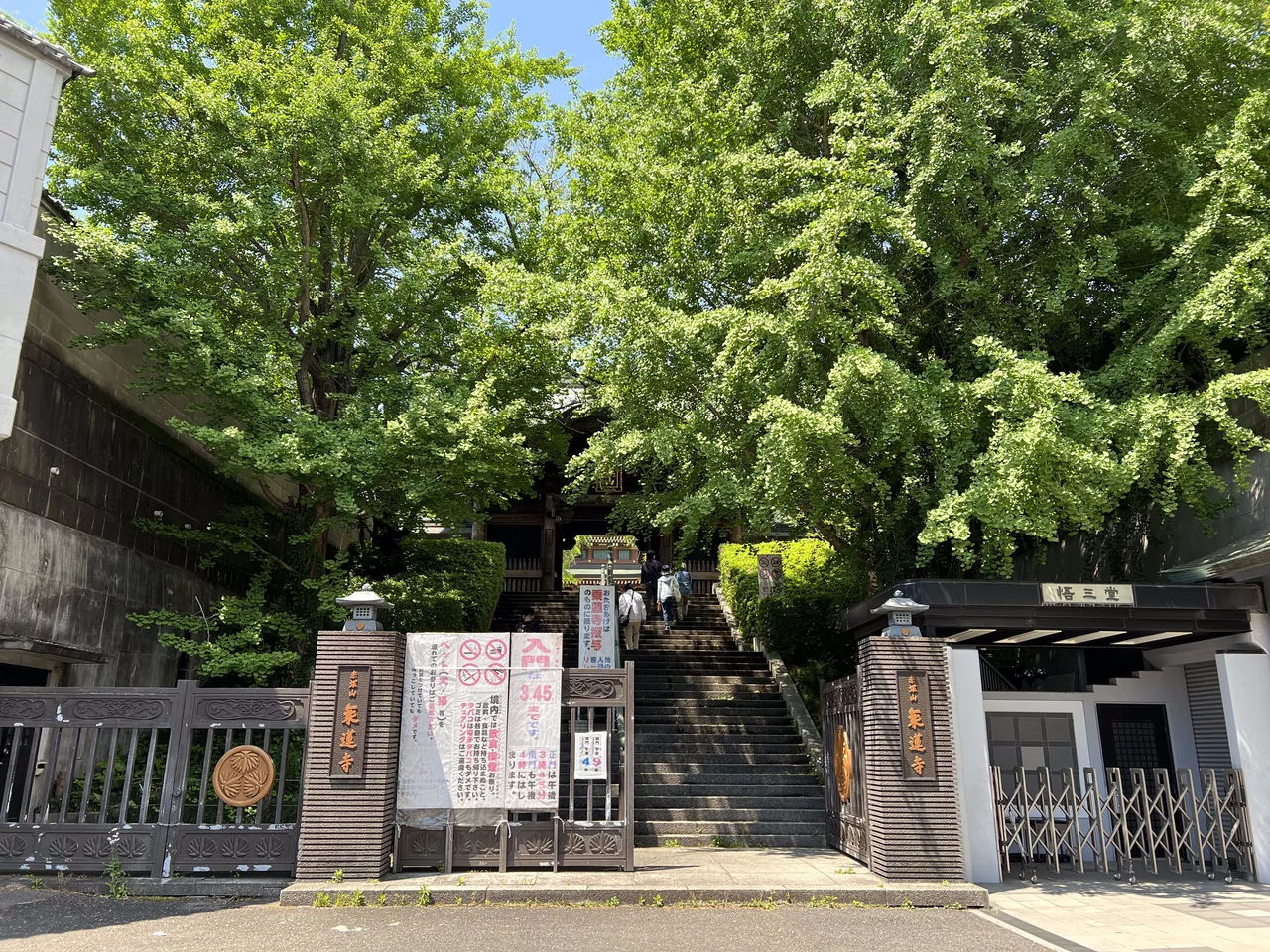
Pass through Jōrenji’s gate, climb toward the main precinct and the Buddha finally rises above the courtyard. The setting makes the scale work. There is enough space to step back, but not so much that the statue becomes a distant landmark. You stand close enough to see the bronze surface, the folds of the robe and the calm expression looking over the temple grounds.
It looks ancient. It was built in 1977.
The Buddha’s stillness can make it feel centuries old, but Tokyo Daibutsu was completed in 1977. It is a bronze seated image of Amida Nyorai, the Buddha of Infinite Light central to Jōdo Buddhism. Measured from its base, the monument is 13 metres high; the head alone is about three metres. The bronze structure weighs approximately 32 tonnes.
When completed, it was described as Japan’s third-largest seated bronze Buddha. Rankings have changed as newer statues have appeared, so the historical wording matters. Its significance was never simply a size competition.
Jōrenji’s 24th head priest, Wakabayashi Ryūdō, initiated the project after reflecting on the destruction of the 1923 Great Kantō Earthquake and the 1945 bombing of Tokyo. The statue was built as a prayer that the city would not again suffer such disaster and war. A monument that first appears to be a suburban curiosity is, in fact, a peace memorial.
That origin gives the Buddha’s expression a different weight. It does not celebrate Tokyo’s power. It asks the city to remember how quickly streets, homes and lives can disappear.
The temple is six centuries older than its famous statue
Jōrenji traces its foundation to the Ōei era, between 1394 and 1428. The temple originally stood elsewhere in Itabashi and later became associated with the old Nakasendō post town. Tokugawa Ieyasu granted it land valued at ten koku in 1591, and later shoguns continued the grant. During falconry excursions, it served as a resting place for Tokugawa shoguns.
The temple moved to the present Akatsuka site during the 1970s as road development transformed its former location. That relocation explains an unusual visual contradiction: a temple with medieval origins, Tokugawa connections and Edo stonework arranged around a monumental Buddha of postwar Japan.
Meet the demon whose job is to endure
Do not leave after photographing the Buddha. Among Jōrenji’s strangest objects is the Gaman no Oni—the “enduring ogre.” The crouching figure carries an immense stone burden while grimacing beneath its weight. Its popular name turns the usually threatening Japanese demon into a symbol of patience and endurance.
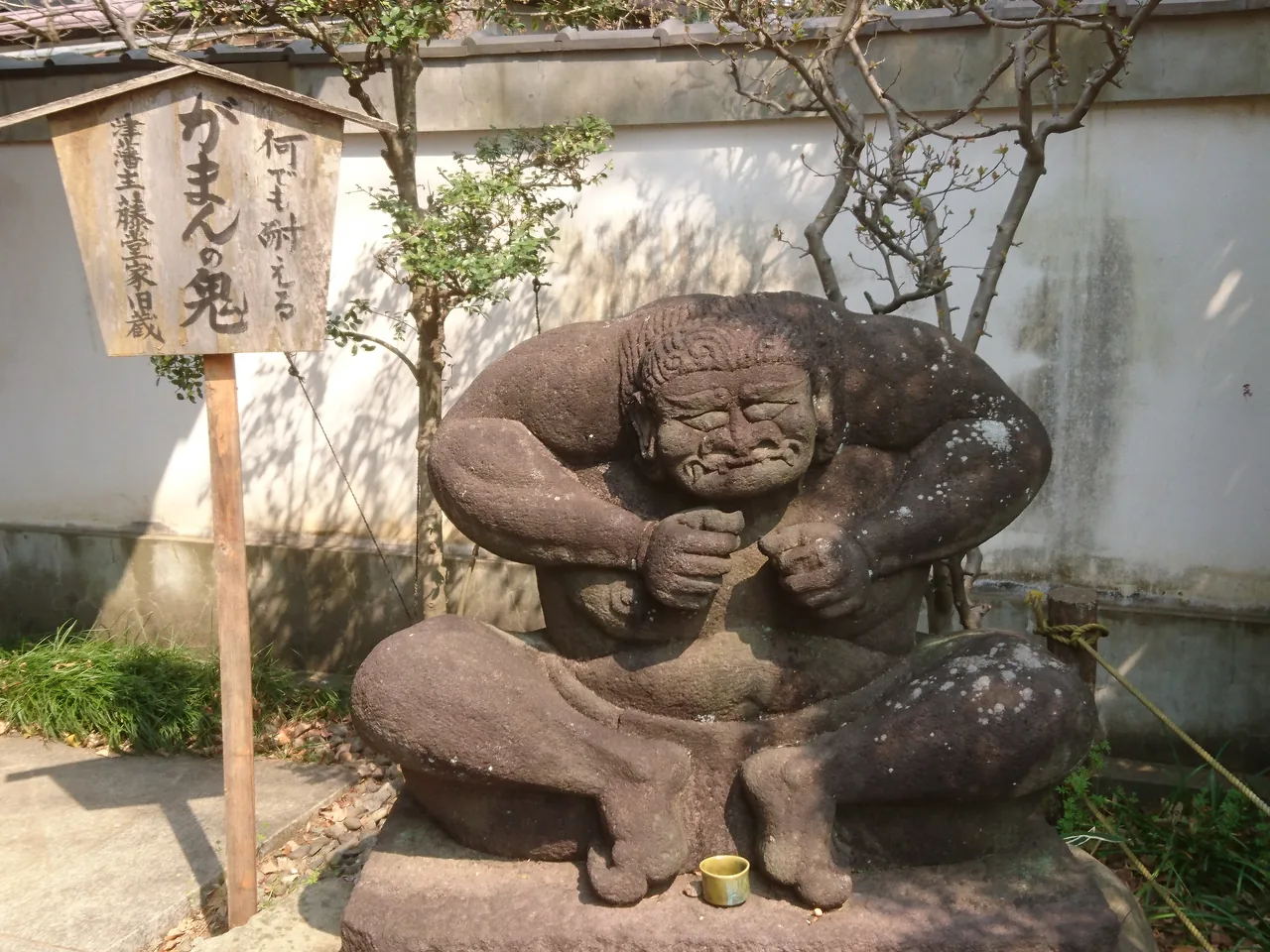
The ogre did not originate at Jōrenji. It belonged to a group of stone figures once kept at the Somei estate of the Tōdō family, lords of the Tsu domain, around present-day Komagome. Documents from 1818 depicted the collection, while an 1842 text already described the figures as unusually shaped curiosities.
After passing through other hands, eight surviving figures were transferred to Jōrenji in 1967 and later moved with the temple to Akatsuka. They are rare not because nobody knows what an oni looks like, but because written records connect these exact eccentric sculptures to the private world of an Edo-period daimyō residence.
The old woman waiting at the river of the dead
Nearby sits an even stranger figure: Datsueba. In Japanese Buddhist folklore, this old woman waits beside the Sanzu River, the boundary between the living world and the afterlife. She strips the clothes from the dead, allowing their deeds to be judged by the weight of the garments.
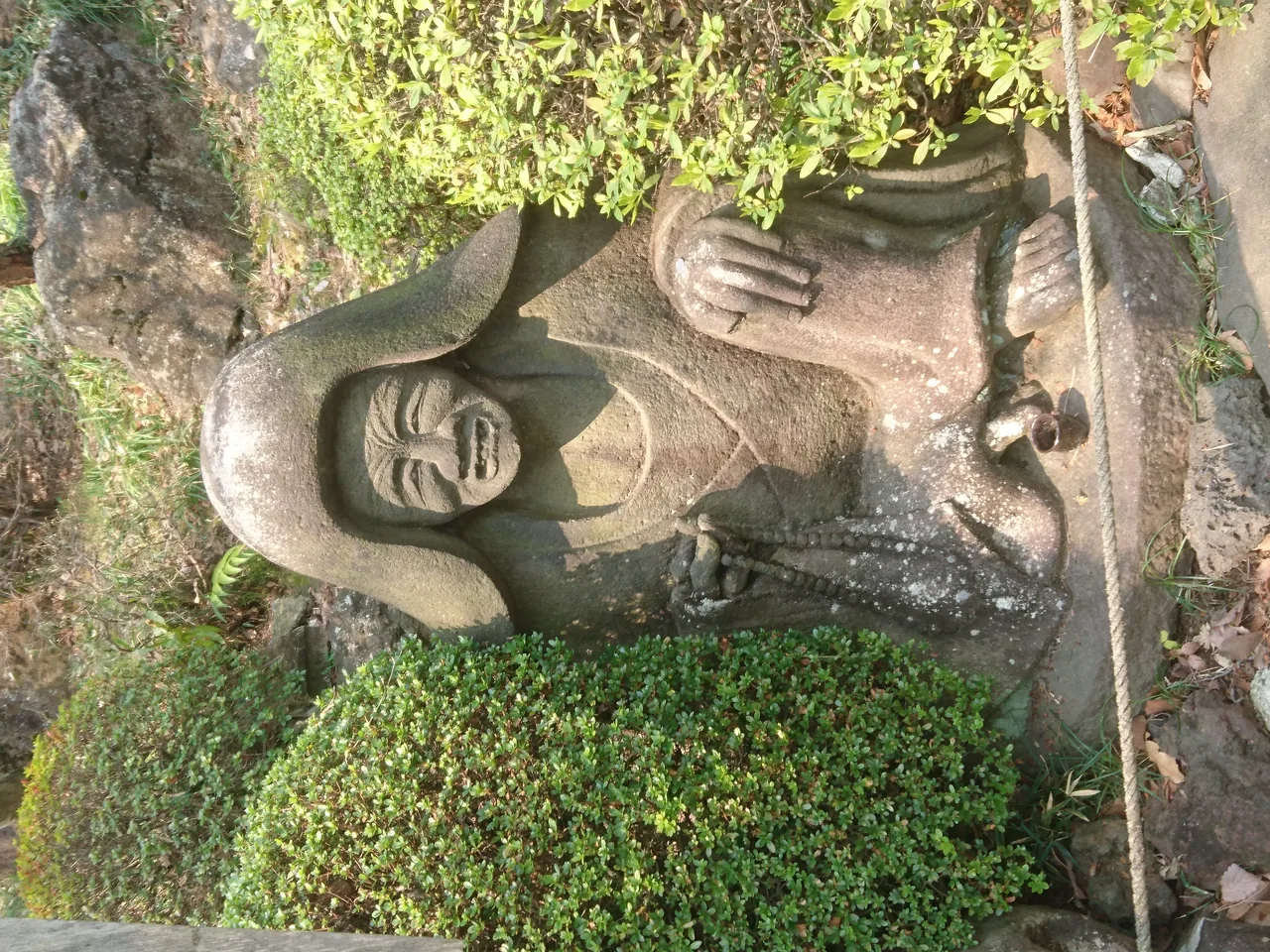
She is frightening, comic and oddly human at the same time—the opposite of the Buddha’s controlled symmetry. Together, the figures make Jōrenji feel less like a single-attraction temple and more like a compact museum of Japanese attitudes toward salvation, punishment, fear and persistence.
Build a half-day around old Akatsuka
The distance from the railway station is a feature, not a defect. Akatsuka sits on the edge of Tokyo’s Musashino uplands, where slopes, temple grounds, parks and remaining farmland break up the dense city. A slow approach allows the neighbourhood to establish the scale of the surprise.
- Start from Narimasu or Shimo-akatsuka. Walk if the weather is comfortable, or use the bus from Narimasu to Akatsuka 8-chōme.
- Enter Jōrenji before mid-afternoon. The final admission time is earlier than many Tokyo attractions.
- See the main hall before the Buddha. Let the temple reveal the giant statue gradually.
- Circle the grounds. Find Gaman no Oni, Datsueba and the other former Tōdō estate figures rather than leaving after one photograph.
- Continue to Akatsuka Botanical Garden or Itabashi Historical Museum. Both help turn a single temple visit into a quiet local half-day.
If you want to follow Itabashi’s history toward the end of the samurai age, continue another day with our guide to Kondō Isami’s execution site and Shinsengumi memorial beside Itabashi Station.
Before you go
- Name: Jōrenji / Tokyo Daibutsu
- Address: 5-28-3 Akatsuka, Itabashi-ku, Tokyo
- Opening: 9:00 a.m.
- Final entry: 3:45 p.m.
- Complete closing: 4:00 p.m.
- Admission: No standard admission fee for normal worship visits
- Access: About 20 minutes on foot from Shimo-akatsuka Station; approximately five minutes on foot from the Akatsuka 8-chōme bus stop after taking a bus from Narimasu
- Time needed: About 45–60 minutes inside the temple
- Etiquette: Jōrenji is an active place of worship. Keep voices low, avoid photographing ceremonies or worshippers, and obey signs around restricted areas.
Where this joins the rest of the east side
Itabashi is the far end of the east side’s northern arc. On the way back, JR Itabashi Station has the grave of Kondo Isami and the Shinsengumi beside the ticket gates, and Akabane has the shrine with a bullet train underneath it. If a temple with a train is what you want, Nishiarai Daishi in Adachi has its own one-kilometer railway.
Quick answers
How big is the Tokyo Daibutsu?
The seated bronze Amida at Jorenji is 13 meters high including its base, with a head about three meters tall, and weighs roughly 32 tonnes. When it was completed in 1977 it was described as Japan’s third-largest seated bronze Buddha.
How do I get to Jorenji and the Tokyo Daibutsu?
Jorenji is in Akatsuka, Itabashi City, in Tokyo’s north-west suburbs. Take the Tobu Tojo line to Shimo-Akatsuka or the Mita subway line to Nishi-Takashimadaira, then walk about 20 to 25 minutes or take a local bus; there is no station beside the temple.
Is the Tokyo Daibutsu free to visit?
Yes. Jorenji’s grounds and the Buddha are free and open during daytime hours. It is an active temple, so behave as you would at any place of worship.
Why was the Tokyo Daibutsu built?
The temple’s 24th head priest, Wakabayashi Ryudo, commissioned it in memory of the 1923 Great Kanto Earthquake and the 1945 bombing of Tokyo, as a prayer that the city would not suffer such disaster again. The temple itself dates from 1394-1428 and moved to Akatsuka in the 1970s.
LOCAL SIDE JAPAN checked historical, opening and access information against Jōrenji, Itabashi City and the Itabashi Tourism Association on September 12, 2026. Opening times and access arrangements may change for New Year events, ceremonies or temple circumstances.