This article contains affiliate links to booking sites. If you book through them, LOCAL SIDE JAPAN earns a small commission at no extra cost to you. The place itself is free and is described first. How this site is made →
TOKYO / KOTO CITY / HIDDEN HISTORY
Tokyo has a museum built around one fishing boat.
Not a replica. Not a digital projection. The actual wooden vessel fills the building from bow to stern.
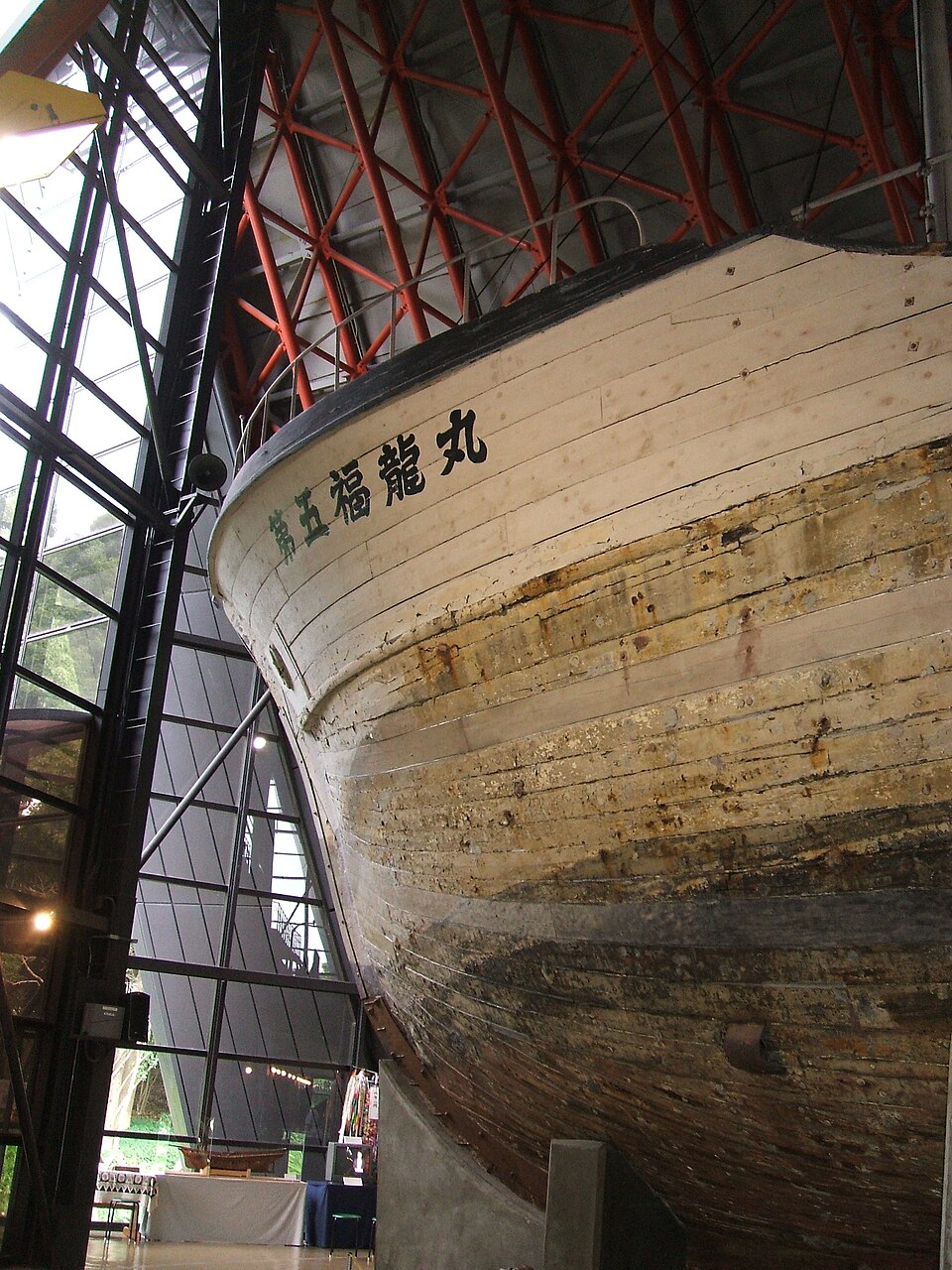
Its name is Daigo Fukuryu Maru—Lucky Dragon No. 5.
In 1954, its 23 crew members were caught in radioactive fallout from a United States hydrogen-bomb test at Bikini Atoll. Years later, the abandoned boat was found on Tokyo’s former garbage island and saved by citizens.
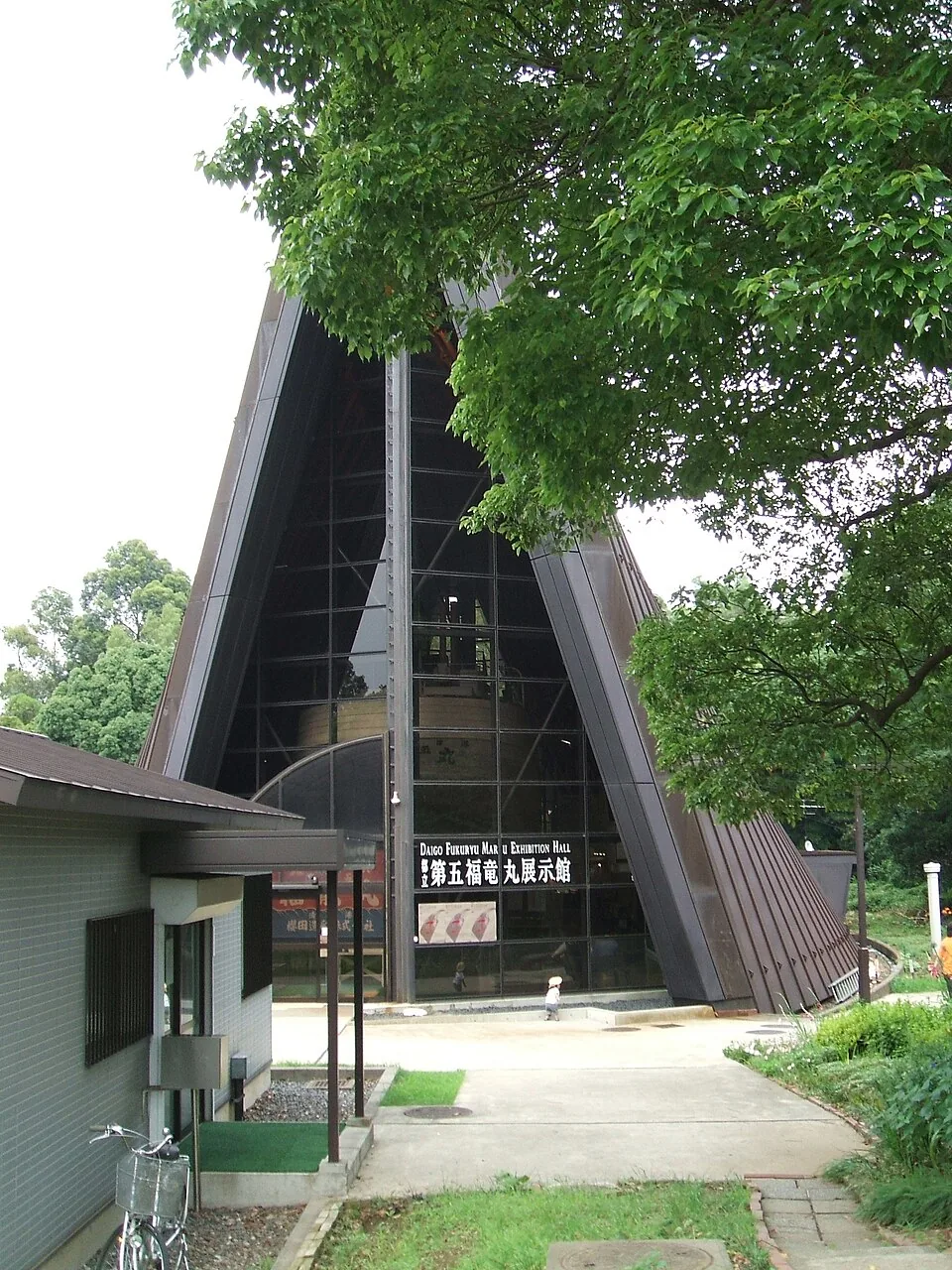
Today it stands inside a quiet, free museum in Yumenoshima Park, less than 15 minutes by train from Tokyo Station and almost entirely absent from most Tokyo itineraries.
On this page
- A normal fishing trip entered the nuclear age
- The bomb was far larger than expected
- The tuna became national news
- How did the boat end up in a Tokyo park?
- What it feels like inside
- A museum that asks more than “what happened?”
- Make it a Yumenoshima half-day
- Before you go
- Where this joins the rest of the east side
- Quick answers
Fast facts
- Admission: Free
- Hours: 9:30–16:00
- Closed: Mondays, or the next weekday when Monday is a public holiday
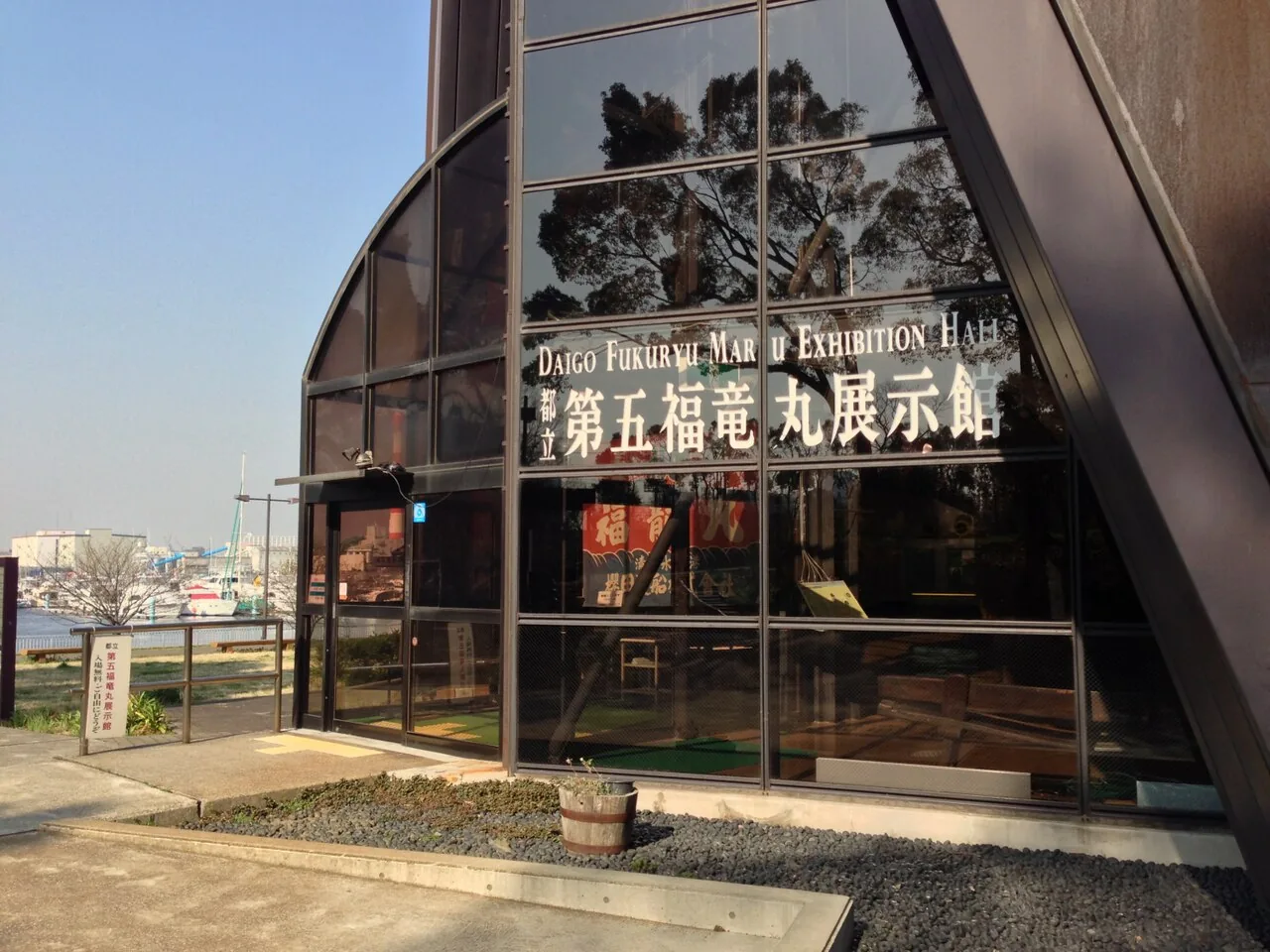
- Address: Inside Yumenoshima Park, 2-1-1 Yumenoshima, Koto City, Tokyo
- Nearest: Shinkiba Station, about 10 minutes on foot
A normal fishing trip entered the nuclear age
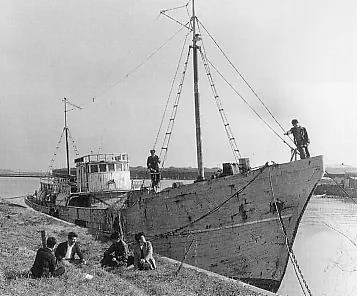
Daigo Fukuryu Maru was built in Wakayama Prefecture in 1947, first as a bonito boat and later converted for deep-sea tuna fishing from Yaizu Port in Shizuoka.
On March 1, 1954, the crew was fishing about 160 kilometers east of the test site at Bikini Atoll in the Marshall Islands.
They saw a sudden flash in the west. Minutes later came a sound like an earthquake. Then white material began falling onto the deck.
The fishermen called it shi no hai—“ashes of death.” It was pulverized coral made radioactive by the explosion.
The 23 men worked to return to Japan while the fallout remained on their boat, clothes, skin and catch. By the time they reached Yaizu, all were suffering symptoms of radiation exposure.
The bomb was far larger than expected
The test was called Castle Bravo. The bomb produced a yield of 15 megatons—about 1,000 times the explosive power of the atomic bomb dropped on Hiroshima, according to the exhibition hall.
Its radioactive contamination spread beyond the test area. Daigo Fukuryu Maru became the best-known Japanese vessel involved, but it was not the only one. The museum’s research states that hundreds of Japanese fishing vessels landed contaminated tuna during 1954.
The Marshall Islands suffered the direct and continuing consequences of 67 American nuclear tests conducted between 1946 and 1958. Several communities remain displaced from their home islands.
This is why the exhibition hall prefers the broader term “Bikini Incident”. A story centered only on one Japanese boat can make the affected Marshallese communities—and the wider Pacific contamination—disappear from view.
The tuna became national news
The contaminated catch was called “atomic tuna.” Fish markets searched for affected shipments, tuna was buried or destroyed, and public fear spread far beyond one crew.
The boat’s chief radio operator, Aikichi Kuboyama, died in September 1954 after months of treatment. His death became a powerful symbol in Japan’s growing movement against atomic and hydrogen bombs.
The incident also changed Japanese popular culture. The original Godzilla appeared in cinemas later that year, opening with a fishing boat destroyed by a mysterious flash at sea. The connection is not subtle. Japan’s giant radioactive monster arrived in the same national atmosphere of shock and fear.
That does not make this a Godzilla attraction. It makes the museum one of the real places that helps explain why the film meant more than a man in a monster suit stepping on buildings.
How did the boat end up in a Tokyo park?
After radiation levels fell and safety was confirmed, the vessel was rebuilt as a training ship named Hayabusa Maru for the Tokyo University of Fisheries.
It was retired in 1967, sold for dismantling and eventually abandoned on reclaimed land at Yumenoshima.
At that time, Yumenoshima was known as a huge garbage-disposal site. The name means “Dream Island,” which is either optimistic urban planning or extremely aggressive rebranding.
Citizens learned that the vessel was lying there and organized a movement to preserve it. The Tokyo Metropolitan Government opened the exhibition hall in 1976.
The boat survived because ordinary people decided that throwing it away would also throw away the memory attached to it.
What it feels like inside
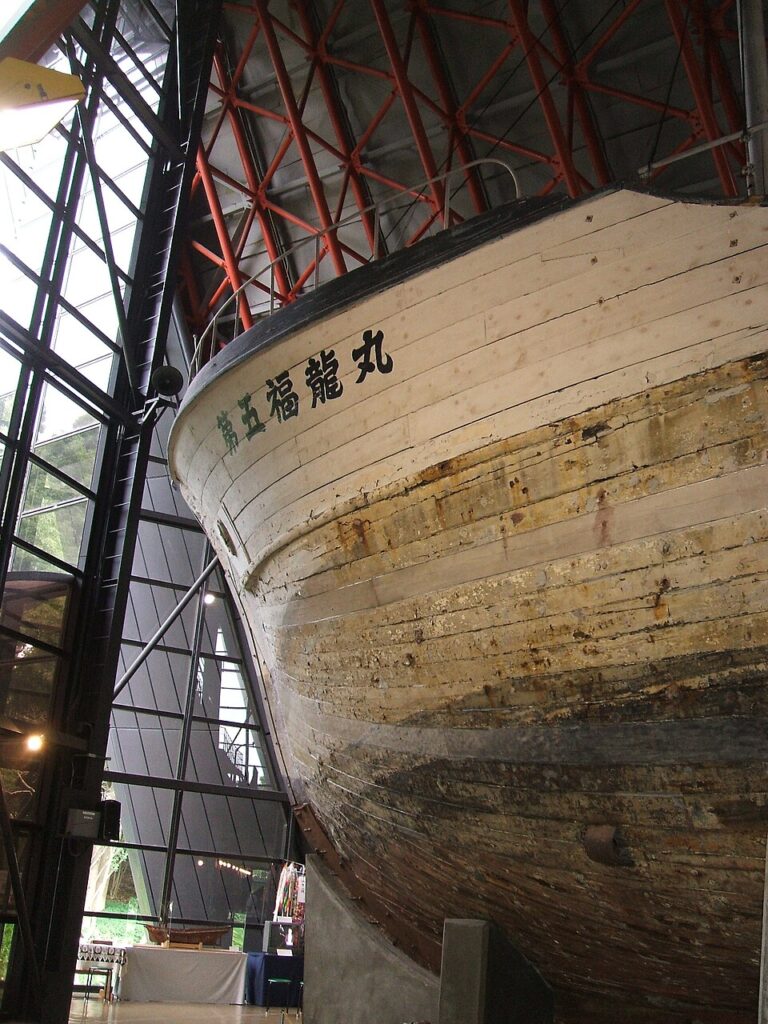
The building is shaped around the ship. Walk in and the scale becomes immediate: roughly 30 meters long, six meters wide, 15 meters high and 140 tons.
Wooden deep-sea fishing boats like this were once part of Japan’s postwar struggle to secure food. The hull is therefore two kinds of evidence at once—evidence of ordinary working life and evidence of nuclear damage.
Exhibits cover the crew, contaminated tuna, radioactive rain, nuclear testing across the Pacific, settlements between Japan and the United States, the Marshall Islands and the international anti-nuclear movement.
Outside are the vessel’s engine, a tuna memorial and a memorial to Aikichi Kuboyama.
English information is available on the museum’s website, but the official site states that no English guide is provided for group tours. Use your phone’s translation camera for Japanese panels and allow enough time to read slowly.
A museum that asks more than “what happened?”
The obvious question is what happened to the fishermen.
The more difficult questions come later. Who was warned? Whose suffering became visible? Whose remained distant? What does a country save, and what does it allow to disappear?
This small Tokyo museum does not provide a comfortable sightseeing break. It provides something more valuable: a physical object that makes an enormous historical event human-sized.
Twenty-three men went to catch tuna. One wooden boat returned carrying evidence of a nuclear test occurring far beyond Japan.
Make it a Yumenoshima half-day
- Shinkiba Station — arrive by the JR Keiyo Line, Tokyo Metro Yurakucho Line or Rinkai Line.
- Daigo Fukuryu Maru Exhibition Hall — allow 60–90 minutes if you want to read rather than simply photograph the ship.
- Yumenoshima Park — walk through the eucalyptus trees and open lawns.
- Yumenoshima Tropical Greenhouse Dome — add the greenhouse if it is open and you want a complete change of atmosphere.
- Tokyo Yumenoshima Marina — finish beside the modern boats, a strange visual contrast with the wooden vessel inside the museum.
From Sunamachi Ginza, use a local bus or connect through Toyocho and Shinkiba depending on your starting point. Check a live route planner on the day because the best connection changes by time.
Before you go
- Official name: Daigo Fukuryu-Maru Exhibition Hall / 東京都立第五福竜丸展示館.
- Address: Inside Yumenoshima Park, 2-1-1 Yumenoshima, Koto City, Tokyo.
- Current hours: 9:30–16:00.
- Admission: Free.
- Regular closure: Mondays, or the following weekday when Monday is a public holiday.
- Access: About ten minutes on foot from Shinkiba Station.
- Language: The official website has English information; bring camera translation for detailed Japanese panels.
- Photography: Follow the signs and staff instructions inside the exhibition hall.
- Latest information: Check the museum’s news page before traveling because temporary closures and events may affect access.
Tokyo is good at replacing what no longer seems useful.
This boat escaped that fate.
It was built to catch fish, exposed by a bomb, renamed, retired, abandoned and finally saved—not because it was beautiful, but because forgetting it would have been easier.
Some places are worth visiting because they are fun.
This one is worth visiting because it refuses to let history become abstract.
Researched using current information from the Daigo Fukuryu-Maru Exhibition Hall, its official history and official access guide, checked September 12, 2026. This is a researched cultural guide, not a firsthand visit report. Hours and exhibition conditions may change.
Making a day of it: Yumenoshima is two stops from Toyosu on the Yurakucho line, and most people combine this free museum with teamLab Planets (date-priced from about ¥3,800; Klook sells the official ticket at face value) or the fish market. Do the boat first, in the morning, when the hall is empty; the contrast with the art museum afterwards is the point.
Where this joins the rest of the east side
Yumenoshima is the seaward end of Koto City. The Onagi River checkpoint and the Yokojukken boat park are the same ward’s inland water story; Kiyosumi-Shirakawa, with the Fukagawa Edo Museum, is two stops from Tokyo Station on the way back. All the ward’s stories are on the Koto City page.
Quick answers
Where is the Daigo Fukuryu Maru museum and how much is it?
In Yumenoshima Park, Koto City, about five minutes from Shin-Kiba Station (JR Keiyo, Yurakucho and Rinkai lines), 15 minutes by train from Tokyo Station. Admission is free. Closed Mondays.
What happened to the Daigo Fukuryu Maru?
On March 1, 1954 the tuna boat was fishing 160 km from Bikini Atoll when the US Castle Bravo H-bomb test (15 megatons) showered it with radioactive coral ash. All 23 crew suffered radiation sickness; radio operator Aikichi Kuboyama died in September 1954.
Is the boat in the museum the real one?
Yes. After decontamination it served as a training ship, was abandoned on the Yumenoshima landfill in 1967, and was saved by a citizens’ campaign. The 30-meter wooden vessel has filled the purpose-built hall since 1976.
Is the Daigo Fukuryu Maru connected to Godzilla?
Yes. The original Godzilla film opened later in 1954 with a fishing boat destroyed by a flash at sea, a direct reference to the incident and the national fear of ‘atomic tuna’ it caused.