This article contains affiliate links to booking sites. If you book through them, LOCAL SIDE JAPAN earns a small commission at no extra cost to you. The rankings below are by value, not by what pays; the cheapest option is recommended first. How this site is made →
TOKYO / TAITO CITY / ASAKUSA
Asakusa has become Tokyo’s workshop district. Within ten minutes of Senso-ji you can now book an hour of calligraphy, candy sculpting, matcha whisking, ring making, lucky-cat painting, incense blending or a tea ceremony in a rented kimono, most of them between ¥2,500 and ¥8,000, most of them rated five stars by people who had a nice time. The reviews are not wrong. They are also not useful, because everything is five stars.
Here is a better sorting: what you actually take home, how much of the hour is craft versus photo, and whether the same money would be better spent two streets away. Prices are from the booking sites in September 2026 and move with the yen.
On this page
Do these
Candy sculpting at Ameshin, about ¥4,000
Amezaiku is sugar pulled and cut into an animal in the three minutes before it hardens, with scissors, by hand. Ameshin is a real Asakusa craft shop whose artisans do this for a living; the workshop is their teaching room, not a studio built for tourists. You will make something lopsided and you will be delighted with it. Two hours, and the best value-for-craft on this list. One caveat on the booking rather than the shop: this particular listing has no reviews at all, so the recommendation rests on what Ameshin is, not on anyone else’s experience of booking it this way. The review depth across this page is below. Candy Art Workshop at Ameshin (Viator).
Matcha and wagashi, about ¥2,500
One hour: you whisk a bowl of matcha properly, you eat a seasonal sweet, someone explains why the bowl is turned. It is the cheapest thing here by a distance and the one with the most reviews (over 1,300 at 5.0), which for once is deserved, because the format is simple and hard to do badly. If you only book one thing in Asakusa and you are not sure about any of it, book this. Matcha Making Class with Japanese Sweets (Viator).
Worth it if you want the object
Calligraphy, about ¥7,800
Ninety minutes with a brush, ink and a teacher, and you leave with a character you wrote, mounted. The price is high for what is essentially a lesson, but a piece of your own calligraphy is the one Asakusa souvenir nobody else on your street will have, and the teaching is real. Worth it if you would frame the result; not worth it if you would fold it into a suitcase and forget it. Calligraphy Workshop in Asakusa (Viator).
A ring made from an old coin, about ¥7,700
You take a vintage Japanese coin, punch and hammer it into a ring, and wear it out. One hour. It is metalwork-lite, but the ring is real, fits, and is the kind of thing people ask about for years. Good for couples; good for teenagers who are sick of temples. Ring-Making Workshop with Vintage Coins (Viator).
Know what you are buying
Tea ceremony in a kimono, around ¥9,000 and up
This is two products in one: a kimono fitting and a short tea ceremony, and most of the ninety minutes is the fitting and the photographs. That is fine if the photographs are the point; they will be good. If you want to understand tea, the ¥2,500 matcha hour above teaches you more for a third of the money. Do not book this one for the tea. Every tea ceremony in the city, sorted into the tea-first and kimono-first kinds, is in Tea Ceremony in Tokyo by Area.
Painting a lucky cat, about ¥3,000 to ¥4,000
You paint a blank ceramic maneki-neko. It is exactly that, for an hour, and it is the workshop people bring small children to. The cat is charming and survives a suitcase. Skip it if you are two adults without kids; there is no craft to learn, only a cat to decorate.
Kimono rental without the ceremony, from about ¥7,000
If what you want is to walk Asakusa in a kimono, rent one and skip the packaged ceremony. Go at 9:00, before Nakamise fills, and give it back by early afternoon; the crowds after noon are the reason the photos in the listings were all taken in the morning. Kimono Rental in Asakusa with Photography Option (Viator).
Four more Asakusa workshops, sorted the same way
- Kintsugi, about ¥2,400, do it. One hour repairing a broken piece of pottery with lacquer and gold powder, and you take the piece home. The real craft takes weeks of curing; the workshop uses a fast-setting version, which the teacher will tell you. For the price it is the best-value hour on this page after the matcha — but the piece included is one of two small pre-broken dishes and a larger one is a ¥5,000 upgrade, which the listing does not say. Kintsugi Workshop in Asakusa (Viator), 4.9 from about 1,200 reviews. Every other kintsugi class in the city, by area, is in Kintsugi Workshops in Tokyo by Area.
- Chopstick making, ¥1,000, do it with children. Plane a pair of chopsticks from a blank, oil them, put them in a box. An hour, and the cheapest thing in Asakusa you can take home that you made. Chopsticks Making Class in Asakusa (Viator), 5.0 from about 2,000 reviews.
- Washi lantern painting, ¥16,000 to ¥20,000, know what you are buying. Ninety minutes painting a real paper lantern of the kind that hangs outside izakaya. The object is wonderful and awkward to carry home, and the price is the highest on this page for a craft that is mostly your own brushwork. For a couple who will actually hang it, yes; otherwise the calligraphy scroll folds flat. Washi Paper Lantern Workshop in Asakusa (Viator), new, a handful of reviews.
- Knife sharpening, about ¥10,000, do it on Kappabashi instead. The “knife workshop” listings around Asakusa are mostly a sharpening lesson; the one worth paying for is the two-hour class on Kappabashi where you sharpen the knife you have just bought, covered in the Kappabashi guide.
And the two hours that cost nothing
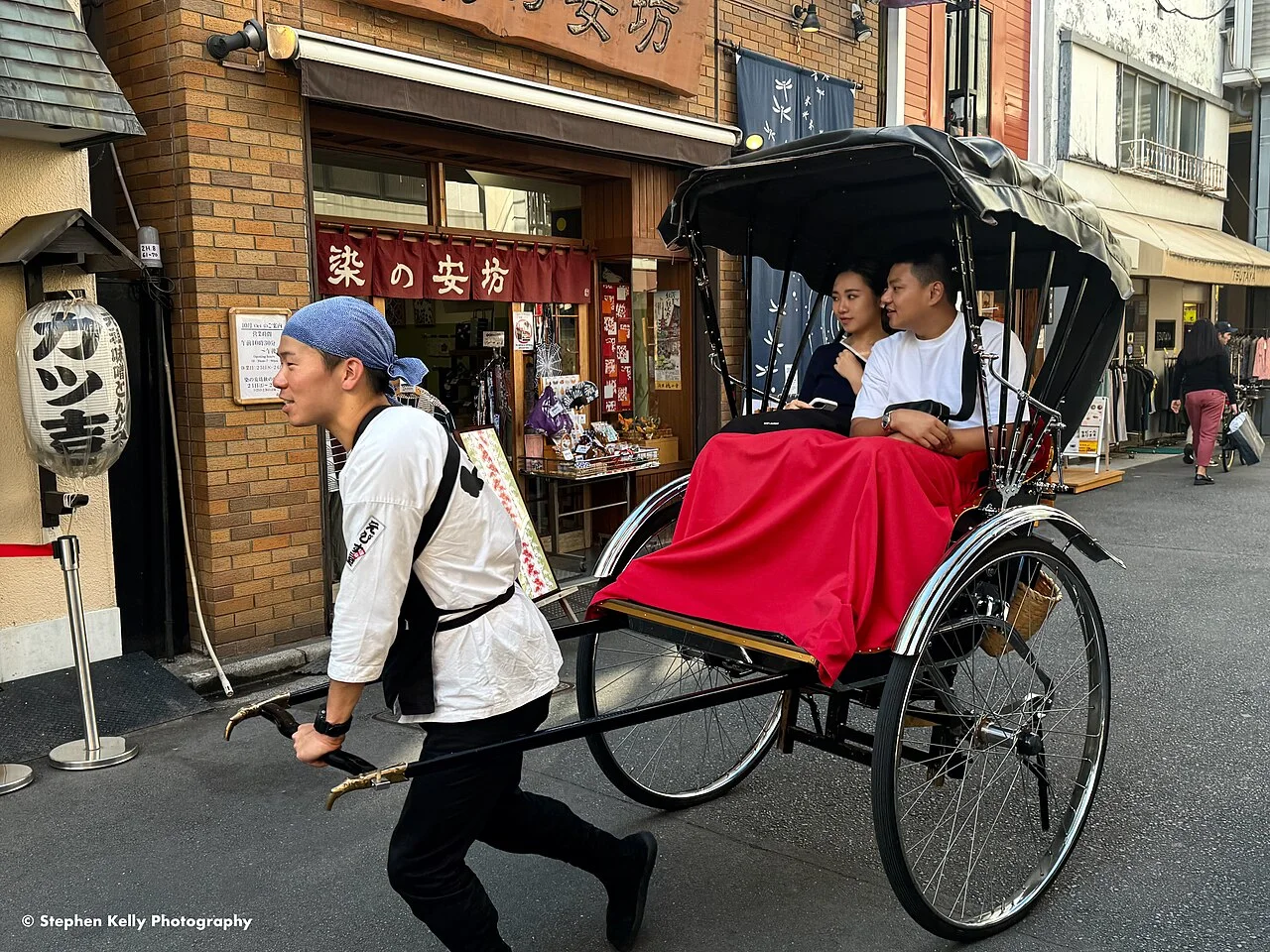
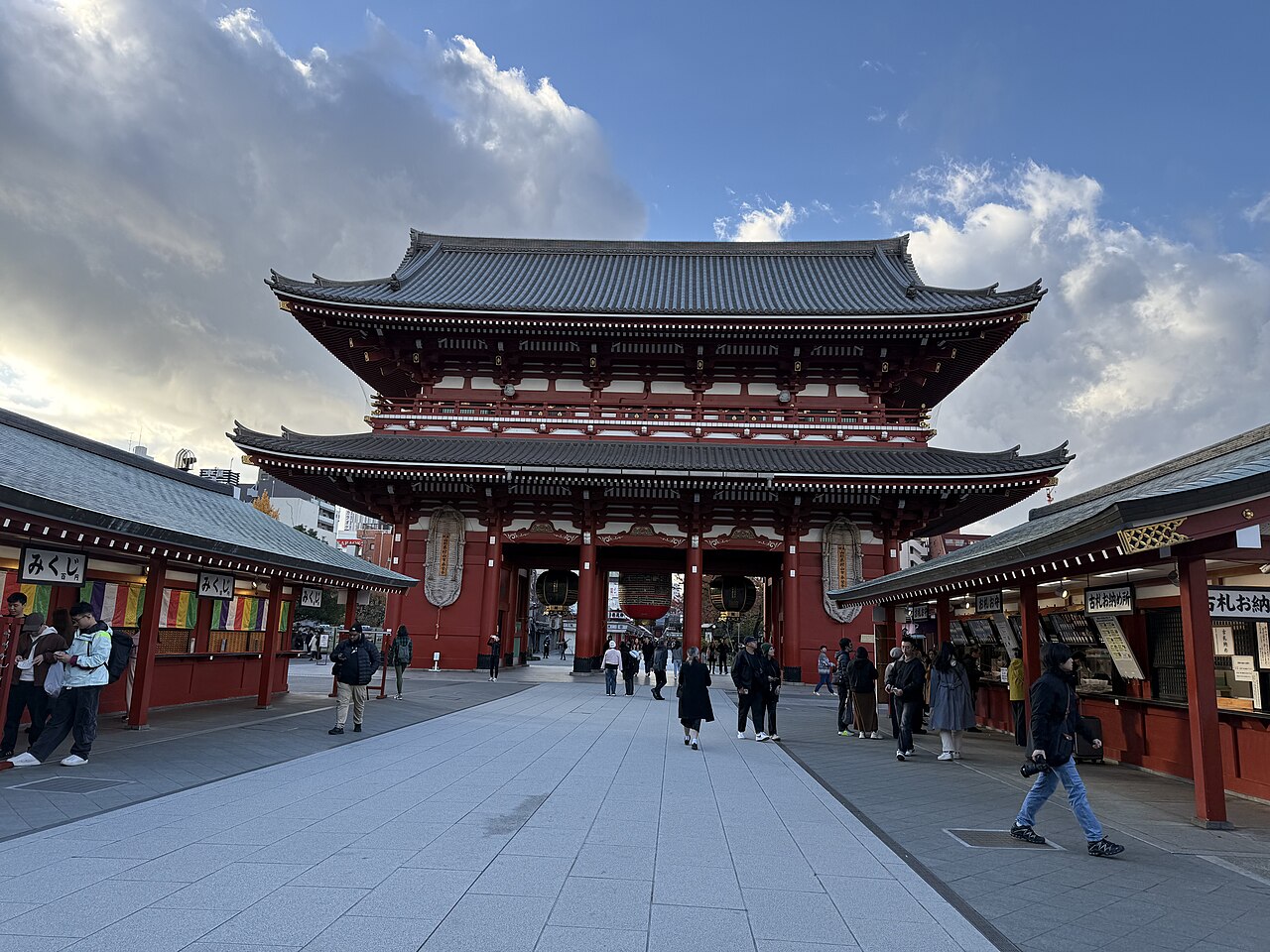
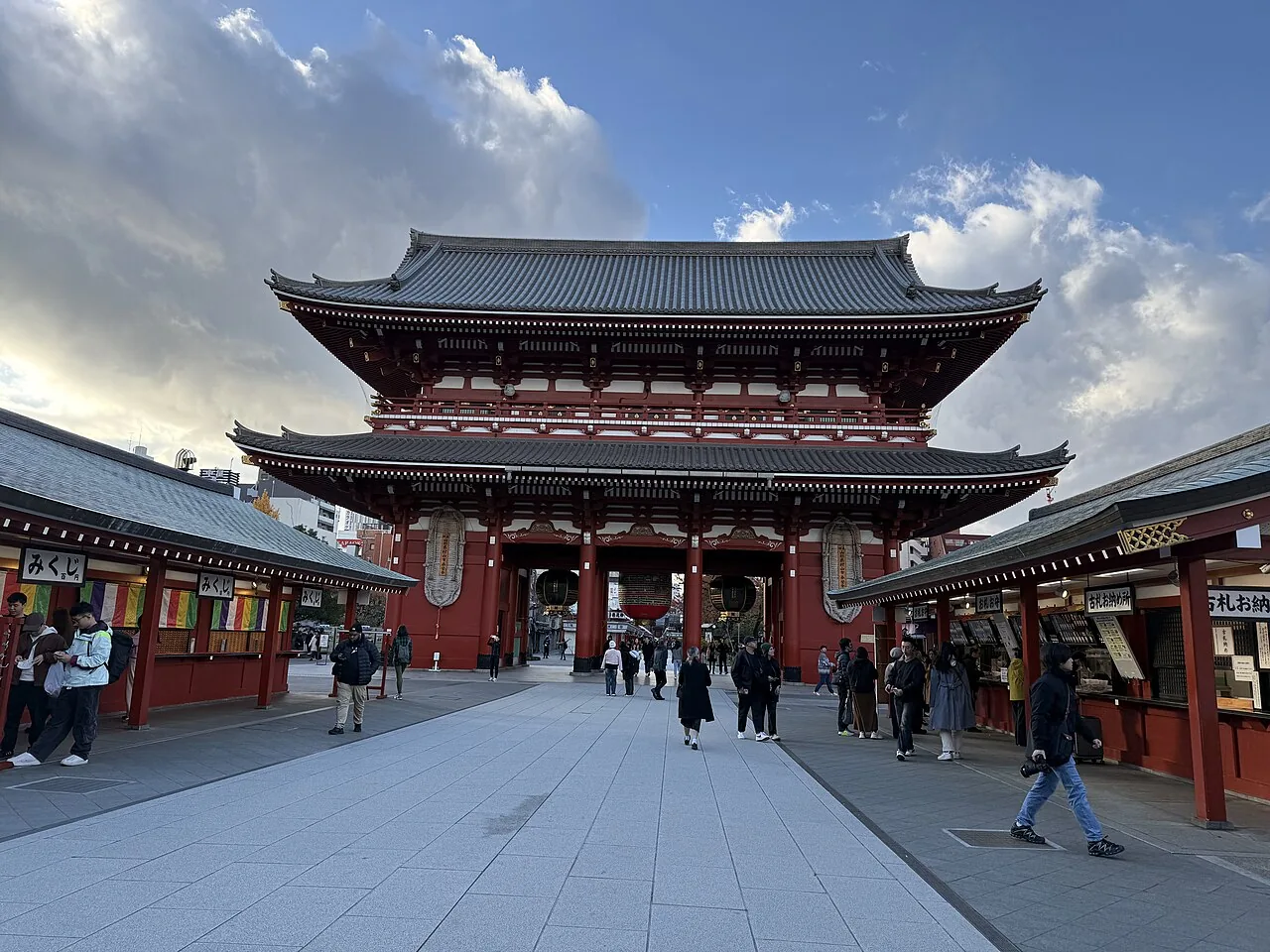
The best thing in Asakusa is still free and still ignored: Senso-ji at 6:30 in the morning, when the main hall is open, the incense is lit, the shutters on Nakamise are down and painted with the shops’ own murals, and there are more locals than visitors. Do that, eat breakfast, and then decide whether you want a workshop at all. Half the people who do this do not. Getting round the district itself — a ¥5,500 rickshaw against a ¥2,000 guided walk — is compared in rickshaw or guide in Asakusa. The same hours across the whole city — calligraphy, ikebana, wagashi, washi papermaking, pottery, coin rings — are sorted by what you actually walk out holding. If what you actually want is the kimono rather than a craft, the shops around the temple are sorted by what each price really includes — the cheapest one on that page includes hair and make-up and several dearer ones do not.
From the temple it is fifteen minutes on foot to Kappabashi, where the one workshop I would pay for above ¥10,000 lives: learning to sharpen the knife you just bought.
The walk in from the Skytree side, along the river and over the Sumida River Walk bridge, is described in Sumida River on Foot; it ends at Kaminarimon and is the best way to arrive.
What the reviews say, and what they mean
These eight bookings carry about 5,050 reviews between them, and two of them have the cleanest records of anything in this series. Read on 3 October 2026, with the operators’ replies.
How good the records actually are
| Workshop | Reviews | Rated 3★ or below |
|---|---|---|
| Chopstick making | 2,157 | 4 (0.19%) |
| Matcha and wagashi | 1,365 | 3 (0.22%) |
| Kintsugi | 1,214 | 13 (1.1%) |
| Calligraphy | 179 | 0 |
| Kimono rental (Yae) | 77 | 0 |
| Coin ring | 47 | 0 |
| Washi lantern painting | 8 | 0 |
| Candy sculpting at Ameshin | 0 | — |
Chopstick making and the matcha hour are, by the numbers, the two safest bookings in Tokyo. Four low reviews in 2,157 and three in 1,365 — roughly one in five hundred. Nothing else this site has looked at comes close, and it is a point in favour of the simple formats: plane a stick, whisk a bowl. There is not much to get wrong.
The exception at the other end is the one with no reviews: the Ameshin candy listing. The shop is a real Asakusa amezaiku workshop and that is why it is first on this page, but nobody has reviewed this booking, so treat the recommendation as being about Ameshin rather than about the listing.
The one thing that repeats, and it is the same shop three times
The coin ring, the chopsticks and the kintsugi are the same operator in the same room near Senso-ji — one reviewer in September 2026 describes several of these activities running at once in a small space. Across 4,330 reviews of those three bookings, the single complaint that recurs is not about the teaching. It is the pricing model:
- Coin ring: the free coins are foreign ones; Japanese and older coins cost extra. Eight of its twenty-three four-star reviews say so.
- Chopsticks: “It costs extra if you want decent wood or engraving” (a reviewer on Viator, September 2026).
- Kintsugi: the included piece is one of two small pre-broken dishes; a larger one is a ¥5,000 upgrade.
None of these is a scandal and the satisfaction rates are extraordinary. But the advertised price is an entry price in all three cases, and the honest budget for the thing you would actually want to keep is higher: roughly ¥3,000–¥5,000 for a ring rather than ¥2,500, and ¥2,400 plus ¥5,000 for a kintsugi plate worth repairing. Decide at the counter, not after you have started.
Which of these are made for foreigners
Asakusa’s cheap hours genuinely undercut the Japanese market. Its expensive ones do not. Every figure below is from a Japanese-language operator’s own price page.
| This page | What a Japanese customer pays | Verdict |
|---|---|---|
| Kintsugi ¥2,400 | ¥8,800 for 2–2.5 h, and you bring your own broken piece | Far cheaper here — but you get a dish they broke for you |
| Coin ring ¥7,700 | ¥6,500–7,500 at a Japanese Asakusa workshop | The same money |
| Calligraphy ¥7,800 | ¥2,000 trial, or ¥3,400 a lesson on a monthly plan | Two to four times — you are paying for English and a one-off |
| Kimono rental from ¥7,000 | ¥3,850 full set with hair, same streets | About double |
All prices checked 3 October 2026. The pattern is consistent and it is useful: the ¥1,000–¥4,000 hours on this page — chopsticks, matcha, kintsugi, the lucky cat — are cheaper than a Japanese person can buy the same hour for, because they are built for volume and the materials are the cheapest version. The ¥7,000-and-up ones are where the visitor premium sits, and calligraphy is the clearest case of it.
Which does not make them wrong to book. It makes the free hours at the bottom of this page and the cheap crafts at the top the better value, and it means that if you want calligraphy badly enough to pay ¥7,800, you are buying a teacher who will work in English rather than a better lesson.
Quick answers
Which Asakusa workshop is the best value?
Candy sculpting (amezaiku) at Ameshin, about ¥4,000 for two hours with real artisans, and the one-hour matcha and wagashi class at about ¥2,500. Both are near Senso-ji and bookable online.
How much do Asakusa workshops cost?
Between ¥2,500 (matcha) and ¥9,000 and up (kimono plus tea ceremony). Calligraphy is about ¥7,800, coin-ring making about ¥7,700, lucky-cat painting ¥3,000 to ¥4,000, kimono rental from about ¥7,000.
Is the kimono tea ceremony in Asakusa worth it?
Only for the photographs. Most of the 90 minutes is the fitting and photos; the ¥2,500 matcha class teaches more about tea for a third of the price.
What is free to do in Asakusa?
Senso-ji at 6:30 in the morning, when the main hall is open, the incense is lit and the Nakamise shutters show their painted murals. Nakamise shops open around 10:00.
Are Asakusa workshops suitable for children?
Lucky-cat painting is the one families choose; the candy workshop has a minimum age (check the listing); matcha and calligraphy suit older children.
Practical notes
- Best value: Ameshin candy sculpting (~¥4,000, 2 hours) and the matcha hour (~¥2,500).
- Best souvenir: your own calligraphy or a coin ring (~¥7,700–7,800).
- For photos: kimono rental, morning only. For tea: not the kimono package.
- With small kids: lucky-cat painting; the candy workshop has a minimum age, check the listing.
- Timing: book workshops for the afternoon and give the morning to the temple. Nakamise shops open around 10:00.
LOCAL SIDE JAPAN checked prices, durations and review counts on the booking sites on September 14, 2026. Prices are quoted as approximate and change with the exchange rate. Nothing here was provided free by an operator.