This article contains affiliate links to booking sites. If you book through them, LOCAL SIDE JAPAN earns a small commission at no extra cost to you. Eight of the ten places below cost ¥600 or less and need no booking. How this site is made →
TOKYO / SUMIDA CITY / THE LIST
Everyone goes to Sumida City. Almost nobody knows they were there, because the Skytree is a place you go up and leave — for ¥1,800 if you book it properly — and the ward around its feet does not get a look. That ward has the Kokugikan and the sumo museum, two of Tokyo’s best small museums and its biggest one, newly reopened, a shopping street that has not changed since the 1960s, three bathhouses that welcome tattoos, and a river walk the tour buses skip. Here are ten things to do in Sumida beyond the Skytree, in the order I would do them, with prices and hours checked on September 20, 2026.
On this page
- Where is Sumida City, and what is it?
- What are the best things to do in Sumida?
- What else is there to see in Sumida?
- What should I do in Sumida if I only have half a day?
- How do I spend a day in Sumida?
- How do you get to Sumida?
- How much does a day in Sumida cost?
- Where this joins the rest of the east side
- Quick answers
Fast facts
- Free: the 3 km river walk from the Skytree to Senso-ji, and the Sumo Museum inside the Kokugikan.
- Cheap: Tobacco and Salt Museum ¥100 · Mukojima Hyakkaen garden ¥150 · Sumida Hokusai Museum ¥400 · a bathhouse ¥600.
- Worth paying for: cutting your own Edo Kiriko glass, ¥4,400 booked direct.
- Closed Mondays: the Edo-Tokyo Museum, the Hokusai Museum and the Tobacco and Salt Museum. Do not come on a Monday for the museums.
- Stations: Oshiage for the Skytree, Ryogoku for sumo and the museums, Kinshicho for the baths and the glass.
- From Asakusa: ten minutes on foot over Azumabashi.
Where is Sumida City, and what is it?
Sumida City — Sumida-ku, 墨田区 — is one of Tokyo’s 23 special wards, on the east bank of the Sumida River, directly across the water from Asakusa. It is 13.77 square kilometres with 287,766 people living in it, which makes it one of the small, dense, flat, residential wards rather than one of the famous ones. Taito, with Asakusa in it, is its western neighbour; Koto is south; Arakawa north-west; Adachi north; Katsushika east; Edogawa south-east; Chuo south-west across the river.
If you have been to Tokyo you have been here, because the Skytree is in Sumida and so is the Kokugikan, the national sumo arena. Almost nobody registers the ward itself, and the reason is that it has no centre you arrive at. It has two ends, and they feel like different cities:
- The south — Ryogoku, Kinshi, Kikukawa. Sumo, the museums, the chanko restaurants, the stables behind sliding doors on residential streets. This is the half with the history in it.
- The north — Oshiage, Mukojima, Kyojima, Tachibana. The Skytree stands at the join, and behind it the ward turns into wooden houses, alleys too narrow for a car, and a shopping street that has not been redecorated since the 1960s. This is the half nobody writes about.
You will see the ward written several ways in English — Sumida City, Sumida Ward, Sumida-ku, sometimes just Sumida. They are all the same place. The ward office uses “Sumida City”, which is why this page does too. Population and area are the ward’s own figures as of April 1, 2025.
What are the best things to do in Sumida?
1. Walk the Sumida River from the tower to Senso-ji, free
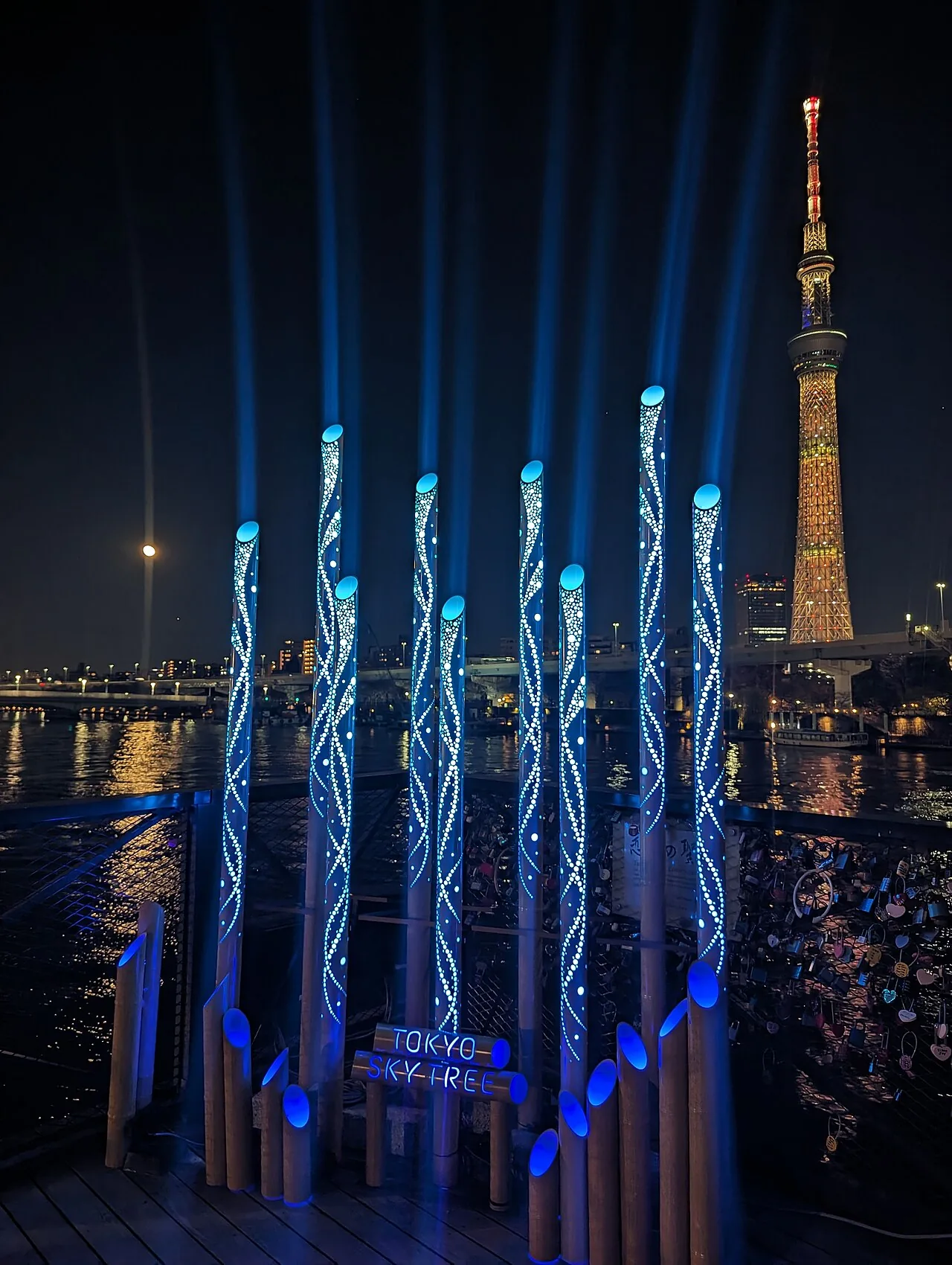
Three kilometers on foot: the Mizumachi cafés under the railway arches, the Sumida River Walk deck hanging off the Tobu bridge, the east bank of Sumida Park with its 300-year-old cherry trees, Ushijima Shrine and its three-legged torii, the X-shaped Sakurabashi, and the west bank down to Azumabashi and the temple. An hour if you walk, a morning if you do it properly. The full route is in Sumida River on Foot.
2. Cut your own Edo Kiriko glass, ¥4,400
Sumida is where Tokyo’s cut glass is still made by hand, and the Sumida Edo Kiriko Museum, a working studio run by Hirota Glass, lets you cut a pattern into your own tumbler for ¥4,400 booked directly, or with an English guide for around ¥22,000 through the booking sites. The honest comparison is in the Edo Kiriko guide. Kinshicho Station.
3. Edo-Tokyo Museum, reopened March 2026
Tokyo’s museum of itself, the one on stilts beside the Kokugikan, reopened on March 31, 2026 after four years closed, with the full-size Nihonbashi bridge, the Edo townhouse street and the kabuki theater rebuilt and relit. It is the one museum in the city that explains why the east side looks the way it does: the fires, the canals, the tenements. Allow two hours. Admission went up with the reopening: ¥800 for adults, ¥400 for 65 and over, ¥480 for university students, ¥300 for high-school students, free for junior high and younger — it was ¥600 before it closed. Open 9:30 to 17:30, to 19:30 on Saturdays, last entry half an hour before closing, closed Mondays. Ryogoku Station. For ¥400 less, and a street you walk inside rather than look at, the Fukagawa Edo Museum in Koto is the other way to do this.
4. The Sumo Museum inside the Kokugikan, free
A single room on the ground floor of the sumo arena with woodblock prints, ceremonial aprons and the portraits of every champion, free, open on weekdays 10:00 to 16:30; during the three Tokyo tournaments (January, May, September) it is open only to ticket holders. The rest of Ryogoku, with the chanko restaurants and the stables you can occasionally see into, is around it. If you want to see actual sumo, the ¥3,500 official seat and how to get it is written by someone who runs a stable in the next ward and says so; the nine places you can actually do it are compared in Tokyo sumo experiences compared, and the morning-practice visits and shows in the three kinds of sumo.
5. Sumida Hokusai Museum, ¥400
Hokusai was born in this ward and spent nearly all of his ninety years in it, moving house ninety-three times. The aluminum museum near Ryogoku shows the Great Wave and the rest of the Thirty-six Views in the permanent collection for ¥400 (special exhibitions extra), with a life-size model of the old man drawing in his squalid studio while his daughter watches. Closed Mondays. Small; an hour.
6. A bath at Koganeyu or Daikokuyu, ¥600
Sumida has more neighborhood bathhouses than anywhere in Tokyo, because the wooden houses here never had baths of their own. Koganeyu in Kinshicho, with a craft-beer tap by the entrance and a DJ booth, and Daikokuyu in Oshiage, open until ten the next morning, both say in writing that tattoos are welcome. ¥600, the fixed Tokyo price since August 2026. The etiquette and the third bath are in the tattoo-friendly sento guide.
7. Kirakira Tachibana shopping street in Kyojima, the price of lunch
Four hundred and seventy meters of Showa-era shops five minutes from Keisei Hikifune: a bakery that has been there since the 1950s, prepared-food counters, greengrocers, and a rest room run by the shopping street where you can eat what you bought. Around it is Kyojima, one of the last dense wooden neighborhoods in the city, which the ward has been trying to make fireproof for fifty years. A two-hour walk plan →
8. Mukojima Hyakkaen, ¥150
The only surviving garden in Tokyo made by Edo townspeople rather than a lord: a plant collector and his literary friends laid it out in 1804 as a “garden of a hundred flowers”, with plum in February, a tunnel of bush clover in September, and haiku stones under the trees. ¥150, 9:00 to 17:00, closed at New Year. Higashi-Mukojima Station, and a short walk from the Shirahige-Higashi apartment firewall, which is the strangest building in the ward.
9. Tobacco and Salt Museum, ¥100
Japan Tobacco’s museum of its two former monopolies, moved from Shibuya to a warehouse district near the Skytree in 2015, and better than it sounds: the salt floor explains how a country with no rock salt made it from seawater for two thousand years, and the tobacco floor has the pipes, the packaging and the Edo tobacco shops. ¥100 for adults. Closed Mondays. Ten minutes from Honjo-Azumabashi.
10. A yakatabune dinner boat from Azumabashi
The lantern-hung wooden boats that leave from the pier below the red bridge are the 400-year-old way to see the river at night, and the one thing on this list worth spending real money on. Booked directly with Amitatsu it is ¥13,800 for two and a half hours with tempura and all-you-can-drink; on Viator, a 100-minute version with a show is about ¥15,800, 4.5 from nearly 600 reviews, with free cancellation. Which to pick is in the yakatabune guide.
What else is there to see in Sumida?
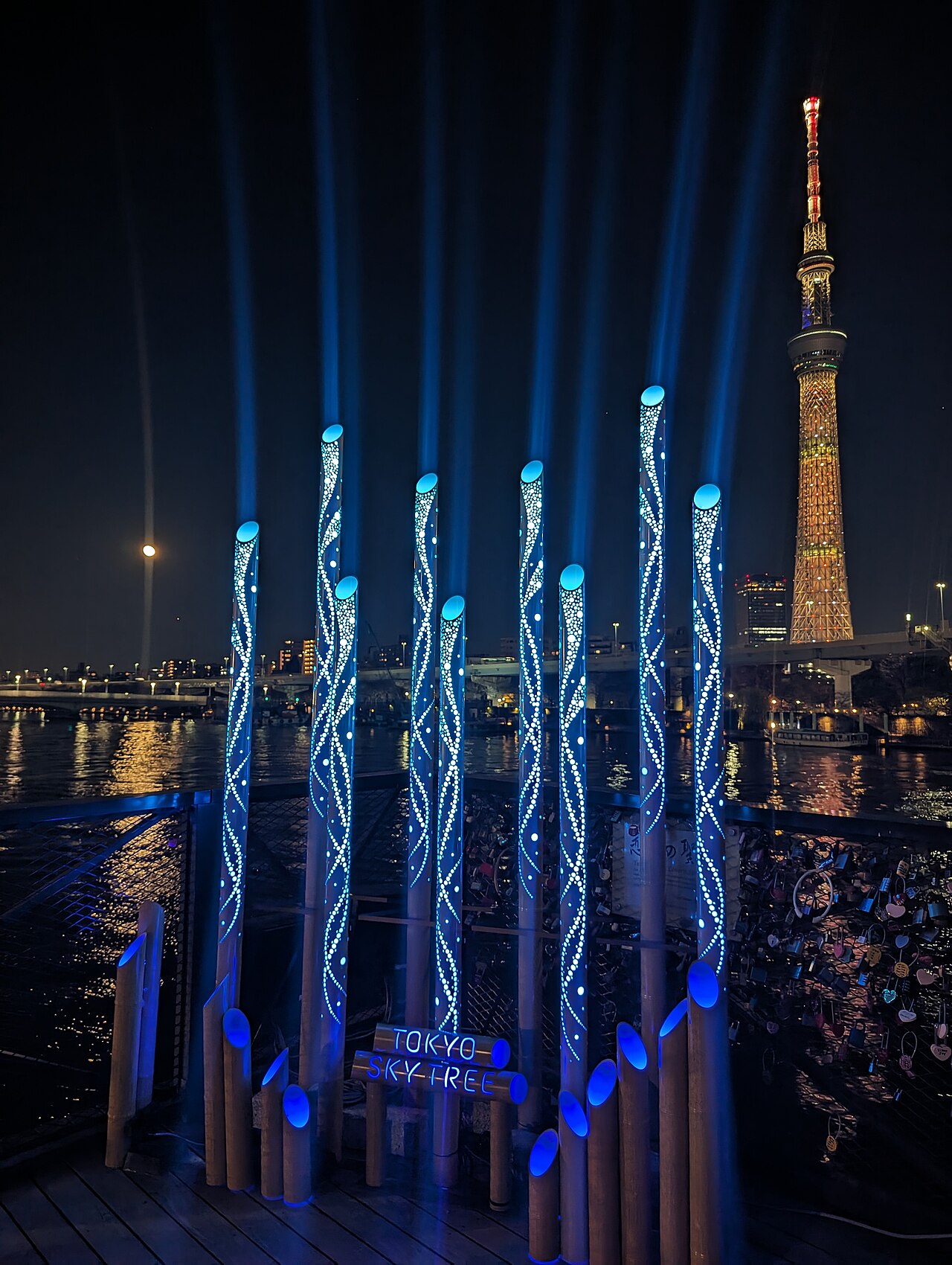
- Tokyo Skytree, obviously. Go at 18:00 on a weekday, buy the ticket online for the date-priced discount, and skip the top deck; the 350-meter floor has the view.
- fcFA in Oshiage, three shops of football shirts beside the tower, for anyone who travels with a club. The shop guide →
- Ekoin temple in Ryogoku, where the sumo tournaments were held before the Kokugikan, with the memorial to the 100,000 dead of the 1657 fire. Free.
- The Sumida fireworks, last Saturday of July, a million people on both banks. Not a day for the river walk.
What should I do in Sumida if I only have half a day?
Walk the river one way and take the train back. Start at the Skytree at nine, walk down to Senso-ji through Mizumachi and Sumida Park, and you have seen the best free thing in the ward in about ninety minutes with the tower behind you the whole way. That is the half day.
If it is raining, do Ryogoku instead. The Edo-Tokyo Museum, the Sumo Museum and the Hokusai Museum are within ten minutes of each other and of the station, and between them they cost about ¥1,000 and fill four hours. Not on a Monday — two of the three are shut.
How do I spend a day in Sumida?
Morning: Ryogoku at 10:00 for the Edo-Tokyo Museum, the sumo museum next door, chanko for lunch. Afternoon: the Hokusai museum, then the Edo Kiriko workshop at Kinshicho if you booked it, or Kirakira Tachibana and Kyojima if you did not. Evening: Koganeyu (open 6:00 to 9:00 and 11:00 to 24:30) for a bath at six, then walk the river to Azumabashi for the boat, or across it to Asakusa for dinner. Total without the boat and the glass: about ¥1,400.
How do you get to Sumida?
Easier than its reputation, because one subway line runs the length of the problem. The Tokyo Metro Hanzomon line starts at Shibuya and ends at Oshiage, at the foot of the Skytree, with Otemachi and Kinshicho on the way. If you are staying anywhere on that line you do not change trains at all.
- From Shibuya: the Hanzomon line, direct to Oshiage. No transfer. This is the single most useful fact on this page for anyone staying on the west side.
- From Tokyo Station: walk through to Otemachi, then the Hanzomon line east. Kinshicho for the baths and the glass, Oshiage for the tower.
- From Asakusa: ten minutes on foot across Azumabashi bridge. Do not take a train. You can see where you are going.
- For Ryogoku — sumo and the museums — note that the Hanzomon line does not stop there. Ryogoku is on the Toei Oedo line, one station from Morishita.
The practical consequence is that Sumida is two visits, not one, unless you are prepared to cross between the ends. Ryogoku in the south and Oshiage in the north are about three kilometres apart on different lines, and the nicest way between them is not a train at all but the river walk.
How much does a day in Sumida cost?
About ¥1,850 for a full day of everything except the glass and the boat. That is the Tobacco and Salt Museum (¥100), Mukojima Hyakkaen (¥150), the Hokusai Museum (¥400), the Edo-Tokyo Museum (about ¥600) and a bathhouse at the end of it (¥600). The river walk and the Sumo Museum are free, and lunch on the Kirakira Tachibana shopping street is a few hundred yen a counter.
Add ¥4,400 if you cut your own glass, which is the one paid thing on this page this site would tell you not to skip. Add ¥13,800 if you finish on a yakatabune. Everything else here is under a thousand yen, which is unusual for a ward with the tallest tower in Japan in it.
Where this joins the rest of the east side
Sumida is the middle of the east side. South across the Onagi is Koto City, with its own twelve-place list; west across the river is Asakusa and its workshops; north up the Tobu line is Kita-Senju. The ward also holds the Japanese Sword Museum in Ryogoku, ¥1,000 and three minutes from the station, which is the real thing behind every samurai experience sold in Tokyo. Everything in the ward is on the Sumida City page.
Quick answers
What is there to do in Sumida besides the Skytree?
The Edo-Tokyo Museum (reopened March 2026), the Sumo Museum in the Kokugikan (free), the Sumida Hokusai Museum (¥400), the Edo Kiriko glass workshop, tattoo-friendly sento such as Koganeyu (¥600), Kirakira Tachibana shopping street in Kyojima, Mukojima Hyakkaen garden (¥150), the Tobacco and Salt Museum (¥100), the Sumida River walk to Senso-ji, and yakatabune dinner boats.
Is the Edo-Tokyo Museum open again?
Yes. It reopened on March 31, 2026 after a four-year renovation, beside the Kokugikan at Ryogoku Station. Check the museum’s site for current admission and hours; it is closed on Mondays.
Is the Sumo Museum free?
Yes. The Sumo Museum on the ground floor of the Ryogoku Kokugikan is free, open weekdays 10:00 to 16:30. During the January, May and September tournaments it is open only to people holding a tournament ticket.
How do I get to Sumida City from central Tokyo?
JR Sobu line or Oedo line to Ryogoku (museums and sumo), Hanzomon line to Oshiage (Skytree, river walk), JR or Hanzomon to Kinshicho (Edo Kiriko, Koganeyu), Tobu Skytree line to Hikifune or Higashi-Mukojima (Kyojima, Hyakkaen). Most of it is 10 to 20 minutes from Tokyo Station.
How much does a day in Sumida cost?
About ¥1,400 in admissions for the museums, the garden and a bath, plus food. The Edo Kiriko workshop adds ¥4,400 and a yakatabune dinner boat ¥13,800 to ¥15,800; both are optional.
LOCAL SIDE JAPAN checked the Edo-Tokyo Museum reopening against the Tokyo Metropolitan Government’s announcement, the Hokusai Museum, Mukojima Hyakkaen (Tokyo Metropolitan Park Association) and Tobacco and Salt Museum admissions against their own pages, the sento price against the Tokyo Sento Association, and the boat prices against Amitatsu and Viator, on September 20, 2026. Prices are approximate and change; the Edo-Tokyo Museum’s post-renovation admission should be confirmed on its site.