This article contains affiliate links to booking sites. If you book through them, LOCAL SIDE JAPAN earns a small commission at no extra cost to you. The writer also runs a sumo experience in Koto City; it is mentioned once, at the end, without an affiliate link and without a ranking, and it is not one of the recommendations. How this site is made →
TOKYO / EXPERIENCES / SUMO, THE THREE KINDS
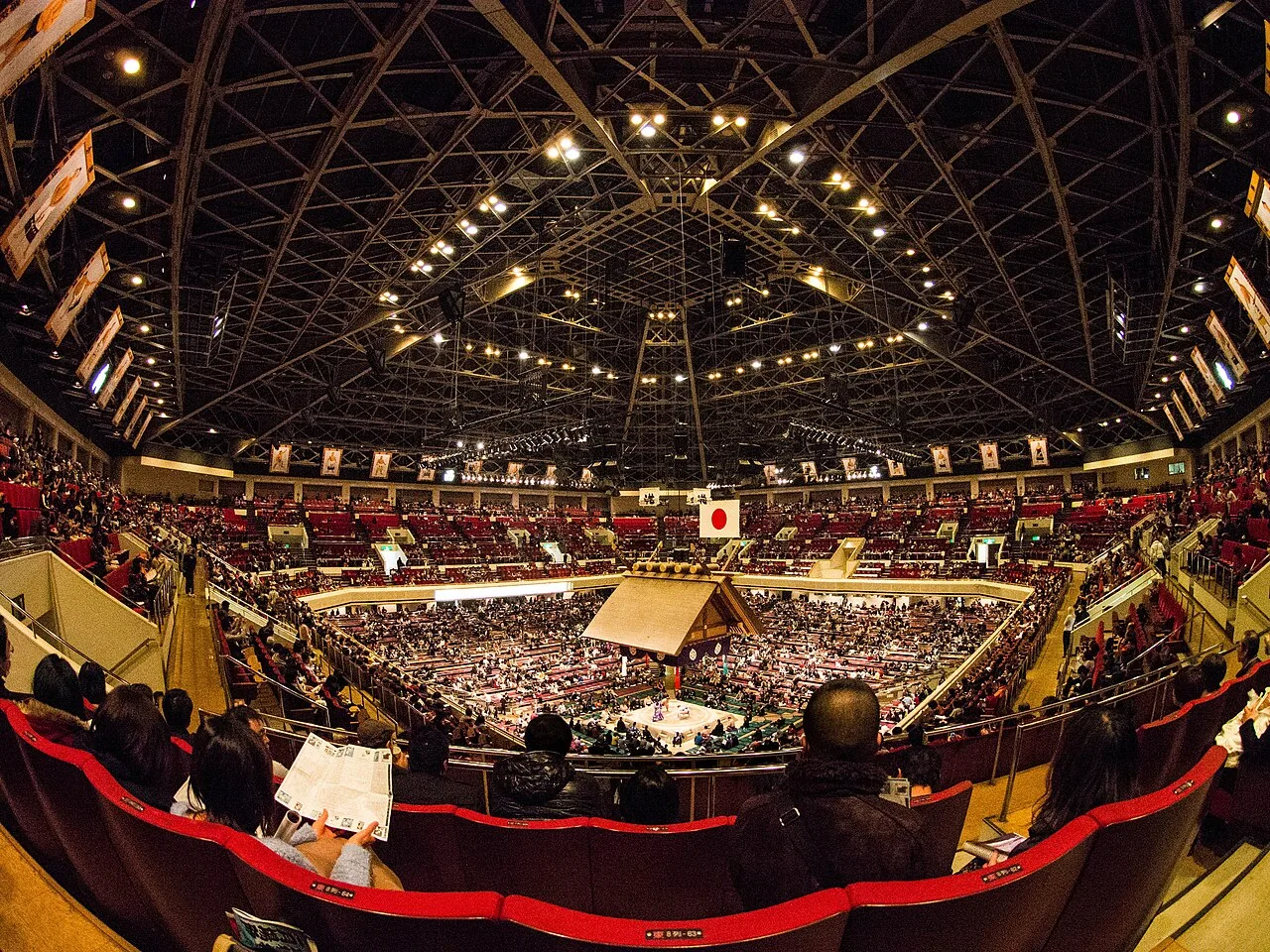
Search “sumo Tokyo” on a booking site and you get forty products that look alike and are three completely different things. There is the tournament, fifteen days three times a year at the Kokugikan, where the sport is actually decided. There is morning practice, which is a real stable’s real training, watched in silence from the edge of the room. And there is the sumo show, retired wrestlers in a restaurant doing demonstrations, letting you into the ring, and serving you chanko stew, which is entertainment and is sold as such. They cost about the same. They are not interchangeable. I run a sumo experience myself, a few stations east of Ryogoku, so I have an interest in this, which is declared again at the bottom; the ranking below leaves my own out. Prices, meeting points and review counts were read on the booking sites on September 21, 2026.
On this page
- Which of the three you actually want
- 1. The tournament: ¥3,500 yourself, or ¥21,000 with someone
- 2. Morning practice: real, silent, and worth knowing the rules of
- 3. The sumo show: entertainment, and good at it
- Which sumo experience to book
- The east side, and the interest I have
- Where this joins the rest of the east side
- Quick answers
Which of the three you actually want
| The tournament | Morning practice | The sumo show | |
|---|---|---|---|
| What it is | The real competition, 15 days, six times a year, three in Tokyo | A stable’s daily training, 7:30 to 10:00, watched from the side | Retired wrestlers demonstrate, you step in the ring, you eat chanko |
| When | Jan, May, Sep in Tokyo; Mar Osaka, Jul Nagoya, Nov Fukuoka | Most mornings outside tournament weeks; never on the days after one | Every day, several sittings |
| Do you interact | No | No; you watch and stay quiet | Yes; that is the product |
| Photos | Yes | Restricted; no flash, no sound, often only at the end | Encouraged |
| Cost, official | ¥3,500 chair seat | Some stables free or ¥1,000 by direct arrangement, mostly Japanese only | None; it exists only as a booking |
| Cost, booked | ¥20,000 to ¥40,000 with a guide | ¥14,000 to ¥18,000 with a guide | ¥8,000 to ¥19,000 |
| Children | Yes, half-day is enough | Over about 8, and only if they can sit still for 90 minutes | Yes, the best of the three for them |
1. The tournament: ¥3,500 yourself, or ¥21,000 with someone
If your dates overlap a Tokyo tournament (September 13 to 27, 2026; January 10 to 24, 2027; then May and September 2027), this is the one. Nothing else on this page is the sport. The official chair seat is ¥3,500 from the Sumo Association’s own seller, and how to buy it, when it goes on sale, and what a day inside looks like are in the sumo tickets guide, which exists so you do not have to pay six times that. If you would rather someone else handle the ticket and explain the rituals, the honest packaged options are JTB’s Grand Sumo Tournament Viewing Tour with Tickets, four to five hours with a guide, about ¥21,000, 4.8 from nearly 900 reviews, and Official Sumo Tournament Ticket with Guided Experience, five hours, about ¥20,700, 4.7 from about 40 reviews. Both sell out; both are worth it only when the official site is sold out or you want the commentary.
2. Morning practice: real, silent, and worth knowing the rules of
Asageiko is what a sumo stable does every morning from about 7:30: two and a half hours of the wrestlers, from teenagers to ranked men, going through the same drills and bouts on a clay ring in a room with a wooden floor and no heating, while the stablemaster watches from a cushion. Visitors sit along the wall. You do not speak, eat, stretch your legs toward the ring, use flash, or leave before the end; you can usually take photographs quietly and a group photo at the finish. It is the most authentic sumo thing a visitor can do, and it is also ninety minutes of watching men do push-ups, and both are true. Stables do not train during tournament weeks (they are at the arena) or for a few days after, so the calendar matters. Almost every guided version below is ¥14,000 to ¥18,000, and the price buys the arrangement with the stable and a guide who explains what you are watching; the stables themselves see little of it. Book the one closest to where you are staying, and read the reviews for how strictly the rules were kept, which is a sign of a stable that takes it seriously.
- Sumo Morning Practice Viewing Tour at a Real Stable, meeting at Kiyosumi-Shirakawa Station: two hours, about ¥14,000, 5.0 from about 130 reviews. The best-priced and best-reviewed, in the ward with the most stables; do the garden and the coffee afterwards.
- Morning Practice Tour with Ring-Side Seat and Photo Shoot, also Kiyosumi-Shirakawa: two hours, about ¥15,000, 4.9 from about 130 reviews, with the group photo built in.
- Authentic Sumo, Not a Show, with English Guide, meeting at Ryogoku Station at 7:45: about ¥15,000, 4.6 from a couple of dozen reviews. The title is the pitch, and it is accurate.
- Morning Practice near Tokyo Skytree with Wrestler Photo: two hours, about ¥18,000, 4.9 from about 60 reviews, for people staying in Oshiage.
- Morning Practice and Chanko Lunch: three hours, about ¥15,000 with group pricing, 4.9 from about 65 reviews, the version that ends with the wrestlers’ stew in a Ryogoku restaurant.
One to be careful with: the one-hour Watch Sumo Morning Practice at Stable is about ¥14,500 and rated 4.2 from 270 reviews, well below the others; the complaints are about the hour being short and the viewing crowded. Read them before booking. And a free version exists: a few stables in Sumida and Koto let individuals watch by direct arrangement, in Japanese, on the stable’s terms, and the ward tourism sites list which; it is not bookable, it can be cancelled at seven in the morning, and it is how locals do it.
3. The sumo show: entertainment, and good at it
These are ninety-minute to two-hour productions in a restaurant or a hall: retired wrestlers explain the rules, demonstrate the ritual and the techniques, fight a few exhibition bouts, invite volunteers into the ring to be gently thrown, pose for photographs, and serve chanko-nabe, the stew the stables eat. Nobody involved is competing, which the good listings say, and the wrestlers are professionals at the show, which is a different skill from the sport and one they are often better at. For children, for groups, for an evening rather than a 7:30 start, and for anyone whose trip misses a tournament, this is the right kind, and the reviews are the highest on this page for a reason.
- The SUMO Show, Ryogoku: ninety minutes at a tonkatsu restaurant in Tatekawa, Sumida, run by retired wrestlers, with sparring, a turn in the ring, tonkatsu and chanko, about ¥12,700, 4.9 from about 2,500 reviews. The east-side one, ten minutes from the Kokugikan, and the one to book if you want the show in sumo’s own neighborhood.
- Shinjuku Sumo Show and Experience with Photo: ninety minutes, about ¥12,000, 4.9 from over 4,000 reviews, the most-booked sumo product in Japan, in a hall in Shinjuku with drinks.
- Shibuya Sumo Show with Drink and Photo: ninety minutes, about ¥8,000, 5.0 from about 740 reviews. The cheapest show in the city, without the meal.
- Sumo Entertainment Show with Chicken Hot Pot and Geisha, Asakusa: two hours, about ¥16,000, 4.8 from about 1,500 reviews, the dinner-theater version with a geisha performance added.
- SUMO LAND, Ryogoku: Wrestler Challenge, Hotpot and Mochi-Pounding: ninety minutes to two hours, 4.9 from about 335 reviews, and the only one with a vegan chanko. Note the price carefully: the ¥9,500 headline is the “no meals, sumo only” option and the version with the hot pot costs more — we had this the wrong way round until we checked the booking page again on October 10, 2026. The chanko itself is supervised by the Isegahama stable.
- Live Sumo Show and Kaiseki Dinner at Hirakuza, Ginza: two hours fifteen, about ¥19,000, 4.9 from about 180 reviews, the upmarket one, often sold out.
Which sumo experience to book
| If you want | Book | Area | About |
|---|---|---|---|
| The sport, during a tournament | Official ¥3,500 seat (see the tickets guide); or JTB’s guided tour | Ryogoku | ¥3,500 · or ¥21,000 · 4.8 (893) |
| The real thing, no tournament | Morning Practice Viewing Tour at a Real Stable | Kiyosumi-Shirakawa | ¥14,000 · 2 h · 5.0 (133) |
| Practice plus the stew | Morning Practice and Chanko Lunch | Ryogoku | ¥15,000 · 3 h · 4.9 (65) |
| The show, in sumo’s neighborhood | The SUMO Show | Ryogoku (Tatekawa) | ¥12,700 · 90 min · 4.9 (2,471) |
| The show, cheapest | Shibuya Sumo Show | Shibuya | ¥8,000 · 90 min · 5.0 (742) |
| The show, with children | Shinjuku Sumo Show, or SUMO LAND | Shinjuku / Ryogoku | ¥12,000 / ¥9,500 |
| Dinner theater | Hirakuza Ginza, or Asakusa with geisha | Ginza / Asakusa | ¥19,000 / ¥16,000 |
The east side, and the interest I have
Sumo is an east-side sport: the Kokugikan is in Sumida, most stables are in Sumida and Koto, and the show in Tatekawa and the practice visits from Kiyosumi-Shirakawa above are within a couple of stations of each other. I run the Sunamachi Ginza Sumo Stable in Kitasuna, Koto City, a sumo experience on a working shopping street that is also listed on the booking sites; it belongs in the “show” column above and it is not ranked there, because I wrote the column. If you want an independent view of it, the reviews are on the listing, and the shopping street it sits on is in the Koto City list on its own merits.
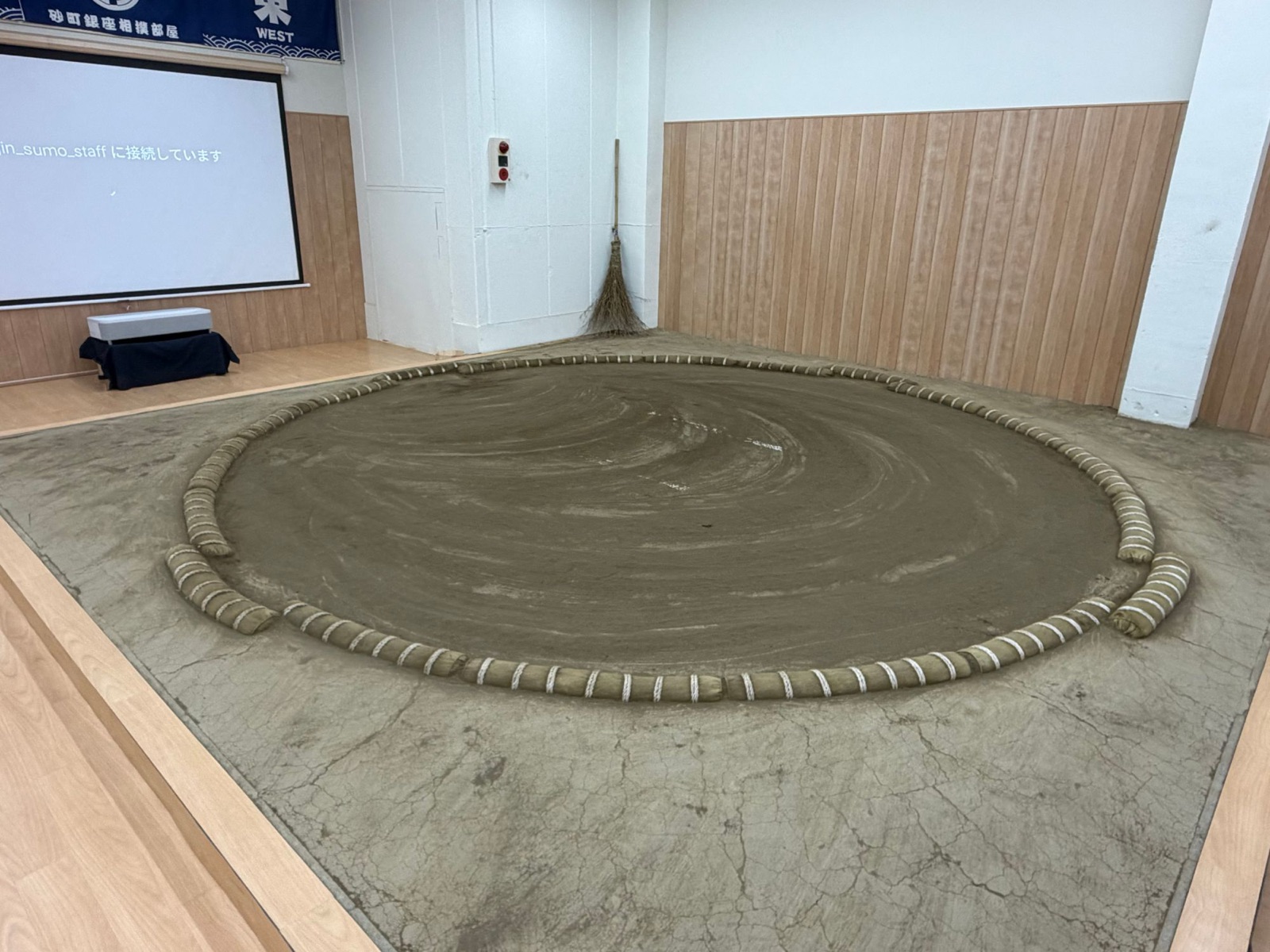
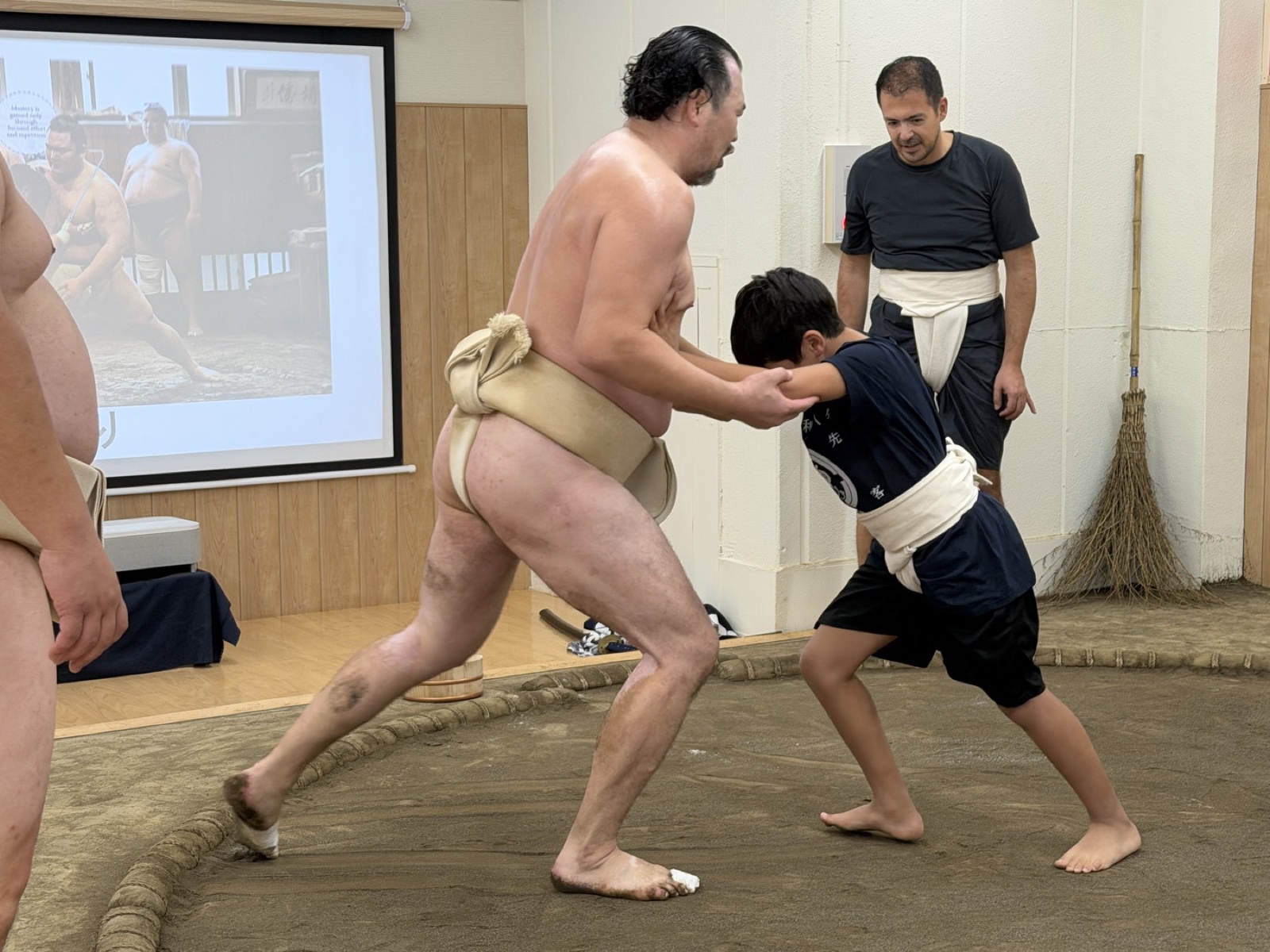
And if you have picked your kind and now need to pick the place: we compared all nine of them on the four things the listings leave out — whether you get in the ring at all, what you wear, how close you sit and what you eat. Tokyo sumo experiences compared →
Where this joins the rest of the east side
The cheap seat and the tournament calendar are in the sumo tickets guide; the free sumo museum and the reopened Edo-Tokyo Museum beside the arena are on the Sumida list; and Tomioka Hachimangu, where Edo’s professional sumo began, is a free stop in Kiyosumi-Shirakawa. The other combat tradition sold to visitors here is compared the same way in samurai and ninja experiences by kind — and the ¥1,000 sword museum in that article is three minutes from the Kokugikan. The other experiences compared by area are tea ceremony, sushi classes and kintsugi.
Quick answers
What is the difference between a sumo show and sumo morning practice?
Morning practice is a real stable’s daily training, watched silently from the side for about two hours from 7:30, with no interaction; guided visits cost ¥14,000 to ¥18,000. A sumo show is a 90-minute entertainment by retired wrestlers with demonstrations, a turn in the ring, photos and chanko stew, ¥8,000 to ¥19,000. Neither is the tournament, which is the actual competition.
Can you watch sumo morning practice for free in Tokyo?
At a few stables, by direct arrangement in Japanese and on the stable’s terms; the ward tourism sites list them. It is not bookable and can be cancelled the same morning. Guided visits, about ¥14,000 to ¥18,000, handle the arrangement and add an English explanation.
When is sumo in Tokyo?
Three tournaments a year at the Ryogoku Kokugikan: January, May and September, each 15 days (September 13 to 27, 2026; January 10 to 24, 2027). Osaka in March, Nagoya in July, Fukuoka in November. Morning practice visits and sumo shows run outside tournament weeks all year.
Which sumo show in Tokyo is best?
The SUMO Show in Ryogoku (about ¥12,700, 4.9 from 2,500 reviews) for the show in sumo’s own neighborhood; the Shinjuku show (about ¥12,000, 4.9 from 4,000 reviews) for the most-booked; the Shibuya show (about ¥8,000) for the cheapest; Hirakuza in Ginza (about ¥19,000) for dinner theater.
Is a sumo morning practice tour worth it?
Yes if you want to see the real sport up close and can sit still and silent for 90 minutes at 7:30 in the morning; no if you want to interact or take part. Book from Kiyosumi-Shirakawa or Ryogoku, avoid tournament weeks, and read reviews for how the rules were kept.
How much are sumo tickets in Tokyo?
¥3,500 for an official chair seat bought from the Sumo Association’s seller; box seats more. Guided packages with tickets cost about ¥20,000 to ¥40,000. The official route is explained step by step in this site’s sumo tickets guide.
LOCAL SIDE JAPAN read the prices, durations, meeting points, suppliers and review counts of every product above on Viator on September 21, 2026, and the tournament dates against the Nihon Sumo Kyokai schedule. Prices are approximate and move with the exchange rate. The writer operates a sumo experience in Koto City, disclosed above; it carries no affiliate link here and is excluded from the rankings. The other operators are described from their listings and reviews.