Sumo

Sumo lives on the east side: the Kokugikan is in Ryogoku, most of the stables are in Sumida and Koto, and the writer of this site runs one of them, the Sunamachi Ginza Sumo Stable in Kitasuna. That interest is declared in every guide. The aim here is to save you money: how to buy the official ¥3,500 tournament seat that the resellers mark up five times, when the tournaments are, how morning practice visits actually work, and which of the packaged shows are worth it.

  • Tokyo Sumo Experiences Compared: Who Lets You In the Ring, and What You Wear (2026)

    Tokyo Sumo Experiences Compared: Who Lets You In the Ring, and What You Wear (2026)

    This article contains affiliate links to booking sites. If you book through them, LOCAL SIDE JAPAN earns a small commission at no extra cost to you. One of the nine places below is mine: I run the Sunamachi Ginza Sumo Stable. Treat that as an interest declared, not a neutral recommendation, and read the section on where it loses. How this site is made →

    TOKYO / SUMO / THE COMPARISON

    There are about nine ways to see sumo in Tokyo and the listings for them look almost identical: ninety minutes, retired wrestlers, a photo, around ¥12,000. What the listings do not tell you is the part that decides whether you enjoy it. At three of them, getting into the ring is a lottery. At one, you are handed an inflatable suit. At another you may be seated at a table with strangers. And the cheapest option in the city has a better review record than anything else on this page. Everything below was read off the operators’ own booking pages and review histograms on October 10, 2026.
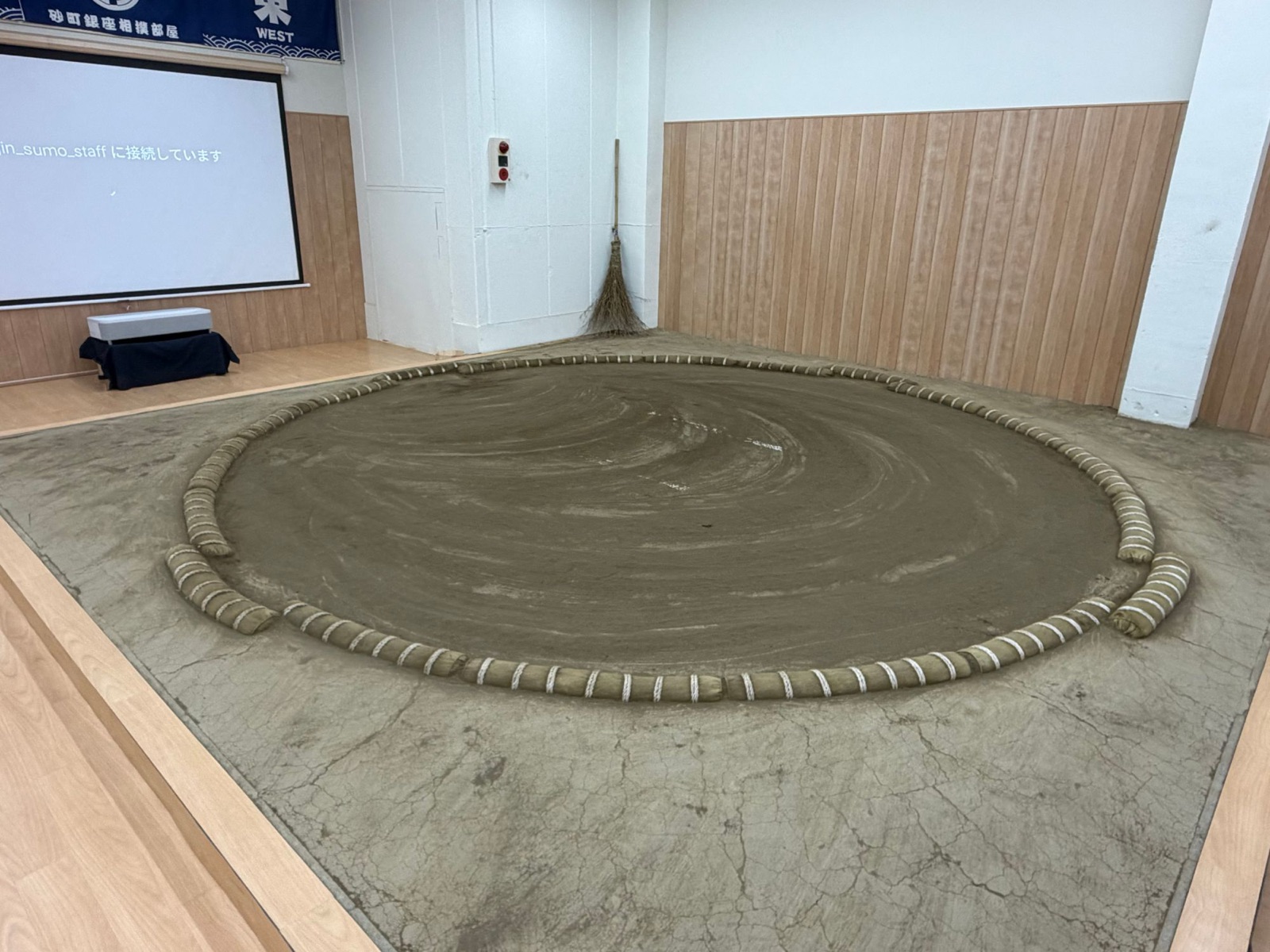
    The dohyo at the Sunamachi Ginza Sumo Stable in Koto City, a full-size clay ring with straw tawara bales
    A full-size clay dohyo with straw tawara bales and the four tokudawara, swept before a session. This is the ring at the Sunamachi Ginza Sumo Stable in Koto City, which is the one on this page I run. Photo: LOCAL SIDE JAPAN.

    Fast facts

    • Cheapest: Shibuya Sumo Club, ¥8,000, no food
    • Dearest: Hirakuza Ginza, ¥19,000, kaiseki dinner
    • Everyone gets in the ring: Sunamachi Ginza Sumo Stable only
    • A real mawashi, not a costume: Sunamachi only
    • No seat grades, no shared tables: Sunamachi only — see the photograph below
    • Getting in the ring is a lottery at: Shinjuku, Shibuya and Asakusa Sumo Club
    • With children: a hands-on venue guarantees them a turn; a lottery venue cannot
    • Best review record: Shibuya — 1,338 reviews, not one below three stars
    • Worst: Asakusa — 2.00% of 1,597 reviews are one or two stars
    • Tournament: January, May and September only. ¥3,500 and up, plus ¥2,000 per ticket in fees

    What kinds of sumo experience are there in Tokyo?

    Five, and the booking sites file them all under the same heading, which is why people end up at the wrong one.

    • The tournament. The sport itself, at the Kokugikan in Ryogoku, in January, May and September only. You watch from a seat. ¥3,500 and up.
    • Morning practice at a stable. Real training, in silence, from the floor of the room. Around ¥14,000. You watch; you do not take part.
    • The Sumo Club chain. Three venues — Shinjuku, Shibuya and Asakusa — running the same show in three locations. Their own booking pages name them SHINJUKU SUMO CLUB, Shibuya Sumo Club and ASAKUSA SUMO CLUB, and all three carry the same clause about getting in the ring, which is the subject of the next section.
    • The restaurant shows. Dosukoi Tanaka in Tatekawa, SUMO LAND in Ryogoku, Hirakuza in Ginza. A meal with a show around it. These sell seats in tiers.
    • A stable that is not a restaurant and not a chain. One of these, and it is mine, so read the rest with that in mind.

    If all you want is the difference between watching the sport, watching training and watching a show, that is a separate question and we have answered it at length in morning practice vs the sumo show vs the tournament. This page is about the nine individual places and the four things their listings leave out.

    Can you actually get in the ring?

    This is the question to ask before you book anything, and the answer is not what most people assume.

    Three of the nine — the Shinjuku, Shibuya and Asakusa Sumo Clubs — print the same line in their list of what is included:

    Opportunity to challenge a sumo wrestler (Limited participants; lottery if too many apply)

    Read that twice. You are buying the opportunity to enter a draw. One reviewer puts the number at six people picked out of the room. It is not a lottery when the room is half empty, but the Asakusa reviews describe it as sold out most of the time for walk-ins, so in practice it is a draw more often than not. The clearest description of what that feels like comes from a two-star review of the Asakusa show, which says most of the evening was spent watching eight other tourists take their turn.
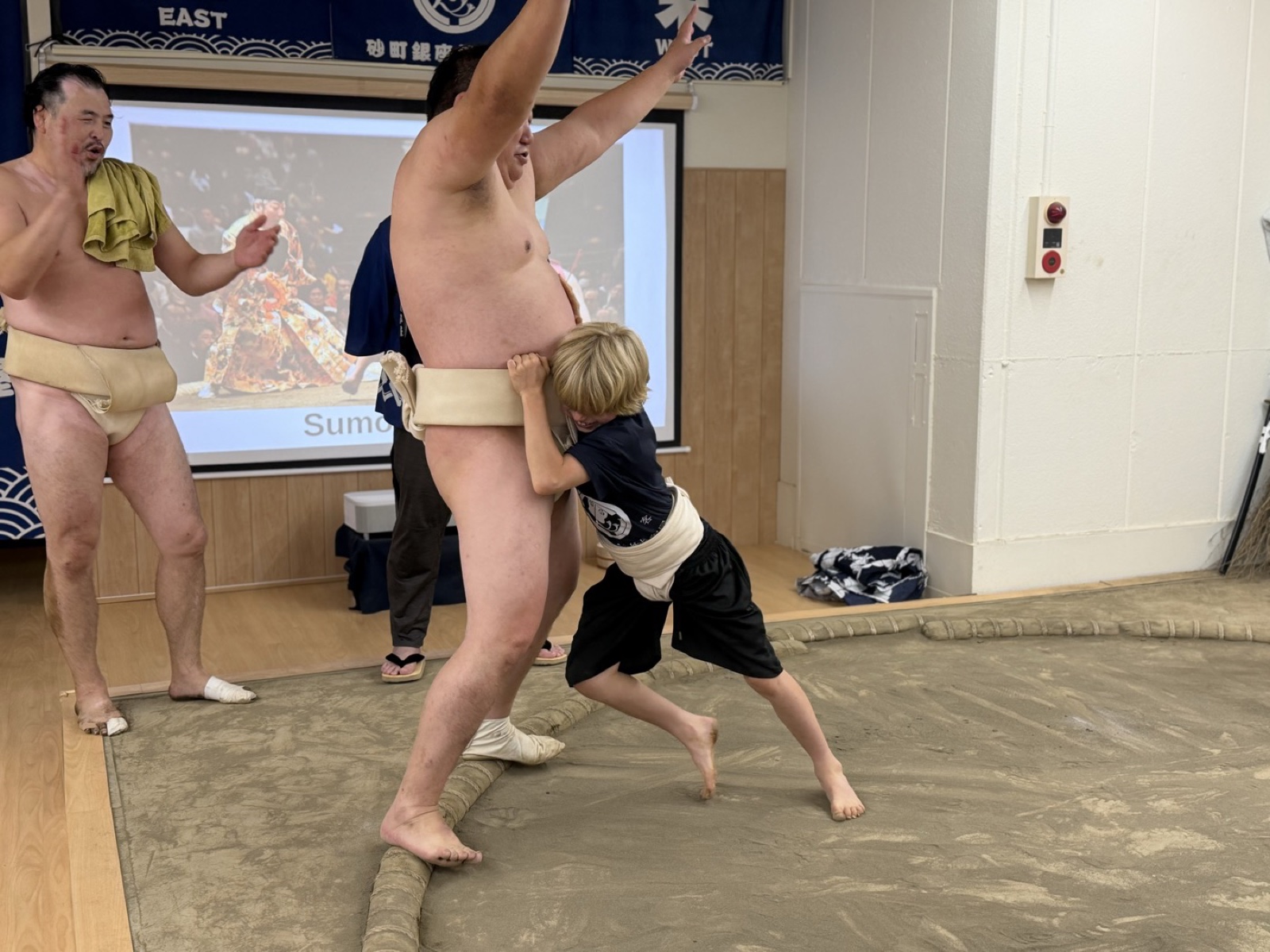
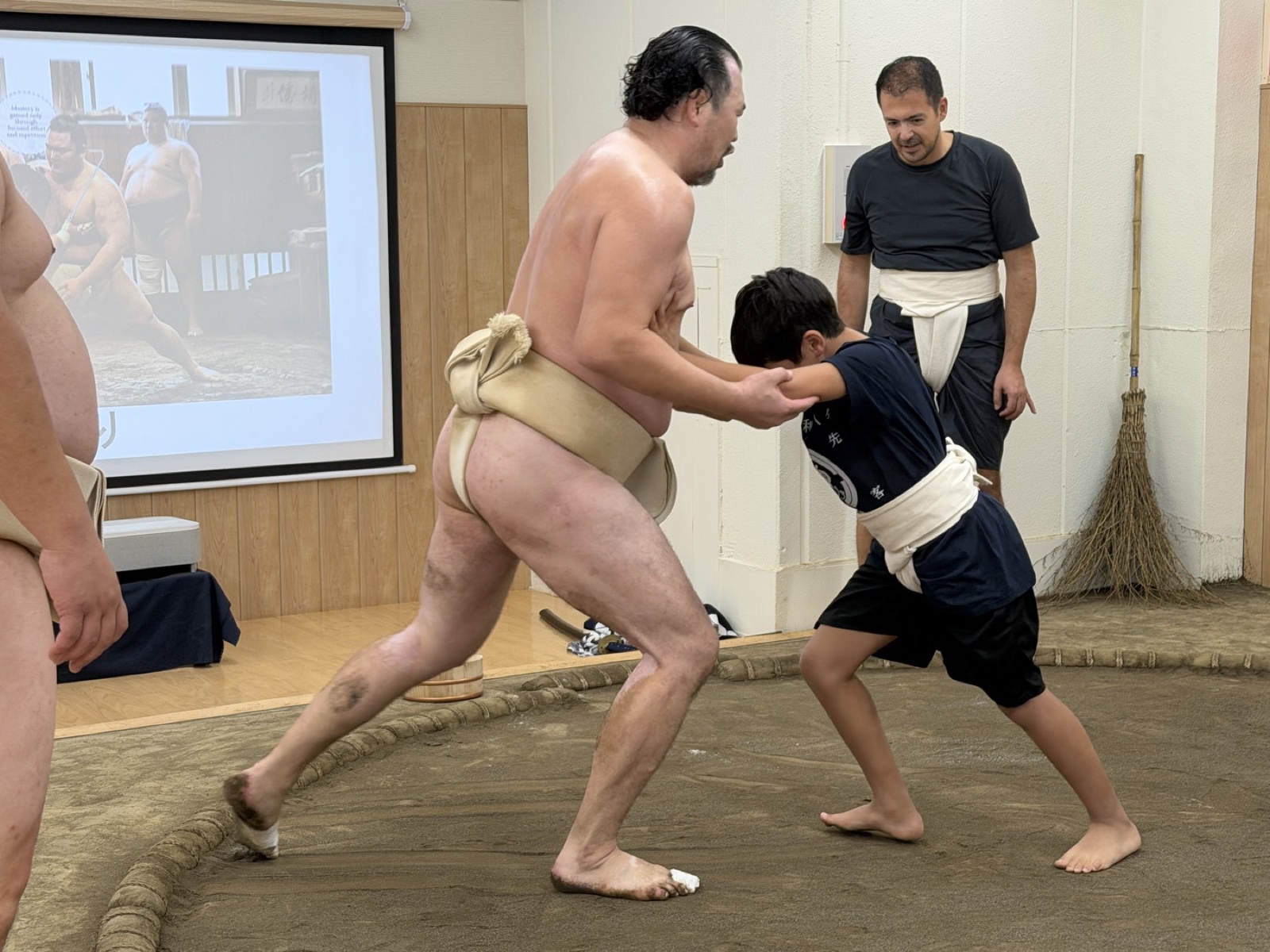
    A child driving a wrestler back over the straw tawara bales on the dohyo at the Sunamachi Ginza Sumo Stable
    What “everyone goes in” looks like: a guest driving a wrestler back over the tawara. No draw, no six names called out — the third block of the ninety minutes is everybody’s turn. Taken at the Sunamachi Ginza Sumo Stable, the one on this page I run. Photo: LOCAL SIDE JAPAN.

    Nobody is being dishonest here. The line is on the page. It is simply in the inclusions list rather than the headline, and almost nobody reads the inclusions list before paying ¥12,000 to ¥16,000.

    The restaurant shows do not use a lottery; at Dosukoi Tanaka the official description has you step into the ring as part of the hour. And at the stable I run in Koto City, the ninety minutes is built as three thirty-minute blocks — learn, watch, then go in — so there is nothing to be drawn for. If getting in the ring yourself is the reason you are booking, check which of these two models you are buying.

    What do you wear for a sumo experience?

    Three different things, and the listings almost never say which.

    • An inflatable suit. At Hirakuza in Ginza, the ¥19,000 kaiseki evening, a reviewer writes that they “didn’t enjoy the sumo ‘fat suits’ that some folks put on”. If you were picturing yourself in a mawashi, that is worth knowing before you pay nineteen thousand yen.
    • A costume. Dosukoi Tanaka’s own inclusions promise photos of yourself “in a traditional sumo costume”, and reviewers describe wrestling “in sumo wrestling outfits”. It is a garment that reads as sumo in a photograph.
    • An actual mawashi. At the Sunamachi stable you are given a clean T-shirt and shorts to change into, and then the wrestlers tie a real mawashi on you over them. A reviewer describes it plainly: “then they put the mawashi on for you”, followed by a traditional warm-up sequence. As far as we can find on any of the three booking platforms, this is the only one in Tokyo where that happens, and it is the single biggest difference between these nine places.
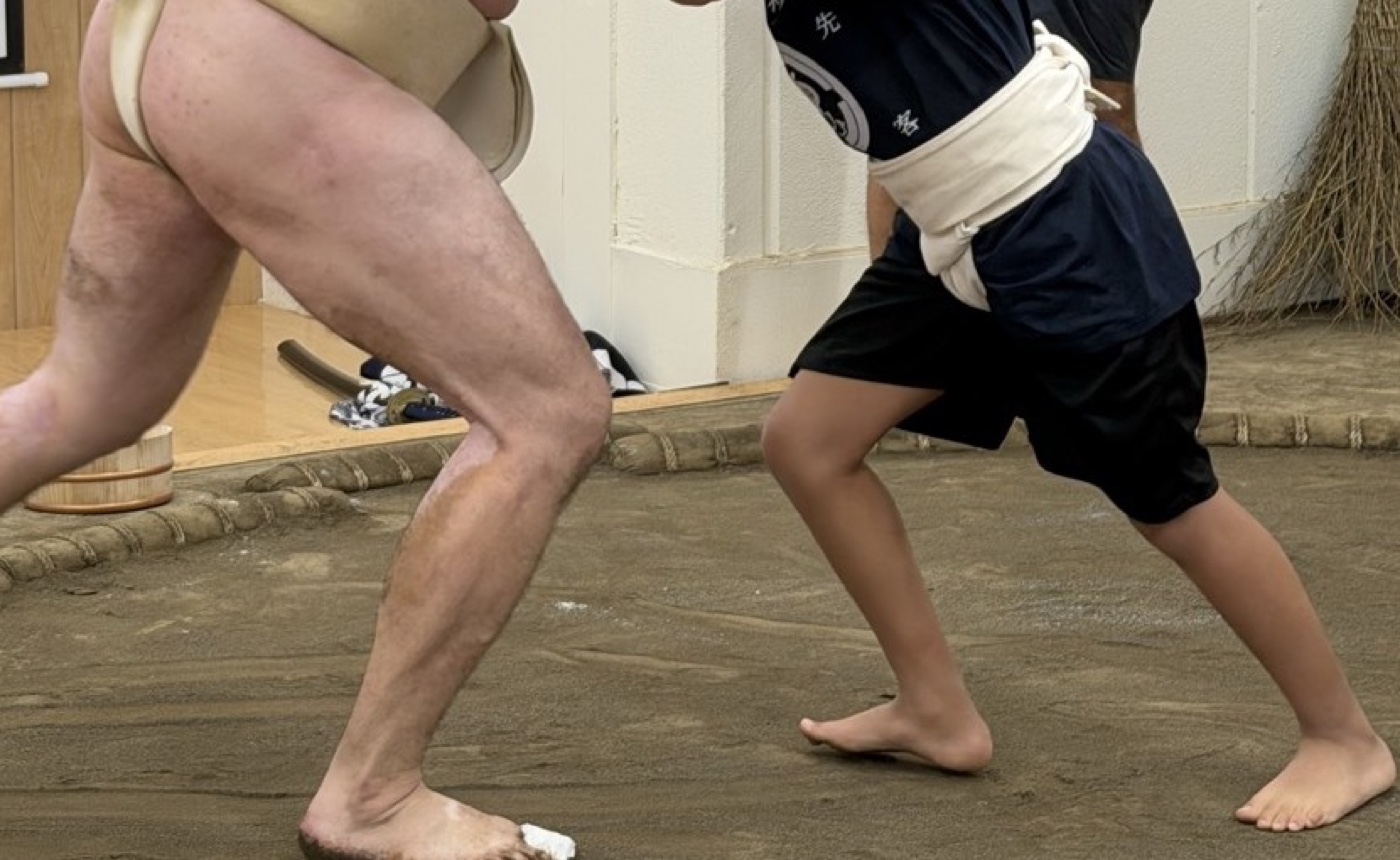
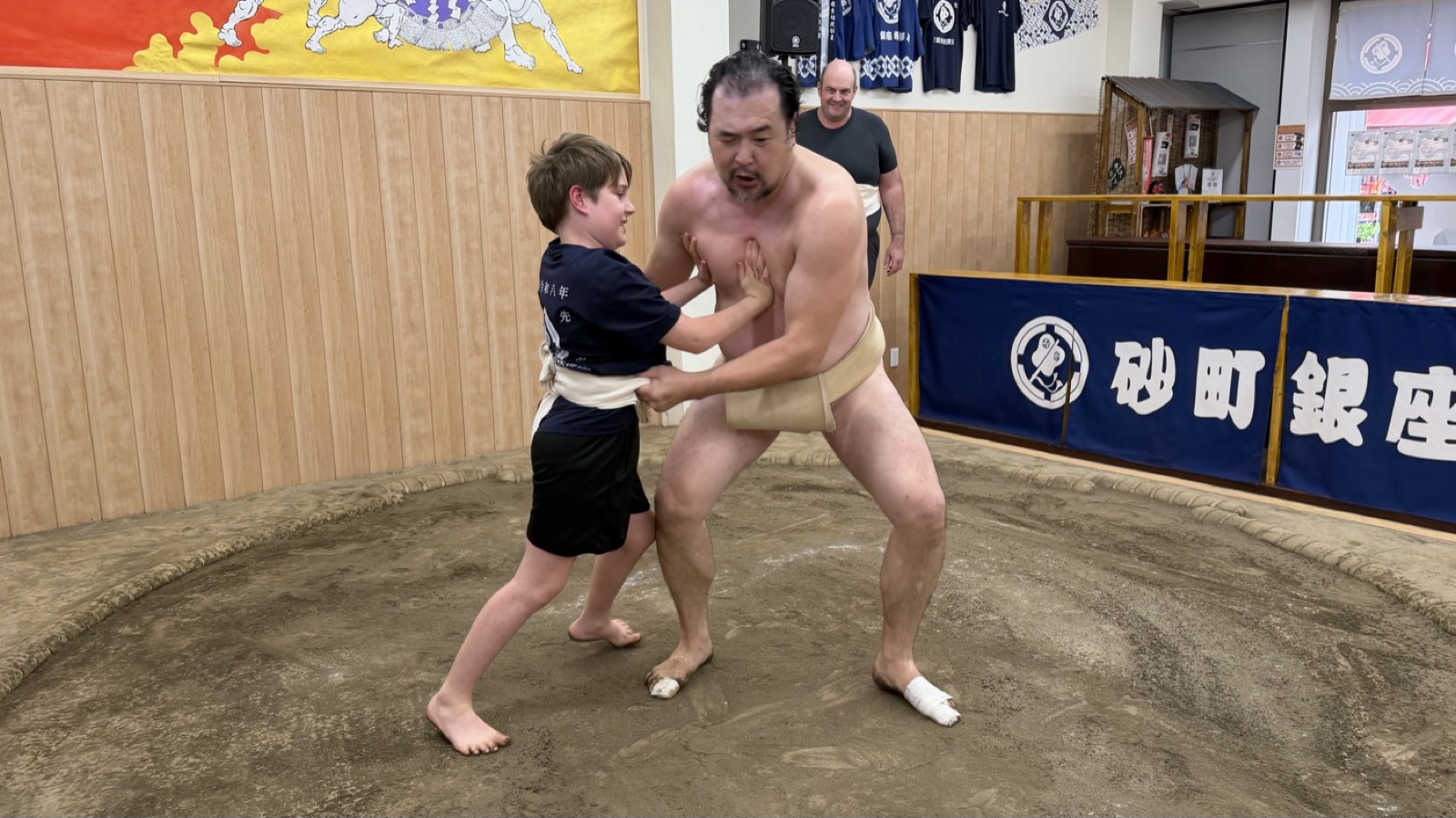
    A guest at the Sunamachi Ginza Sumo Stable wearing a white practice mawashi tied over a lent T-shirt and shorts, pushing against a wrestler in a real mawashi on the clay
    Left, a wrestler’s mawashi. Right, a guest’s: the white practice mawashi tied over the T-shirt and shorts the stable lends you, barefoot on the clay. This is the difference between the three rows in the list above, in one frame. Taken at the Sunamachi Ginza Sumo Stable, which is the one on this page I run. Cropped so that no guest is identifiable. Photo: LOCAL SIDE JAPAN.

    At SUMO LAND reviewers mention getting their feet into the sand rather than any garment. The three Sumo Club venues do not state what you wear, which follows from the previous section: most guests never find out.

    How close do you sit to the ring?

    Nobody publishes a seating distance, but the booking pages give it away in what they sell.
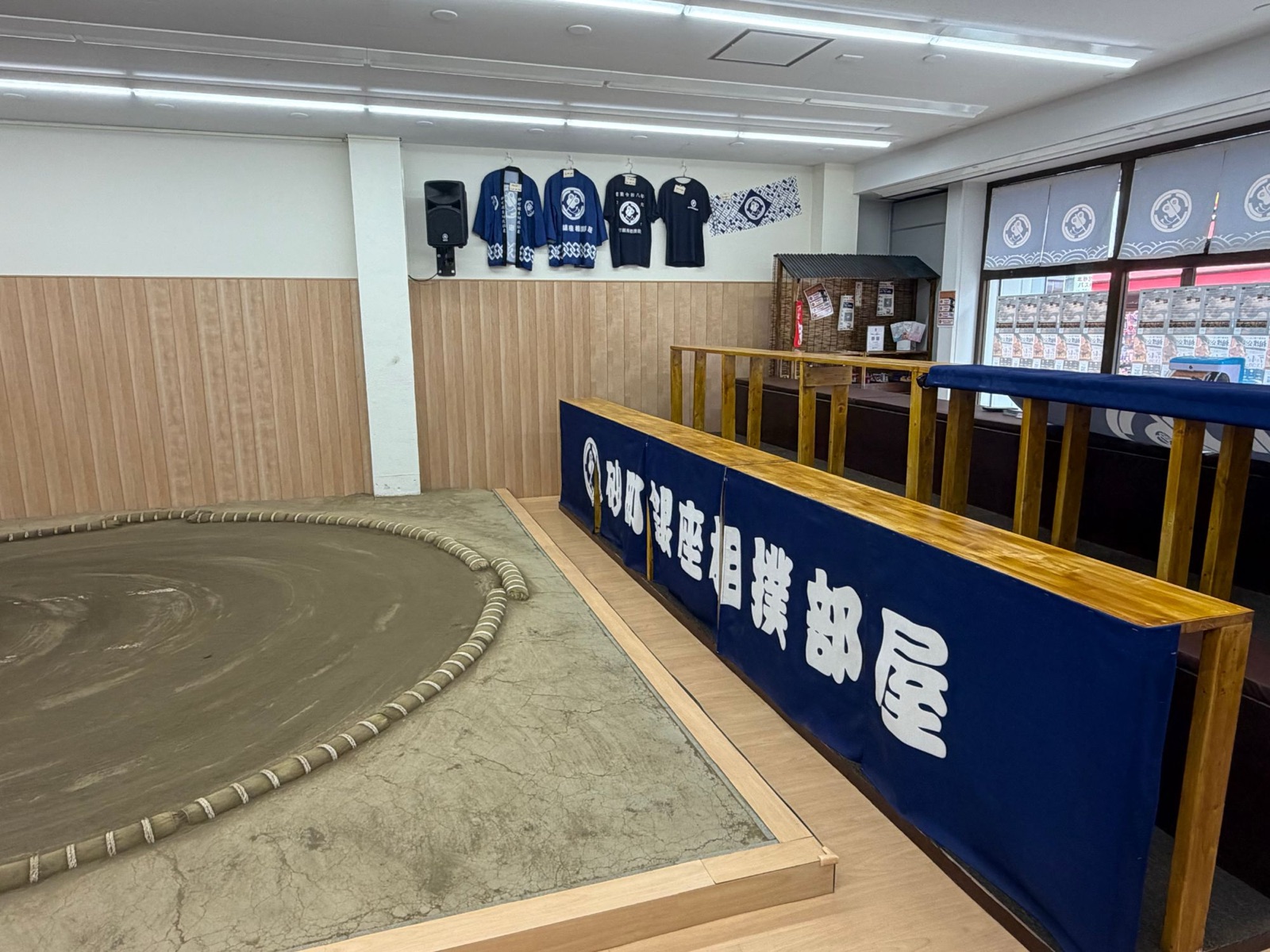
    The viewing counter at the Sunamachi Ginza Sumo Stable, running along the edge of the dohyo at ring level
    What “no bad seat” looks like: the viewing counter runs along the edge of the clay, at the same level as the ring, with nothing between you and it. There are no seat grades to upgrade to. Photo: LOCAL SIDE JAPAN.
    • Dosukoi Tanaka sells tables, and not all of them are equal. The small print says “you may be asked to share a table with another group”, and a five-star reviewer advises you to “definitely book a ring seat table”. That is a recommendation you only make when the other tables are worse.
    • SUMO LAND sells two grades. Standard seats and box seats, and the note explaining the difference is unusually frank: at the standard seats it is dangerous to hold a child on your lap, while the box seats are safe and take up to six.
    • Hirakuza sells Premium and Standard. The ¥19,000 is the Standard.
    • Shibuya holds about sixty people, by a reviewer’s count. Shinjuku is smaller, and a reviewer there says “it’s a small venue so every seat is a good one” — which is true, and worth saying.
    • The Sunamachi stable does not sell seat grades at all, and there is no table to share. It is one room with the dohyo in it, capped at forty people, and the viewing counter is built along the edge of the clay at ring level — the photograph above is the whole seating plan. Forty is a ceiling rather than a target: the venue is a room, not an arena.

    The honest summary is that Shinjuku and Sunamachi both avoid the bad-seat problem, for different reasons, and that Sunamachi is the only one of the nine that does not sell a better seat than the one you just bought.

    Is food included, and does it matter?

    It varies more than the prices suggest, and “no food” is not automatically the cheap option.

    • Asakusa, ¥16,000: all-you-can-eat chicken chanko-nabe with a set meal, a drink, a printed group photo, a geisha dance and a souvenir set. The most that is included anywhere.
    • Hirakuza, ¥19,000: a kaiseki dinner. A children’s plate for ages three to twelve.
    • Dosukoi Tanaka, ¥12,700: tonkatsu and chanko soup, drinks and gratuities included.
    • SUMO LAND: chicken chanko you cook at your own table, supervised by the Isegahama stable, with a vegan version available. Note that the ¥9,500 headline price is the “no meals, sumo only” option — the version with the hot pot costs more.
    • Shinjuku, ¥12,000, and Shibuya, ¥8,000: no food at all. One bottle of water. At Shibuya, snacks and drinks are sold at the venue.
    • Sunamachi, ¥11,000: no food served, and the booking page tells you to bring your own: the venue is on a 1950s shopping street and “you are encouraged to bring food in”. You walk the street first, buy yakitori, croquettes and sweets, and eat it beside the dohyo.

    One thing worth knowing before you judge the last one: bringing your own food in is how Japanese people watch sumo. The Kokugikan has chanko stalls and bento inside and still lets you carry in your own food and drink. Eating something you chose yourself is not a cut corner; it is the normal way.

    What the reviews say, and what they mean

    Everything on this page is rated between 4.8 and 5.0, which tells you nothing. The star distributions tell you a great deal. These are the Viator figures, read on October 10, 2026.

    VenueReviews1★2★One or two stars
    Shibuya Sumo Club1,338000%
    Shinjuku Sumo Club4,8791090.39%
    Hirakuza Ginza219010.46%
    SUMO LAND335300.90%
    Dosukoi Tanaka2,5411860.94%
    Asakusa Sumo Club1,59720122.00%
    Sunamachi stable7000%, but this is the wrong column for us — see below
    Viator review histograms, including Tripadvisor reviews, read October 10, 2026.

    The best record on this page belongs to the cheapest option. Shibuya has 1,338 reviews and not one of them is below three stars. That is a far harder thing to achieve than a clean sheet across seven, and it deserves saying plainly on a page where one of the entries is mine.

    One correction to the table above, about my own entry. The seven is a Viator count, and Viator is not where we are reviewed. The Sunamachi stable has 109 Google reviews at 4.9 and 89 GetYourGuide reviews at 5.0 — 198 between them. Almost nobody finds us through Viator or Klook, which is why those columns are nearly empty, and quoting seven as our record understates it by a factor of about twenty-eight. I am leaving the seven in the table because the table compares Viator against Viator and swapping in a number from a different platform would break it. But do not read that row as our review history.

    Where the low reviews are, and what they have in common

    We read every one- and two-star review on the worst-scoring listing, the Asakusa show, and the complaint does not vary. One says “actual sumo wrestling only about 10% of the entire show”. Another calls it “more of a gimmick rather than traditional. And very Americanized”. Others describe a touristy skit, forced comedy, forced clapping, and an evening spent watching other guests.

    Hirakuza’s small number of low reviews say the same thing from the other end of the price range: “the actual sumo matches seemed mostly staged”, and the demonstrations are “comical”. Shinjuku’s include “probably not worth $80 bucks”.

    Nobody who leaves a low review is complaining that the show was bad at being a show. They are all saying the same sentence in different words: I came for sumo and I was given an entertainment act. The operators answer these reviews honestly — the Asakusa host’s replies say the programme is built with entertainment elements for a broad audience, which is exactly true.

    That is the whole basis of the ranking in the next section. It is not our opinion about which is better. It is the one thing the unhappy minority agrees on, used as a scale.

    How authentic is each one?

    Five stars here does not mean better. It means closer to the sport. If you want an entertaining night out with a geisha dance and all-you-can-eat hot pot, a one-star rating on this scale is exactly what you should book.

    VenueAuthenticityWhy
    Kokugikan tournament★★★★★The sport itself. You cannot take part.
    Morning practice at a stable★★★★★Real training. You watch in silence.
    Sunamachi Ginza Sumo Stable★★★★★Former professionals, a regulation dohyo, a real mawashi, no staging — and you go in
    SUMO LAND★★★A restaurant, but the chanko is supervised by the Isegahama stable
    Dosukoi Tanaka★★Retired wrestlers in a tonkatsu restaurant. Costume, not mawashi.
    Hirakuza Ginza★★Kaiseki and a live show. Inflatable suits.
    Shinjuku / Shibuya / Asakusa★A hosted entertainment show. Taking part is a draw.

    The tournament, morning practice and the stable all sit at five stars, and the difference between them is simple: the first two you watch, and the third you do.

    Which Tokyo sumo experience should you book?

    If you wantBookPriceTimes
    The lowest price, and a spotless recordShibuya Sumo Club¥8,00012:00 / 17:00 / 19:30
    To wear a real mawashi and go in the ringSunamachi Ginza Sumo Stable, direct — or on GetYourGuide, Viator or Klook¥11,00011:00 / 15:30, closed Wed & Thu
    Children who want a turn, not a drawSunamachi Ginza Sumo Stable, or Dosukoi Tanaka¥7,700 child / ¥11,000 adultDaytime only
    A dinner and a show, with childrenAsakusa Sumo Club¥16,000Evening
    Lunch in sumo’s own neighbourhoodDosukoi Tanaka, Tatekawa¥12,70013:00 only
    Chanko you cook yourself, or vegan chankoSUMO LAND, Ryogoku¥9,500 without foodAfternoon and evening
    A formal dinner in GinzaHirakuza Ginza¥19,000From 17:00
    Real training, and you are happy to only watchMorning practice at a stableFrom ¥14,000Early morning
    The sport, and your trip hits a tournamentTournament with chair seats, or buy direct¥3,500 and upJan, May, Sep
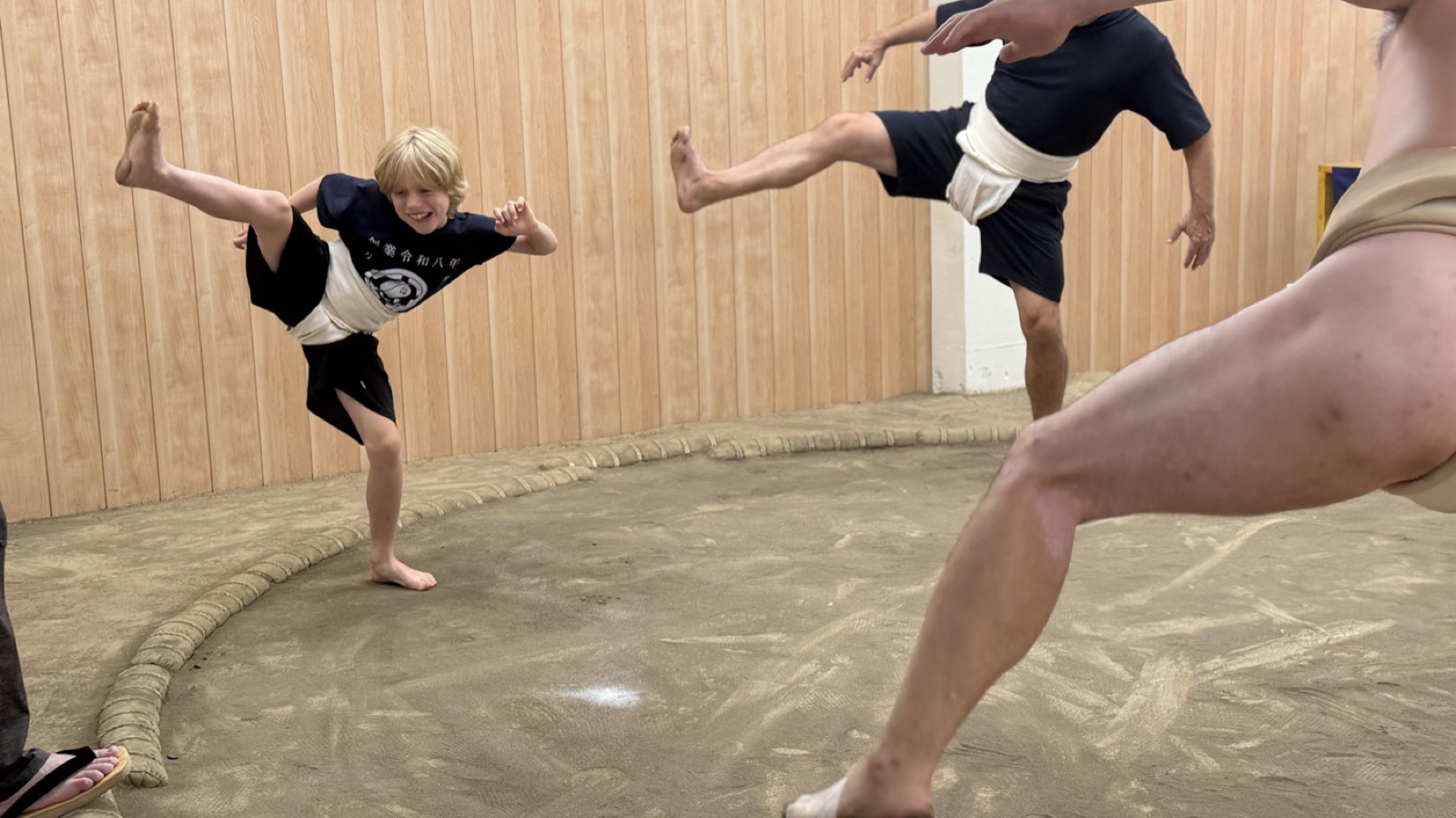
    A smiling child raising a leg in the shiko stance beside a wrestler on the dohyo at the Sunamachi Ginza Sumo Stable
    The shiko leg-raise, copied by a guest who is about nine. Children can take part in the hands-on venues; at the three lottery venues they can only enter the draw like everyone else. Photo: LOCAL SIDE JAPAN.

    Where the one I run loses

    Since I am asking you to trust a table with my own business at the top of it, here is the other side, and none of it is small.

    • Volume. Our full record is 109 Google reviews at 4.9 and 89 GetYourGuide reviews at 5.0, 198 in total — against Shinjuku’s 4,879 and Dosukoi’s 2,541 on Viator alone. We are still the smallest sample on this page by a wide margin. Two hundred reviews is enough to be a real record and nowhere near enough to be the strongest one here.
    • The clean sheet. Shibuya’s zero low reviews out of 1,338 is a stronger result than a 4.9 across our 109, and anyone comparing the two should prefer the bigger sample. A 4.9 is not a clean sheet: it means some people did not give us five stars.
    • Price. ¥11,000 is more than Shibuya at ¥8,000 and more than SUMO LAND’s sumo-only ticket.
    • Evenings. There are none. 11:00 and 15:30, and we are closed on Wednesdays and Thursdays. If you want sumo after dinner, book Shibuya at 19:30 or Hirakuza at 17:00.
    • Location. Kitasuna, in Koto City. It is not Shinjuku, Shibuya or Ginza, and nobody is passing by.
    • Nobody cooks for you. If you want a kaiseki dinner or an all-you-can-eat hot pot brought to the table, we are the wrong place.
    • The tournament’s atmosphere. Several thousand people in the Kokugikan is a thing a room of forty cannot reproduce.

    If none of that rules it out, the booking page is the stable’s own. Booking direct costs you the same ¥11,000 as the agencies charge and keeps the commission out of it, which is the only reason I am pointing you there rather than at a listing.

    ¥11,000 adults · ¥7,700 children 4–12 · under 4 free · 11:00 and 15:30 · 90 minutes · closed Wednesdays and Thursdays · Kitasuna, Koto City. Also on GetYourGuide if you prefer to keep everything in one account.

    Do you need a tournament ticket?

    If your trip lands in January, May or September, go. Nothing on this page replaces the sport. The thing to understand is that a tournament seat does not get you close.
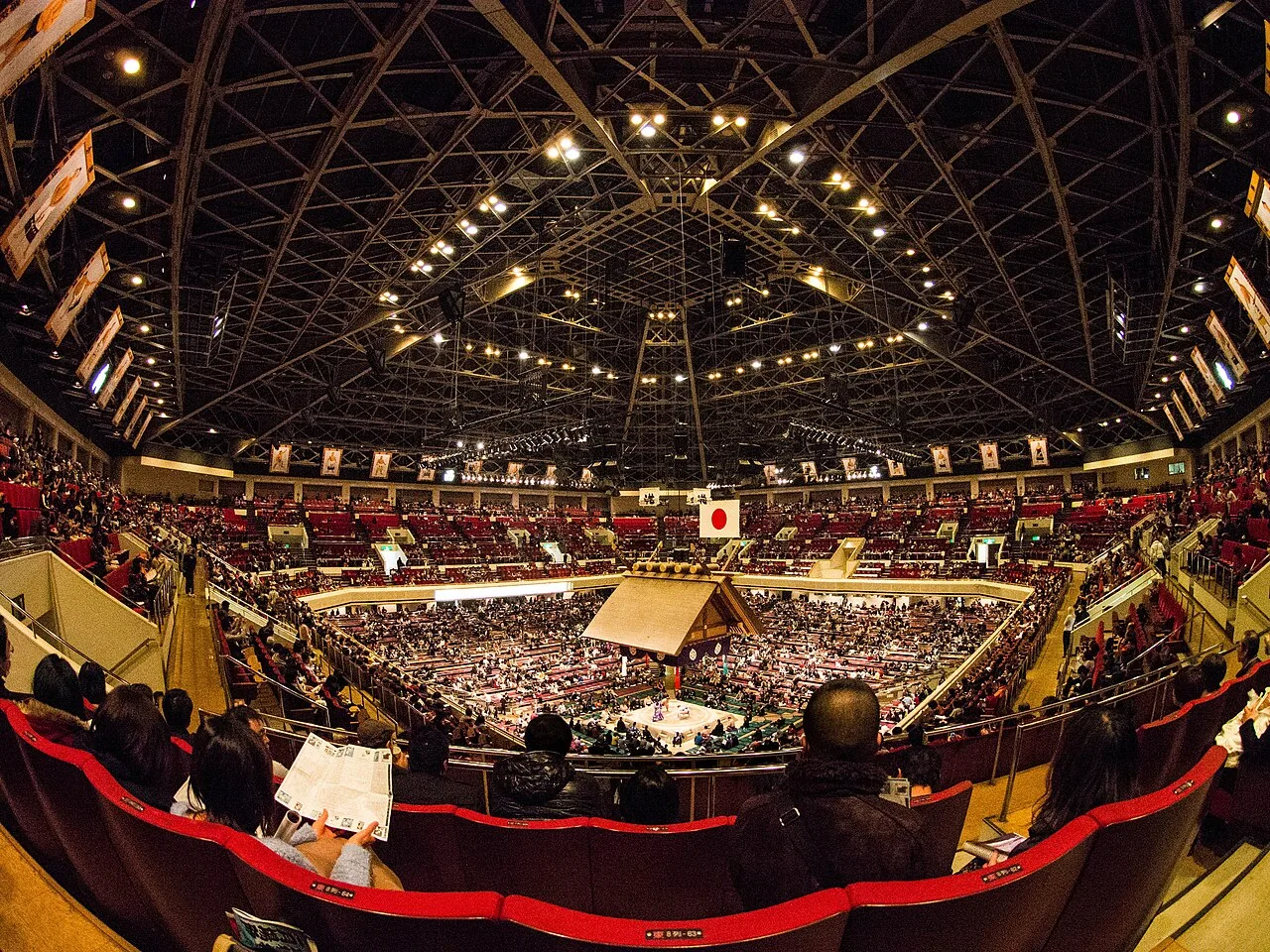
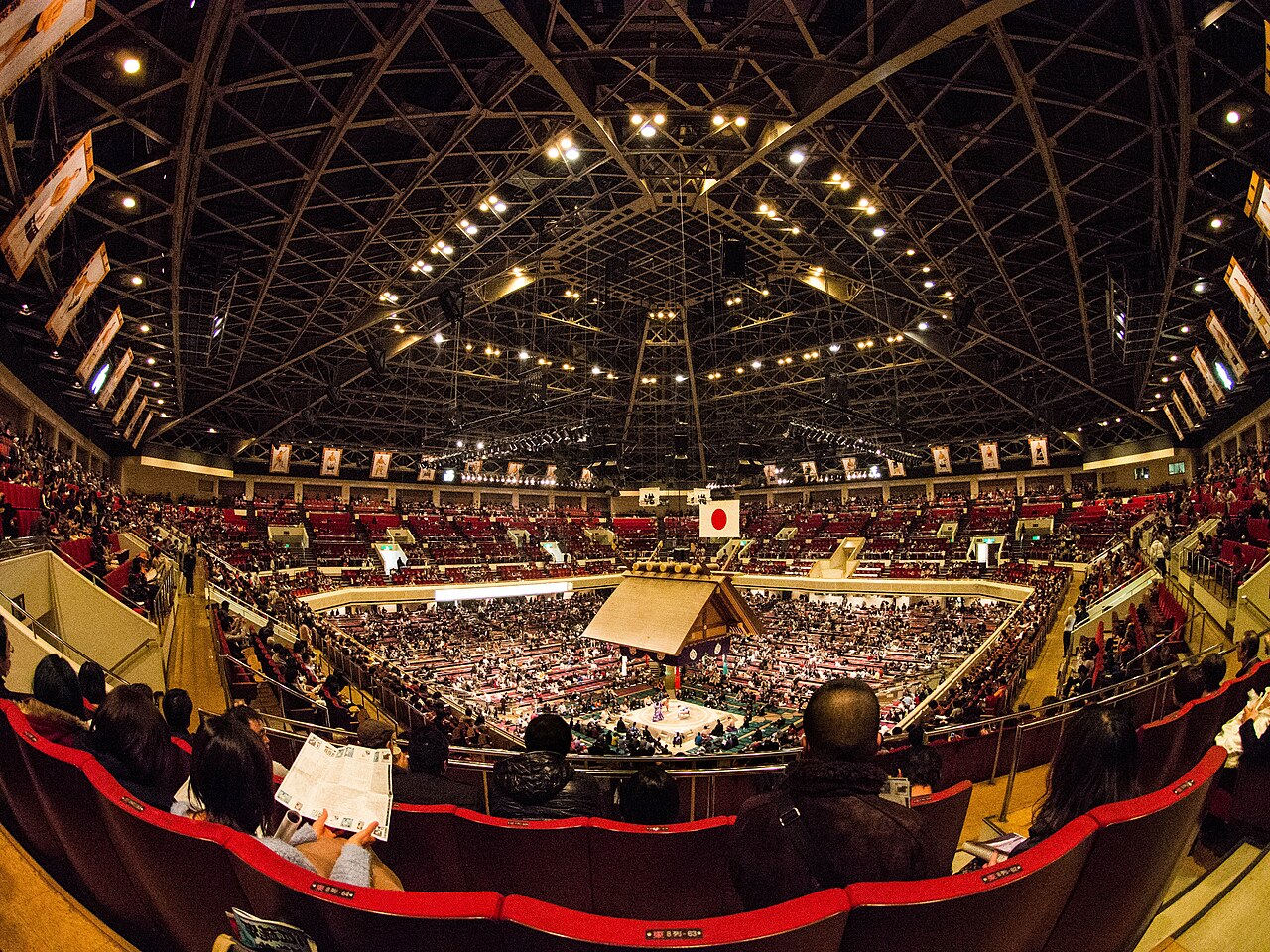
    Looking down at the sumo ring from the upper chair seats inside Ryogoku Kokugikan
    The Kokugikan from the chair seats. This is what ¥9,000 buys you — the closest chair sold on the English-language site, and the ring is still a long way down. Photo: Gregg Tavares / Wikimedia Commons, CC BY 2.0.
    SeatWeekdayWhat it is
    Chair C¥3,500Upper tier, back rows. The wrestlers are small.
    Chair B¥5,000Upper tier, middle. The sensible choice.
    Chair S¥9,000The closest chair you can buy in English.
    Box C, four people¥34,000Lower tier, floor cushions, shoes off.
    Ringside¥20,000Floor level — not sold on the English site.
    September 2026 Tokyo tournament, from the official English ticket site. Add ¥2,000 per ticket in fees. Full detail in our tickets guide below.

    So the closest seat a visitor can actually buy in English is ¥9,000, and the ring itself is off limits at any price. Tickets are also printed at a 7-Eleven in Japan rather than at home or at the arena, and the day runs from 8:00 to 18:00 with the part worth seeing starting around 14:00. The full ¥3,500 ticket guide, and how to actually get one →

    One practical note on booking a tournament through a third party: between tournaments these listings show as sold out, because there is nothing to sell until the next basho. That is not a dead product. The next Tokyo tournament is in January.

    Where this joins the rest of the east side

    Five of the nine are in Sumida and Koto, within a few stops of each other. The Kokugikan, Dosukoi Tanaka and SUMO LAND are all in Sumida City, where the free Sumo Museum sits inside the arena itself; the Sunamachi stable is in Koto City, on the shopping street. For the difference between the three kinds rather than the nine places, read morning practice vs the show vs the tournament. And if what you actually want is to hold a sword rather than wrestle, the four things Tokyo sells as a samurai experience has the same problem and the same kind of answer.

    Quick answers

    Can you get in the ring at a Tokyo sumo experience?

    At some of them. The Shinjuku, Shibuya and Asakusa Sumo Clubs state that participation is limited and decided by lottery if too many guests apply. The restaurant shows at Dosukoi Tanaka and SUMO LAND include a turn in the ring, and the Sunamachi Ginza Sumo Stable in Koto City builds its 90 minutes around everyone going in.

    What do you wear for a sumo experience in Tokyo?

    It depends where you book. Hirakuza in Ginza uses inflatable suits, according to its own reviewers. Dosukoi Tanaka provides a sumo costume for photographs. The Sunamachi Ginza Sumo Stable lends a T-shirt and shorts and then ties a real mawashi on over them, which appears to be the only place in Tokyo where that happens.

    What is the cheapest sumo experience in Tokyo?

    The Shibuya Sumo Club at about ¥8,000 for 90 minutes, with a drink and a photo but no food. It also has the best review record of any show in the city: 1,338 reviews on Viator with none below three stars, as of October 2026.

    Is a sumo show in Tokyo worth it?

    Yes, if you want an entertaining evening with retired professionals, and the ratings of 4.8 to 5.0 reflect that. The one- and two-star reviews all make the same complaint: that the sumo itself is a small part of a hosted comedy show. If that would bother you, book a tournament seat, a morning practice visit, or a stable where you get in the ring yourself.

    Which Tokyo sumo experience is closest to the ring?

    At the Kokugikan tournament the closest seat sold on the English-language site is a ¥9,000 Chair S, and ringside is Japanese-language sales only. Among the experiences, Dosukoi Tanaka, SUMO LAND and Hirakuza all sell seats in grades, while the Sunamachi Ginza Sumo Stable sells none: it is one room with the ring in it, capped at forty people.

    Is food included in a Tokyo sumo experience?

    Asakusa (¥16,000) includes all-you-can-eat chanko-nabe and a geisha dance; Hirakuza (¥19,000) a kaiseki dinner; Dosukoi Tanaka (¥12,700) tonkatsu and chanko. Shinjuku and Shibuya include no food at all. SUMO LAND’s ¥9,500 price is its no-meal option. At the Sunamachi stable you buy food on the shopping street and bring it in, which is also allowed at the Kokugikan.

    When are the sumo tournaments in Tokyo?

    January, May and September. Outside those months the only ways to see sumo in Tokyo are a morning practice visit at a stable, a show, or an experience where you get in the ring yourself.


    Prices, start times, inclusions, seating notes and review histograms were read from the operators’ own Viator, GetYourGuide and Klook listings on October 10, 2026, and tournament prices from the official English ticket site. Review quotations are short extracts, attributed by platform and star rating, with no reviewer names. The photographs of the dohyo and the ringside counter were taken by the author at the Sunamachi Ginza Sumo Stable; the Kokugikan interior is a Wikimedia Commons image, credited in its caption. Sunamachi Ginza Sumo Stable is operated by the author; its entry is marked as such throughout.
    Written by Kizuku. I run the Sunamachi Ginza Sumo Stable, a sumo experience in Koto City, and I write about the east side of Tokyo I live and work in. More about this site →

  • Sumo in Tokyo: Morning Practice vs Sumo Show vs the Tournament, by Someone Who Runs One (2026)

    Sumo in Tokyo: Morning Practice vs Sumo Show vs the Tournament, by Someone Who Runs One (2026)

    This article contains affiliate links to booking sites. If you book through them, LOCAL SIDE JAPAN earns a small commission at no extra cost to you. The writer also runs a sumo experience in Koto City; it is mentioned once, at the end, without an affiliate link and without a ranking, and it is not one of the recommendations. How this site is made →

    TOKYO / EXPERIENCES / SUMO, THE THREE KINDS

    Search “sumo Tokyo” on a booking site and you get forty products that look alike and are three completely different things. There is the tournament, fifteen days three times a year at the Kokugikan, where the sport is actually decided. There is morning practice, which is a real stable’s real training, watched in silence from the edge of the room. And there is the sumo show, retired wrestlers in a restaurant doing demonstrations, letting you into the ring, and serving you chanko stew, which is entertainment and is sold as such. They cost about the same. They are not interchangeable. I run a sumo experience myself, a few stations east of Ryogoku, so I have an interest in this, which is declared again at the bottom; the ranking below leaves my own out. Prices, meeting points and review counts were read on the booking sites on September 21, 2026.

    Inside the Ryogoku Kokugikan during a Grand Sumo tournament, view from the chair seats
    The Kokugikan during a tournament. The other two kinds of sumo happen in rooms a hundredth this size. Photo: Gregg Tavares / Wikimedia Commons, CC BY 2.0.

    Which of the three you actually want

    The tournamentMorning practiceThe sumo show
    What it isThe real competition, 15 days, six times a year, three in TokyoA stable’s daily training, 7:30 to 10:00, watched from the sideRetired wrestlers demonstrate, you step in the ring, you eat chanko
    WhenJan, May, Sep in Tokyo; Mar Osaka, Jul Nagoya, Nov FukuokaMost mornings outside tournament weeks; never on the days after oneEvery day, several sittings
    Do you interactNoNo; you watch and stay quietYes; that is the product
    PhotosYesRestricted; no flash, no sound, often only at the endEncouraged
    Cost, official¥3,500 chair seatSome stables free or ¥1,000 by direct arrangement, mostly Japanese onlyNone; it exists only as a booking
    Cost, booked¥20,000 to ¥40,000 with a guide¥14,000 to ¥18,000 with a guide¥8,000 to ¥19,000
    ChildrenYes, half-day is enoughOver about 8, and only if they can sit still for 90 minutesYes, the best of the three for them

    1. The tournament: ¥3,500 yourself, or ¥21,000 with someone

    If your dates overlap a Tokyo tournament (September 13 to 27, 2026; January 10 to 24, 2027; then May and September 2027), this is the one. Nothing else on this page is the sport. The official chair seat is ¥3,500 from the Sumo Association’s own seller, and how to buy it, when it goes on sale, and what a day inside looks like are in the sumo tickets guide, which exists so you do not have to pay six times that. If you would rather someone else handle the ticket and explain the rituals, the honest packaged options are JTB’s Grand Sumo Tournament Viewing Tour with Tickets, four to five hours with a guide, about ¥21,000, 4.8 from nearly 900 reviews, and Official Sumo Tournament Ticket with Guided Experience, five hours, about ¥20,700, 4.7 from about 40 reviews. Both sell out; both are worth it only when the official site is sold out or you want the commentary.

    2. Morning practice: real, silent, and worth knowing the rules of

    Asageiko is what a sumo stable does every morning from about 7:30: two and a half hours of the wrestlers, from teenagers to ranked men, going through the same drills and bouts on a clay ring in a room with a wooden floor and no heating, while the stablemaster watches from a cushion. Visitors sit along the wall. You do not speak, eat, stretch your legs toward the ring, use flash, or leave before the end; you can usually take photographs quietly and a group photo at the finish. It is the most authentic sumo thing a visitor can do, and it is also ninety minutes of watching men do push-ups, and both are true. Stables do not train during tournament weeks (they are at the arena) or for a few days after, so the calendar matters. Almost every guided version below is ¥14,000 to ¥18,000, and the price buys the arrangement with the stable and a guide who explains what you are watching; the stables themselves see little of it. Book the one closest to where you are staying, and read the reviews for how strictly the rules were kept, which is a sign of a stable that takes it seriously.

    One to be careful with: the one-hour Watch Sumo Morning Practice at Stable is about ¥14,500 and rated 4.2 from 270 reviews, well below the others; the complaints are about the hour being short and the viewing crowded. Read them before booking. And a free version exists: a few stables in Sumida and Koto let individuals watch by direct arrangement, in Japanese, on the stable’s terms, and the ward tourism sites list which; it is not bookable, it can be cancelled at seven in the morning, and it is how locals do it.

    3. The sumo show: entertainment, and good at it

    These are ninety-minute to two-hour productions in a restaurant or a hall: retired wrestlers explain the rules, demonstrate the ritual and the techniques, fight a few exhibition bouts, invite volunteers into the ring to be gently thrown, pose for photographs, and serve chanko-nabe, the stew the stables eat. Nobody involved is competing, which the good listings say, and the wrestlers are professionals at the show, which is a different skill from the sport and one they are often better at. For children, for groups, for an evening rather than a 7:30 start, and for anyone whose trip misses a tournament, this is the right kind, and the reviews are the highest on this page for a reason.

    • The SUMO Show, Ryogoku: ninety minutes at a tonkatsu restaurant in Tatekawa, Sumida, run by retired wrestlers, with sparring, a turn in the ring, tonkatsu and chanko, about ¥12,700, 4.9 from about 2,500 reviews. The east-side one, ten minutes from the Kokugikan, and the one to book if you want the show in sumo’s own neighborhood.
    • Shinjuku Sumo Show and Experience with Photo: ninety minutes, about ¥12,000, 4.9 from over 4,000 reviews, the most-booked sumo product in Japan, in a hall in Shinjuku with drinks.
    • Shibuya Sumo Show with Drink and Photo: ninety minutes, about ¥8,000, 5.0 from about 740 reviews. The cheapest show in the city, without the meal.
    • Sumo Entertainment Show with Chicken Hot Pot and Geisha, Asakusa: two hours, about ¥16,000, 4.8 from about 1,500 reviews, the dinner-theater version with a geisha performance added.
    • SUMO LAND, Ryogoku: Wrestler Challenge, Hotpot and Mochi-Pounding: ninety minutes to two hours, 4.9 from about 335 reviews, and the only one with a vegan chanko. Note the price carefully: the ¥9,500 headline is the “no meals, sumo only” option and the version with the hot pot costs more — we had this the wrong way round until we checked the booking page again on October 10, 2026. The chanko itself is supervised by the Isegahama stable.
    • Live Sumo Show and Kaiseki Dinner at Hirakuza, Ginza: two hours fifteen, about ¥19,000, 4.9 from about 180 reviews, the upmarket one, often sold out.

    Which sumo experience to book

    If you wantBookAreaAbout
    The sport, during a tournamentOfficial ¥3,500 seat (see the tickets guide); or JTB’s guided tourRyogoku¥3,500 · or ¥21,000 · 4.8 (893)
    The real thing, no tournamentMorning Practice Viewing Tour at a Real StableKiyosumi-Shirakawa¥14,000 · 2 h · 5.0 (133)
    Practice plus the stewMorning Practice and Chanko LunchRyogoku¥15,000 · 3 h · 4.9 (65)
    The show, in sumo’s neighborhoodThe SUMO ShowRyogoku (Tatekawa)¥12,700 · 90 min · 4.9 (2,471)
    The show, cheapestShibuya Sumo ShowShibuya¥8,000 · 90 min · 5.0 (742)
    The show, with childrenShinjuku Sumo Show, or SUMO LANDShinjuku / Ryogoku¥12,000 / ¥9,500
    Dinner theaterHirakuza Ginza, or Asakusa with geishaGinza / Asakusa¥19,000 / ¥16,000

    The east side, and the interest I have

    Sumo is an east-side sport: the Kokugikan is in Sumida, most stables are in Sumida and Koto, and the show in Tatekawa and the practice visits from Kiyosumi-Shirakawa above are within a couple of stations of each other. I run the Sunamachi Ginza Sumo Stable in Kitasuna, Koto City, a sumo experience on a working shopping street that is also listed on the booking sites; it belongs in the “show” column above and it is not ranked there, because I wrote the column. If you want an independent view of it, the reviews are on the listing, and the shopping street it sits on is in the Koto City list on its own merits.

    The dohyo at the Sunamachi Ginza Sumo Stable in Koto City, a full-size clay ring with straw tawara bales
    The ring I am talking about: the dohyo at the Sunamachi Ginza Sumo Stable in Kitasuna, Koto City. Full size, straw tawara, in a room rather than an arena — which is the practical difference between the three kinds above. Photo: LOCAL SIDE JAPAN.
    A young guest in a practice mawashi over a T-shirt pushing against a wrestler on the dohyo at the Sunamachi Ginza Sumo Stable
    And the reason it does not sit in the “show” column cleanly: the guests are in practice mawashi and in the ring, not watching from a table. Same stable, same session. Photo: LOCAL SIDE JAPAN.

    And if you have picked your kind and now need to pick the place: we compared all nine of them on the four things the listings leave out — whether you get in the ring at all, what you wear, how close you sit and what you eat. Tokyo sumo experiences compared →

    Where this joins the rest of the east side

    The cheap seat and the tournament calendar are in the sumo tickets guide; the free sumo museum and the reopened Edo-Tokyo Museum beside the arena are on the Sumida list; and Tomioka Hachimangu, where Edo’s professional sumo began, is a free stop in Kiyosumi-Shirakawa. The other combat tradition sold to visitors here is compared the same way in samurai and ninja experiences by kind — and the ¥1,000 sword museum in that article is three minutes from the Kokugikan. The other experiences compared by area are tea ceremony, sushi classes and kintsugi.

    Quick answers

    What is the difference between a sumo show and sumo morning practice?

    Morning practice is a real stable’s daily training, watched silently from the side for about two hours from 7:30, with no interaction; guided visits cost ¥14,000 to ¥18,000. A sumo show is a 90-minute entertainment by retired wrestlers with demonstrations, a turn in the ring, photos and chanko stew, ¥8,000 to ¥19,000. Neither is the tournament, which is the actual competition.

    Can you watch sumo morning practice for free in Tokyo?

    At a few stables, by direct arrangement in Japanese and on the stable’s terms; the ward tourism sites list them. It is not bookable and can be cancelled the same morning. Guided visits, about ¥14,000 to ¥18,000, handle the arrangement and add an English explanation.

    When is sumo in Tokyo?

    Three tournaments a year at the Ryogoku Kokugikan: January, May and September, each 15 days (September 13 to 27, 2026; January 10 to 24, 2027). Osaka in March, Nagoya in July, Fukuoka in November. Morning practice visits and sumo shows run outside tournament weeks all year.

    Which sumo show in Tokyo is best?

    The SUMO Show in Ryogoku (about ¥12,700, 4.9 from 2,500 reviews) for the show in sumo’s own neighborhood; the Shinjuku show (about ¥12,000, 4.9 from 4,000 reviews) for the most-booked; the Shibuya show (about ¥8,000) for the cheapest; Hirakuza in Ginza (about ¥19,000) for dinner theater.

    Is a sumo morning practice tour worth it?

    Yes if you want to see the real sport up close and can sit still and silent for 90 minutes at 7:30 in the morning; no if you want to interact or take part. Book from Kiyosumi-Shirakawa or Ryogoku, avoid tournament weeks, and read reviews for how the rules were kept.

    How much are sumo tickets in Tokyo?

    ¥3,500 for an official chair seat bought from the Sumo Association’s seller; box seats more. Guided packages with tickets cost about ¥20,000 to ¥40,000. The official route is explained step by step in this site’s sumo tickets guide.


    LOCAL SIDE JAPAN read the prices, durations, meeting points, suppliers and review counts of every product above on Viator on September 21, 2026, and the tournament dates against the Nihon Sumo Kyokai schedule. Prices are approximate and move with the exchange rate. The writer operates a sumo experience in Koto City, disclosed above; it carries no affiliate link here and is excluded from the rankings. The other operators are described from their listings and reviews.

    Written by Kizuku. I run the Sunamachi Ginza Sumo Stable, a sumo experience in Koto City, and I write about the east side of Tokyo I live and work in. More about this site →

  • A Sumo Seat in Tokyo Costs ¥3,500. Here Is How to Actually Get One.

    A Sumo Seat in Tokyo Costs ¥3,500. Here Is How to Actually Get One.

    This article contains affiliate links to booking sites. If you book through them, LOCAL SIDE JAPAN earns a small commission at no extra cost to you. The official ticket route is described first and costs nothing extra. How this site is made →

    TOKYO / SUMIDA CITY / RYOGOKU

    A chair seat at a Grand Sumo tournament in Tokyo costs ¥3,500 from the official seller. The same afternoon, bought as a guided package, costs ¥25,000 to ¥40,000. Both are legitimate. Most guides only tell you about the second one, because that is where the commission is.

    I run a sumo experience a few stations east of the Kokugikan, so I get this question every week. Here is the honest version: when the tournaments are, how to buy the cheap seat yourself, what a day inside actually looks like, and when it makes sense to pay someone to handle it.

    Inside Ryogoku Kokugikan during a Grand Sumo tournament, looking down at the ring from the upper seats
    The Kokugikan from the chair seats. Photo: Gregg Tavares / Wikimedia Commons, CC BY 2.0.

    When sumo is actually in Tokyo

    There are six Grand Sumo tournaments a year, each 15 days long. Only three are in Tokyo, at the Ryogoku Kokugikan in Sumida City. The other three are in Osaka, Nagoya and Fukuoka. If your trip does not overlap with a Tokyo tournament, skip to the “no tournament” section below; nothing you pay for will change the calendar.

    TournamentDatesVenueOfficial tickets on sale from
    September 2026Sep 13 – Sep 27, 2026Kokugikan, TokyoAug 8, 2026 (on sale now)
    November 2026Nov 8 – Nov 22, 2026FukuokaSep 19, 2026
    January 2027Jan 10 – Jan 24, 2027Kokugikan, TokyoDec 5, 2026
    March 2027Mar 14 – Mar 28, 2027OsakaFeb 6, 2027
    May 2027May 9 – May 23, 2027Kokugikan, TokyoApr 10, 2027
    July 2027Jul 11 – Jul 25, 2027NagoyaMay 15, 2027
    September 2027Sep 12 – Sep 26, 2027Kokugikan, TokyoAug 7, 2027
    Source: Nihon Sumo Kyokai official tournament schedule. Sale dates are for general advance sales.

    The pattern is simple: Tokyo in January, May and September. Tickets go on sale roughly five weeks before day one. Weekends and the final two days sell out first; a weekday in the first week is the easiest ticket in sumo.

    The official route: buy the ticket yourself

    The Sumo Association sells tickets in English through Ticket Pia at sumo.pia.jp/en. Credit card only, first come first served, and seat numbers inside your category are assigned by draw. Purchases cannot be changed or cancelled for any reason, which is the one rule that catches people out.

    Prices for the September 2026 Tokyo tournament, including tax:

    SeatWeekdayWeekend / holidayWhat it is
    Chair Seat C¥3,500¥4,000Upper tier, back rows. You see everything; the wrestlers are small.
    Chair Seat B¥5,000¥5,500Upper tier, middle rows. The sensible choice.
    Chair Seat A¥8,000¥8,500Upper tier, front rows.
    Chair Seat S¥9,000¥9,500Best of the chairs, closest to the ring.
    Box Seat C (4 people)¥34,000¥38,000Lower tier, floor cushions in a small square. Shoes off. Tight for four Western adults.
    Box Seat S (4 people)¥56,000¥60,000Same format, closest boxes.
    Ringside (tamari)¥20,000¥20,000Floor level. Not sold on the English site; Japanese-language sales only.
    Source: sumo.pia.jp English ticket page, September 2026 tournament. Box prices are per box, not per person.

    Two costs the price table does not show. There is a ¥2,000 service fee per ticket, and tickets bought on the English site are printed at a Seven-Eleven in Japan. You cannot print at home, and you cannot collect at the arena. Any 7-Eleven will do, and the multi-function copier has an English menu, but plan to do it the day before, not on the way to the match.

    So a real weekday visit for two people on Chair B comes to ¥14,000 including fees. That is the number to compare against everything below.

    What a tournament day looks like

    Your ticket is valid for the whole day, and the day is long. Doors open around 8:00. The lowest divisions wrestle in front of a nearly empty hall through the morning. The building fills from about 14:00, when the second-highest division, juryo, enters the ring in ceremonial aprons. The top division, makuuchi, does its own ring-entering ceremony just before 16:00, the yokozuna perform theirs separately, and then the bouts that matter run until the last one at 18:00.

    If you arrive at 14:00 you see four hours of the good part and skip four hours of the quiet part. If you arrive at 16:30 you have missed the ceremonies, which is a mistake; they are the most photogenic ten minutes of the day.

    Bring cash for food. There are chanko stalls and bento inside, and you are allowed to bring your own food and drink. The Kokugikan is a two-minute walk from JR Ryogoku Station (West Exit) and about five minutes from Ryogoku on the Toei Oedo Line.

    When a guided tournament package is worth it

    The booking sites sell “sumo tournament tours”: a guide meets you, walks you to the Kokugikan, gives you a seat that was bought in bulk, and explains what is happening. They cost roughly three to five times the raw ticket. That premium buys three things, and you should pay it only if you want at least two of them:

    • A seat when the official site is sold out. Operators hold allocations. For a weekend or the final days, this is often the only way in.
    • Free cancellation. The official ticket has none. Most packages can be cancelled up to 24 hours ahead.
    • Someone explaining the ritual. Sumo rewards knowing what you are looking at. A good guide turns the salt-throwing and the staring into a story; without one, the first hour can feel like a lot of standing around.

    The three I would point a friend to, in order of how the seat quality compares to the price:

    Check the seat category before you book. “Chair seat” is honest. “Premium” or “S seat” packages at ¥40,000 and up are paying for a ¥9,000 ticket plus a guide; decide whether the guide is worth ¥30,000 to you.

    No tournament during your trip? Two real options and one staged one

    Morning practice at a stable

    Wrestlers train most mornings when there is no tournament, and some stables admit small groups to sit at the edge of the practice ring. It is silent, repetitive, sweaty, and the closest most visitors will ever get to a real rikishi. You cannot walk in; access is arranged through operators with a relationship to the stable, and the rules are strict (no talking, no flash, no leaving mid-session).

    A hands-on session with former wrestlers

    This is the part where I declare an interest. I run the Sunamachi Ginza Sumo Stable in Koto City: former professional wrestlers, a real ring, you get in it, and chanko afterwards on a shopping street that tourists have not found yet. I am not going to review my own business here. It exists, it is on the east side, and it is the reason I know the rest of this article.

    A young guest gripping a wrestler’s mawashi on the dohyo at the Sunamachi Ginza Sumo Stable, with the stable banner behind
    A room-sized ring, next to the 11,000-seat Kokugikan above: a guest with a grip on the mawashi at the stable I run in Koto City. I am declaring the interest rather than reviewing it. Photo: LOCAL SIDE JAPAN.

    The sumo “shows”

    Shibuya, Shinjuku, Ginza and Asakusa all now have 90-minute sumo shows: retired wrestlers, a demonstration, an audience member pulled into the ring, a photo, sometimes a chanko bowl. They are staged entertainment, not sport, and the operators are upfront about that. If you have one evening and no tournament, they are fun. Just do not confuse them with the Kokugikan.

    Make a day of Ryogoku

    The Kokugikan sits in Ryogoku, on the Sumida side of the river, and the neighborhood is the sumo district: stables behind ordinary house fronts, chanko restaurants run by retired wrestlers, and the occasional rikishi in a yukata on a bicycle. Come early, eat chanko for lunch on the street behind the station, walk the riverbank, then go in at 14:00. From Ryogoku it is fifteen minutes by train to Sunamachi Ginza and the ¥100 boat park if you want the rest of the east side afterwards.

    If your dates miss a tournament, the two other kinds of sumo, morning practice at a stable and the retired-wrestler shows, are compared by area in Sumo in Tokyo: Morning Practice vs Sumo Show vs the Tournament. Three minutes from the same station is the Japanese Sword Museum, ¥1,000, which is where that guide to samurai and ninja experiences starts.

    Quick answers

    How much does a sumo ticket in Tokyo cost?

    From the official seller (sumo.pia.jp), a Chair Seat C at the Ryogoku Kokugikan is ¥3,500 on weekdays and ¥4,000 on weekends for the September 2026 tournament, plus a ¥2,000 service fee per ticket. Box seats for four start at ¥34,000. Guided packages on booking sites cost roughly ¥25,000 to ¥40,000 per person.

    When are the sumo tournaments in Tokyo in 2026 and 2027?

    Tokyo tournaments are held at the Ryogoku Kokugikan in January, May and September: September 13–27, 2026; January 10–24, 2027; May 9–23, 2027; September 12–26, 2027. Official tickets go on sale about five weeks before day one.

    What time should I arrive at a sumo tournament?

    Arrive around 14:00. Doors open at about 8:00, but the top two divisions enter the ring from about 14:15 and the final bouts end at 18:00. Arriving at 14:00 gives you the ceremonies and the best four hours.

    How do I collect official sumo tickets bought online?

    Tickets bought on the English site (sumo.pia.jp/en) are printed at a Seven-Eleven in Japan using the confirmation code. They cannot be printed at home or collected at the arena, and purchases cannot be changed or refunded.

    Tomioka Hachimangu, the shrine where Edo’s first professional sumo tournaments were held, is a free stop on the Kiyosumi-Shirakawa morning, across the river from the Kokugikan.


    Practical notes

    • Official tickets: sumo.pia.jp/en. Credit card only. No changes, no refunds. ¥2,000 fee per ticket. Print at any 7-Eleven in Japan.
    • Best value: Chair Seat B on a weekday in the first week, ¥5,000 plus fee.
    • Arrive: 14:00 for the juryo ring-entering ceremony. Bouts end at 18:00.
    • Access: JR Ryogoku Station (West Exit), 2 minutes. Toei Oedo Line Ryogoku, about 5 minutes.
    • Sold out or want a guide: the GetYourGuide, Viator and Klook packages above; expect ¥25,000 to ¥40,000 per person for chair seats with a guide.
    • Etiquette inside: no flash during bouts, stay seated during the final bouts, and do not throw your cushion, whatever the crowd around you does when a yokozuna loses.

    LOCAL SIDE JAPAN checked tournament dates against the Nihon Sumo Kyokai official schedule and ticket prices against the sumo.pia.jp English sales page on September 14, 2026. Prices are for the September 2026 tournament and may change for later tournaments. Package prices on booking sites vary by date and are quoted as a range.

    Related: the Kokugikan is in Sumida City, and a tournament day leaves half the day free. Things to do in Sumida around the sumo — the free Sumo Museum is in the same building.

    Related: if your trip misses January, May and September, the alternatives are not interchangeable. We compared all nine Tokyo sumo experiences on whether you actually get in the ring — at three of them it is decided by lottery — what you wear, how close you sit and what you eat.

    Written by Kizuku. I run the Sunamachi Ginza Sumo Stable, a sumo experience in Koto City, and I write about the east side of Tokyo I live and work in. More about this site →