This article contains affiliate links to booking sites. If you book through them, LOCAL SIDE JAPAN earns a small commission at no extra cost to you. The first recommendation on this page is a ¥1,000 museum in Sumida that pays this site nothing. How this site is made →
TOKYO / EXPERIENCES / SAMURAI AND NINJA, BY KIND AND AREA
“Samurai experience Tokyo” is sold at every price from ¥3,500 to ¥48,000, and the listings do not make clear that they are four completely different products: a museum ticket, a costumed hour in a photo studio, a genuine martial arts lesson from a licensed teacher, and a professional armour photoshoot. People book the ¥9,800 studio hour expecting the ¥18,000 dojo, and the other way round. This page sorts every bookable option in Tokyo into those four kinds, with the area, the price and what actually happens in the room — and starts with the ¥1,000 museum in Ryogoku that most of these listings are an imitation of. Prices, durations, meeting points and review counts were read on the booking sites on September 24, 2026.
On this page
- The four things sold as “a samurai experience”
- Start here: the ¥1,000 room in Ryogoku
- The museums and costume tickets
- The studio hour, area by area
- The real martial arts: kendo and iaido
- Ninja, and what it actually is
- Armour photography
- Which one to book
- What the reviews say, and what they mean
- Where this joins the rest of the east side
The four things sold as “a samurai experience”
- A museum ticket, ¥1,000–¥3,500. Either real swords and armour in a glass case, or a tourist museum where the ticket includes a costume and a throwing-star game.
- The studio hour, ¥6,500–¥13,000. A room, a hakama to put on, a blunt or soft sword, a set of choreographed cuts taught by a performer, and twenty minutes of photographs. Enjoyable, well reviewed, and closer to a theatre workshop than to a martial art. This is what most listings titled “samurai experience” are.
- A martial arts lesson, ¥15,000–¥30,000. Kendo in real armour with a bamboo shinai, or iaido — the art of drawing a sword — with a licensed instructor from a named school, in a dojo where people actually train the rest of the week. You will be corrected, you will be worse at it than you expect, and it is the only version that leaves you knowing anything.
- Armour photography, ¥16,000–¥48,000. A studio, a full set of kacchu armour, a photographer, and a file of images. No sword skills involved; you are buying the portrait.
None of these is a bad thing to book. The mistake is booking one while imagining another, and the listings rarely say which they are, because “samurai experience” sells better than “choreographed sword posing with costume”.
Start here: the ¥1,000 room in Ryogoku
The Japanese Sword Museum (刀剣博物館) is at 1-12-9 Yokoami in Sumida, inside the old Yasuda Garden, a three-minute walk from Ryogoku Station and next door to the sumo stadium. It is run by the foundation that preserves Japanese swords, and the objects in the cases are the real ones — blades by named smiths, several of them designated national treasures or important cultural properties, rotated through changing exhibitions. Admission is ¥1,000 for adults, ¥500 for high-school, university and vocational students, free below that; open 9:30 to 17:00 with last entry at 16:30, closed Mondays, between exhibitions and over the new year. No booking, no costume, no photographs of you.
Spend an hour there before you decide which of the paid experiences you want, because it answers the question the ¥9,800 ones cannot: what a sword actually is — how short, how heavy, how specific the curve, how much of the value is in the grain of the steel rather than in the drama. Then pick your experience knowing what you are imitating. It is ten minutes from the rest of Sumida and the same walk as the Kokugikan.
The museums and costume tickets
Samurai Ninja Museum Asakusa, basic ticket is about ¥3,500 for an hour, 4.9 from 495 reviews, at 1-8-13 Nishi-Asakusa, and includes a guided tour and a throwing-star competition. It is a tourist attraction rather than a collection, it knows it, and for families it is the most reliably enjoyable ¥3,500 in this article. The Shinjuku Samurai Museum ticket is the same operator’s western branch, also about ¥3,500, 4.5 from about 50 reviews.
The same museum sells the costume upgrades, and these are the best-value studio hours in the city because the museum tour is folded in. The family-friendly sword experience, about ¥8,100 over two hours and 4.9 from 181 reviews, is a hands-on sword lesson in a hakama plus an armour try-on and studio photographs. The version with the museum tour included is about ¥11,900, 4.8 from 317 — and it is the one listing in this article worth reading the fine print on. The sword is an iaito, a blunt zinc-aluminium practice blade that the operator’s own description explains “cannot hold a sharp edge”, and there is no tatami cutting, although the inclusions line still reads “Use a real samurai sword”. The reviews are below. The ninja version — costume, shuriken, a maximum of twenty people — is about ¥7,000 and 4.9 from 452 reviews, the most-reviewed ninja listing in Tokyo and the right one for children.
The studio hour, area by area
Shinjuku. Samurai Theater Tokyo at 40 Yokoteramachi, in the grounds of a temple, is the category leader by a wide margin: one hour, about ¥9,800, costume included, 5.0 from 594 reviews — and two low reviews in all 594, the cleanest record in this article by a distance. Booked as a show-and-lesson by performers rather than as training, and the best-run example of the type.
Asakusa and Kuramae. The archery and katana session at BAC Asakusa, five minutes from Kaminarimon, is the most interesting hour in this tier: a real Japanese bow and arrows, a wooden stick for kendo practice, soft katana for the games and a decorative one for photographs, small group, about ¥11,000 and often discounted, 4.9 from about 95 reviews. Kyudo is genuinely hard and genuinely absorbing, and almost nobody offers it. Samurai Training Asakusa, in an unsigned shop in Hanakawado, is the private photo-heavy version at about ¥13,000 with picture and video footage included, 4.9 from about 80 reviews.
Tsukishima. Samurai Adventure in Tsukuda, the old fishing quarter across the river from Tsukiji, is the cheapest credible studio hour at about ¥6,500: history, a demonstration, wooden swords, a photo session, small group or private. Worth combining with a walk around Tsukuda’s canal houses, which is the last corner of central Tokyo that still looks like the 1950s.
Sendagaya. SAMURAI’ve, in a basement near the National Stadium, is a sword-fighting class with costumes and metal replica katana, about ¥11,000, 4.5 from about 15 reviews — the lowest rating among the well-known studios, and priced as though it were higher.
The real martial arts: kendo and iaido
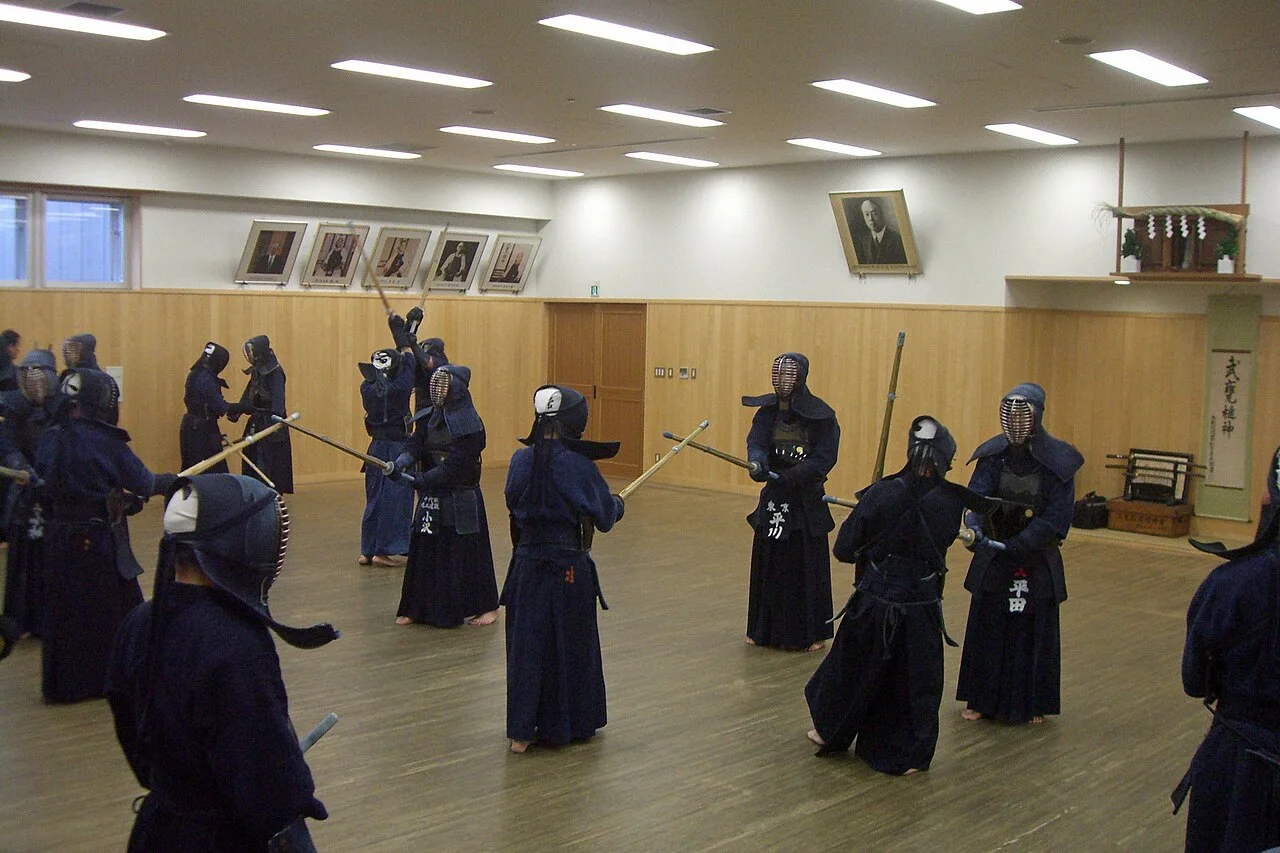
The kendo workshop at Seidokan in Higashi-Nippori is the one this site would book. Two hours in a working dojo in Arakawa City, ten to twelve minutes from Uguisudani Station, full kendo armour and a shinai provided, ending in a mock tournament: about ¥18,000, 4.8 from about 130 reviews. It is on the east side, it is a real dojo rather than a studio, and putting the men helmet on and being hit by someone who knows how is an experience of a different order from posing with a blunt blade.
Bushido through Kendo in Nihonbashi-Kobunacho is the central version, two hours with kendo attire and shinai included, about ¥20,000, 5.0 from about 130 reviews. Samurai Sword Tokyo in Kojimachi sits between the studio hour and the dojo: uniform rental, a live demonstration, an English explanation of sword technique and bushido, and a named certificate scroll at the end, about ¥15,000, 5.0 from about 60 reviews.
For iaido — drawing the sword, which is the discipline most people mean when they picture a samurai — the Mugai-ryu session in Kuramae is an hour with a named school, an English-speaking instructor, hakama and sword rental, about ¥23,000, 5.0 from about 45 reviews; the dojo is a minute from Kuramae Station and a short walk from the river walk. A private iaido lesson near Kudanshita is about ¥23,500 for ninety minutes, 4.8 from about 15.
The most serious listing in Tokyo is also the furthest out: three hours of sword and archery training in a Machida dojo taught by a man who describes himself as a samurai descendant, about ¥30,000, 5.0 from over 150 reviews, with a practice uniform, bokken and a real bow, and the instructor asking your height and weight beforehand so the clothes fit. Machida is forty minutes west of Shinjuku, so this is a half-day, not an add-on.
Ninja, and what it actually is
Worth saying plainly: shinobi existed as spies and irregular soldiers, mostly in the Iga and Koka areas, and almost nothing about the popular image is contemporary with them. The all-black hooded outfit is generally traced to kabuki stage convention — the black-clad stagehands an audience agrees not to see — rather than to any historical uniform. Everything below is entertainment, and the good ones are open about it.
NINJA SAMURAI TOKYO in Shiomi, Koto City is the east side’s entry and the best-reviewed serious one: two hours with a Japanese sensei who teaches ninja arts in English, costume rental included, about ¥15,000, 5.0 from about 240 reviews. Their one-hour lesson is about ¥12,500. Shiomi is two stops from Tokyo Station on the Keiyo line and a short walk from the rest of Koto.
MUSASHI JAPAN on Kappabashi runs an eighty-minute immersion with a black-belt instructor and an online interpreter, about ¥25,300, 4.9 from about 95 reviews — the premium end, and five minutes from the knife street. Ninja Wire Action in Yushima straps you into a film-stunt harness and gives you the video, about ¥16,900, 4.9 from about 35 reviews. It is not remotely historical and it is the most fun on this page.
Armour photography
The Yoyogi armour studio is the entry point: an hour, staff who explain the armour and dress you in it, pose direction and composite shots, about ¥16,300, 5.0 from a small number of reviews. The Shibuya studio in Maruyamacho is the established one — full kacchu armour and helmet, a professional photographer, the images handed over on an SD card, a printed “samurai licence” and a frame, about ¥35,000, 5.0 from about 85 reviews. Between them sits the Yoyogi studio’s ninety-minute premium version at about ¥32,800. Armour is heavy and hot; ninety minutes is the ceiling of what is enjoyable.
Which one to book
| If you want | Book | Area | About |
|---|---|---|---|
| The real objects, almost free | Japanese Sword Museum | Ryogoku, Sumida | ¥1,000 · no booking |
| The real thing, hands on | Kendo workshop at Seidokan | Higashi-Nippori, Arakawa | ¥18,000 · 2 h · 4.8 (131) |
| The best studio hour | Samurai Theater Tokyo | Shinjuku | ¥9,800 · 1 h · 5.0 (592) |
| Something you cannot do elsewhere | Archery and katana at BAC | Asakusa | ¥11,000 · kyudo included · 4.9 (94) |
| The cheapest studio hour | Samurai Adventure | Tsukuda, Tsukishima | ¥6,500 · 1 h |
| Children | Ninja Experience at the museum | Nishi-Asakusa | ¥7,000 · 2 h · 5.0 (452) |
| Drawing the sword, properly | Mugai-ryu iaido | Kuramae | ¥23,000 · 1 h · 5.0 (45) |
| Ninja, taken seriously | NINJA SAMURAI TOKYO | Shiomi, Koto | ¥15,000 · 2 h · 5.0 (238) |
| Ninja, not taken seriously | Ninja Wire Action | Yushima | ¥16,900 · video included |
| A portrait in armour | Samurai Armor Photo Studio | Shibuya | ¥35,000 · SD card · 5.0 (86) |
| A half-day of actual training | Sword and archery, Machida dojo | Machida | ¥30,000 · 3 h · 5.0 (153) |
Four things nobody tells you
- You will not cut anything. Beginners handle wooden bokken, soft practice katana or blunt iaito. Tatami-mat cutting with a live blade is a separate, rarer and more expensive thing, and no listing in this article includes it.
- “Samurai descendant” is not a credential anyone issues. A school name — Mugai-ryu, or a kendo federation grade — is. Look for the school in the listing, not the ancestry.
- Kendo armour smells, and that is normal. Rental sets are shared. Long socks and a T-shirt under it make the two hours much better.
- The studio hours photograph better than the dojo ones. If the pictures matter more than the skill, book the studio and spend the difference elsewhere — that is not a criticism of either, just the trade you are making.
What the reviews say, and what they mean
The listings on this page carry about 3,293 reviews between them, and roughly 62 of those are rated three stars or below — about 1.9% overall. But the average hides the only thing worth knowing here: the complaints are concentrated in one operator. Read on 4 October 2026, with the operators’ replies and the current listing text.
Where the low reviews are
| Listing | Reviews | Rated 3★ or below |
|---|---|---|
| Samurai Theater Tokyo, Shinjuku | 594 | 2 (0.34%) |
| Samurai Ninja Museum, basic ticket | 495 | 15 (3.0%) |
| Same museum, ninja version | 452 | 6 (1.3%) |
| Same museum, sword + museum tour | 317 | 16 (5.0%) |
| NINJA SAMURAI TOKYO, Shiomi | 240 | 2 (0.8%) |
| Same museum, family sword experience | 181 | 4 (2.2%) |
| Machida dojo, sword and archery | 153 | 1 (0.7%) |
| Seidokan kendo, Higashi-Nippori | 134 | 5 (3.7%) |
| Bushido through Kendo, Nihonbashi | 131 | 0 |
| BAC Asakusa, archery and katana | 100 | 2 (2.0%) |
| MUSASHI JAPAN | 94 | 0 |
| Shibuya armour studio | 87 | 0 |
| Samurai Training Asakusa | 80 | 1 (1.3%) |
| Samurai Sword Tokyo, Kojimachi | 62 | 0 |
| Same museum, Shinjuku ticket | 50 | 4 (8.0%) |
| Mugai-ryu iaido, Kuramae | 49 | 0 |
| Six smaller listings | 10–36 each | 0–1 each |
The five Samurai Ninja Museum listings hold 1,495 reviews and 45 low ones, a rate of 3.0%. Everything else on this page — the studios, the dojos, the armour photographers, the ninja operators — holds about 1,798 reviews and roughly 17 low ones, under 1%. Three times the complaint rate, from the operator that sells the most listings in the category.
The sword is a blunt alloy replica, and there is no tatami cutting
This matters because the ¥11,900 listing is sold on the idea of cutting. Its own product URL still contains the word tameshigiri — test cutting — and its inclusions line still reads “Use a real samurai sword”. But the operator’s own description, lower down the same page, now explains at length that what you hold is an iaito: a practice sword made of zinc-aluminium alloy, deliberately unsharpened, which in the operator’s words “cannot hold a sharp edge, meaning it is not classified as a weapon under Japanese law”. The session is described as learning basic iaido technique “with a replica sword”.
A July 2024 reviewer put it less diplomatically: “YOU DO NOT GET TO CUT A TATAMI MAT WITH A REAL KATANA”, adding that staff told them a change in the law had ended it, and that it should be removed from the itinerary. Two years later the itinerary still implies otherwise in one line and corrects it in another.
None of this makes it a bad hour — 288 of 317 reviewers gave it five stars, and an iaito is what almost every beginner anywhere in the world trains with. But if cutting a mat with a live blade is what you are paying ¥11,900 for, you will not get it here, and the dojo listings further down this page are the honest place to spend the money instead.
The group-size complaint, and the operator fixing it
Two reviewers describe the opposite of a small group: “at least 40 persons in the museum and 25 with the swordcutting… you have to get in queue for cutting, everybody is watching” (October 2023), and “a lot of waiting around for the rest of the group to have individual turns” (May 2024). The operator replied that it had moved to a larger venue and increased the number of tours.
It appears to have worked. The listing today states a maximum of four travellers. That is a genuine fix and it is worth saying so, because it means the older low reviews describe a product that no longer exists in that form.
Check the age rules before you book, not at the door
A parent in October 2023 arrived with a child and was told the katana session was 18 and over; the booking had been made with the child’s age entered. The operator’s reply said the limit is on its own website and that external booking platforms “may not always relay all specific details”. The current listing states that children under 10 cannot enter the samurai venue.
For families, the ninja version and the basic museum ticket are the ones built for children, and they have the better records of the five.
Where no complaint repeats
Samurai Theater Tokyo: 594 reviews, two below four stars. That is a 0.34% complaint rate, the best in this article and among the best this site has measured anywhere. Bushido through Kendo (131), MUSASHI JAPAN (94), the Shibuya armour studio (87), Samurai Sword Tokyo (62) and the Mugai-ryu iaido session in Kuramae (49) have no review below four stars between them. The Seidokan kendo workshop this page recommends has five in 134, and they do not say the same thing.
Which of these are made for foreigners
This is the widest gap in the entire series, and it is not close.
Taito City — the ward Asakusa is in, where most of these listings are — publishes the membership fees of its community martial arts clubs in its own lifelong-learning guide (Taito City, checked 4 October 2026):
- Taito Iaido Association: ¥2,000 a month, ¥1,000 to join. Adults, Monday and Thursday evenings, at Ueno and Shinobuoka middle schools.
- Kuromon Kendo Friends Association: ¥1,000 a month, ¥1,000 to join. Any age, Sunday mornings.
- Shitaya Makoto Kendo Friends Association: ¥1,000 a month, no joining fee.
- Hatsune Kenshin Juku: ¥500 a month. Shinobuoka Kendo Club: ¥6,000 a year for working adults.
A resident of Asakusa can train iaido with a club, weekly, for ¥2,000 a month. A visitor pays ¥11,900 for ninety minutes of iaido technique with a replica sword, or ¥18,000–¥20,000 for a single kendo session. That is roughly six months of club membership for one afternoon.
And the gap is almost entirely justified, which is the honest part. Those clubs practise in school gymnasiums on weekday evenings, in Japanese, with no English and no equipment for a stranger, and they are built around people who turn up every week for years. None of them is a drop-in. You cannot buy two hours of that on a Tuesday afternoon in English, and the studios exist precisely because you cannot.
What the numbers do tell you is where the money stops buying anything. The Japanese Sword Museum in Ryogoku is ¥1,000, and that is the same ¥1,000 for everybody; the blades in those cases are better than anything you will hold in a studio. Between a ¥1,000 museum and a ¥2,000-a-month club sits a ¥9,800 costume hour, and knowing that is the difference between buying it on purpose and buying it by accident.
Where this joins the rest of the east side
Unusually for a category dominated by Shinjuku and Shibuya, the east side holds the best of this one: the swords themselves in Ryogoku, the kendo dojo in Arakawa, the ninja school in Koto, iaido in Kuramae and the shinobi studio on Kappabashi. The same streets are where the Asakusa workshops are, and the other experiences compared by area are kimono rental, ramen classes, tea ceremony, kintsugi and sushi making. For the other combat tradition the east side is actually famous for, see morning practice versus sumo show versus the tournament. Everything bookable is on the Experiences page, and the area is in the east side guide.
Quick answers
What is the best samurai experience in Tokyo?
It depends which of four things you want. For the real objects, the Japanese Sword Museum in Ryogoku, ¥1,000. For real training, the kendo workshop at a working dojo in Higashi-Nippori, about ¥18,000 for two hours. For the best-run costumed hour, Samurai Theater Tokyo in Shinjuku, about ¥9,800, rated 5.0 from nearly 600 reviews. For photographs, the armour studio in Shibuya, about ¥35,000.
How much does a samurai experience in Tokyo cost?
¥3,500 for a museum ticket with a costume, ¥6,500 to ¥13,000 for a studio hour with a sword lesson and photographs, ¥15,000 to ¥30,000 for a genuine kendo or iaido lesson with a licensed instructor, and ¥16,000 to ¥48,000 for a professional armour photoshoot.
Are samurai experiences in Tokyo authentic?
Some are. The kendo and iaido listings are taught in working dojos by instructors from named schools and are as authentic as a two-hour introduction can be. The ¥7,000 to ¥13,000 studio hours are closer to a theatre workshop: a hakama, a blunt or soft sword, choreographed cuts and photographs. Both are worth booking; the listings just rarely say which they are.
Can you cut a tatami mat with a real katana in Tokyo?
Not on any of the standard experiences. Beginners use wooden bokken, soft practice katana or blunt iaito. Live-blade cutting, tameshigiri, is a separate and rarer offering that requires more instruction, and none of the listings compared here includes it.
Where can you see real samurai swords in Tokyo?
The Japanese Sword Museum at 1-12-9 Yokoami in Sumida, three minutes from Ryogoku Station, run by the sword preservation foundation. Blades by named smiths, several designated national treasures or important cultural properties, in rotating exhibitions. ¥1,000 for adults, ¥500 for students, open 9:30 to 17:00 with last entry 16:30, closed Mondays.
Is a ninja experience in Tokyo worth it?
As entertainment, yes. Shinobi existed as spies and irregulars, but the black hooded costume comes from kabuki stage convention rather than history, and every operator is selling a modern invention. The best-reviewed serious one is NINJA SAMURAI TOKYO in Shiomi, Koto, about ¥15,000 for two hours; the best for children is the ¥7,000 ninja session at the Samurai Ninja Museum in Asakusa.
What should I wear to a kendo or samurai lesson?
Clothes you can move and sweat in, plus long socks. Kendo armour and the shinai are provided and the sets are shared, so a T-shirt underneath helps. You will be barefoot or in tabi on a wooden floor. Skirts are ruled out at the wire-action and armour studios.
LOCAL SIDE JAPAN read the price, inclusions, duration, meeting point and review record of every listing above on Viator on September 24, 2026, and checked the Japanese Sword Museum’s hours and admission against the Society for the Preservation of Japanese Art Swords’ own site the same day. Prices are approximate, move with the exchange rate, and several use group pricing. This is a researched comparison of the listings and their reviews, not a firsthand report on each dojo, and the article says so here rather than pretending otherwise. Nothing was provided free by an operator.
Sumo has exactly the same problem. The shows sell a costume and, at three of them, a lottery for the chance to step into the ring at all. The nine Tokyo sumo experiences, compared on what the listings leave out →