This article contains affiliate links to booking sites. If you book through them, LOCAL SIDE JAPAN earns a small commission at no extra cost to you. The official ticket route is described first and costs nothing extra. How this site is made →
TOKYO / SUMIDA CITY / RYOGOKU
A chair seat at a Grand Sumo tournament in Tokyo costs ¥3,500 from the official seller. The same afternoon, bought as a guided package, costs ¥25,000 to ¥40,000. Both are legitimate. Most guides only tell you about the second one, because that is where the commission is.
I run a sumo experience a few stations east of the Kokugikan, so I get this question every week. Here is the honest version: when the tournaments are, how to buy the cheap seat yourself, what a day inside actually looks like, and when it makes sense to pay someone to handle it.
On this page
When sumo is actually in Tokyo
There are six Grand Sumo tournaments a year, each 15 days long. Only three are in Tokyo, at the Ryogoku Kokugikan in Sumida City. The other three are in Osaka, Nagoya and Fukuoka. If your trip does not overlap with a Tokyo tournament, skip to the “no tournament” section below; nothing you pay for will change the calendar.
| Tournament | Dates | Venue | Official tickets on sale from |
|---|---|---|---|
| September 2026 | Sep 13 – Sep 27, 2026 | Kokugikan, Tokyo | Aug 8, 2026 (on sale now) |
| November 2026 | Nov 8 – Nov 22, 2026 | Fukuoka | Sep 19, 2026 |
| January 2027 | Jan 10 – Jan 24, 2027 | Kokugikan, Tokyo | Dec 5, 2026 |
| March 2027 | Mar 14 – Mar 28, 2027 | Osaka | Feb 6, 2027 |
| May 2027 | May 9 – May 23, 2027 | Kokugikan, Tokyo | Apr 10, 2027 |
| July 2027 | Jul 11 – Jul 25, 2027 | Nagoya | May 15, 2027 |
| September 2027 | Sep 12 – Sep 26, 2027 | Kokugikan, Tokyo | Aug 7, 2027 |
The pattern is simple: Tokyo in January, May and September. Tickets go on sale roughly five weeks before day one. Weekends and the final two days sell out first; a weekday in the first week is the easiest ticket in sumo.
The official route: buy the ticket yourself
The Sumo Association sells tickets in English through Ticket Pia at sumo.pia.jp/en. Credit card only, first come first served, and seat numbers inside your category are assigned by draw. Purchases cannot be changed or cancelled for any reason, which is the one rule that catches people out.
Prices for the September 2026 Tokyo tournament, including tax:
| Seat | Weekday | Weekend / holiday | What it is |
|---|---|---|---|
| Chair Seat C | ¥3,500 | ¥4,000 | Upper tier, back rows. You see everything; the wrestlers are small. |
| Chair Seat B | ¥5,000 | ¥5,500 | Upper tier, middle rows. The sensible choice. |
| Chair Seat A | ¥8,000 | ¥8,500 | Upper tier, front rows. |
| Chair Seat S | ¥9,000 | ¥9,500 | Best of the chairs, closest to the ring. |
| Box Seat C (4 people) | ¥34,000 | ¥38,000 | Lower tier, floor cushions in a small square. Shoes off. Tight for four Western adults. |
| Box Seat S (4 people) | ¥56,000 | ¥60,000 | Same format, closest boxes. |
| Ringside (tamari) | ¥20,000 | ¥20,000 | Floor level. Not sold on the English site; Japanese-language sales only. |
Two costs the price table does not show. There is a ¥2,000 service fee per ticket, and tickets bought on the English site are printed at a Seven-Eleven in Japan. You cannot print at home, and you cannot collect at the arena. Any 7-Eleven will do, and the multi-function copier has an English menu, but plan to do it the day before, not on the way to the match.
So a real weekday visit for two people on Chair B comes to ¥14,000 including fees. That is the number to compare against everything below.
What a tournament day looks like
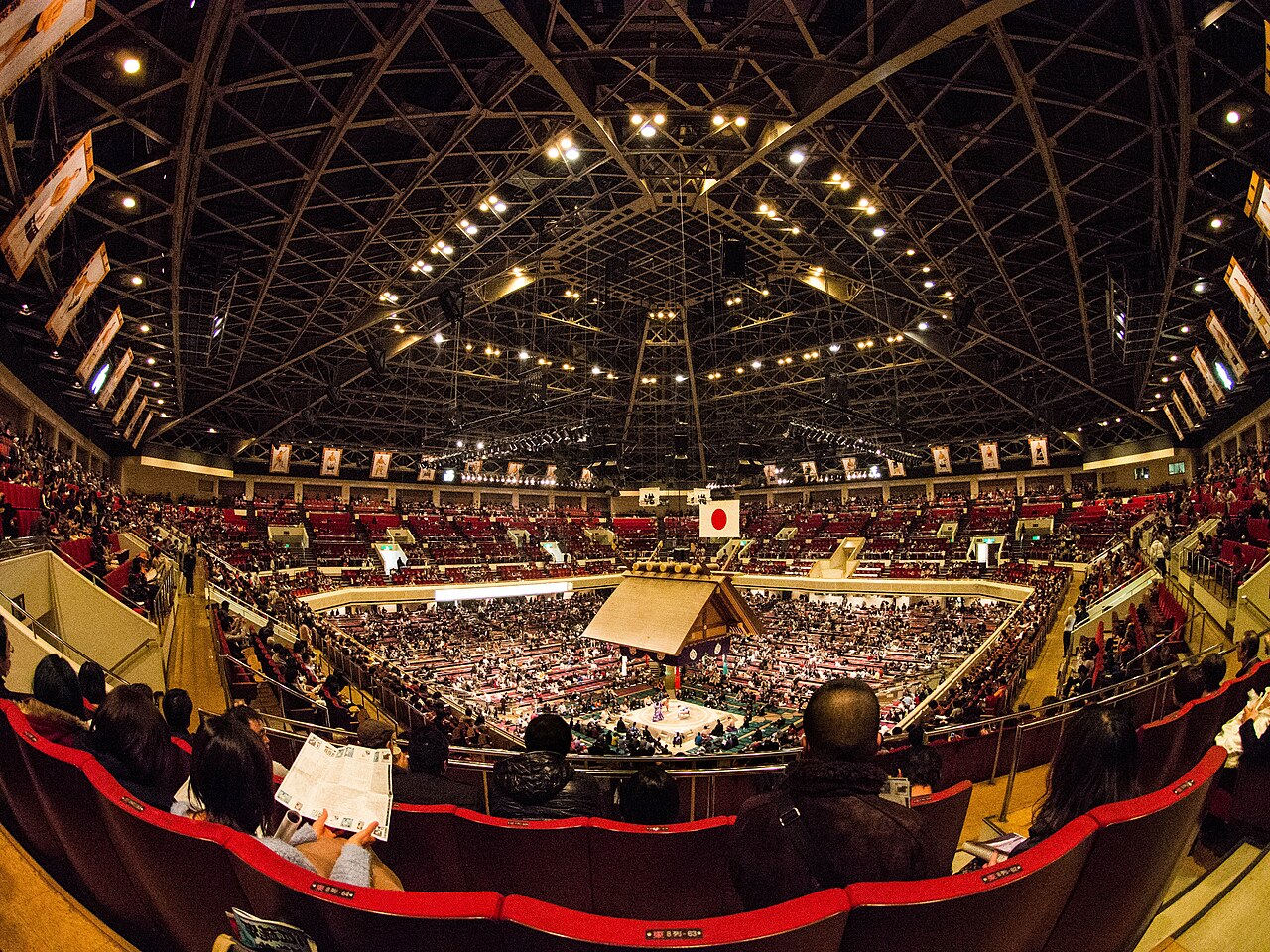
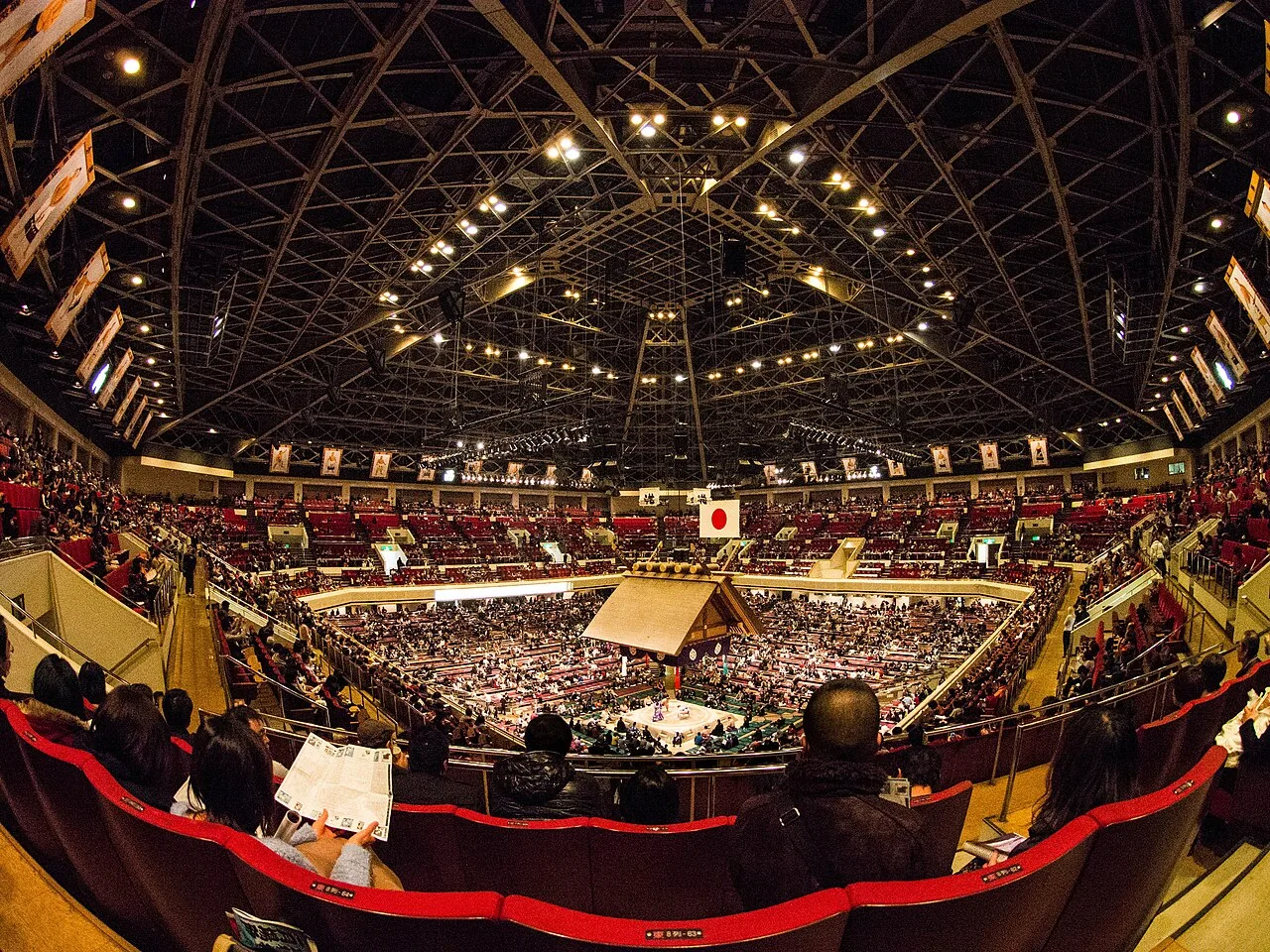
Your ticket is valid for the whole day, and the day is long. Doors open around 8:00. The lowest divisions wrestle in front of a nearly empty hall through the morning. The building fills from about 14:00, when the second-highest division, juryo, enters the ring in ceremonial aprons. The top division, makuuchi, does its own ring-entering ceremony just before 16:00, the yokozuna perform theirs separately, and then the bouts that matter run until the last one at 18:00.
If you arrive at 14:00 you see four hours of the good part and skip four hours of the quiet part. If you arrive at 16:30 you have missed the ceremonies, which is a mistake; they are the most photogenic ten minutes of the day.
Bring cash for food. There are chanko stalls and bento inside, and you are allowed to bring your own food and drink. The Kokugikan is a two-minute walk from JR Ryogoku Station (West Exit) and about five minutes from Ryogoku on the Toei Oedo Line.
When a guided tournament package is worth it
The booking sites sell “sumo tournament tours”: a guide meets you, walks you to the Kokugikan, gives you a seat that was bought in bulk, and explains what is happening. They cost roughly three to five times the raw ticket. That premium buys three things, and you should pay it only if you want at least two of them:
- A seat when the official site is sold out. Operators hold allocations. For a weekend or the final days, this is often the only way in.
- Free cancellation. The official ticket has none. Most packages can be cancelled up to 24 hours ahead.
- Someone explaining the ritual. Sumo rewards knowing what you are looking at. A good guide turns the salt-throwing and the staring into a story; without one, the first hour can feel like a lot of standing around.
The three I would point a friend to, in order of how the seat quality compares to the price:
- Grand Sumo Tournament Tour with Chair Seat Tickets (GetYourGuide): guided, around 3.5 to 4.5 hours, chair seats. Over a thousand reviews at 4.7. This is the standard package.
- Tokyo Grand Sumo Wrestling Tournament Experience (Viator): the same idea from a different operator, free cancellation, about 3.5 hours. Useful when the GetYourGuide dates are full.
- Tokyo Sumo Wrestling Tournament Tour (Klook): English-guided, 10,000+ bookings. Klook tends to have inventory later than the other two, so check it last if the first two are gone.
Check the seat category before you book. “Chair seat” is honest. “Premium” or “S seat” packages at ¥40,000 and up are paying for a ¥9,000 ticket plus a guide; decide whether the guide is worth ¥30,000 to you.
No tournament during your trip? Two real options and one staged one
Morning practice at a stable
Wrestlers train most mornings when there is no tournament, and some stables admit small groups to sit at the edge of the practice ring. It is silent, repetitive, sweaty, and the closest most visitors will ever get to a real rikishi. You cannot walk in; access is arranged through operators with a relationship to the stable, and the rules are strict (no talking, no flash, no leaving mid-session).
- Tokyo Sumo Morning Practice Tour: Real Stable Viewing & Guide (GetYourGuide): 1.5 to 2 hours with a guide, 4.8 rating.
- Sumo Morning Practice Tour with Ring-Side Seat and Photo Shoot, Kiyosumi-Shirakawa (Viator): in Koto City, on this site’s home turf. Two hours, ring-side.
- Real Sumo Morning Practice with an Expert Reporter (Klook): led by a sumo journalist, which means better answers to your questions.
A hands-on session with former wrestlers
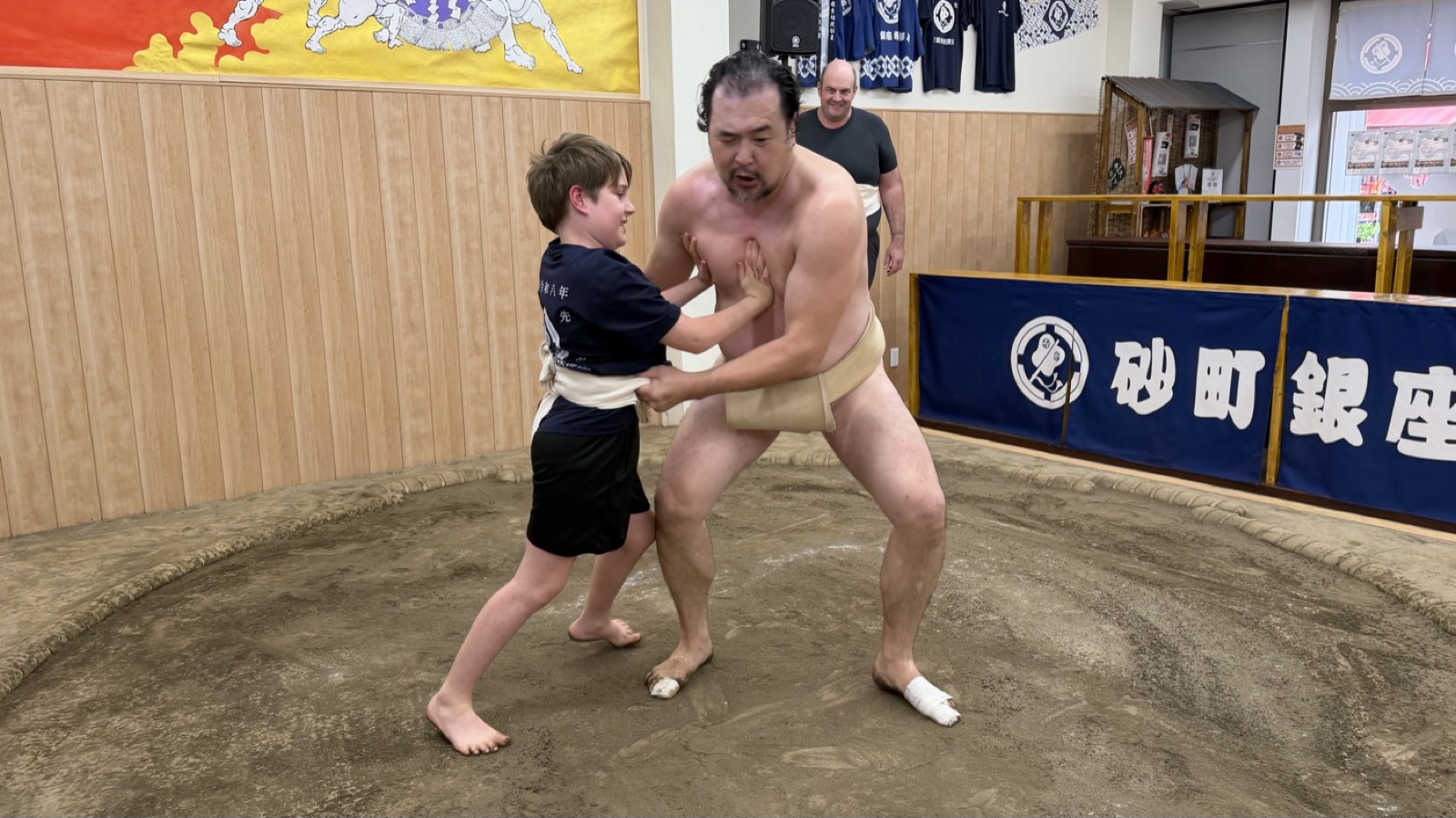
This is the part where I declare an interest. I run the Sunamachi Ginza Sumo Stable in Koto City: former professional wrestlers, a real ring, you get in it, and chanko afterwards on a shopping street that tourists have not found yet. I am not going to review my own business here. It exists, it is on the east side, and it is the reason I know the rest of this article.
The sumo “shows”
Shibuya, Shinjuku, Ginza and Asakusa all now have 90-minute sumo shows: retired wrestlers, a demonstration, an audience member pulled into the ring, a photo, sometimes a chanko bowl. They are staged entertainment, not sport, and the operators are upfront about that. If you have one evening and no tournament, they are fun. Just do not confuse them with the Kokugikan.
- Shinjuku Sumo Show & Experience with Photo (GetYourGuide): the biggest one by review count, 4.9 from 7,800+ reviews.
- Shibuya Sumo Show with Drink and Photo (Viator): cheaper, shorter, central.
Make a day of Ryogoku
The Kokugikan sits in Ryogoku, on the Sumida side of the river, and the neighborhood is the sumo district: stables behind ordinary house fronts, chanko restaurants run by retired wrestlers, and the occasional rikishi in a yukata on a bicycle. Come early, eat chanko for lunch on the street behind the station, walk the riverbank, then go in at 14:00. From Ryogoku it is fifteen minutes by train to Sunamachi Ginza and the ¥100 boat park if you want the rest of the east side afterwards.
If your dates miss a tournament, the two other kinds of sumo, morning practice at a stable and the retired-wrestler shows, are compared by area in Sumo in Tokyo: Morning Practice vs Sumo Show vs the Tournament. Three minutes from the same station is the Japanese Sword Museum, ¥1,000, which is where that guide to samurai and ninja experiences starts.
Quick answers
How much does a sumo ticket in Tokyo cost?
From the official seller (sumo.pia.jp), a Chair Seat C at the Ryogoku Kokugikan is ¥3,500 on weekdays and ¥4,000 on weekends for the September 2026 tournament, plus a ¥2,000 service fee per ticket. Box seats for four start at ¥34,000. Guided packages on booking sites cost roughly ¥25,000 to ¥40,000 per person.
When are the sumo tournaments in Tokyo in 2026 and 2027?
Tokyo tournaments are held at the Ryogoku Kokugikan in January, May and September: September 13–27, 2026; January 10–24, 2027; May 9–23, 2027; September 12–26, 2027. Official tickets go on sale about five weeks before day one.
What time should I arrive at a sumo tournament?
Arrive around 14:00. Doors open at about 8:00, but the top two divisions enter the ring from about 14:15 and the final bouts end at 18:00. Arriving at 14:00 gives you the ceremonies and the best four hours.
How do I collect official sumo tickets bought online?
Tickets bought on the English site (sumo.pia.jp/en) are printed at a Seven-Eleven in Japan using the confirmation code. They cannot be printed at home or collected at the arena, and purchases cannot be changed or refunded.
Tomioka Hachimangu, the shrine where Edo’s first professional sumo tournaments were held, is a free stop on the Kiyosumi-Shirakawa morning, across the river from the Kokugikan.
Practical notes
- Official tickets: sumo.pia.jp/en. Credit card only. No changes, no refunds. ¥2,000 fee per ticket. Print at any 7-Eleven in Japan.
- Best value: Chair Seat B on a weekday in the first week, ¥5,000 plus fee.
- Arrive: 14:00 for the juryo ring-entering ceremony. Bouts end at 18:00.
- Access: JR Ryogoku Station (West Exit), 2 minutes. Toei Oedo Line Ryogoku, about 5 minutes.
- Sold out or want a guide: the GetYourGuide, Viator and Klook packages above; expect ¥25,000 to ¥40,000 per person for chair seats with a guide.
- Etiquette inside: no flash during bouts, stay seated during the final bouts, and do not throw your cushion, whatever the crowd around you does when a yokozuna loses.
LOCAL SIDE JAPAN checked tournament dates against the Nihon Sumo Kyokai official schedule and ticket prices against the sumo.pia.jp English sales page on September 14, 2026. Prices are for the September 2026 tournament and may change for later tournaments. Package prices on booking sites vary by date and are quoted as a range.
Related: the Kokugikan is in Sumida City, and a tournament day leaves half the day free. Things to do in Sumida around the sumo — the free Sumo Museum is in the same building.
Related: if your trip misses January, May and September, the alternatives are not interchangeable. We compared all nine Tokyo sumo experiences on whether you actually get in the ring — at three of them it is decided by lottery — what you wear, how close you sit and what you eat.