This article contains affiliate links to booking sites. If you book through them, LOCAL SIDE JAPAN earns a small commission at no extra cost to you. Classes are ranked by what you learn and eat for the money, not by what pays. How this site is made →
TOKYO / EXPERIENCES / SUSHI CLASSES, BY AREA
A sushi-making class in Tokyo costs between ¥6,000 and ¥20,000 and lasts between one hour and three, and the difference in price is almost never the sushi. It is whether you make nigiri or only rolls, whether the person teaching you has stood behind a sushi counter for a living, whether there are six of you or twenty, and whether the class comes with a fish-market walk or a matcha bowl or a samurai in the next room. Here are the classes you can book, by area, with what each one actually has you make, and which to choose depending on whether you want to learn, eat, entertain children, or take a photograph. Prices, meeting points and review counts were read on the booking sites on September 21, 2026.
Fast facts
- Price: ¥6,000 to ¥19,800 for a visitor class. Most sit at ¥9,000–¥11,000
- Length: one to three hours. Ninety minutes is standard
- Cheapest: ¥6,000, Asakusa, with sake. Most booked: ¥9,000, Asakusa, 5.0 from over 5,000
- With children: Kita-Senju, ¥10,500, age 8 and up
- The complaint that repeats everywhere: you shape the rice, the chef cuts the fish. Ask before booking if that matters
- Becoming a sushi chef is a different thing entirely: ¥880,000 for five weeks. See below
On this page
First, what a sushi class actually teaches
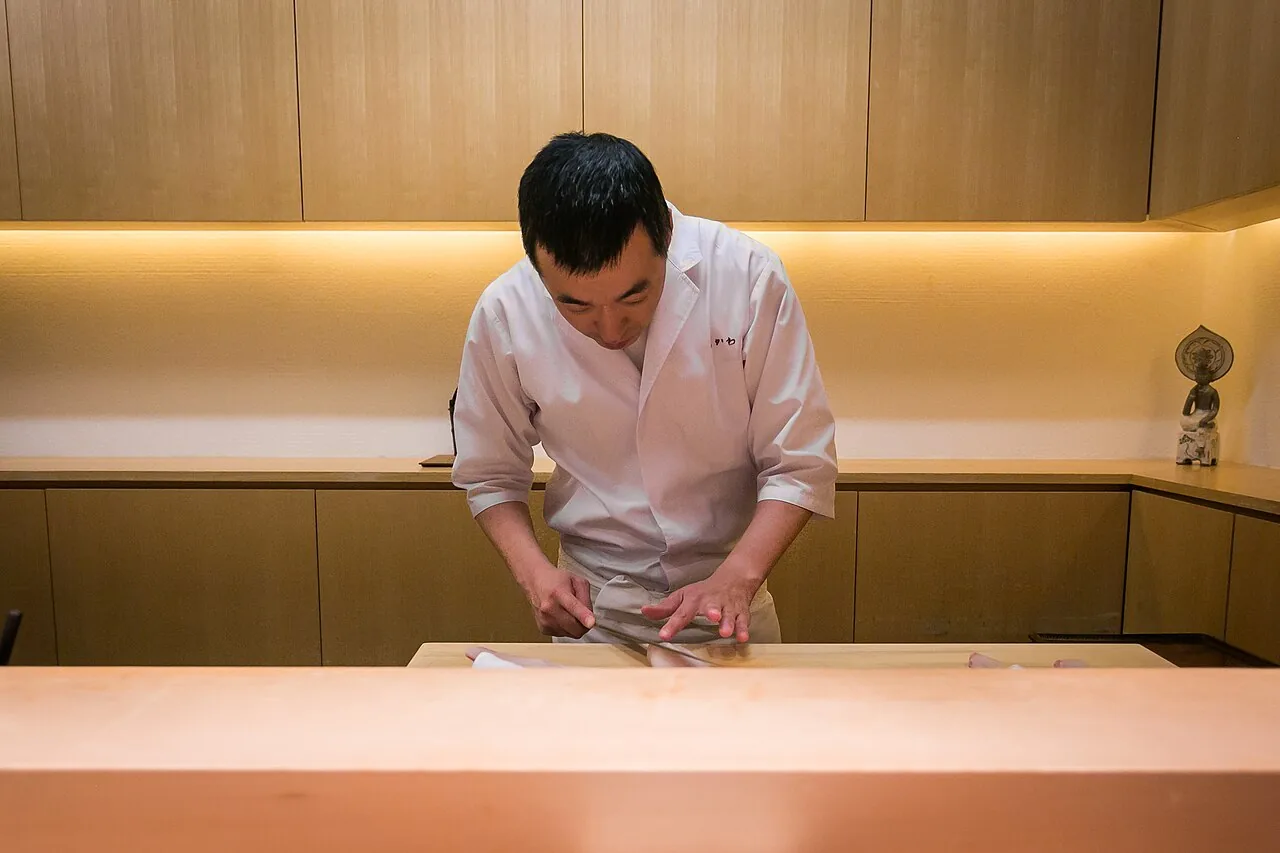
Three things, in descending order of usefulness. Rice: how it is cooked, seasoned with vinegar, sugar and salt, cooled with a fan, and, above all, how little of it a piece of nigiri needs and how loosely it must be held. Everyone over-packs. Every class fixes this, and it is the one skill you will use at home. Rolls: maki on a bamboo mat, temaki hand rolls, temari ball sushi, the “Tokyo roll” invented for classes; easy, photogenic, and what the cheaper classes mostly do. Nigiri: the two-finger press that shapes rice and fish together, which is the thing sushi chefs spend years on and which a class can show you the shape of in an hour. If the listing does not say nigiri, you will be making rolls. None of the classes cut whole fish beyond a demonstration, and the ones that say “chef” mean a working or retired sushi chef, which is worth paying for; the ones that say “instructor” mean a cooking teacher, which is fine for rolls.
Sushi classes in Tokyo, area by area
Asakusa: the most-booked class in Japan, and the fun one
Sushi Making Tokyo: Roll and Authentic Japanese Sushi Class, three minutes from Asakusa Station by Kaminarimon: one hour forty, about ¥9,000, rolls and temari and nigiri, and 5.0 from over 5,000 reviews, which makes it the most-reviewed cooking class in the country. It is a production line in the best sense: a big bright room, staff who have done this ten thousand times, and everyone leaves with a plate they made and a photograph of it. Not the deepest class here; the safest. Popular Sushi Making Class in Asakusa, ninety minutes, about ¥9,900, 5.0 from about 370 reviews, is the same format from the operator with the Tokyo Tower branch. The fun one is Sushi Making with Matcha and Unlimited Sake in Hanakawado by the river: ninety minutes, from about ¥6,000, a sushi-chef jacket to wear, a matcha bowl at the end and, as the name says, the sake, 5.0 from about 80 reviews. Cheapest in the district and the right choice for an evening rather than a lesson. At the top end, Sushi Making and Samurai Dining is two hours and about ¥15,000 with a samurai-themed room; you are paying for the theater.
Tsukiji: with a real chef, and with the market
Sushi Making Class in Tsukiji with a Professional Chef is the one for people who want to learn: ninety minutes, about ¥11,000, a working sushi chef, fish preparation and knife technique demonstrated, nigiri and rolls made, 5.0 from about 1,500 reviews. A little dearer than Asakusa’s ¥9,000, and more serious. The same operator’s Tsukiji Market Tour and Sushi Class adds a two-hour walk through the outer market first, four hours in all, about ¥15,700, 4.9 from 987 reviews. Think before you add the walk. The class on its own has 7 reviews below four stars in 1,502; the version with the market tour bolted on has 32 in 987 — six times the rate — and the complaints are about the walk, not the class. The market is also closed on Sundays, Wednesdays and holidays, and reviewers who booked those days report no substitute. The numbers are below. The short, cheap option is the one-hour Sushi Bento class, about ¥7,300, 5.0 from about 75 reviews, where you make a box to carry away rather than a plate to eat.
Shinjuku and Shimbashi: the small groups and the long class
Three-Hour Small-Group Sushi Class at Cooking Sun, in Shinanomachi between Shinjuku and Yotsuya: the longest class in the city, three hours, about ¥11,000 with group pricing, California rolls and tekka rolls and nigiri from scratch, 5.0 from about 175 reviews. The one that comes closest to a real cooking lesson. In Shimbashi, Tokyo Sushi Making Experience and Japanese Cooking Class does maki, temari and nigiri with tuna, salmon and flying-fish roe in ninety minutes for about ¥9,000, 5.0 from about 190 reviews, in a room that takes up to fifteen; good if you are staying around Ginza or Shiodome.
Shibuya, Sasazuka and Nishi-Azabu: the Michelin ones
Sushi Making and Sake Tasting at a Michelin-Listed Standing Sushi Bar in Sasazuka, ten minutes by train from Shinjuku: ninety minutes, about ¥14,000 with group pricing, you make nigiri yourself and eat pieces made by the chef with better fish, 4.9 from 77 reviews. The best fish on this page and a real counter. Confirm the piece count and the finish time when you book: in April 2026 a guest reported getting seven pieces rather than fourteen and finishing in an hour rather than ninety minutes, and the operator replied in public acknowledging the discrepancy and promising to review the description. Hand-Rolled Sushi Class in Shibuya with a Master is the cheaper Shibuya option, ninety minutes, about ¥7,700, new with a couple of dozen reviews. And the one for people who want a private lesson from someone who cooks at the top: Private Sushi Making with a Sushi Master in Nishi-Azabu, one hour forty-five, about ¥19,800, held in a Michelin-starred restaurant’s kitchen, slicing raw fish and choosing seasonal ingredients, 5.0 from about 100 reviews.
Tokyo Tower
Popular Sushi Making Class near Tokyo Tower: ninety minutes, about ¥9,900, 4.9 from about 250 reviews, the same format as the Asakusa branch for people staying in Roppongi or Hamamatsucho.
The east side: Kita-Senju, and the one for children
The only sushi class east of the river is also the best one for families. Kid-Friendly Sushi Making Class in Tokyo meets at the east exit of Kita-Senju Station at 10:30: two and a half hours, about ¥10,500, a small group, four kinds of sushi from the rice up, a quiz on sushi etiquette, and a relaxed teacher who takes children from eight. 5.0 from about 35 reviews. Do it in the morning, then spend the afternoon in the post town and let the adults have the evening in the standing bars. For the other kind of sushi morning on the east side, the public open days at Adachi Market, where you eat at the wholesalers’ counters at 8:00, are in the same guide.
What does a sushi chef course in Tokyo cost?
People search for this and land on pages about ninety-minute tourist classes, which is not the same product and not the same order of money. If what you mean is training to work behind a counter, here is the real number.
Tokyo Sushi Academy runs the English-language professional courses, from its Tsukiji campus. Its published fees:
| Course | Length | Fee |
|---|---|---|
| International Sushi Chef Course | 5 weeks, 25 days, Mon–Fri 9:30–15:30 | ¥880,000 incl. tax |
| ISC Advanced Sushi Master Course | 2 weeks, 10 days | ¥550,000 |
| Both, booked together | 7 weeks, 35 class days | ¥1,320,000 (saves ¥110,000) |
Three things worth knowing before you picture yourself doing it. No professional experience is required and the five-week course is open from beginner level, so it is not gatekept. You must be eighteen and legally in Japan for the whole period, which for most visitors means a visa question, not a money question. And there is no one-day or weekend version in English with a published price — the shortest English course is the two-week Advanced one, and that is built for chefs who already work with fish. The Japanese-language courses are cheaper per week (¥165,000 admission plus ¥803,000 tuition for the two-month intensive) but require Japanese good enough to follow the teaching.
So the honest comparison is ¥9,000 against ¥880,000, and they are not competing for the same decision. A ninety-minute class teaches you the rice, which is the part you will actually use at home. Five weeks teaches you to break down a fish and shape nigiri at speed, for a job. If you want something in between on a holiday, it does not exist in English at a published price — the closest is the three-hour small-group class further up this page.
Which sushi class to book
| If you want | Book | Area | About |
|---|---|---|---|
| To actually learn | Sushi Making Class with a Professional Chef | Tsukiji | ¥11,000 · 90 min · 5.0 (1,503) |
| The safe, famous one | Sushi Making Tokyo: Roll and Authentic Sushi | Asakusa | ¥9,000 · 100 min · 5.0 (5,081) |
| A market walk as well | Tsukiji Market Tour and Sushi Class | Tsukiji | ¥15,700 · 4 h · 4.9 (987) · read the reviews first |
| An evening, not a lesson | Sushi, Matcha and Unlimited Sake | Asakusa | ¥6,000 · 90 min · 5.0 (83) |
| The longest, most thorough | Three-Hour Small-Group Class, Cooking Sun | Shinanomachi | ¥11,000 · 3 h · 5.0 (175) |
| The best fish | Michelin-listed standing sushi bar | Sasazuka | ¥14,000 · 90 min · 4.9 (77) |
| Private, top chef | Private Sushi Making with a Sushi Master | Nishi-Azabu | ¥19,800 · 105 min · 5.0 (102) |
| With children | Kid-Friendly Sushi Class | Kita-Senju | ¥10,500 · 2.5 h · 5.0 (34) · age 8+ |
| Only an hour | Tsukiji Sushi Bento Class | Tsukiji | ¥7,300 · 1 h · 5.0 (77) |
Questions worth asking before you book
- Nigiri or only rolls? The listings above say which. If you want the two-finger press, it must say nigiri.
- Is it a meal? Most classes are: you eat what you make, and it is enough for lunch. The one-hour bento class is a box to take away.
- Vegetarian, halal, allergies: the big Asakusa and Tsukiji operators handle all three with notice; the Michelin ones are fish-only by definition.
- Raw fish and children: every class has cooked or vegetable options; the Kita-Senju class is built around them.
- Group size: Asakusa and Shimbashi run rooms of fifteen to twenty; Cooking Sun, Sasazuka and Kita-Senju keep it under ten; Nishi-Azabu is private.
What the reviews say, and what they mean
The fourteen listings on this page carry about 9,040 reviews between them — more than any other article in this series, and more than the ramen, crafts and food-tour pages combined. On 2 October 2026 I read every review rated three stars or below on the listings deep enough to show a pattern, and the operators’ replies. Eight of the fourteen have no review below four stars at all.
Where the low reviews are
| Listing | Reviews | Rated 3★ or below |
|---|---|---|
| Asakusa, Sushi Making Tokyo | 5,081 | 46 (0.9%) |
| Tsukiji, with a professional chef | 1,502 | 7 (0.5%) |
| Tsukiji, market tour + class | 987 | 32 (3.2%) |
| Asakusa, Popular Sushi Making | 370 | 1 (0.3%) |
| Tokyo Tower | 251 | 5 (2.0%) |
| Shimbashi | 187 | 2 (1.1%) |
| Cooking Sun, three hours | 175 | 0 |
| Nishi-Azabu, private master | 102 | 0 |
| Samurai dining | 88 | 0 |
| Matcha and unlimited sake | 83 | 0 |
| Tsukiji bento, one hour | 77 | 0 |
| Sasazuka, Michelin-listed | 77 | 3 (3.9%) |
| Kita-Senju, children | 34 | 0 |
| Shibuya, hand rolls | 26 | 0 |
Two listings stand out, and they are the two this page recommended most warmly. Both recommendations above have been rewritten.
The complaint that repeats everywhere: you never touch the fish
This is the one thing reviewers say across different operators, different prices and different parts of the city. At the 5,081-review Asakusa class: “I was expecting more about the cutting of the fish which is the essence of sushi making”, and the rolling technique was “shown via video, not live” (a reviewer on Viator, April 2025). At the Michelin-listed bar: “We were expecting more than forming a 10g riceball onto a piece of fish. Do not expect to learn to slice and prepare the fish” (May 2026). At the Tsukiji market tour, that the ingredients were already laid out and it was “just an assembly task” (April 2024).
This page warns about it in its first section and the warning stands: none of these classes cut whole fish beyond a demonstration. What the reviews add is how often people book anyway and are disappointed — and the Michelin operator has now publicly conceded that “our course description could be clearer”. If handling fish is the point for you, only the Nishi-Azabu private class does it, and the reason it costs ¥19,800 is in the next section.
The Tsukiji market walk is where the complaints are, not the sushi
The same Tsukiji operator sells the class on its own (¥11,000) and the class with a two-hour guided walk through the outer market (¥15,700). The class alone has 7 low reviews in 1,502. The version with the walk has 32 in 987. Six times the rate, for ¥4,700 more.
And the complaints are almost all about the walk. Four of the six I read say some version of the same thing — that a guide is not needed to eat your way down an outer market, and that the stops were the ones every other tour makes. The sushi half draws separate criticism for being assembly in a crowded room, one reviewer counting thirty people in it (January 2026).
The avoidable one is the closing days. A May 2026 reviewer found the market shut and no substitute arranged: the detail is in the listing’s fine print and, by that account, nobody in the group had seen it. Tsukiji’s outer market closes on Sundays, holidays and designated Wednesdays — the same trap the food tours page found on this operator’s other Tsukiji product. Book Monday, Tuesday, Thursday, Friday or Saturday, or book the class without the walk.
The operator answers every critical review at length and said in one reply that it has now opened its own premises for the sushi half in order to control the experience. The ¥11,000 class is the part that works.
Sasazuka: three low reviews, three different broken promises
Seventy-seven reviews and three below four stars is a high rate for a small listing, and there is no single repeating fault — but all three are the same kind of fault. A booking in September 2025 arrived to find the restaurant closed, which the operator admitted was “an internal oversight on our part”. A May 2026 guest expected to learn to slice fish and did not. An April 2026 guest was billed ninety minutes and finished in sixty, and counted seven pieces where fourteen had been advertised — and the operator replied acknowledging “a discrepancy between the advertised program and your actual experience regarding the duration and the number of pieces served”.
The fish is still the best on this page and the chef is praised in all three. Confirm the piece count, the finish time and that the booking has actually been passed to the restaurant.
Where no complaint repeats
Cooking Sun’s three-hour class, the Nishi-Azabu private lesson, the samurai dining room, the sake evening in Hanakawado, the Tsukiji bento hour, the Kita-Senju children’s class and the Shibuya hand-roll class have no review below four stars between them — 591 reviews with nothing under four. The Tsukiji chef class has seven in 1,502. There is no pattern to report in any of them.
Which of these are made for foreigners
This is the first category in this series where the answer is clearly no. The Japanese-language sushi classes cost the same or more.
Tsukiji Tamasushi, an Edomae sushi company founded a century ago, sells a sushi-making experience to Japanese customers at three tiers (checked 2 October 2026): ¥11,000 including tax for six nigiri, a hand roll, a wasabi tasting and a tamagoyaki demonstration with the meal; ¥16,500 for the tier that adds a fish-butchering demonstration; and ¥27,500 for the one that adds knife technique. None of the three is offered in English — the page says Japanese only, bring a translator.
Read those numbers against the complaint above and the whole thing reframes. The fish work is not being withheld from visitors; it is the expensive tier in the Japanese market too, at a 50% to 150% premium over the entry course. The one listing on this page that actually slices fish — the Nishi-Azabu private class at ¥19,800 — is priced exactly where a Japanese sushi company prices the same thing. And the entry-level tourist classes at ¥6,000 to ¥9,900 undercut Tamasushi’s ¥11,000 entry course.
The best value we found anywhere is Japanese, and it takes foreign visitors at the same price. Tokyo Sushi School in Ikebukuro — a vocational school that trains sushi chefs — runs a half-day taster at ¥12,000 including tax for two hours, in which you make eighteen or more kinds across three servings, materials and food included. The school states that the same price applies to everyone and that, because it is almost entirely hands-on, you can do it without Japanese; supplementary materials are provided. The catches: it runs 13:30–15:30 on weekdays and Saturdays only, it is a training school rather than a hospitality product, and the language support is “you will manage” rather than a guide at your elbow.
So the honest summary for this category: pay the tourist price for English, a fixed date and a room by Kaminarimon, and know that you are not paying a premium for being foreign. The money question on this page is not nationality. It is whether to add ¥4,700 for a guided walk round a market you can walk round yourself.
Where this joins the rest of the east side
The Kita-Senju class is the east side’s one entry; the ward’s fish is otherwise eaten, not made, at Adachi Market’s open days and at Toyosu, on the Koto City list. The other experiences compared by area are tea ceremony and kintsugi and kimono rental, plus ramen classes, sorted by who lets you make the noodles, , general Japanese cooking classes sorted by which kind of kitchen you stand in, and food tours, sorted by how much of the food is in the price — including the Tsukiji market walks. The knife you will want after the class is on Kappabashi — where the ¥6,900 noodle studio also is.
Quick answers
How much does a sushi chef course in Tokyo cost?
Tokyo Sushi Academy’s English-language International Sushi Chef Course is ¥880,000 including tax for five weeks (25 days) at its Tsukiji campus, and its two-week Advanced Sushi Master Course is ¥550,000; both together are ¥1,320,000. Tuition excludes accommodation, tools and uniform. No professional experience is needed, but you must be 18 and legally in Japan for the whole course. A ninety-minute tourist sushi class, by contrast, costs ¥6,000 to ¥19,800.
What is the best sushi making class in Tokyo?
To learn, the Tsukiji class with a professional sushi chef (about ¥11,000, 90 minutes, 5.0 from about 1,500 reviews). The most-booked is the Asakusa roll-and-nigiri class near Kaminarimon (about ¥9,000, 5.0 from over 5,000 reviews). For the best fish, the Michelin-listed standing sushi bar in Sasazuka (about ¥14,000).
How much does a sushi making class cost in Tokyo?
About ¥6,000 to ¥10,000 for a 60 to 100-minute class where you make rolls and nigiri and eat them; ¥11,000 to ¥16,000 for three-hour classes or ones that include a Tsukiji market tour; ¥14,000 to ¥20,000 for classes at Michelin-listed restaurants or private lessons with a master.
Is there a sushi making class in Tokyo for kids?
Yes. The Kid-Friendly Sushi Making Class meets at Kita-Senju Station, takes children from age eight, runs two and a half hours in a small group for about ¥10,500, and includes cooked and vegetable options. The big Asakusa classes also take children with adults.
Sushi class in Asakusa or Tsukiji?
Tsukiji if you want to learn from a working chef and see the market; Asakusa if you want a fun, well-run class near Senso-ji with the most reviews in Japan, or an evening version with sake. Both run about 90 minutes at ¥8,000 to ¥10,000.
Do you make nigiri or just rolls in a Tokyo sushi class?
It depends on the class. The Tsukiji chef class, Cooking Sun, the Sasazuka and Nishi-Azabu classes and the Asakusa and Shimbashi classes all include nigiri; the one-hour bento class and some cheaper classes are rolls and temari only. Check the listing for the word nigiri.
Is there a sushi making class in east Tokyo?
One: the kid-friendly small-group class at Kita-Senju in Adachi, about ¥10,500 for two and a half hours. It is the only bookable sushi class east of the Sumida River.
LOCAL SIDE JAPAN read the prices, durations, meeting points, inclusions and review counts of every class above on Viator on September 21, 2026. Prices are approximate and move with the exchange rate; several use group pricing. This is a researched comparison of the listings and their reviews, not a firsthand report on each kitchen, and the article says so here rather than pretending otherwise. Nothing was provided free by an operator.