Kizuku

  • Kiyosumi-Shirakawa on a Weekday: Garden, Coffee, Fire Ritual, ¥550 Total

    Kiyosumi-Shirakawa on a Weekday: Garden, Coffee, Fire Ritual, ¥550 Total

    This article contains affiliate links to booking sites. If you book through them, LOCAL SIDE JAPAN earns a small commission at no extra cost to you. The neighborhood is described in full first; the two guided versions come at the end, with what they actually cost. How this site is made →

    TOKYO / KOTO CITY / KIYOSUMI-SHIRAKAWA

    Kiyosumi-Shirakawa gets called “Tokyo’s Brooklyn” by people who have been to neither. What it actually is: a low, flat, canal-cut district of old timber warehouses that the lumber trade left behind, into which, starting around 2015, coffee roasters moved because the ceilings were high and the rent was not. Blue Bottle opened its first shop outside the United States here. The neighborhood around it never changed to match. There is a 140-year-old garden, a Buddhist temple that burns a fire five times a day, a museum that is a rebuilt Edo street, and a very good contemporary art museum, and on a weekday morning you can have all of them nearly to yourself.
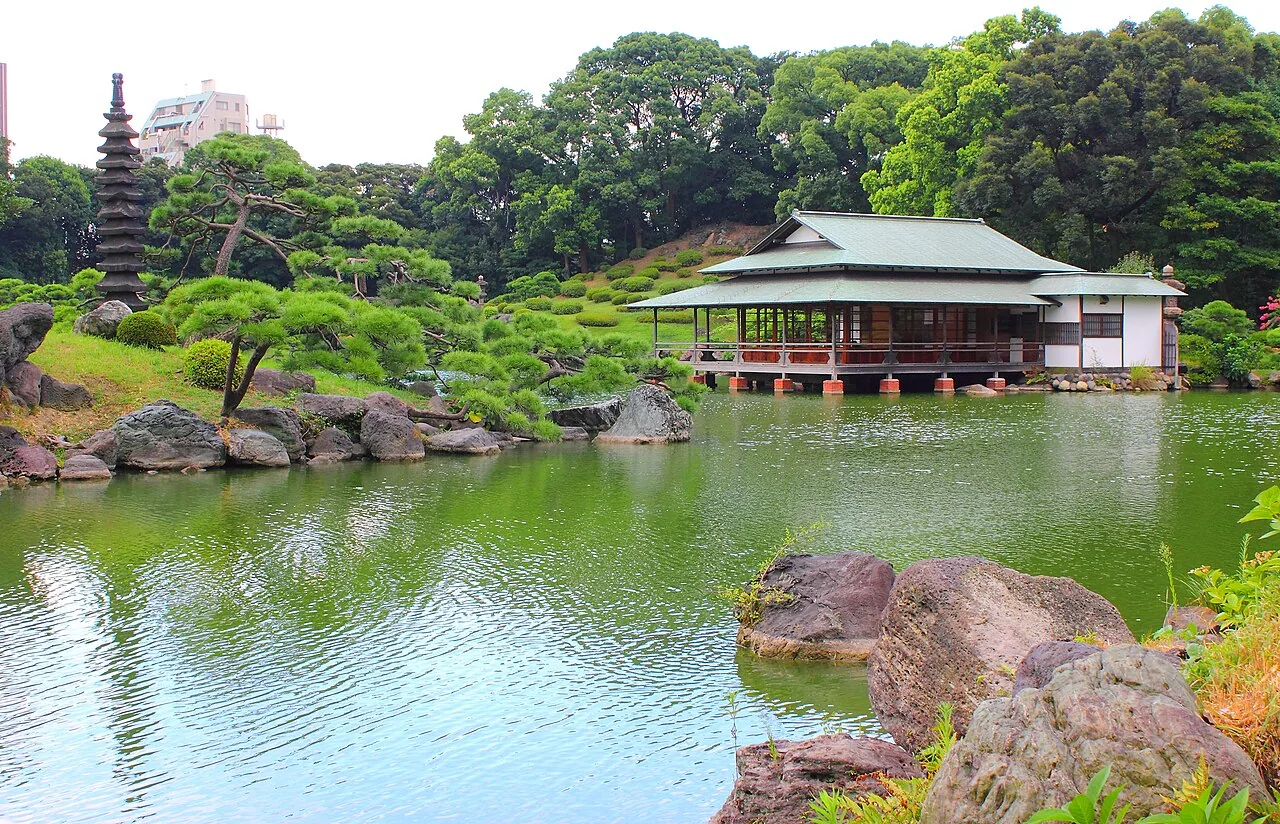
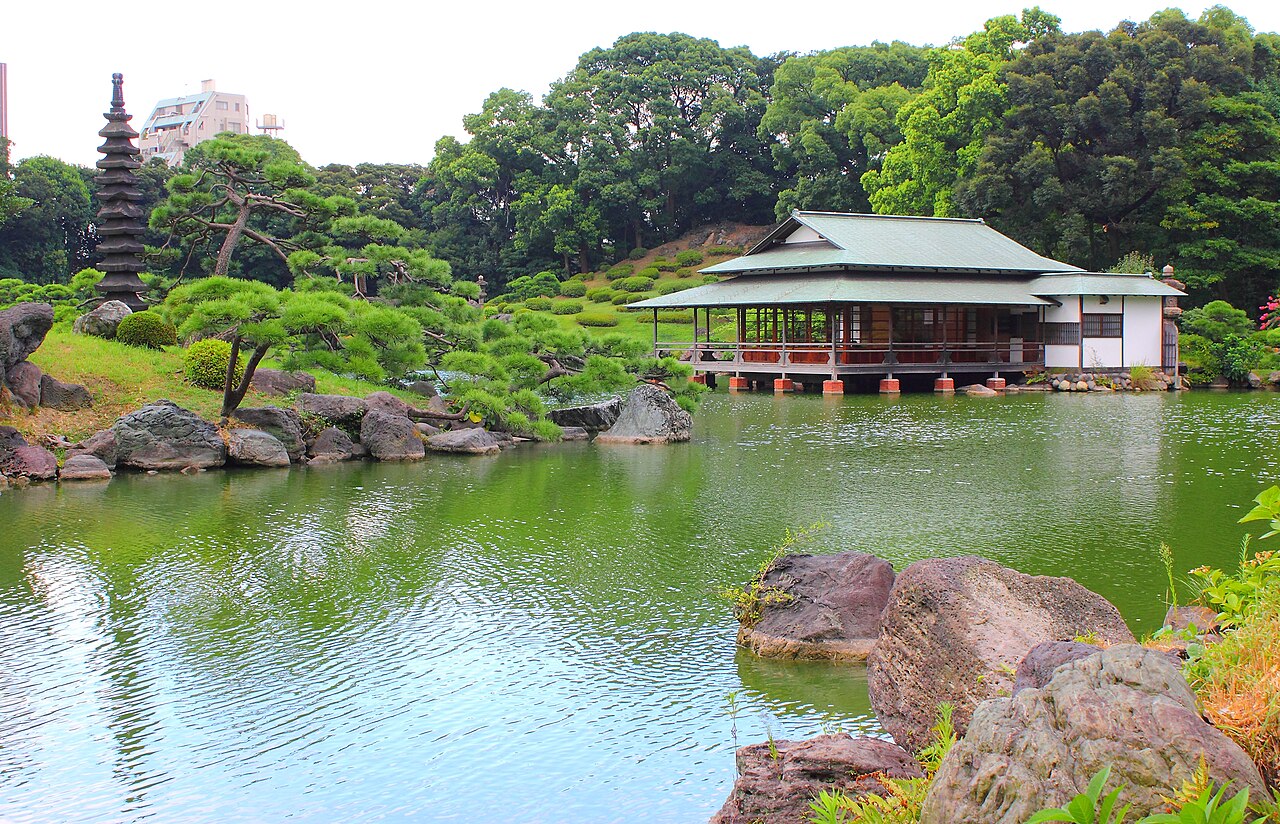
    Kiyosumi Garden pond with stepping stones and pine trees, Koto City, Tokyo
    Kiyosumi Garden, ¥150 at the gate. Photo: Kakidai / Wikimedia Commons, CC BY-SA 4.0.

    A morning here, in order

    1. Kiyosumi Garden, 9:00. Come out of Kiyosumi-Shirakawa Station (Hanzomon or Oedo line) exit A3 and the wall of the garden is in front of you. ¥150 for adults, ¥70 over 65, free for children; open 9:00 to 17:00, last entry 16:30, closed only December 29 to January 1. It was built in the 1880s by Iwasaki Yataro, the founder of Mitsubishi, who had famous stones shipped from all over Japan on his own boats and set them around a pond you cross on stepping stones. Turtles, herons, carp, and at 9:00 almost nobody. Give it forty-five minutes.
    2. Coffee, 10:00. The roasters are scattered along Kiyosumi-dori and the side streets to the east. Allpress Espresso is in a converted timber warehouse on the far side of the garden and is the one that photographs best; ARiSE Coffee Roasters is a counter with a few stools run by a man who roasts in the back; Blue Bottle‘s original Japan shop is on Hirano 1-chome and is a Blue Bottle. Pick one. The pastry-and-latte breakfast will cost ¥1,200 to ¥1,800 wherever you go.
    3. Fukagawa Edo Museum, 11:00. Three minutes from the garden. Inside a hangar they rebuilt a full-size block of 1840s Fukagawa: tenement houses, a rice shop, a boat landing, a fire tower, with the lighting cycling from dawn to night every twenty minutes and a rooster crowing on a loop. You can go into the houses and sit on the floor. ¥400 for adults, ¥50 for children. Volunteer guides in English usually on hand and worth accepting. One hour. Full guide to the museum →
    4. Lunch: fukagawa-meshi. The dish this district is named for is clams in miso ladled over rice, invented for fishermen who did not have time to sit down. Several places around the museum serve it for ¥1,000 to ¥1,500; the one facing the museum entrance is fine.
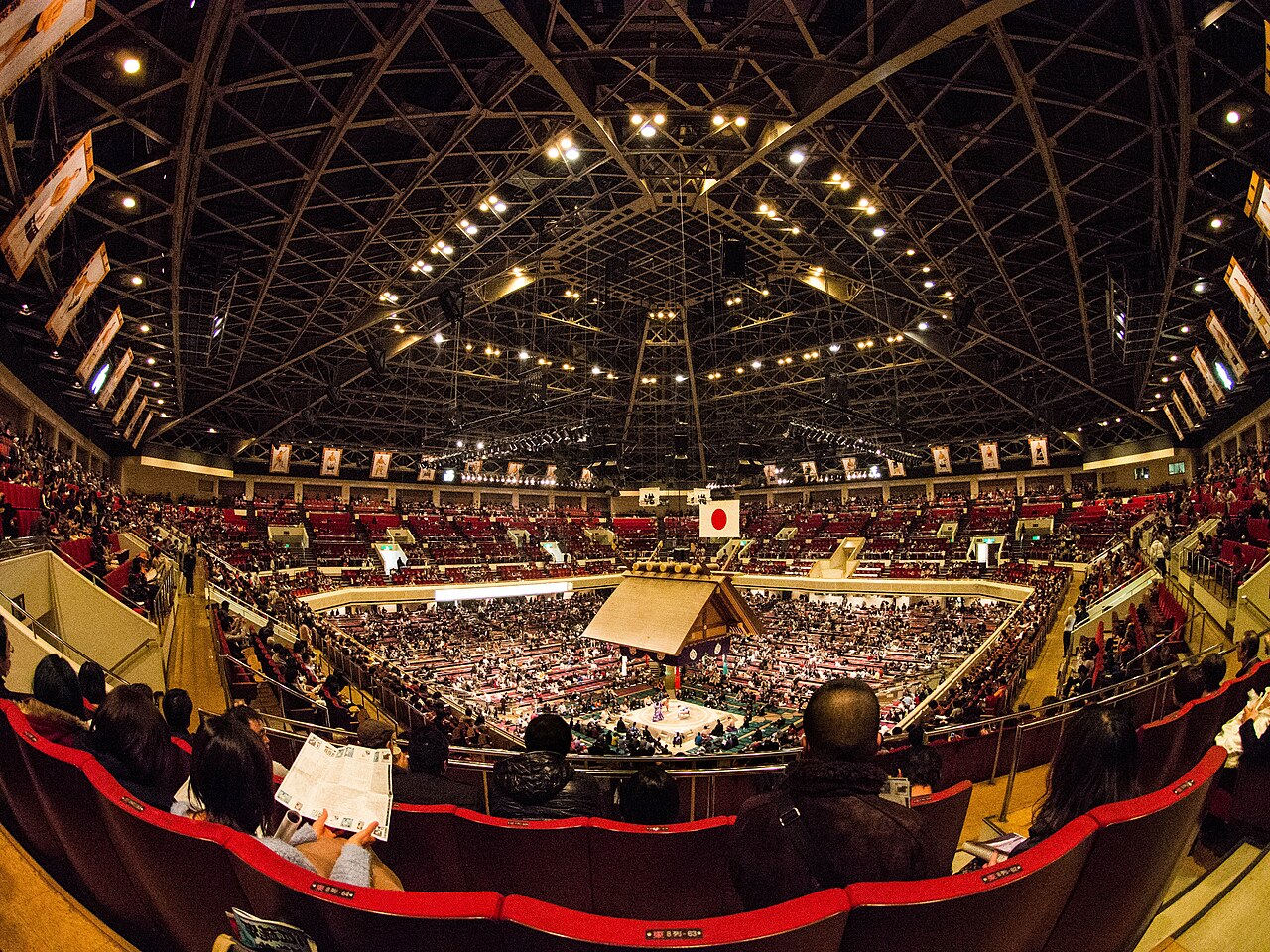
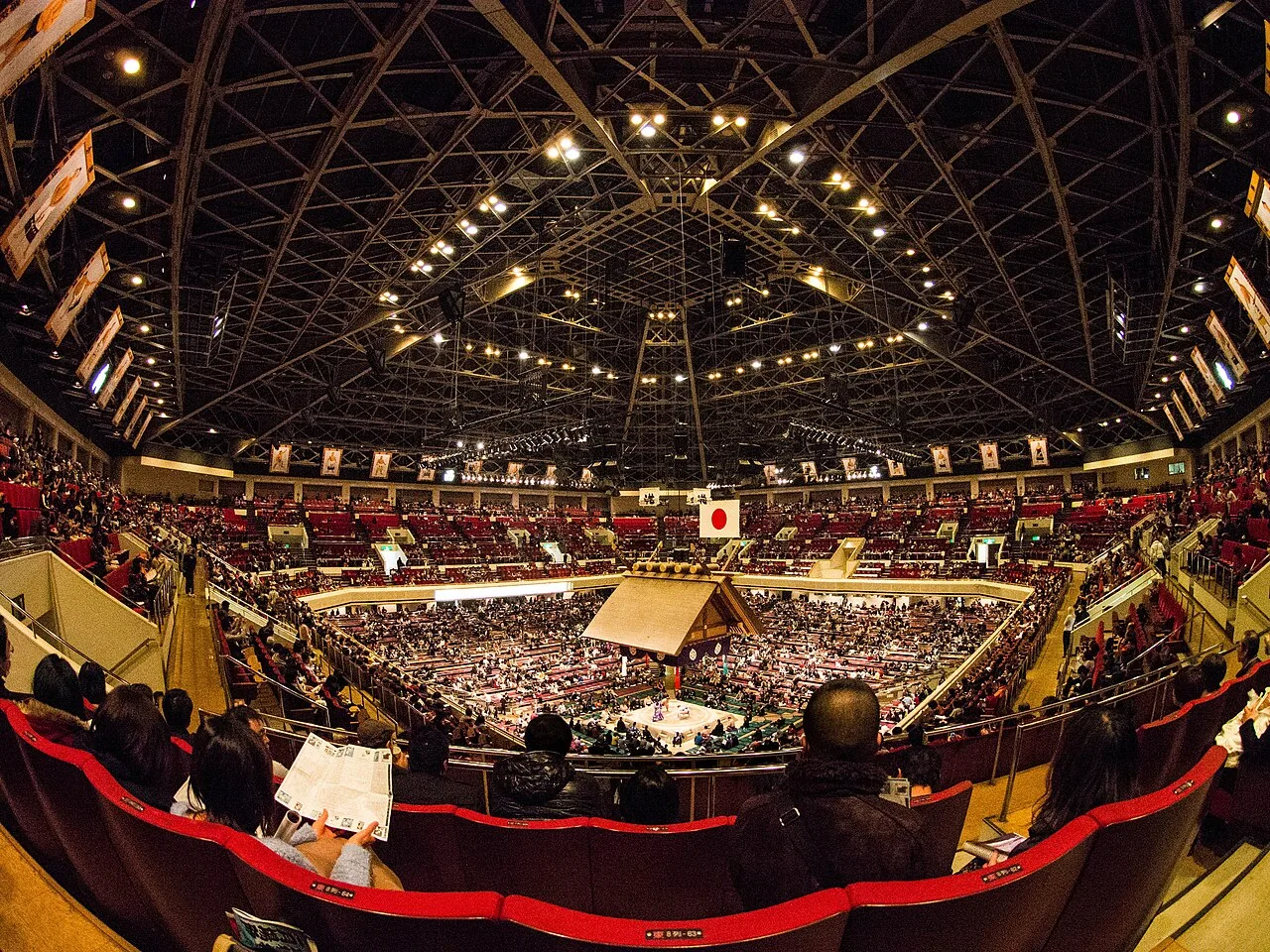
    5. Fukagawa Fudo-do, 13:00. Fifteen minutes’ walk south, or one stop to Monzen-Nakacho. This is a branch of Narita-san, and five times a day, at 9:00, 11:00, 13:00, 15:00 and 17:00, the monks perform goma: a fire lit in the main hall, sutras chanted over four large taiko drums, loud enough to feel in your chest. Watching is free and you can sit in the hall; nobody minds foreigners as long as you are quiet and do not photograph the ritual itself. Twenty-five minutes. Tomioka Hachimangu, the shrine that started professional sumo’s Edo tournaments, is next door and also free. Sumo is still the thing this ward is best at selling badly: the nine ways to see it in Tokyo, compared, including which ones let you into the ring and which run a lottery for it.
    6. Museum of Contemporary Art Tokyo, afternoon, if you have energy left. Twenty minutes’ walk east through Kiba Park. The permanent collection is ¥500 and is the best-value contemporary art ticket in the city; closed Mondays.

    Total spend for the day without the art museum: about ¥550 in admissions plus what you eat. This is a neighborhood where paying for a guide is a choice, not a necessity.

    When to come, and when not to

    • Weekday mornings are the neighborhood at its best. Saturday afternoon the coffee shops have queues down the street, mostly of Tokyo people, which is its own kind of interesting but not quiet.
    • Monday: MOT is closed every Monday; the Fukagawa Edo Museum closes on the second and fourth Monday of the month (it stays open when that Monday is a holiday). The garden and the temple are open every day.
    • Mid-August, every third year: the full Fukagawa Hachiman Festival, when spectators throw buckets of water over fifty portable shrines. 2026 was a full year; the next is 2029. The smaller annual version is still worth seeing.
    • Early November: the garden’s maples turn, and the garden runs evening openings. Late March for cherry blossom in Kiba Park.

    Two guided versions, and what they really cost

    Both of these exist on Viator and both are honest products. Read the price notes, because one of them is not what the headline number suggests.

    • Kiyosumi Shirakawa Morning Tour: Garden, Coffee and Japanese Sweets (Viator): three hours from 9:00, starting at the garden gate, then Allpress for coffee and a light breakfast, then a Japanese sweet, with a guide who lives here. Around ¥10,000, garden admission and the coffee included. It is the route above with the stories told and someone to order for you; good if you are on your first days in Japan and would like the neighborhood explained rather than found. New listing, a handful of five-star reviews.
    • Coffee Omakase at KOFFEE MAMEYA Kakeru + Kiyosumi Garden (Viator): this is a reserved seat at Kakeru, the tasting-menu coffee bar in a Kiyosumi warehouse where a barista serves a course of coffees the way a sushi chef serves a course of fish, followed by a walk to the garden. The Viator price of about ¥4,500 covers the seat reservation and the garden ticket; the coffee course itself, ¥8,500 to ¥10,000, is paid at the bar on the day. So the real cost is ¥13,000 to ¥14,500 per person. For a coffee person, Kakeru is one of the two or three places in Tokyo worth that; for everyone else, it is a lot of money for coffee, and the seat is also bookable directly from the shop if you plan ahead.

    Where this joins the rest of the east side

    Kiyosumi-Shirakawa sits at the top of the canal network that runs down through Koto City. The Onagi River and its old boat checkpoint are a thirty-minute walk east along the water; the ¥100 boat park on the Yokojukken is a little beyond it. North across the Sumida is Ryogoku and the Kokugikan. The Edo Kiriko glass workshop is two stations north on the Oedo line, and the tattoo-friendly sento are across the river in Sumida.

    The rest of the ward, in order, is in Things to Do in Koto City: 12 Places.

    Quick answers

    How much does Kiyosumi Garden cost and when is it open?

    Adults ¥150, over 65 ¥70, children free. Open 9:00 to 17:00 with last entry at 16:30, every day except December 29 to January 1. It is directly outside exit A3 of Kiyosumi-Shirakawa Station.

    Is Kiyosumi-Shirakawa worth visiting for coffee?

    Yes, on a weekday. Allpress Espresso, ARiSE Coffee Roasters and the original Blue Bottle Japan shop are all within ten minutes of the station, and a coffee and pastry costs ¥1,200 to ¥1,800. Saturday afternoons have long queues.

    What is the Fukagawa Edo Museum and how much is it?

    A full-size reconstruction of an 1840s Fukagawa street inside a hall, with houses you can enter and lighting that cycles from dawn to night. ¥400 for adults, ¥50 for children; closed the second and fourth Monday of the month. Three minutes from Kiyosumi Garden.

    Can visitors watch the fire ritual at Fukagawa Fudo-do?

    Yes, free. The goma fire ritual with taiko drums is held daily at 9:00, 11:00, 13:00, 15:00 and 17:00 in the main hall. Sit quietly and do not photograph the ritual. The temple is a fifteen-minute walk south of Kiyosumi-Shirakawa or next to Monzen-Nakacho Station.

    Do I need a guided tour for Kiyosumi-Shirakawa?

    No. Everything is walkable and signposted, and the whole morning costs about ¥550 in admissions. A guided morning tour costs around ¥10,000 and is useful mainly on your first days in Japan. The coffee omakase tour lists at about ¥4,500 but the coffee course, ¥8,500 to ¥10,000, is paid separately at the bar.


    Practical notes

    • Getting there: Kiyosumi-Shirakawa Station, Hanzomon line (from Shibuya, Omotesando, Otemachi) or Oedo line (from Ryogoku, Tsukishima). Exit A3 for the garden, B2 for the coffee streets.
    • Admissions: Kiyosumi Garden ¥150 / Fukagawa Edo Museum ¥400 / Fukagawa Fudo-do free / Tomioka Hachimangu free / MOT collection ¥500.
    • Cash: the garden gate and the museum take cards now; some of the smaller roasters and the fukagawa-meshi places do not. Carry ¥5,000.
    • Closed days: MOT every Monday; Fukagawa Edo Museum second and fourth Monday; garden and temples never, except the New Year holiday.
    • With kids: the Edo Museum is the best thing in the district for children; the garden’s stepping stones are the second best. Kiba Park has a large playground.

    LOCAL SIDE JAPAN checked garden and museum prices and hours against the Tokyo Metropolitan Park Association, Koto City Cultural Community Foundation and Fukagawa Fudo-do’s public information, and the tour prices and inclusions on Viator, on September 18, 2026. Prices are approximate and change with the exchange rate. Nothing here was provided free by an operator.
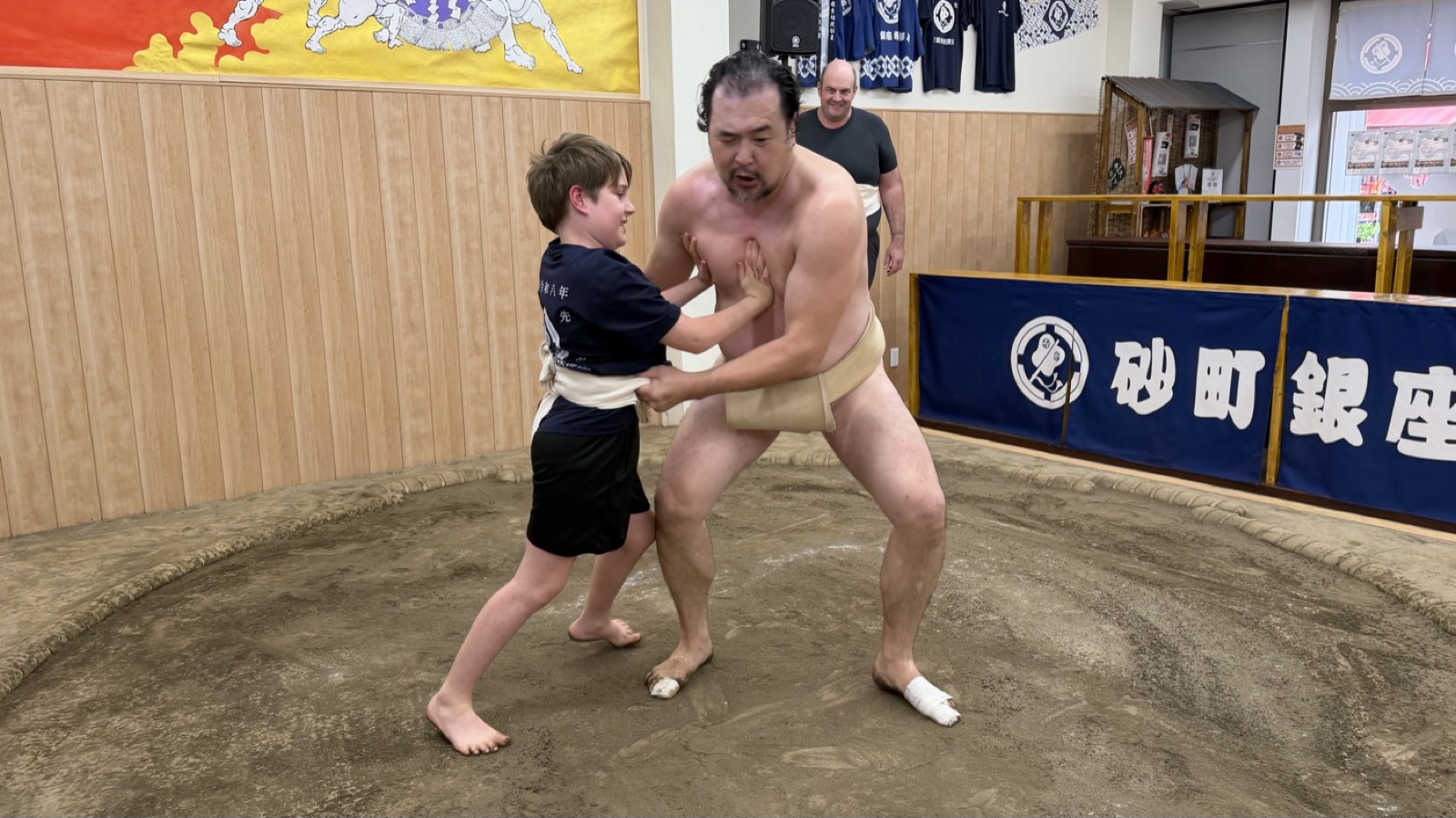
    Written by Kizuku. I run the Sunamachi Ginza Sumo Stable, a sumo experience in Koto City, and I write about the east side of Tokyo I live and work in. More about this site →

  • Sumida River on Foot: From Skytree to Senso-ji the Slow Way

    Sumida River on Foot: From Skytree to Senso-ji the Slow Way

    This article contains affiliate links to booking sites. If you book through them, LOCAL SIDE JAPAN earns a small commission at no extra cost to you. The walk itself is free and is described in full. How this site is made →

    TOKYO / SUMIDA & TAITO / THE RIVER

    Most people do the Skytree and Senso-ji as two separate stops joined by a train. They are 1.5 kilometers apart with a river in between, and the river is the best part. This is the walk from the base of the tower to the temple gate along the Sumida, on the east bank going north and the west bank coming back if you want it, past two shrines nobody visits, a bridge shaped like an X, and the cherry trees a shogun planted three hundred years ago to give the townspeople somewhere to go. It takes an hour if you walk and a morning if you do it properly.

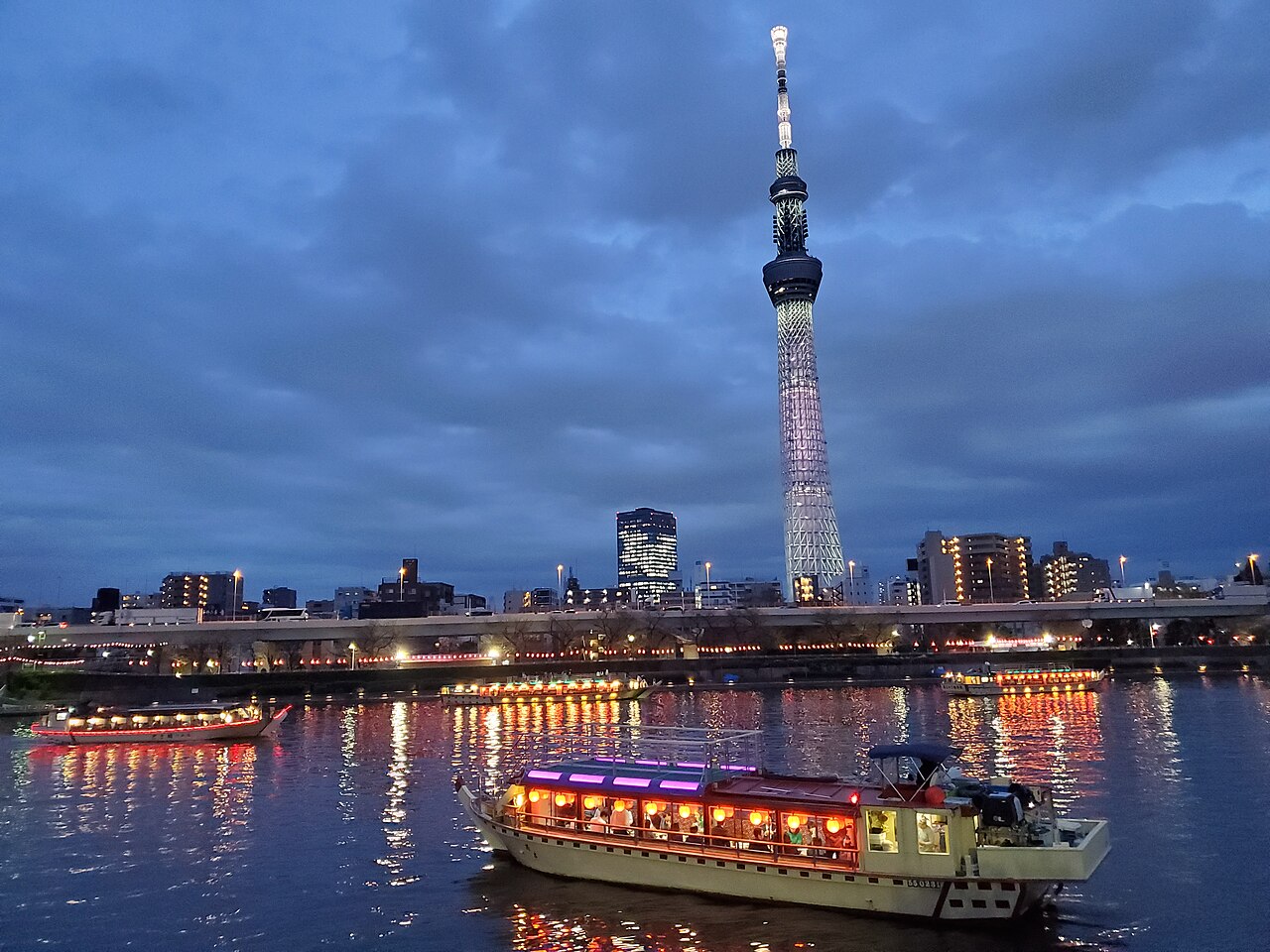
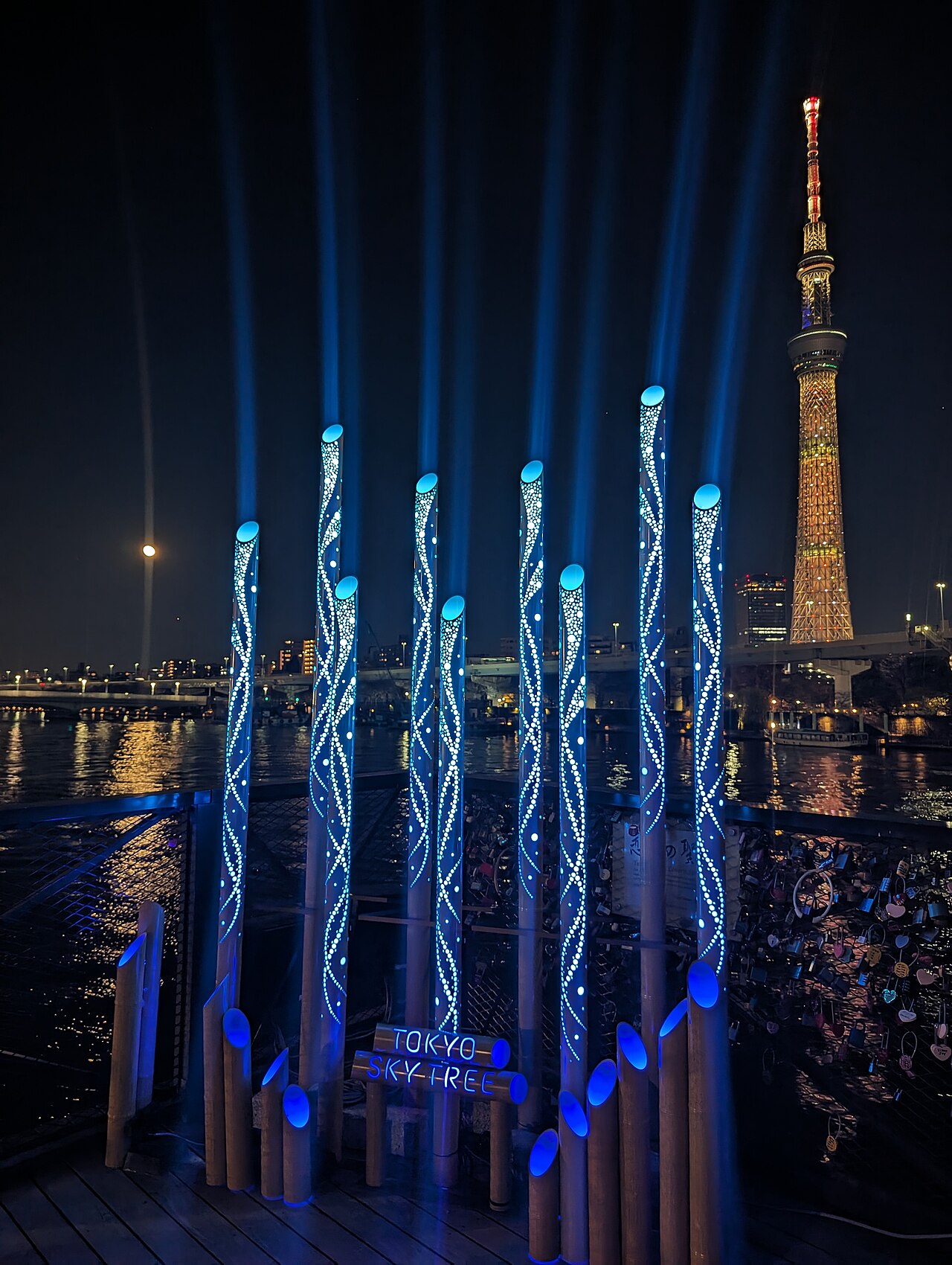
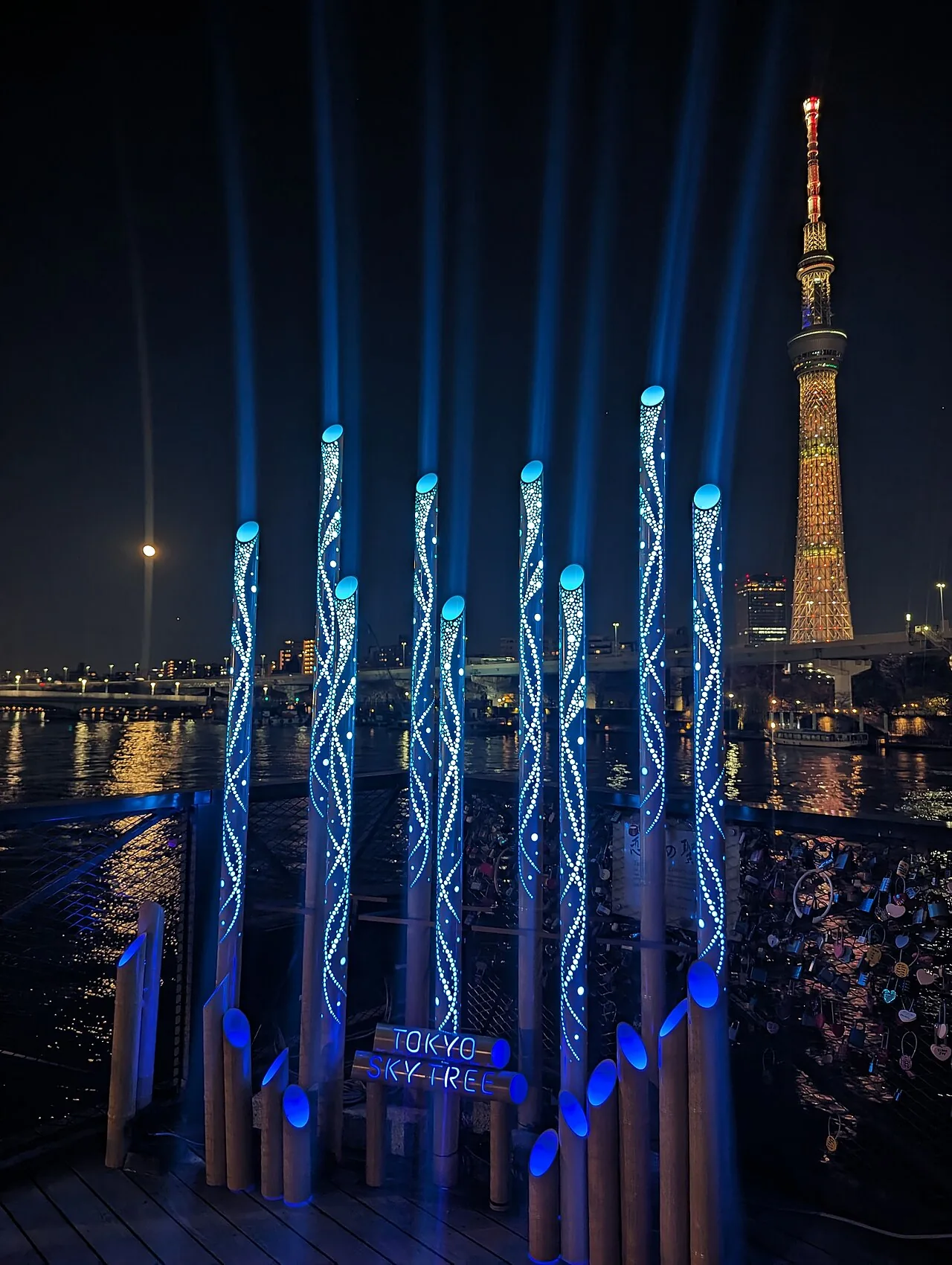
    Sumida River Walk pedestrian bridge at night with Tokyo Skytree behind
    The Sumida River Walk, under the railway bridge, at night. Photo: Justin Ormont / Wikimedia Commons, CC BY-SA 4.0.

    Fast facts

    • Cost: ¥0. The route is public and signposted; the shrines are free.
    • Distance: About 3 km using both banks.
    • Time: 60–90 minutes walking, a morning if you stop.
    • Start: Oshiage / Tokyo Skytree Station. End: Asakusa Station.
    • Best time: 07:00–09:00 or dusk. Avoid the last Saturday of July unless you are there for the fireworks.
    • Booking: none needed. Guided versions exist at about ¥6,600–¥7,500.

    Can you walk from Tokyo Skytree to Senso-ji?

    Yes, and it is the best free hour in east Tokyo. It is about three kilometres from the foot of the tower to the temple gate, 60 to 90 minutes at a walking pace, entirely on public paths, and signposted most of the way. You cross the Sumida River on a pedestrian deck bolted to the side of a railway bridge, and the tower is behind you the whole way.

    Almost everybody takes the train instead, which is one stop and takes four minutes. The train is the mistake. The walk is the part of Tokyo the two attractions are standing in, and it costs nothing.

    What is the Sumida River walk route?

    1. Start under the Skytree (Oshiage or Tokyo Skytree Station). You can ride back down this same river afterwards for ¥1,000 on the water bus from Asakusa, or see the district from a rickshaw or a ¥2,000 guided walk. Do not go up the tower; that is a different day, and when you do, buy the ticket from the official site — the marketplaces charge up to twice as much, and there is a free lift hall in Sumida City Office that looks straight at it. Walk west along the Kitajukken River, the narrow canal at the tower’s foot, on the path called Tokyo Mizumachi: a row of small shops and cafés built into the railway arches. Five minutes.
    2. Sumida River Walk. Where the canal meets the river, a pedestrian deck hangs off the side of the Tobu railway bridge. It opened in 2020 and is the only place you can cross the Sumida with trains passing a few meters above your head and the Skytree filling the sky behind you. Cross it, look back, and cross back; it is short and the view is the point.
    3. Sumida Park, east side. Stay on the Sumida ward bank and walk north. This stretch of park is the quiet one. The cherry trees along here descend from the ones the eighth shogun, Yoshimune, had planted in the 1710s so that ordinary Edo people would have a place for outings; it is one of the oldest deliberate public parks in the city.
    4. Ushijima Shrine, set back from the river in the park. A shrine with a bronze cow you stroke to cure whatever hurts (rub the cow’s leg, then your own). The three-legged torii, with a small extra gate on each side, is unusual enough that people who know shrines come here just to see it. Free, always open.
    5. Sakurabashi, the X-shaped footbridge further north, built for pedestrians only in 1985 to join the two halves of the park. Cross it to the Taito side. At cherry blossom time this is the most crowded 200 meters in east Tokyo; the rest of the year it is a bridge with a good view of the tower.
    6. Sumida Park, west side, walking south now toward Asakusa. This is the busier bank, with the river terrace at water level, the boat pier, and the golden flame on the Asahi building across the water. Come off the terrace at Azumabashi, the red bridge, and you are two minutes from Kaminarimon.
    7. Senso-ji, if you have not been. If you have, walk instead to Imado Shrine a few minutes north, which claims to be the home of the beckoning cat and is where locals come to pray for a partner.

    Total: about 3 kilometers, 60 to 90 minutes without stops. Everything is free. There are public toilets in both halves of the park and convenience stores at both ends.

    When is the best time to walk the Sumida River?

    • Early morning, 7:00 to 9:00, any season: joggers, dog walkers, a man doing tai chi, and the tower with the sun behind it. The Mizumachi cafés open around 8:00 or 9:00.
    • Dusk: the tower lights come on, the yakatabune boats start leaving Azumabashi with their lanterns lit, and the river terrace fills with people who live here. Bring a can from the convenience store; drinking on the terrace is normal.
    • Late March: the cherry blossom on both banks is the reason the park exists. Expect the crowds that come with that.
    • Last Saturday of July: the Sumida River Fireworks, seen by around a million people. Not a walk that day; a standing event.

    Do I need a guide for the Sumida River walk?

    You do not need a guide for this walk. Two exist that follow roughly the same water, and both are cheap enough to be reasonable if you would rather have someone explain the shrines than read about them:

    If you would rather be on the water than beside it, the public water bus runs from the pier at Azumabashi down to Hinode and Odaiba for the price of a train ticket, and the evening version of the river is the yakatabune dinner boat, which leaves from the same pier.

    Where this joins the rest of the east side

    From the Skytree end, Daikokuyu is ten minutes’ walk for a bath afterwards and Kyojima twenty. From the Asakusa end, Kappabashi is fifteen minutes west and the workshops in the streets behind Senso-ji are right there, along with the kimono rental shops, compared by what each price includes. Further up the same river, past where this walk ends, is the kilometer-long apartment wall built to stop fire, which is what the Sumida bank looks like when nobody is trying to make it pretty.

    The rest of the ward, in order, is in Things to Do in Sumida Beyond the Skytree: 10 Places.

    Quick answers

    How far is the walk from Tokyo Skytree to Senso-ji?

    About 1.5 kilometers direct, or around 3 kilometers if you follow the river through both halves of Sumida Park and cross at Sakurabashi. Allow 60 to 90 minutes without stops. The route is flat and free.

    What is the Sumida River Walk?

    A pedestrian deck attached to the Tobu railway bridge between Tokyo Skytree and Asakusa, opened in 2020. It lets you cross the Sumida River on foot with trains passing overhead and a full view of the Skytree, and connects to Tokyo Mizumachi, the shops built under the railway arches.

    Is Sumida Park worth visiting outside cherry blossom season?

    Yes. The east bank is quiet year-round, with Ushijima Shrine and its bronze cow, and the west bank has the river terrace with views of the Skytree and the Asahi building. Early morning and dusk are the best times.

    Do I need a tour to walk the Sumida River?

    No. The route is signposted and entirely public. Guided options exist for around ¥6,600 to ¥7,500 if you want the shrines and Senso-ji explained, but the walk itself needs no booking.


    Practical notes

    • Start: Oshiage / Tokyo Skytree Station. End: Asakusa Station. About 3 km via both banks, 60–90 minutes.
    • Cost: ¥0. Shrines free. Cafés at Mizumachi from about ¥500.
    • Best time: 7:00–9:00 or dusk. Avoid the last Saturday of July unless you are there for the fireworks.
    • Worth booking: only if you want the shrines and the temple explained; both guided walks are under ¥8,000.

    LOCAL SIDE JAPAN checked the Sumida River Walk, Mizumachi and Sumida Park details against Tobu Railway’s and Sumida City’s public information on September 18, 2026. Tour prices are from the booking sites on that date.

    Written by Kizuku. I run the Sunamachi Ginza Sumo Stable, a sumo experience in Koto City, and I write about the east side of Tokyo I live and work in. More about this site →

  • Shibamata: The Last Old Town Before Tokyo Runs Out

    Shibamata: The Last Old Town Before Tokyo Runs Out

    This article contains one affiliate link to a booking site. If you book through it, LOCAL SIDE JAPAN earns a small commission at no extra cost to you. Everything else in Shibamata costs between ¥0 and ¥500 and needs no booking. How this site is made →

    TOKYO / KATSUSHIKA CITY / SHIBAMATA

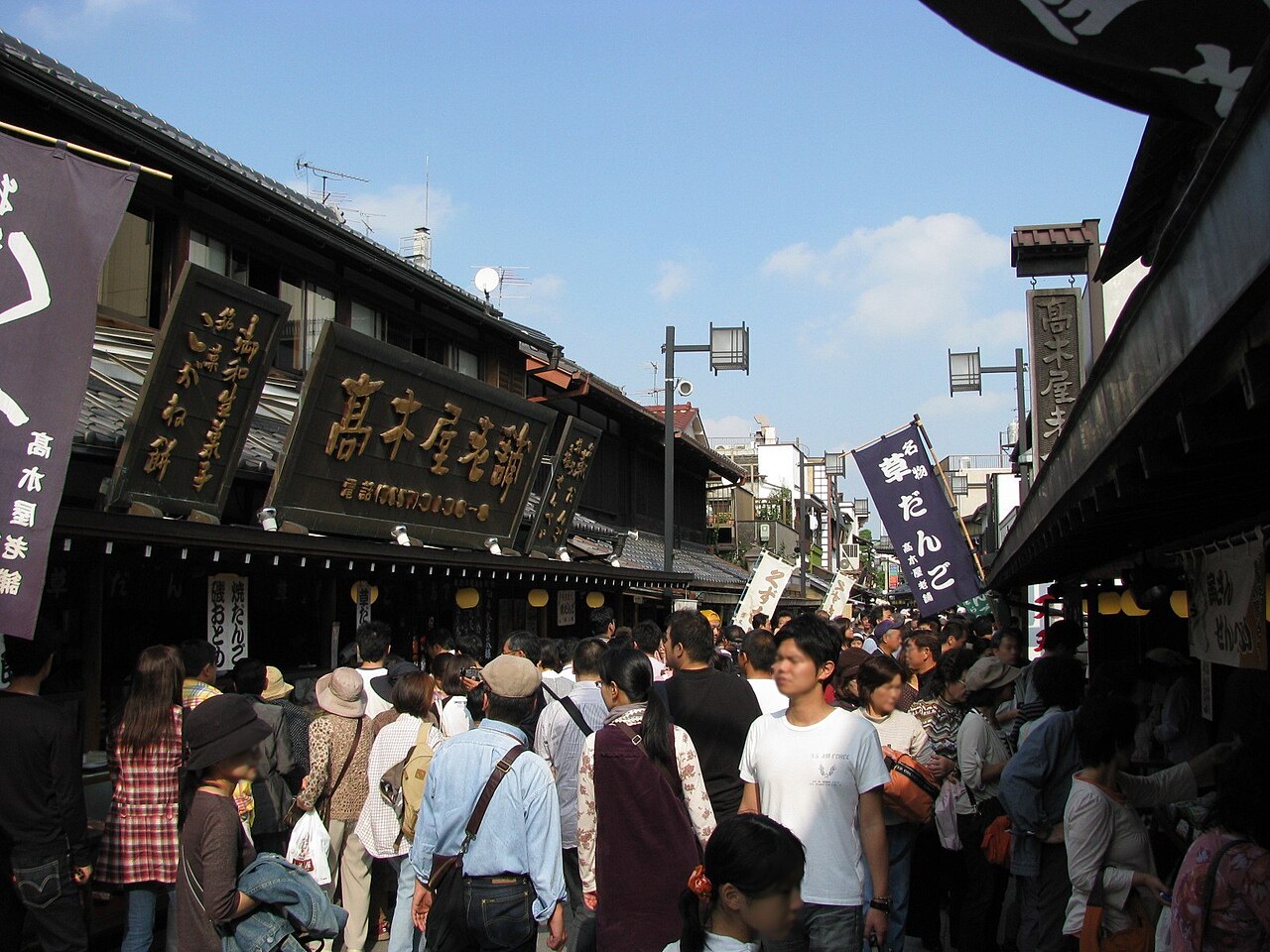
    Shibamata is the last stop before Tokyo runs out. It sits on the Edo River, the border with Chiba, at the end of a two-station branch line that most Tokyo residents have never ridden. There is a temple whose walls are carved like a wooden Bible, a 200-meter street of rice-cracker and sweet-dumpling shops that has not changed its shopfronts in decades, a ferry that has been rowing people across the river since the 1600s, and a museum devoted to a fictional travelling salesman who is the most beloved character in Japanese cinema. It is the most complete old-Tokyo town left inside the city limits, and on a weekday you will share it with pensioners.

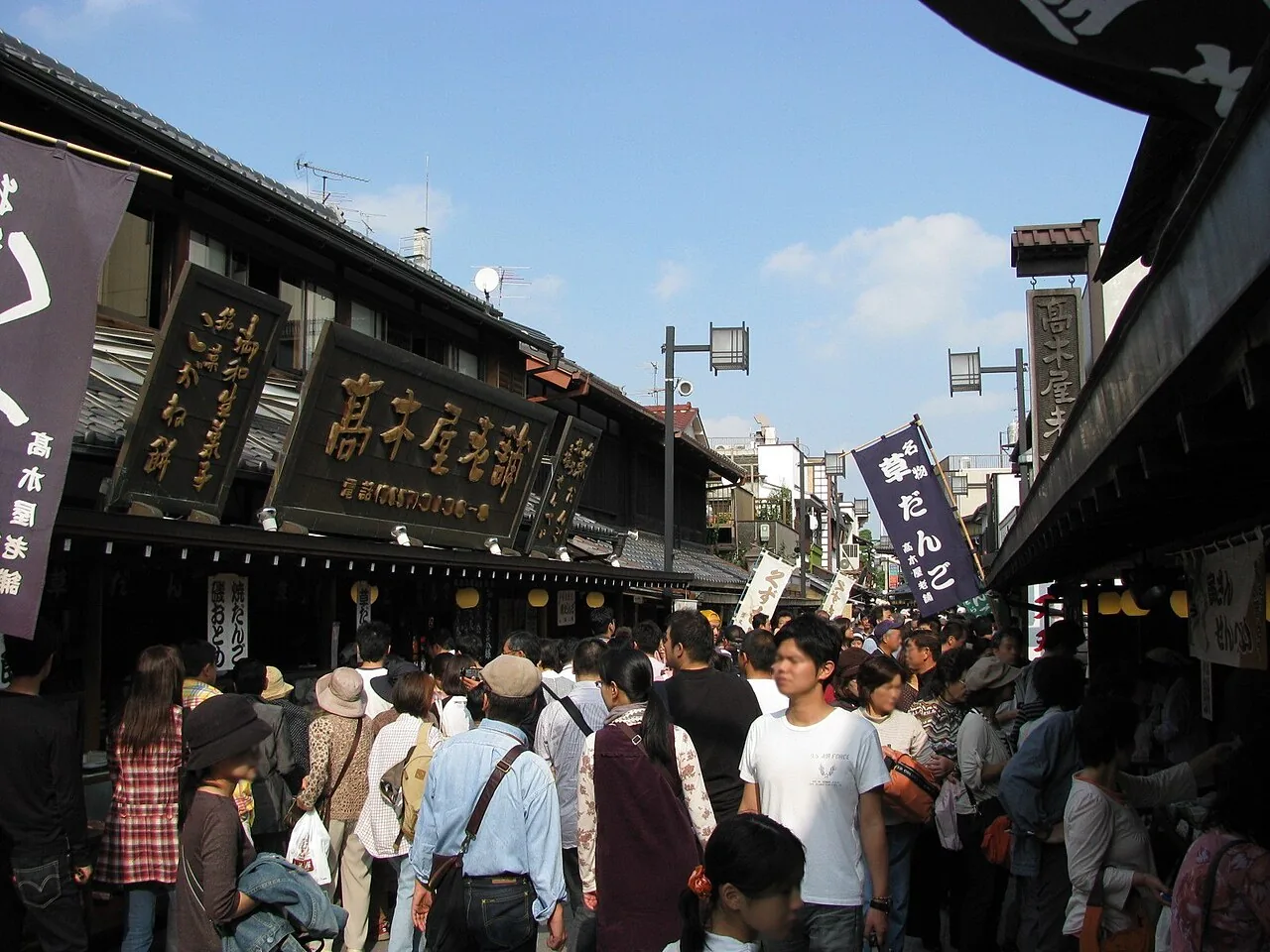
    The Taishakuten sando shopping street in Shibamata, Tokyo
    Taishakuten Sando, the street from the station to the temple. Photo: Aimaimyi / Wikimedia Commons, CC BY-SA 3.0.

    Getting there is half the point

    Take the Keisei line to Keisei-Takasago (from Asakusa or Ueno, about 20 minutes on the Keisei Oshiage or Main Line; from Narita, it is on the way in). Change to the Kanamachi Line, a two-carriage shuttle that runs between three stations, and get off at Shibamata, the middle one. The station opened in 1912 and the platform has not been improved much since. Outside, a bronze statue of Tora-san, hat and suitcase, is looking back at the town as if he is about to leave it again. Everyone photographs it. Do it now and get it over with.

    The loop (about three hours, mostly free)

    1. Taishakuten Sando, the 200-meter street from the station to the temple gate. Rice crackers grilled on the spot, kusa dango (mugwort dumplings with sweet bean paste, the local specialty), sweet-potato sweets, and a couple of old restaurants serving eel and carp. Shops open around 9:00 or 10:00. Eat your way down slowly; the whole street is a five-minute walk if you do not stop, and you will stop.
    2. Shibamata Taishakuten (Daikyo-ji), the temple at the end. The grounds and the main hall are free. Pay ¥400 for the two things worth paying for: the sculpture gallery, where the outer walls of the inner hall are carved, panel after panel, with scenes from the Lotus Sutra by ten master carvers between 1922 and 1934, and the Suikei-en garden, which you view from a covered wooden walkway. Hours 9:00–17:00 (to 18:00 on weekends and holidays).
    3. Yamamoto-tei, a few minutes past the temple: a 1920s merchant’s house that mixes a Japanese garden with a Western-style reception room, and serves tea looking onto the garden. Small entry fee. The most restful half hour in eastern Tokyo.
    4. Tora-san Museum and Yamada Yoji Museum, on the embankment side. ¥500 for both, 9:00–17:00, closed the third Tuesday of the month. See below for whether you should go in.
    5. Yagiri no Watashi, the ferry. Walk up onto the Edo River embankment behind the museum. A man in a wooden rowing boat takes you to the Chiba side and back for ¥200 each way. There is no timetable; he goes when there are enough people, and not at all in bad weather. It has been operating since the early Edo period and it is the last of Tokyo’s river crossings still worked by oar.

    Who is Tora-san, and should you care

    Between 1969 and 1995, director Yoji Yamada made 48 films about the same man: Torajiro Kuruma, a good-hearted, hopeless, itinerant peddler who comes home to his family’s dumpling shop in Shibamata, falls in love with a woman who does not love him back, and leaves again. Every film. For 26 years. It is the longest film series with a single actor in the world, and in Japan Tora-san is closer to a relative than a character. The dumpling shop in the films is on this street; the family’s house is the museum.

    Should you go in the museum if you have never seen a film? Honestly, yes, for ¥500: it recreates the shop set, the trains he rode, and the town as it was in 1969, and the point is not the man but the Japan he kept coming back to. Twenty minutes is enough. If you have seen the films, you will be there an hour.

    When to go

    • Weekday morning, arriving by 10:00. The street is quiet, the crackers are fresh, and the ferry has fewer people waiting.
    • Temple fair days: Taishakuten holds a fair on days with an 8 in them (the 8th, 18th, 28th). Stalls, crowds, more life; also more people. Good if you want the festival version.
    • Skip: a rainy day, because the ferry will not run and the ferry is a third of the reason to come.

    If you want it explained

    Shibamata rewards knowing the stories, and there is only one bookable walk that covers it: Shibamata: Old Town Walk and Temple Culture (Viator), 90 minutes with a guide for around ¥13,500 per person, price varying by group size. That is expensive for a small town, and everything above can be done alone with this article in your pocket. Book it only if you are here for the films and want someone who can tell you which corner each scene was shot on. Otherwise spend the ¥13,500 on lunch and crackers and give the change to the ferryman.

    On the way back

    Shibamata is the far north-east corner of the city; it pairs naturally with the rest of the east side on the way home. Keisei-Takasago to Oshiage is fifteen minutes, which puts you at Daikokuyu for a bath before dinner, or at Kyojima for a second, smaller shopping street that nobody has made a film about.

    Quick answers

    How do I get to Shibamata from central Tokyo?

    Take the Keisei line to Keisei-Takasago (about 20 minutes from Asakusa or Ueno), change to the two-carriage Kanamachi Line, and get off at Shibamata, the middle of its three stations. The temple street starts outside the station.

    How much does Shibamata Taishakuten cost?

    The temple grounds and main hall are free. The carved sculpture gallery and Suikei-en garden cost ¥400 together. Hours are 9:00–17:00 on weekdays and 9:00–18:00 on weekends and holidays.

    How much is the Yagiri no Watashi ferry?

    ¥200 per adult and ¥100 per child each way, cash. There is no timetable: the boatman leaves when enough passengers have gathered, and does not run in bad weather. The landing is about ten minutes’ walk from Shibamata Station, on the Edo River embankment beyond the temple.

    Is the Tora-san Museum worth visiting?

    For ¥500 (which also covers the Yamada Yoji Museum), yes, even if you have never seen the films: it recreates the family dumpling shop and 1969 Shibamata. It is open 9:00–17:00 and closed on the third Tuesday of each month.


    Practical notes

    • Get there: Keisei to Keisei-Takasago, change to the Kanamachi Line, one stop to Shibamata.
    • Costs: street and temple grounds free; sculpture gallery and garden ¥400; Tora-san and Yamada museums ¥500; ferry ¥200 each way. Cash for all of it.
    • Hours: temple 9:00–17:00 (18:00 weekends); museums 9:00–17:00, closed 3rd Tuesday; shops from about 9:00–10:00.
    • Time: three hours for everything, four with lunch. Weekday morning is best; fair days are the 8th, 18th and 28th.
    • Worth booking: only the guided walk, and only if the films matter to you.

    LOCAL SIDE JAPAN checked temple and museum admissions, hours and closing days against the Tokyo Convention & Visitors Bureau’s official listings (GO TOKYO) and the ferry fare against current visitor reports on September 15, 2026. Fares and hours may change; the ferry is weather-dependent.

    Written by Kizuku. I run the Sunamachi Ginza Sumo Stable, a sumo experience in Koto City, and I write about the east side of Tokyo I live and work in. More about this site →

  • Yakatabune: Tokyo’s 400-Year-Old Dinner Boat, and the Two Ways to Book It

    Yakatabune: Tokyo’s 400-Year-Old Dinner Boat, and the Two Ways to Book It

    This article contains affiliate links to booking sites. If you book through them, LOCAL SIDE JAPAN earns a small commission at no extra cost to you. Booking directly with the boat operator, described first, pays us nothing. How this site is made →

    TOKYO / SUMIDA RIVER / ASAKUSA TO ODAIBA

    A yakatabune is a flat, lantern-hung wooden boat with tatami inside, and for four hundred years it has been how Edo, then Tokyo, went out on the river to eat. The boats are still run by family companies, several of them from the same riverbank districts they started in. You board in Asakusa at dusk, eat tempura fried on the boat while the Skytree goes past, sit under the Rainbow Bridge for half an hour with the lights of Odaiba, and come back. It is one of the few things in Tokyo that is both genuinely old and genuinely fun.

    It is also confusing to book, because the same evening is sold three different ways at three different prices. Here is how it actually works.

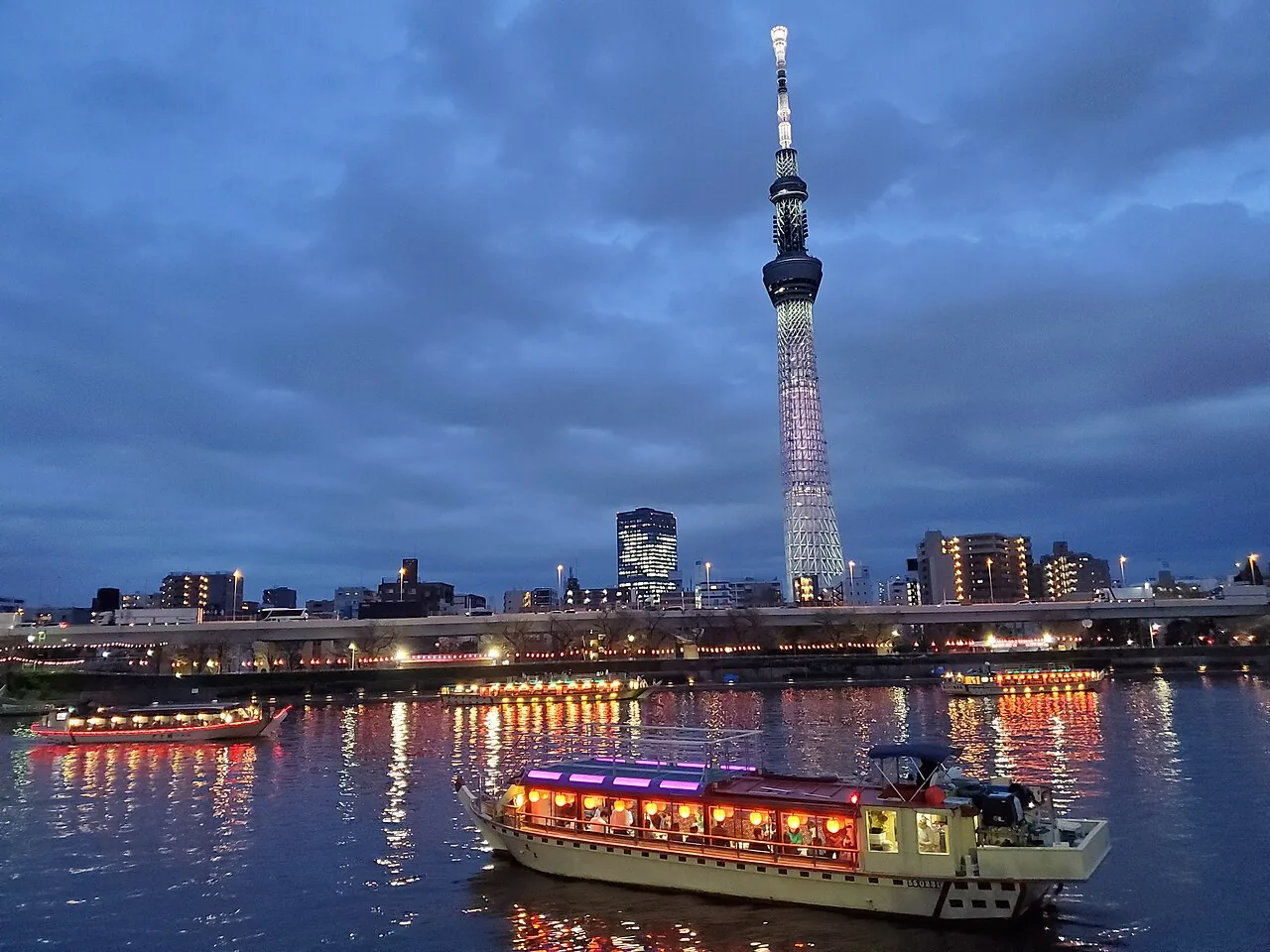
    A yakatabune boat on the Sumida River in Tokyo
    A yakatabune on the Sumida. Photo: Nurg / Wikimedia Commons, CC BY-SA 4.0.

    Fast facts

    • Price: ¥13,800 per adult booked direct (Amitatsu, 2.5 hours); about ¥11,800 through a booking site (1 h 40)
    • Included: Dinner, all-you-can-drink, service and tax
    • Pier: Azumabashi, Asakusa, for the direct booking
    • Booking: English web form, confirmed by email within 3 business days, minimum 2 people
    • Timing: Depart about an hour before sunset; arrive 20 minutes early. October to April for the clearest nights

    What the evening is

    Most yakatabune companies run two products. A chartered boat is the traditional one: a company or a family rents the whole boat for twenty or more people. A shared dinner cruise is the newer one for visitors: you book two or more seats on a scheduled sailing and share the boat with other groups. Everything below is about the shared cruise.

    The standard shared evening is about two and a half hours. Boarding is at a pier on the Sumida, most often Azumabashi pier in Asakusa, a minute from the Asahi building with the gold flame. The boat goes downriver past the bridges and the Skytree, out to the bay, and stops for a while off Odaiba with the Rainbow Bridge lit up, then returns. Dinner is served on board: tempura fried while you sail, sashimi, a seasonal course, and all-you-can-drink beer, sake and soft drinks are included in the standard price.

    Booking direct: about ¥13,800, 2.5 hours

    Amitatsu is a hundred-year-old operator with eight boats and an English booking page. Its “Odaiba Skytree course” on a shared boat is the reference product for this article:

    • Price: ¥13,800 per adult; children 4–12 ¥6,900; under 4 free without a seat or meal. The fee includes boarding, the meal, all-you-can-drink, service and tax.
    • Duration: about 2 hours 30 minutes. Departs and returns at Azumabashi pier, Asakusa (Harumi pier during cherry blossom season).
    • Minimum: two people. Vegetarian menu available if requested when booking.
    • How to book: a web form in English, answered by a person between 10:00 and 17:00; the booking is confirmed only when the confirmation email arrives, usually within three business days. Credit cards accepted.
    • The catch: it is not instant, sailings are on a schedule that changes by season, and you cannot choose which of the eight boats you get.

    Other established companies run similar shared cruises from Asakusa, Yanagibashi and Shinagawa at similar prices; the Tokyo Yakatabune Association lists its members. If you have a week’s notice and can wait for an email, direct is the fuller evening for the money.

    Booking through a site: about ¥11,800, 1 hour 40

    The booking sites sell a shorter version: a 100-minute cruise with dinner, drinks and usually a short performance on board, for around ¥11,800. That is about ¥2,000 less than booking direct, but for an hour less on the water, so per hour on the boat direct is still the better deal. What the booking site adds is instant confirmation, free cancellation to 24 hours before, and English support if something goes wrong. For a trip planned at short notice, or a group that wants to be back by nine, that is the right trade.

    When to go, and when not to

    • Best: a clear evening from October to April, when the air is dry and the bridge lights are sharp. Book a sailing that departs about an hour before sunset so you get the river in daylight, dusk on the bay, and the return in the dark.
    • Cherry blossom (late March to early April): the boats switch to a Sumida River route under the trees. Book weeks ahead; direct operators move their pier for the season.
    • Sumida River Fireworks (late July): the most famous night of the year and by far the most expensive; boats are chartered out months in advance. Do not expect a shared seat.
    • Skip: the rainy season in June and typhoon days in September; a yakatabune in horizontal rain is a tatami room with fogged windows.

    Small things that matter on board

    • You sit on the floor at low tables, usually with a well for your legs. Wear something you can sit cross-legged in.
    • Go up on the roof deck when the boat stops off Odaiba. That half hour is the reason to be there.
    • The all-you-can-drink is real and the boat is not big; pace yourself before the return leg.
    • Arrive at the pier 20 minutes early. Boats leave on time and do not come back for you.

    If you are staying east of the river, Azumabashi pier is fifteen minutes on foot from Daikokuyu, which is open until ten the next morning; a bath after the boat is the local way to end it. For the daytime version of Tokyo’s waterways, the old boat checkpoint on the Onagi River and the ¥100 rowing boats at Yokojukken are the same water, four centuries and ¥13,000 apart. Every other boat you can get on in Tokyo — including the scheduled water bus from Asakusa at ¥1,000, which is the cheapest way to see the same river — is in the water bus and cruises guide.

    Quick answers

    How much does a yakatabune cruise in Tokyo cost?

    A shared dinner cruise booked directly with an operator such as Amitatsu costs about ¥13,800 per adult for 2.5 hours, including a tempura and sashimi dinner and all-you-can-drink. Booking sites sell a shorter 100-minute version with dinner and drinks for around ¥11,800. Children 4–12 pay about half.

    Where do yakatabune boats depart in Tokyo?

    Most shared cruises for visitors depart from Azumabashi pier in Asakusa on the Sumida River, near Asakusa Station. During cherry blossom season some operators move to Harumi pier. Other companies sail from Yanagibashi and Shinagawa.

    Can I book a yakatabune for two people?

    Yes. Shared dinner cruises can be reserved from two people. Chartering a whole boat needs about 20 people on weekdays and 25 on weekends and holidays.

    What is the best season for a yakatabune cruise?

    Clear evenings from October to April give the sharpest views of the Rainbow Bridge and Skytree. Cherry blossom season in late March runs a special river route and sells out weeks ahead. The Sumida River Fireworks in late July are chartered out months in advance.

    Before the boat, or instead of it: the free riverside walk from the Skytree to Senso-ji covers the same water on foot, and ends at the pier the boats leave from.


    Practical notes

    • Direct: Amitatsu shared cruise, ¥13,800 adult, 2.5 h, Azumabashi pier (Asakusa). Book by English web form; confirmed by email within 3 business days. From 2 people.
    • Through a site: the Viator cruises above, ~¥11,800, 1 h 40, instant confirmation, free cancellation.
    • Included: dinner, all-you-can-drink, service, tax. Vegetarian on request when booking direct.
    • Timing: depart about an hour before sunset; arrive 20 minutes early; October–April for the clearest nights.

    LOCAL SIDE JAPAN checked Amitatsu’s shared-cruise price, duration, pier and booking terms on the operator’s English website, and booking-site prices on Viator, on September 14, 2026; Viator prices re-checked September 27, 2026. Prices change by season and exchange rate.

    Related: a yakatabune is the last entry on our list of things to do in Sumida City — the other nine are what to do with the daylight before the boat leaves.

    Written by Kizuku. I run the Sunamachi Ginza Sumo Stable, a sumo experience in Koto City, and I write about the east side of Tokyo I live and work in. More about this site →

  • Asakusa Workshops: Which Hour Is Worth ¥7,000, and Which Isn’t

    Asakusa Workshops: Which Hour Is Worth ¥7,000, and Which Isn’t

    This article contains affiliate links to booking sites. If you book through them, LOCAL SIDE JAPAN earns a small commission at no extra cost to you. The rankings below are by value, not by what pays; the cheapest option is recommended first. How this site is made →

    TOKYO / TAITO CITY / ASAKUSA

    Asakusa has become Tokyo’s workshop district. Within ten minutes of Senso-ji you can now book an hour of calligraphy, candy sculpting, matcha whisking, ring making, lucky-cat painting, incense blending or a tea ceremony in a rented kimono, most of them between ¥2,500 and ¥8,000, most of them rated five stars by people who had a nice time. The reviews are not wrong. They are also not useful, because everything is five stars.

    Here is a better sorting: what you actually take home, how much of the hour is craft versus photo, and whether the same money would be better spent two streets away. Prices are from the booking sites in September 2026 and move with the yen.

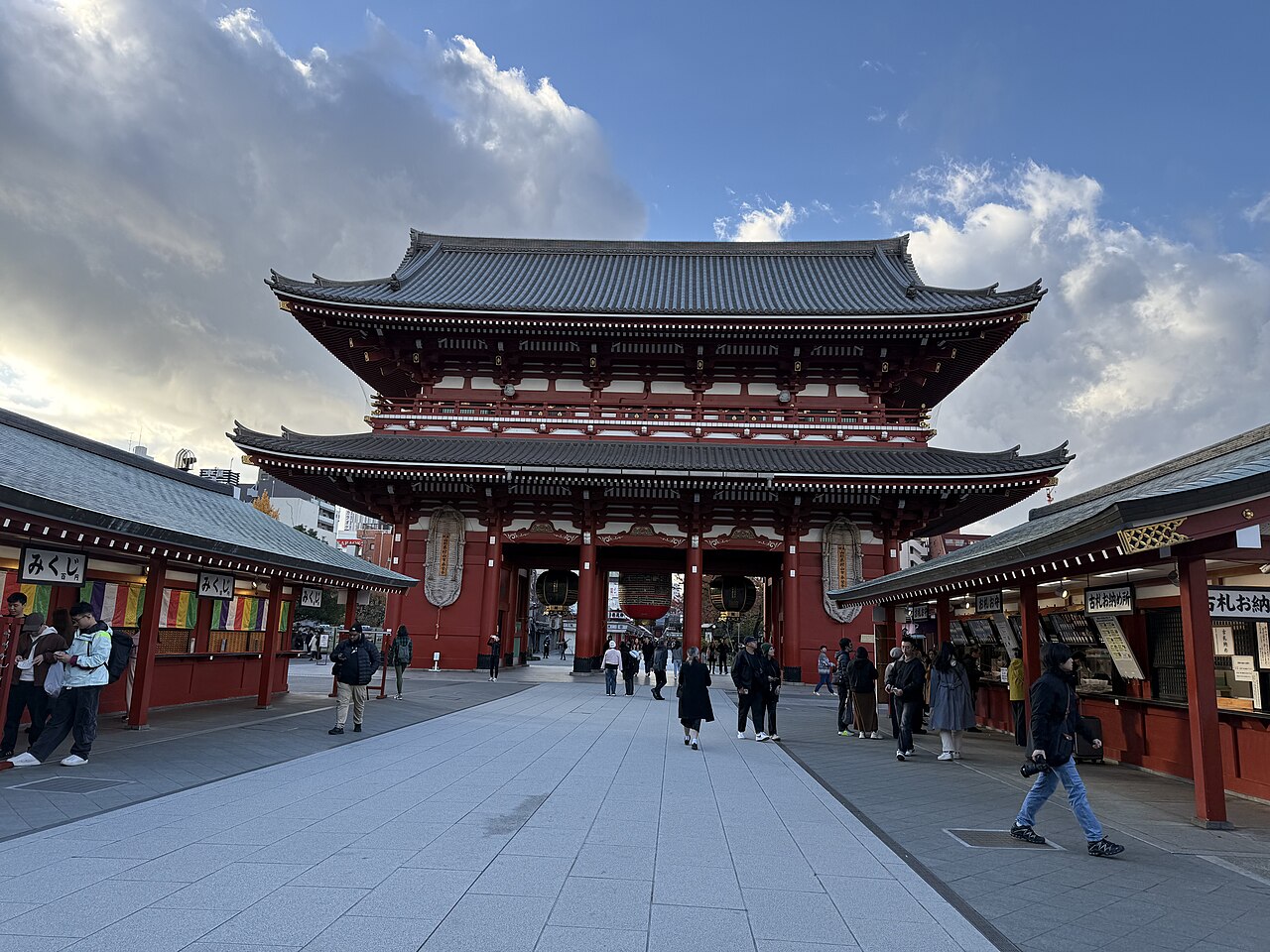
    Senso-ji temple in Asakusa, Tokyo
    Senso-ji. The workshops are in the streets behind it. Photo: LMP 2001 / Wikimedia Commons, CC BY-SA 4.0.

    Do these

    Candy sculpting at Ameshin, about ¥4,000

    Amezaiku is sugar pulled and cut into an animal in the three minutes before it hardens, with scissors, by hand. Ameshin is a real Asakusa craft shop whose artisans do this for a living; the workshop is their teaching room, not a studio built for tourists. You will make something lopsided and you will be delighted with it. Two hours, and the best value-for-craft on this list. One caveat on the booking rather than the shop: this particular listing has no reviews at all, so the recommendation rests on what Ameshin is, not on anyone else’s experience of booking it this way. The review depth across this page is below. Candy Art Workshop at Ameshin (Viator).

    Matcha and wagashi, about ¥2,500

    One hour: you whisk a bowl of matcha properly, you eat a seasonal sweet, someone explains why the bowl is turned. It is the cheapest thing here by a distance and the one with the most reviews (over 1,300 at 5.0), which for once is deserved, because the format is simple and hard to do badly. If you only book one thing in Asakusa and you are not sure about any of it, book this. Matcha Making Class with Japanese Sweets (Viator).

    Worth it if you want the object

    Calligraphy, about ¥7,800

    Ninety minutes with a brush, ink and a teacher, and you leave with a character you wrote, mounted. The price is high for what is essentially a lesson, but a piece of your own calligraphy is the one Asakusa souvenir nobody else on your street will have, and the teaching is real. Worth it if you would frame the result; not worth it if you would fold it into a suitcase and forget it. Calligraphy Workshop in Asakusa (Viator).

    A ring made from an old coin, about ¥7,700

    You take a vintage Japanese coin, punch and hammer it into a ring, and wear it out. One hour. It is metalwork-lite, but the ring is real, fits, and is the kind of thing people ask about for years. Good for couples; good for teenagers who are sick of temples. Ring-Making Workshop with Vintage Coins (Viator).

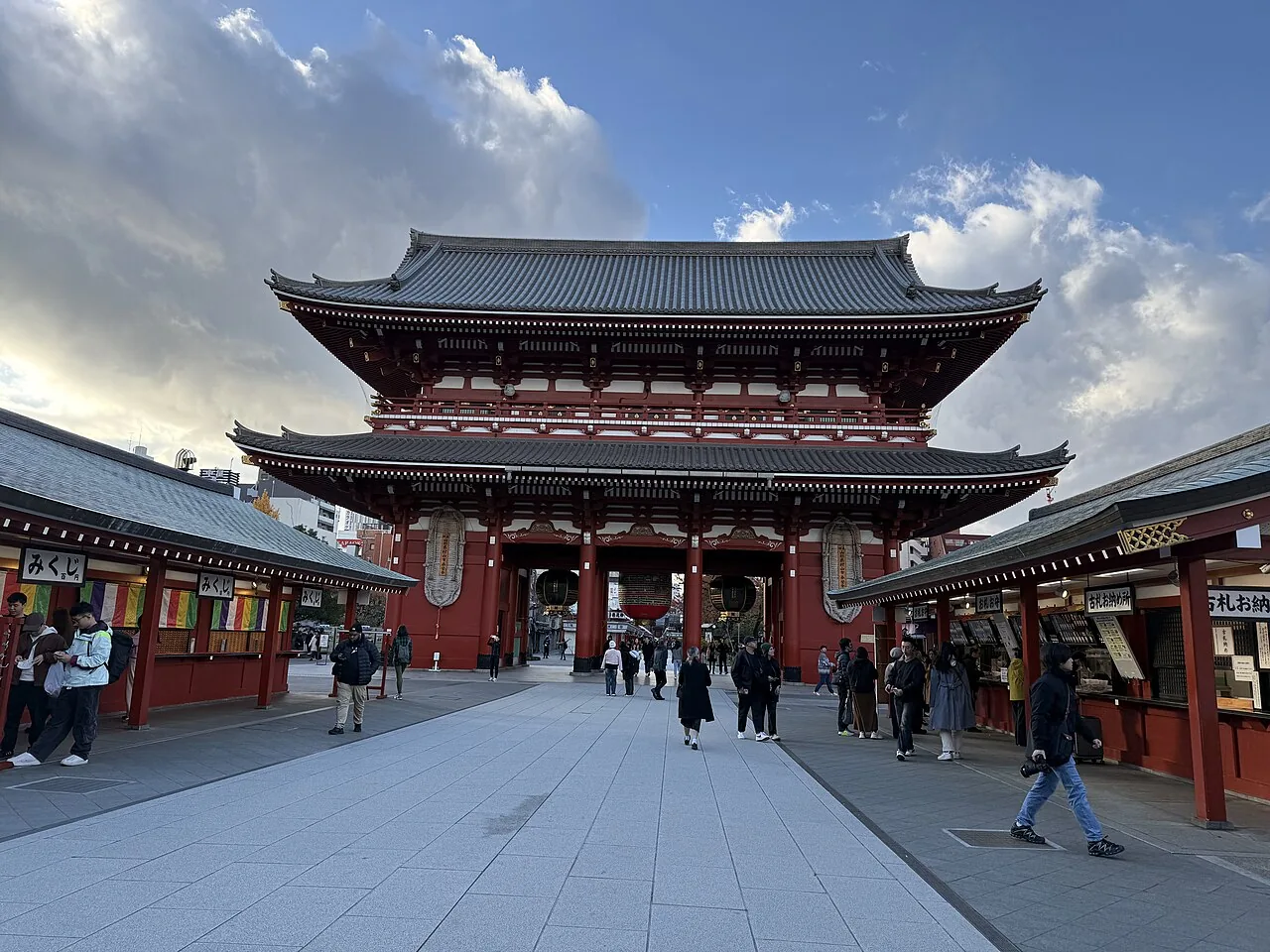
    Know what you are buying

    Tea ceremony in a kimono, around ¥9,000 and up

    This is two products in one: a kimono fitting and a short tea ceremony, and most of the ninety minutes is the fitting and the photographs. That is fine if the photographs are the point; they will be good. If you want to understand tea, the ¥2,500 matcha hour above teaches you more for a third of the money. Do not book this one for the tea. Every tea ceremony in the city, sorted into the tea-first and kimono-first kinds, is in Tea Ceremony in Tokyo by Area.

    Painting a lucky cat, about ¥3,000 to ¥4,000

    You paint a blank ceramic maneki-neko. It is exactly that, for an hour, and it is the workshop people bring small children to. The cat is charming and survives a suitcase. Skip it if you are two adults without kids; there is no craft to learn, only a cat to decorate.

    Kimono rental without the ceremony, from about ¥7,000

    If what you want is to walk Asakusa in a kimono, rent one and skip the packaged ceremony. Go at 9:00, before Nakamise fills, and give it back by early afternoon; the crowds after noon are the reason the photos in the listings were all taken in the morning. Kimono Rental in Asakusa with Photography Option (Viator).

    Four more Asakusa workshops, sorted the same way

    • Kintsugi, about ¥2,400, do it. One hour repairing a broken piece of pottery with lacquer and gold powder, and you take the piece home. The real craft takes weeks of curing; the workshop uses a fast-setting version, which the teacher will tell you. For the price it is the best-value hour on this page after the matcha — but the piece included is one of two small pre-broken dishes and a larger one is a ¥5,000 upgrade, which the listing does not say. Kintsugi Workshop in Asakusa (Viator), 4.9 from about 1,200 reviews. Every other kintsugi class in the city, by area, is in Kintsugi Workshops in Tokyo by Area.
    • Chopstick making, ¥1,000, do it with children. Plane a pair of chopsticks from a blank, oil them, put them in a box. An hour, and the cheapest thing in Asakusa you can take home that you made. Chopsticks Making Class in Asakusa (Viator), 5.0 from about 2,000 reviews.
    • Washi lantern painting, ¥16,000 to ¥20,000, know what you are buying. Ninety minutes painting a real paper lantern of the kind that hangs outside izakaya. The object is wonderful and awkward to carry home, and the price is the highest on this page for a craft that is mostly your own brushwork. For a couple who will actually hang it, yes; otherwise the calligraphy scroll folds flat. Washi Paper Lantern Workshop in Asakusa (Viator), new, a handful of reviews.
    • Knife sharpening, about ¥10,000, do it on Kappabashi instead. The “knife workshop” listings around Asakusa are mostly a sharpening lesson; the one worth paying for is the two-hour class on Kappabashi where you sharpen the knife you have just bought, covered in the Kappabashi guide.

    And the two hours that cost nothing

    The best thing in Asakusa is still free and still ignored: Senso-ji at 6:30 in the morning, when the main hall is open, the incense is lit, the shutters on Nakamise are down and painted with the shops’ own murals, and there are more locals than visitors. Do that, eat breakfast, and then decide whether you want a workshop at all. Half the people who do this do not. Getting round the district itself — a ¥5,500 rickshaw against a ¥2,000 guided walk — is compared in rickshaw or guide in Asakusa. The same hours across the whole city — calligraphy, ikebana, wagashi, washi papermaking, pottery, coin rings — are sorted by what you actually walk out holding. If what you actually want is the kimono rather than a craft, the shops around the temple are sorted by what each price really includes — the cheapest one on that page includes hair and make-up and several dearer ones do not.

    From the temple it is fifteen minutes on foot to Kappabashi, where the one workshop I would pay for above ¥10,000 lives: learning to sharpen the knife you just bought.

    The walk in from the Skytree side, along the river and over the Sumida River Walk bridge, is described in Sumida River on Foot; it ends at Kaminarimon and is the best way to arrive.

    What the reviews say, and what they mean

    These eight bookings carry about 5,050 reviews between them, and two of them have the cleanest records of anything in this series. Read on 3 October 2026, with the operators’ replies.

    How good the records actually are

    WorkshopReviewsRated 3★ or below
    Chopstick making2,1574 (0.19%)
    Matcha and wagashi1,3653 (0.22%)
    Kintsugi1,21413 (1.1%)
    Calligraphy1790
    Kimono rental (Yae)770
    Coin ring470
    Washi lantern painting80
    Candy sculpting at Ameshin0—

    Chopstick making and the matcha hour are, by the numbers, the two safest bookings in Tokyo. Four low reviews in 2,157 and three in 1,365 — roughly one in five hundred. Nothing else this site has looked at comes close, and it is a point in favour of the simple formats: plane a stick, whisk a bowl. There is not much to get wrong.

    The exception at the other end is the one with no reviews: the Ameshin candy listing. The shop is a real Asakusa amezaiku workshop and that is why it is first on this page, but nobody has reviewed this booking, so treat the recommendation as being about Ameshin rather than about the listing.

    The one thing that repeats, and it is the same shop three times

    The coin ring, the chopsticks and the kintsugi are the same operator in the same room near Senso-ji — one reviewer in September 2026 describes several of these activities running at once in a small space. Across 4,330 reviews of those three bookings, the single complaint that recurs is not about the teaching. It is the pricing model:

    • Coin ring: the free coins are foreign ones; Japanese and older coins cost extra. Eight of its twenty-three four-star reviews say so.
    • Chopsticks: “It costs extra if you want decent wood or engraving” (a reviewer on Viator, September 2026).
    • Kintsugi: the included piece is one of two small pre-broken dishes; a larger one is a ¥5,000 upgrade.

    None of these is a scandal and the satisfaction rates are extraordinary. But the advertised price is an entry price in all three cases, and the honest budget for the thing you would actually want to keep is higher: roughly ¥3,000–¥5,000 for a ring rather than ¥2,500, and ¥2,400 plus ¥5,000 for a kintsugi plate worth repairing. Decide at the counter, not after you have started.

    Which of these are made for foreigners

    Asakusa’s cheap hours genuinely undercut the Japanese market. Its expensive ones do not. Every figure below is from a Japanese-language operator’s own price page.

    This pageWhat a Japanese customer paysVerdict
    Kintsugi ¥2,400¥8,800 for 2–2.5 h, and you bring your own broken pieceFar cheaper here — but you get a dish they broke for you
    Coin ring ¥7,700¥6,500–7,500 at a Japanese Asakusa workshopThe same money
    Calligraphy ¥7,800¥2,000 trial, or ¥3,400 a lesson on a monthly planTwo to four times — you are paying for English and a one-off
    Kimono rental from ¥7,000¥3,850 full set with hair, same streetsAbout double

    All prices checked 3 October 2026. The pattern is consistent and it is useful: the ¥1,000–¥4,000 hours on this page — chopsticks, matcha, kintsugi, the lucky cat — are cheaper than a Japanese person can buy the same hour for, because they are built for volume and the materials are the cheapest version. The ¥7,000-and-up ones are where the visitor premium sits, and calligraphy is the clearest case of it.

    Which does not make them wrong to book. It makes the free hours at the bottom of this page and the cheap crafts at the top the better value, and it means that if you want calligraphy badly enough to pay ¥7,800, you are buying a teacher who will work in English rather than a better lesson.

    Quick answers

    Which Asakusa workshop is the best value?

    Candy sculpting (amezaiku) at Ameshin, about ¥4,000 for two hours with real artisans, and the one-hour matcha and wagashi class at about ¥2,500. Both are near Senso-ji and bookable online.

    How much do Asakusa workshops cost?

    Between ¥2,500 (matcha) and ¥9,000 and up (kimono plus tea ceremony). Calligraphy is about ¥7,800, coin-ring making about ¥7,700, lucky-cat painting ¥3,000 to ¥4,000, kimono rental from about ¥7,000.

    Is the kimono tea ceremony in Asakusa worth it?

    Only for the photographs. Most of the 90 minutes is the fitting and photos; the ¥2,500 matcha class teaches more about tea for a third of the price.

    What is free to do in Asakusa?

    Senso-ji at 6:30 in the morning, when the main hall is open, the incense is lit and the Nakamise shutters show their painted murals. Nakamise shops open around 10:00.

    Are Asakusa workshops suitable for children?

    Lucky-cat painting is the one families choose; the candy workshop has a minimum age (check the listing); matcha and calligraphy suit older children.


    Practical notes

    • Best value: Ameshin candy sculpting (~¥4,000, 2 hours) and the matcha hour (~¥2,500).
    • Best souvenir: your own calligraphy or a coin ring (~¥7,700–7,800).
    • For photos: kimono rental, morning only. For tea: not the kimono package.
    • With small kids: lucky-cat painting; the candy workshop has a minimum age, check the listing.
    • Timing: book workshops for the afternoon and give the morning to the temple. Nakamise shops open around 10:00.

    LOCAL SIDE JAPAN checked prices, durations and review counts on the booking sites on September 14, 2026. Prices are quoted as approximate and change with the exchange rate. Nothing here was provided free by an operator.
    Written by Kizuku. I run the Sunamachi Ginza Sumo Stable, a sumo experience in Koto City, and I write about the east side of Tokyo I live and work in. More about this site →

  • Tattoo-Friendly Sento on Tokyo’s East Side: Three Baths That Say So in Writing

    Tattoo-Friendly Sento on Tokyo’s East Side: Three Baths That Say So in Writing

    This article contains affiliate links to booking sites. If you book through them, LOCAL SIDE JAPAN earns a small commission at no extra cost to you. Every bathhouse listed here can be visited on your own for ¥600; the tours are optional. How this site is made →

    TOKYO / SUMIDA & TAITO / SENTO

    Most guides to “tattoo-friendly onsen in Tokyo” send you to a hotel spa in Shinjuku or a resort bath by the bay. That is the wrong answer to the wrong question. The right question is: where can a person with tattoos take a proper Japanese bath, in a neighborhood, for the price of a coffee? The answer is a sento, the public bathhouse, and the east side of Tokyo has the best ones in the city, several of which have written “tattoos welcome” on their own websites.

    Since August 1, 2026, the fixed adult price at every sento in Tokyo is ¥600. Children are ¥200. Here is how it works, and three baths east of the river that will not look twice at your arms.

    The front of a neighborhood sento bathhouse in Edogawa, Tokyo
    A neighborhood sento on the east side. Photo: Higa4 / Wikimedia Commons, CC0.

    Sento, onsen, and why the tattoo rule is different

    An onsen is a bath fed by a natural hot spring; a sento is a bath fed by a boiler. The bathing is the same. The difference that matters to you is legal and cultural: sento are regulated as public hygiene facilities with a price fixed by the prefecture, and they grew up serving working neighborhoods where nobody had a bathtub at home. A tattoo in a sento in Sumida is a much smaller event than a tattoo in a resort onsen in Hakone. Many sento simply never had a rule. The ones below have gone further and said so in public.

    Three baths that say it on their own website

    Koganeyu (黄金湯), Kinshicho, Sumida

    A 1930s bathhouse rebuilt in 2020 by a couple who also run two other baths and a brewery, with a DJ booth and a beer tap at the front desk, a bathing hall behind, and one of the more serious saunas in east Tokyo behind that. Its FAQ answers the tattoo question in three words: you can bathe. Six minutes from the north exit of Kinshicho Station.

    • Hours: 6:00–9:00 and 11:00–24:30 every day. Closed the 2nd and 4th Monday. Wednesday is the swap day (men’s and women’s sides switch).
    • Price: ¥600 for 90 minutes. Sauna extra: women ¥350–400, men ¥550–600 for two hours (walk-in or web reservation; it fills on weekends). Towel set ¥200. Shampoo, soap and dryers free.
    • Pay: cash or PayPay for the bath; cards accepted at the bar.
    • Also: dormitory rooms upstairs if you want to sleep at a bathhouse, and their own craft beer after.

    Daikokuyu (大黒湯), Oshiage, Sumida

    Koganeyu’s older sister, founded 1949, six minutes from Oshiage Station and ten from the base of Skytree. A real hot-spring source (the water is mildly alkaline), a large rooftop outdoor bath from which you can see the tower, a painted Fuji on the wall, and the first sento in the 23 wards to run all night. If you land late and want a bath before a bed, this is the one.

    • Hours: weekdays 15:00 to 10:00 the next morning; Saturday from 14:00; Sunday and holidays from 13:00. Closed Tuesday (open if Tuesday is a holiday, then closed Wednesday).
    • Price: ¥600; sauna and late-night surcharges apply, check the board.
    • Tattoos: same owners, same policy as Koganeyu; widely and repeatedly confirmed by visitors with visible work.

    Kotobuki-yu (寿湯), Higashi-Ueno, Taito

    The old-school option. A temple-roofed miya-zukuri bathhouse two minutes from Inaricho Station on the Ginza Line, one stop from Ueno, with what it claims is the largest outdoor bath of any sento in Tokyo on the men’s side, an electric bath (a mild current through the water; try it once), and a different themed bath almost every day of the month. No design studio touched it. Tattooed regulars have been bathing here for years and the staff do not react.

    • Where: 5-4-17 Higashi-Ueno, Taito. Inaricho Station, 2 minutes.
    • Price: ¥600. Check the monthly holiday calendar on the door or the website before you go; the rest day moves.

    How to not embarrass yourself (it is easy)

    1. Shoes go in the locker at the entrance. Take the wooden key.
    2. Pay at the front desk (¥600, cash is safest). Say “sauna” if you want it. Buy or bring a small towel; you carry it in, you do not put it in the bath.
    3. Undress completely in the changing room. Everything in the locker. There is no swimwear in a sento, ever.
    4. Sit at a tap, wash your whole body with soap, rinse. Then get in. This is the one rule everyone will notice if you skip it.
    5. Hair up or out of the water. Voices low. No phones past the changing room, no photos anywhere inside.
    6. Wring your towel out and pat yourself down before walking back into the changing room, so you do not drip on the mats.
    7. Drink something cold on the way out. That is the entire point.

    If you want someone to walk you in

    You do not need a tour for any of the above. But the first time in a sento, with the shoe locker and the ticket machine and the etiquette, is the one that stops people going at all, and a guided first visit fixes that permanently. Two that are honest about being for tattooed guests:

    After one guided visit, you will never need another. Go to Koganeyu on your own the next night.

    Make it an evening

    Koganeyu and Daikokuyu are fifteen minutes’ walk apart, either side of the Edo Kiriko museum in Kinshicho. Cut a glass in the afternoon, bathe at six, drink the house beer at Koganeyu, and if you are still awake, Daikokuyu’s rooftop bath is open until ten the next morning. That is a Sumida day nobody sells as a package, and it costs about ¥6,000 including the glass.

    Tattoo-friendly baths near Asakusa

    Two more, for people staying in Asakusa who do not want to cross the river. Both are listed as tattoo-friendly on the Japanese bath directories; neither prints a policy on its own site, so if you are heavily inked, a polite question at the counter costs nothing.

    • Hinode-yu, Moto-Asakusa: a natural hot-spring sento on the ground floor of an apartment block, three minutes from Inaricho Station on the Ginza line and fifteen on foot from Senso-ji. Ancient-cypress tub, steam sauna, a ¥100 carbonated shower, and a small café at the front desk. 14:00 to 22:40, closed Wednesdays. ¥600.
    • Mikokuyu, Ishihara (Sumida): the best bath within walking distance of Asakusa, eight minutes over the Kuramae bridge. Five floors of black natural hot spring with a rooftop open-air bath that looks straight at the Skytree, a different medicinal bath each day, and a reputation for being easy for foreigners and for tattoos. 15:30 to 2:00, closed Mondays (Tuesday if Monday is a holiday). ¥600.

    Private baths, and bathing as a couple

    Every sento on this page is separated by sex at the changing-room door; there is no mixed bathing and no swimwear. If you want to bathe together, you need a private bath, and on the east side the honest answer is that there are very few. Mikokuyu has one, a “welfare-type family bath” with rails and a lift, ¥1,500 per person for 90 minutes, reservation required, and it is meant for people who need help bathing and their carers; do not book it as a date. Daikokuyu’s rooftop has a small open-air tub for one that is not bookable. Beyond that, a private bath in this part of Tokyo means a hotel room with one, or the private sauna rooms that have opened around Sumida and Ginza at ¥5,000 to ¥30,000 an hour, which allow tattoos because nobody else is there. For a couple with tattoos, the practical plan is: go to the same sento at the same time, meet in the lobby afterwards with a bottle of milk, and walk to Mikokuyu’s rooftop on a different night for the view. If you would rather someone else had the conversation at the counter, there is now a guided tattoo-friendly bathhouse and ramen evening that meets at Kinshicho and ends at Daikokuyu, listed in the ramen classes and tours comparison — about ¥9,000 for what you can do yourself for ¥1,500.

    Quick answers

    Are there tattoo-friendly bathhouses in Tokyo?

    Yes. On the east side, Koganeyu in Kinshicho states on its own website that guests with tattoos may bathe; its sister bath Daikokuyu in Oshiage has the same owners and policy; Kotobuki-yu in Higashi-Ueno has long admitted tattooed bathers. All are sento, the public bathhouses, and cost ¥600.

    How much does a sento in Tokyo cost?

    Since August 1, 2026 the fixed adult price at every sento in Tokyo is ¥600. Children aged 6 to 11 pay ¥200 and under-6s ¥100. Saunas are extra, typically ¥350 to ¥600.

    What are Koganeyu’s opening hours?

    Koganeyu (Taihei 4-14-6, Sumida City, six minutes from Kinshicho Station north exit) is open 6:00–9:00 and 11:00–24:30 every day, closed on the second and fourth Monday. Entry is ¥600 for 90 minutes; sauna is ¥350–600 extra.

    What is the etiquette at a Japanese sento?

    Shoes in the entrance locker, pay at the front desk, undress completely (no swimwear), wash thoroughly at a tap before entering any bath, keep your towel and hair out of the water, no phones or photos inside, and dry off before returning to the changing room.

    Further north, Takara-yu in Kita-Senju has the best bathhouse garden in Tokyo; it does not publish a tattoo policy, so it is not on this list, but it is worth knowing about.


    Practical notes

    • Price: ¥600 adults, ¥200 children (6–11), ¥100 under 6, fixed across Tokyo since August 1, 2026. Sauna is extra.
    • Bring: a small towel (or buy one for ¥200–300), coins, nothing else. Soap and shampoo are usually provided at the baths above; at older sento, bring your own.
    • Tattoos: Koganeyu states it in writing; Daikokuyu is the same owners; Kotobuki-yu is long established as tattoo-tolerant. Elsewhere, look for a sign at the door; no sign usually means no rule.
    • Do not: wear swimwear, get in without washing, put your towel in the water, take a phone into the bathing hall, or bathe drunk (Koganeyu will turn you away).

    LOCAL SIDE JAPAN checked prices, hours and tattoo policies against the bathhouses’ own websites (Koganeyu, Daikokuyu, Kotobuki-yu) and the Tokyo Metropolitan Government’s August 2026 price notice on September 14, 2026. Rest days and sauna surcharges change monthly; check the door.

    Written by Kizuku. I run the Sunamachi Ginza Sumo Stable, a sumo experience in Koto City, and I write about the east side of Tokyo I live and work in. More about this site →

    If the etiquette section above still feels like an exam, the long version, with the rules on the wall set against the rules people actually follow, is Sento Etiquette: The Written Rules, the Real Rules.

  • Edo Kiriko: What It Is, Where to Buy It in Tokyo, and the ¥4,400 Way to Cut Your Own

    Edo Kiriko: What It Is, Where to Buy It in Tokyo, and the ¥4,400 Way to Cut Your Own

    This article contains affiliate links to booking sites. If you book through them, LOCAL SIDE JAPAN earns a small commission at no extra cost to you. The cheapest way to try Edo Kiriko is described first, and it is not an affiliate link. How this site is made →

    TOKYO / SUMIDA CITY / KINSHICHO

    Edo Kiriko is cut glass: a clear or colored glass with a pattern ground into it on a spinning wheel, one line at a time, by someone who has been doing it for decades. It started in 1834 in a glass shop near Nihonbashi, survived the move east across the river when the city’s workshops did, and is still made almost entirely in Sumida and Koto, in small buildings that look like nothing from the street.

    You can spend ¥4,400 to try it, or ¥21,000. Both are 90 minutes, both end with a glass you cut yourself. Here is the difference, and where the workshops actually are.

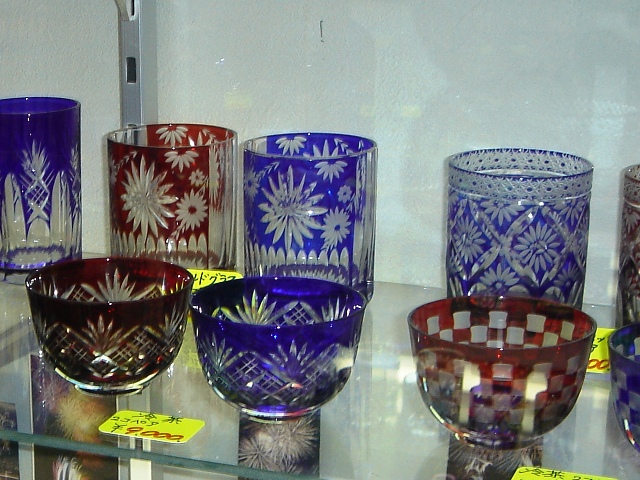
    Edo Kiriko cut glass with a traditional pattern
    Edo Kiriko: the pattern is cut, not painted. Photo: Wikimedia Commons, public domain.

    What you are actually looking at

    Pick up a piece and turn it. The pattern is not on the surface; it is cut into it, and the cuts catch light from inside the glass. The classic motifs have names: nanako (fish roe, a field of tiny squares), kiku (chrysanthemum), asa-no-ha (hemp leaf), yarai (bamboo fence). A colored piece is two layers, a thin skin of blue or red over clear glass, and every cut exposes the clear beneath, which is why the lines glow white.

    Real Edo Kiriko carries the mark of the Tokyo Cut Glass Industrial Cooperative, and the craft is nationally designated. A rocks glass from a good workshop is ¥10,000 to ¥30,000. The ¥1,500 “kiriko-style” tumblers in Asakusa souvenir shops are pressed in a mold; there is nothing wrong with them, but they are not this.

    What Edo Kiriko is, in five minutes

    Edo Kiriko is cut glass made in Tokyo: a clear glass blank with a thin skin of colored glass on the outside, usually ruby red or lapis blue, into which a craftsman cuts patterns on a spinning wheel until the clear glass shows through in lines. The tradition dates from 1834, when a glass wholesaler called Kagaya Kyubei in Edo began cutting glass with emery, and it survived because the city’s wholesalers kept buying it; it was named a Tokyo traditional craft in 1985 and a national one in 2002. The patterns are the vocabulary: nanako (fish roe, a field of small crosses), kiku-tsunagi (linked chrysanthemums), asa-no-ha (hemp leaf, the six-pointed star), yarai (bamboo fence), and a dozen more, mostly worked from a single grid the cutter draws on the glass by hand. The other famous cut glass, Satsuma Kiriko from Kagoshima, has a thicker colored layer that shades from color to clear; Edo Kiriko is thinner, sharper and cheaper, and it is the one made in the ward this site is written from.

    Where to buy Edo Kiriko in Tokyo, and what it costs

    • Prices, roughly: a small sake cup (guinomi) from about ¥5,000; a rocks or whisky glass, the thing most visitors want, ¥10,000 to ¥30,000 depending on the pattern density and whether a named cutter made it; a pair in a box ¥30,000 and up; exhibition pieces well over ¥100,000. Anything under ¥3,000 sold as “Edo Kiriko” is machine-pressed or imported; real pieces carry the Edo Kiriko Cooperative’s sticker and a maker’s name.
    • The Sumida Edo Kiriko Museum shop (Hirota Glass, Kinshicho), the same place as the workshop below: a full range from one maker at maker’s prices, with the cutters working in the back. Tax-free with a passport.
    • The Edo Kiriko Cooperative’s own shop in Kameido, a station east: work from many member workshops in one room, the widest choice of patterns and prices in the city, and staff who will tell you who cut what.
    • Tokyo Solamachi at the Skytree and the big department stores (Nihonbashi Mitsukoshi, Ginza) for a boxed gift in a hurry, at a mark-up, with English.
    • Carrying it home: the shops box it well; it goes in hand baggage, not the hold. A whisky glass weighs about 300 grams.

    The ¥4,400 version: go to the source

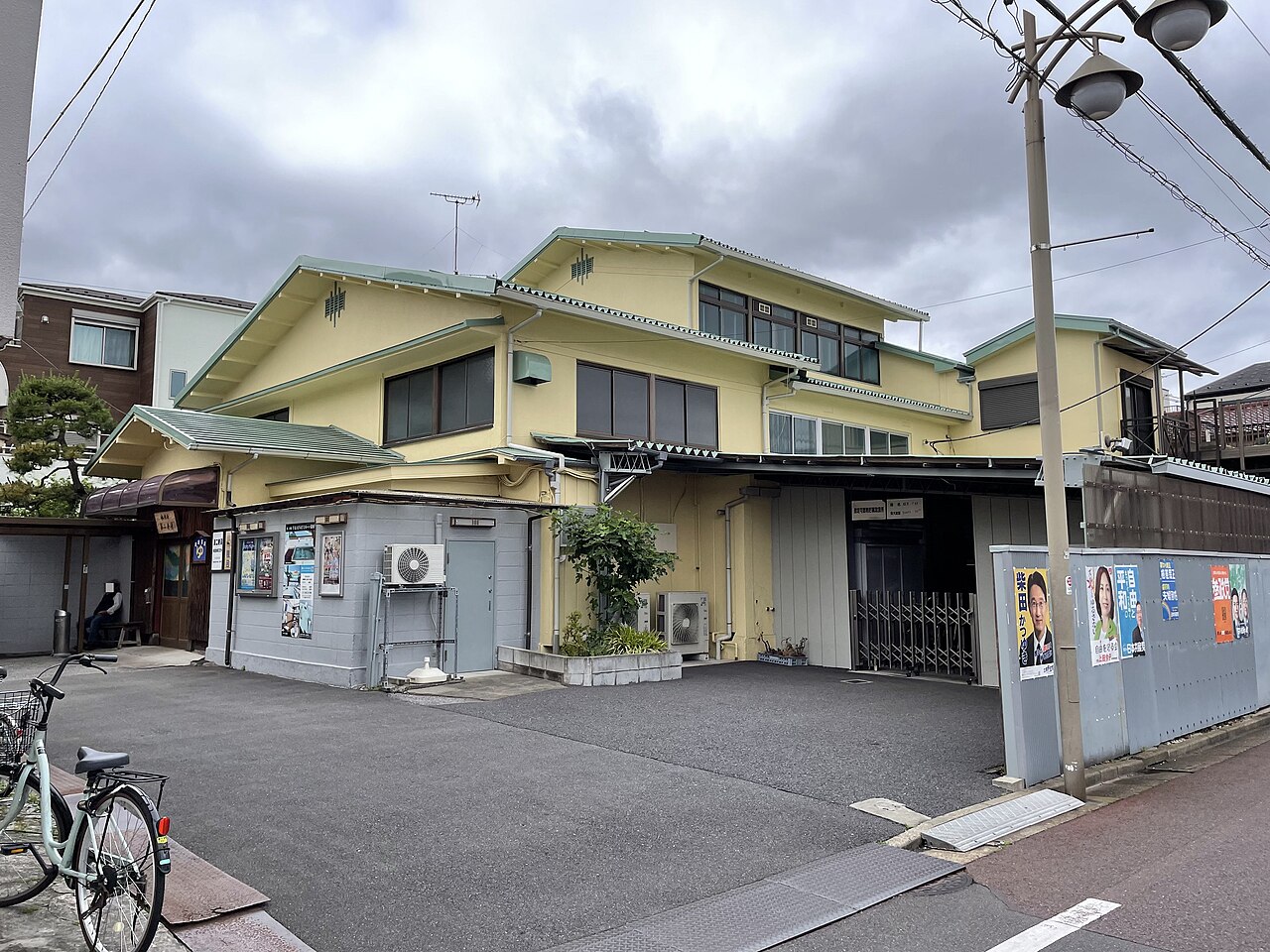
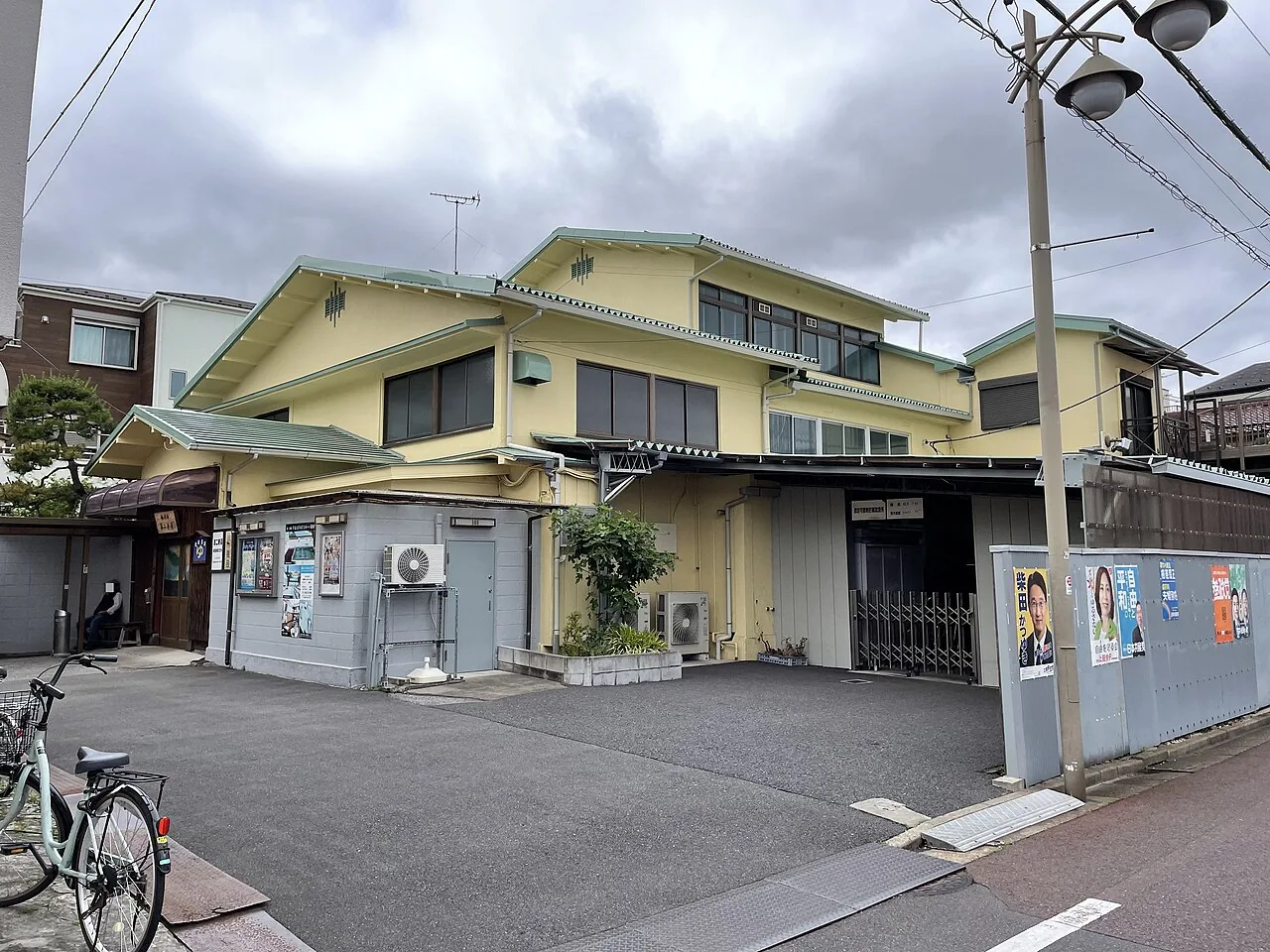
    The Sumida Edo Kiriko Museum (すみだ江戸切子館) is a working studio and shop run by Hirota Glass, a company that has been making glass in this part of Tokyo since 1899. It is seven minutes’ walk from the north exit of Kinshicho Station, on an ordinary street, and it is certified by Sumida City as one of the ward’s small “museums” of local industry.

    • Hours: 10:00 to 18:00. Closed Sunday and Monday.
    • Workshop: 90 minutes, three sessions a day (10:30, 13:00, 15:00), reservation required, small groups.
    • Price: ¥4,000 plus tax for adults (¥4,400), ¥1,100 for children from about age 10. You cut a pattern into a glass and take it home.
    • Language: Japanese first. The staff manage with gestures and short English, and cutting glass does not need much vocabulary; you watch, then you copy.

    Book by phone or through their website, in Japanese. If that is a barrier, the front desk of any hotel in Tokyo will make the call in two minutes. The shop upstairs is the best place on the east side to buy a real piece, because the people who cut it are downstairs.

    The ¥21,000 version: what the extra money buys

    The booking sites sell a 90-minute Edo Kiriko workshop in Sumida for around US$140 to ¥22,000 per person. I want to be clear about what that is: an English-speaking host, a group capped at four, a reservation you can make in thirty seconds in your own language, free cancellation to 24 hours before, and a studio where the artisans are working while you cut. The glass-cutting itself is the same activity.

    That is worth ¥17,000 to some people and not to others. If you do not read Japanese, are traveling with children, or have one afternoon and cannot risk a phone call going wrong, it is a reasonable purchase. If you are comfortable being the only foreigner in a room and following by watching, go direct.

    There is also a cheaper “sand-carved glass” class in Tokyo for around ¥8,000. Sandblasting through a stencil is a different technique, easier, and produces a frosted design rather than a cut one. It is fine for a rainy afternoon; it is not Edo Kiriko, and the listing should not call it that.

    Where the workshops are, if you want to see one

    Most Edo Kiriko is cut within two kilometers of Kinshicho and Kameido, in Sumida and Koto. Some workshops have a small shop at the front and will let you watch through a doorway; most do not take visitors and should not be knocked on. The cooperative’s website lists member studios and which ones sell direct. A polite rule: buy something if you go in, and do not photograph the cutters without asking.

    Sumida City runs a program of these tiny industry museums (the Edo Kiriko one is the best-known), and it is a good way to see the ward for what it is: a place that still makes things. From Kinshicho it is one stop to Ryogoku, and a twenty-minute walk north to Kyojima and the Kirakira Tachibana shopping street, which is the same idea in food.

    Related: Tattoo-friendly sento on the east side: Koganeyu and Daikokuyu are a short walk from here. Cutting your own glass is number two on our list of what to do in Sumida City.

    Quick answers

    What is Edo Kiriko?

    Edo Kiriko is Tokyo’s traditional cut glass: a pattern ground into clear or colored glass on a spinning wheel by hand. It started in 1834 near Nihonbashi and is now made almost entirely in Sumida and Koto wards. Real pieces carry the Tokyo Cut Glass Industrial Cooperative mark.

    Where can I try Edo Kiriko glass cutting in Tokyo?

    At the Sumida Edo Kiriko Museum (Sumida Edo Kiriko Kan), seven minutes from the north exit of Kinshicho Station, run by Hirota Glass. The 90-minute workshop costs ¥4,400 for adults, runs three times a day, and needs a reservation. Closed Sunday and Monday.

    How much does an Edo Kiriko workshop cost?

    ¥4,400 per adult booked directly with the Sumida Edo Kiriko Museum in Japanese, or about US$143 to ¥22,000 per person for an English-language workshop through GetYourGuide or Viator, which adds an English host, a group of four and free cancellation.

    How much does real Edo Kiriko glass cost?

    A hand-cut rocks glass from a good workshop is ¥10,000 to ¥30,000. Tumblers sold for around ¥1,500 in souvenir shops are pressed in a mold and are not cut glass.

    What is Edo Kiriko?

    Cut glass made in Tokyo since 1834: a clear glass blank with a thin colored outer layer, usually red or blue, into which patterns such as fish roe, hemp leaf and chrysanthemum are cut on a wheel so the clear glass shows through. It is a designated national traditional craft, made mainly in Sumida and Koto.

    How much does Edo Kiriko cost and where can I buy it?

    A sake cup from about ¥5,000, a whisky or rocks glass ¥10,000 to ¥30,000, boxed pairs from ¥30,000. Buy at the Sumida Edo Kiriko Museum shop in Kinshicho, the Edo Kiriko Cooperative shop in Kameido, or Solamachi and department stores at a mark-up. Real pieces carry the cooperative’s sticker.

    Two stops south on the Oedo line is Kiyosumi-Shirakawa, the coffee-roaster district with a ¥150 garden and a rebuilt Edo street; it pairs well with a morning workshop here.


    Practical notes

    • Direct: Sumida Edo Kiriko Museum, 7 min from Kinshicho Station north exit. 10:00–18:00, closed Sun and Mon. Workshop ¥4,400 adults, 90 min, three sessions a day, reservation required (Japanese).
    • Booked in English: the GetYourGuide or Viator workshop above, about US$143 / ¥22,000, max 4 people, free cancellation.
    • Buying: ¥10,000–30,000 for a real cut rocks glass; look for the cooperative’s mark. Glass goes in checked luggage, wrapped by the shop.
    • Kids: the direct workshop takes children from around age 10; the booked one gives younger children a lidded container instead of a glass.

    LOCAL SIDE JAPAN checked the museum’s hours, session times and workshop prices against Sumida City’s small-museum listings and the museum’s own information, and booking-site prices against GetYourGuide and Viator, on September 14, 2026. Booking-site prices move with the exchange rate.

    Written by Kizuku. I run the Sunamachi Ginza Sumo Stable, a sumo experience in Koto City, and I write about the east side of Tokyo I live and work in. More about this site →

    If the craft you want is kintsugi rather than glass, there is none on the east side yet; the city’s workshops, area by area, are in Kintsugi Workshops in Tokyo by Area.

  • Yanaka on a Weekday: The Old Tokyo That Survived

    Yanaka on a Weekday: The Old Tokyo That Survived

    This article contains affiliate links to booking sites. If you book through them, LOCAL SIDE JAPAN earns a small commission at no extra cost to you. Everything in the first half of this article is free and needs no booking. How this site is made →

    TOKYO / TAITO CITY / YANAKA

    Yanaka is the part of Tokyo that did not burn. The 1923 earthquake missed it, the 1945 firebombing mostly missed it, and the property developers of the 1980s could not make the narrow lanes and the enormous cemetery pay. So it is still here: wooden houses, sixty-odd temples, a shopping street that closes at six, and cats that have clearly never been told about Shibuya.

    It is also, by now, on every list. The trick is not finding Yanaka; it is going on a weekday morning, walking the right loop, and knowing which of the things people sell here are worth your afternoon.

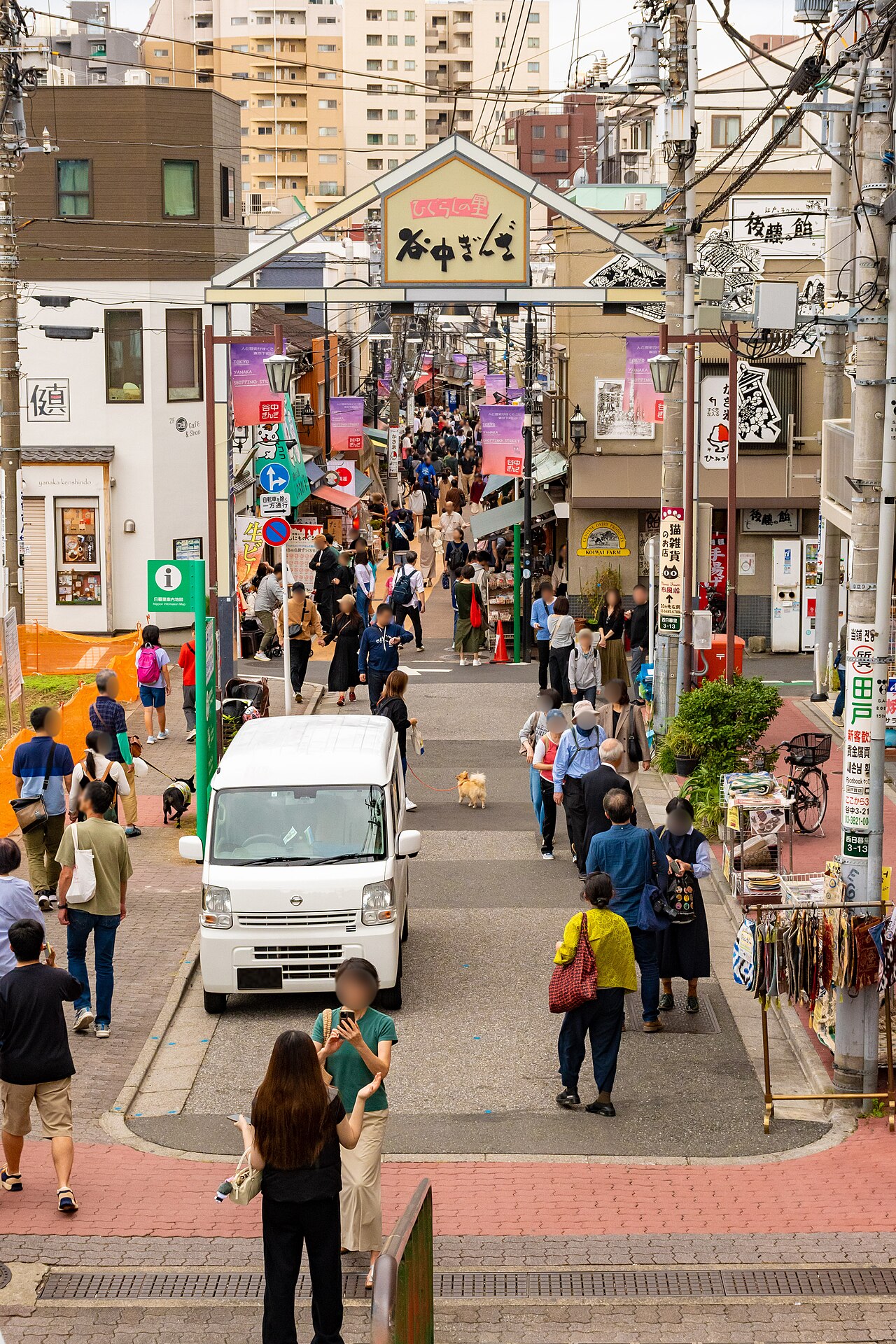
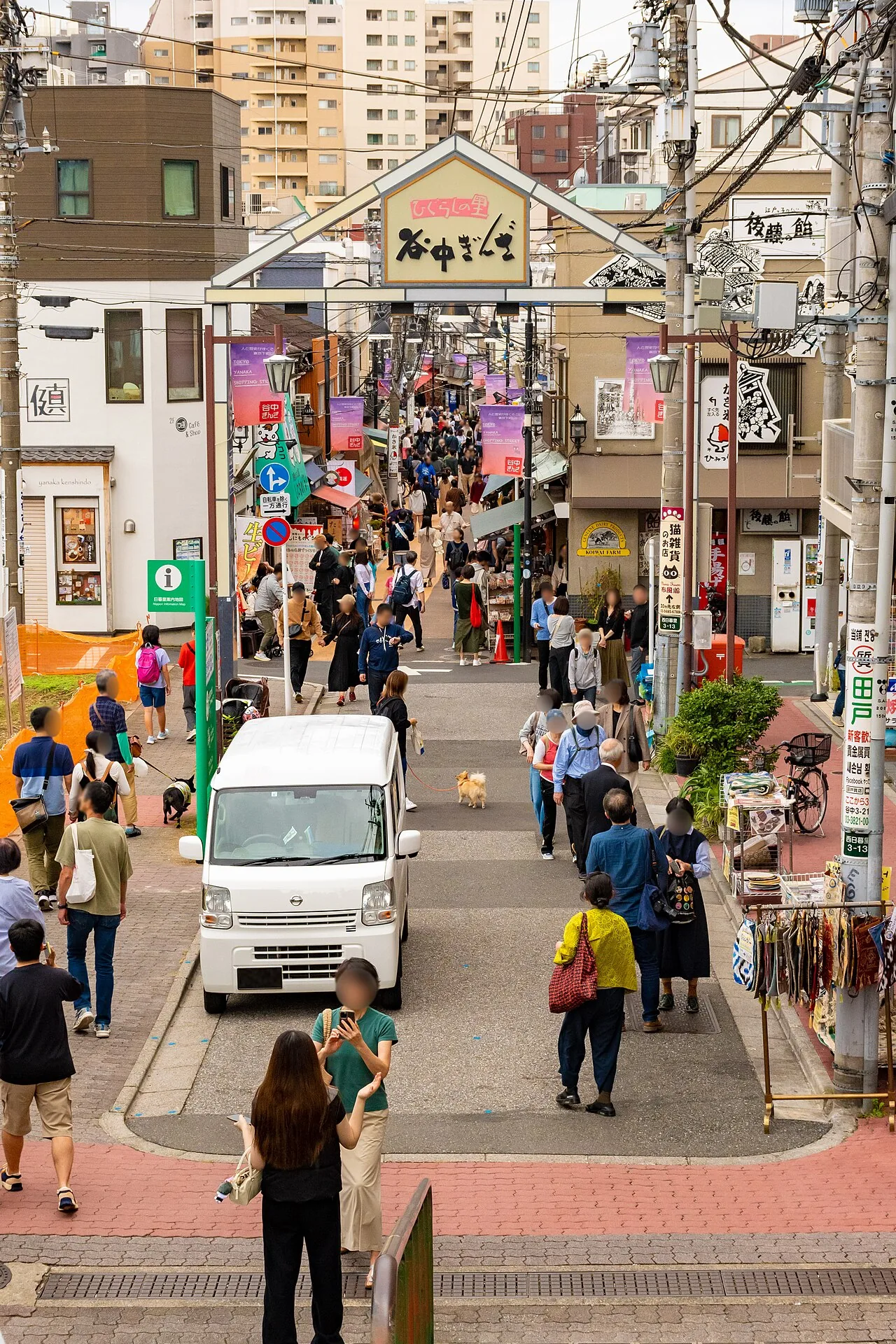
    Yanaka Ginza shopping street seen from the top of the Yuyake Dandan steps
    Yanaka Ginza from the top of the Yuyake Dandan steps. Photo: SuFlyer / Wikimedia Commons, CC0.

    The loop, in the right order

    Start at Nippori Station (JR Yamanote, Keisei from the airport), west exit. This is the only way to do Yanaka in one line without doubling back.

    1. Yanaka Cemetery (谷中霊園), five minutes from the station. Ten hectares, a cherry-tree avenue, the grave of the last shogun, and almost nobody. Walk the main avenue north to south. It is a park that happens to have graves in it, and the locals treat it as one.
    2. Yuyake Dandan (夕やけだんだん), the steps. At the bottom is the shopping street; at the top, at dusk, is the view everyone photographs. Go down them now and come back up them at five.
    3. Yanaka Ginza (谷中銀座), 170 meters, about 70 shops. Croquettes, taiyaki, a sake shop that pours by the glass, a cat-shaped everything. Most shops open around 10:00 and shut between 17:00 and 19:00. Eat standing up; that is what the street is for.
    4. The back lanes south of the street. This is the part most people miss. Turn left at the end of Yanaka Ginza and wander toward Nezu: temples with their gates open, a public bath, a sake brewer’s old warehouse turned into a café, and the wooden houses that make the neighborhood what it is.
    5. Nezu Shrine (根津神社), the finish. A 1706 shrine with a tunnel of small red torii and, in April, 3,000 azaleas on the hillside. Nezu Station (Chiyoda Line) is five minutes further on.

    Three hours at a walking pace, four with lunch. The whole thing is free.

    What to know before you go

    • Weekday mornings. Weekend afternoons on Yanaka Ginza are shoulder-to-shoulder and the croquette queue is twenty minutes. A Tuesday at 10:30 is a different street.
    • Cash. The street-food windows are ¥150 to ¥400 a piece and many do not take cards. Bring coins.
    • The cats are optional. Yanaka sells itself as “cat town.” There are some real cats and a great many ceramic ones. Do not build the day around it.
    • Nippori Fabric Town is on the other side of the station: a kilometer of fabric shops, with the Tomato main store as the anchor. Closed Sundays. Only worth it if you sew, in which case it is worth a whole separate morning.
    • Temples close. Grounds are generally open in daylight; halls are not. Do not expect to go inside.

    When a booking is worth it here

    Yanaka has more bookable “experiences” than almost anywhere on the east side, and most of them are guided walks that cover the same loop I just gave you for free. Skip those unless you want the company. Three things are different, because you cannot do them on your own:

    Cook in a Yanaka house

    The wooden houses are the reason the neighborhood exists, and the only way inside one is to be invited. Private home cooking in Yanaka is two hours in a local kitchen making an ordinary Japanese dinner, the kind that never appears on a restaurant menu. Around ¥18,500 per person, private, 5.0 from close to two hundred reviews. Of everything on the booking sites for this neighborhood, this is the one I would pay for.

    Ikebana, for real

    Same host, different room. Ikebana in Yanaka is 90 minutes of flower arrangement in a house that suits it. Small group, sells out, and unlike the ten-minute “try ikebana” add-ons in Asakusa, you leave understanding why the empty space matters.

    If you do want a guide

    Take the cheap one. The Old Quarter of Tokyo: Yanaka Walking Tour is three hours, around ¥7,000, 4.8 from nearly seven hundred reviews, and covers the loop above with the stories attached. The ¥30,000 “eat like a local” food walks are pleasant, but you are paying ¥25,000 for someone to hand you croquettes you could buy for ¥200.

    Two things you can book in Yanaka itself, rather than somewhere else in Tokyo. The private ikebana workshop here is the best version in the city and the reason is the shopping — you pick your own flowers at a Yanaka florist first, which no studio class lets you do. And the tearooms in Yanaka and Bunkyo are two of the most authentic settings in Tokyo and the ones nobody advertises. Calligraphy, ikebana and wagashi, by area → / Tea ceremonies by area →

    Where this fits with the rest of the east side

    Yanaka is the gentle end of a line that gets darker as you go north-east: twenty minutes’ walk from Nippori is Kozukappara, the old execution ground, and Jokan-ji, where the Yoshiwara women were buried. Fifteen minutes south is Kappabashi if you want to leave with a knife instead of a croquette. Do Yanaka first; it is the one you will want to end on if you only do one.

    Quick answers

    How do I get to Yanaka?

    Start at Nippori Station (JR Yamanote Line, or Keisei from Narita Airport), west exit. Walk through Yanaka Cemetery, down the Yuyake Dandan steps to Yanaka Ginza, then through the back lanes to Nezu Shrine and Nezu Station on the Chiyoda Line. The loop takes about three hours.

    What are Yanaka Ginza’s opening hours?

    Yanaka Ginza is a 170-meter shopping street of about 70 shops. Most open around 10:00 and close between 17:00 and 19:00. Some shops rest on Monday or Tuesday, but the street never fully closes. Bring cash for street food.

    Is Yanaka worth visiting?

    Yes, on a weekday morning. Yanaka survived the 1923 earthquake and the 1945 firebombing, so it keeps wooden houses, dozens of temples and an old shopping street. Weekend afternoons are crowded; a weekday before 11:00 is a different place.

    What can I book in Yanaka that I cannot do on my own?

    A private home-cooking session or an ikebana class inside a real Yanaka house. The wooden houses are private, and being invited in is the only way to see one. Guided walks cover the same streets you can walk for free.


    Practical notes

    • Start: Nippori Station, west exit (JR Yamanote / Keisei). End: Nezu Station (Chiyoda Line).
    • Time: 3 hours walking, 4 with lunch. Best on a weekday, arriving by 10:30.
    • Cost: ¥0 to walk. ¥1,000 to ¥2,000 if you eat your way down Yanaka Ginza. Cash.
    • Yanaka Ginza hours: shops open about 10:00, close 17:00 to 19:00. Some shops rest on Mondays or Tuesdays; the street never fully closes.
    • Nezu Shrine azaleas: April. The garden charges a small entry fee during the festival; the shrine is free.
    • Worth booking: the home-cooking evening or the ikebana session, both in a real Yanaka house. The guided walk only if you want a storyteller.

    LOCAL SIDE JAPAN checked shop numbers and hours against the Yanaka Ginza shopping association, Nippori Fabric Town’s official holiday list and Nezu Shrine’s notices on September 14, 2026. Class prices are quoted as ranges from the booking sites on that date.

    Written by Kizuku. I run the Sunamachi Ginza Sumo Stable, a sumo experience in Koto City, and I write about the east side of Tokyo I live and work in. More about this site →

  • Kappabashi Knife Street: Prices, the Shops Worth Your Time, and How to Buy

    Kappabashi Knife Street: Prices, the Shops Worth Your Time, and How to Buy

    This article contains affiliate links to booking sites. If you book through them, LOCAL SIDE JAPAN earns a small commission at no extra cost to you. Walking the street and buying a knife needs no booking at all. How this site is made →

    TOKYO / TAITO CITY / KAPPABASHI

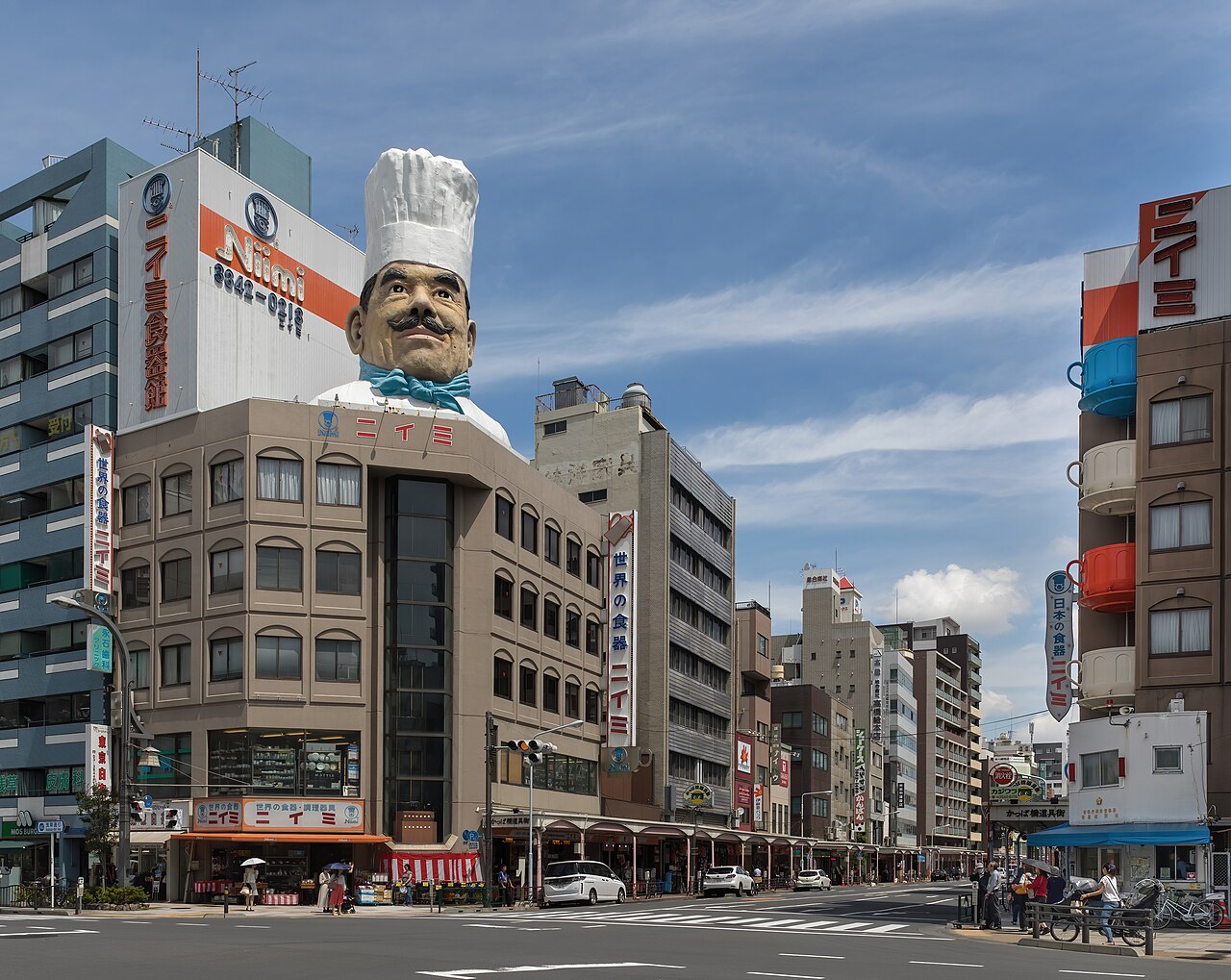
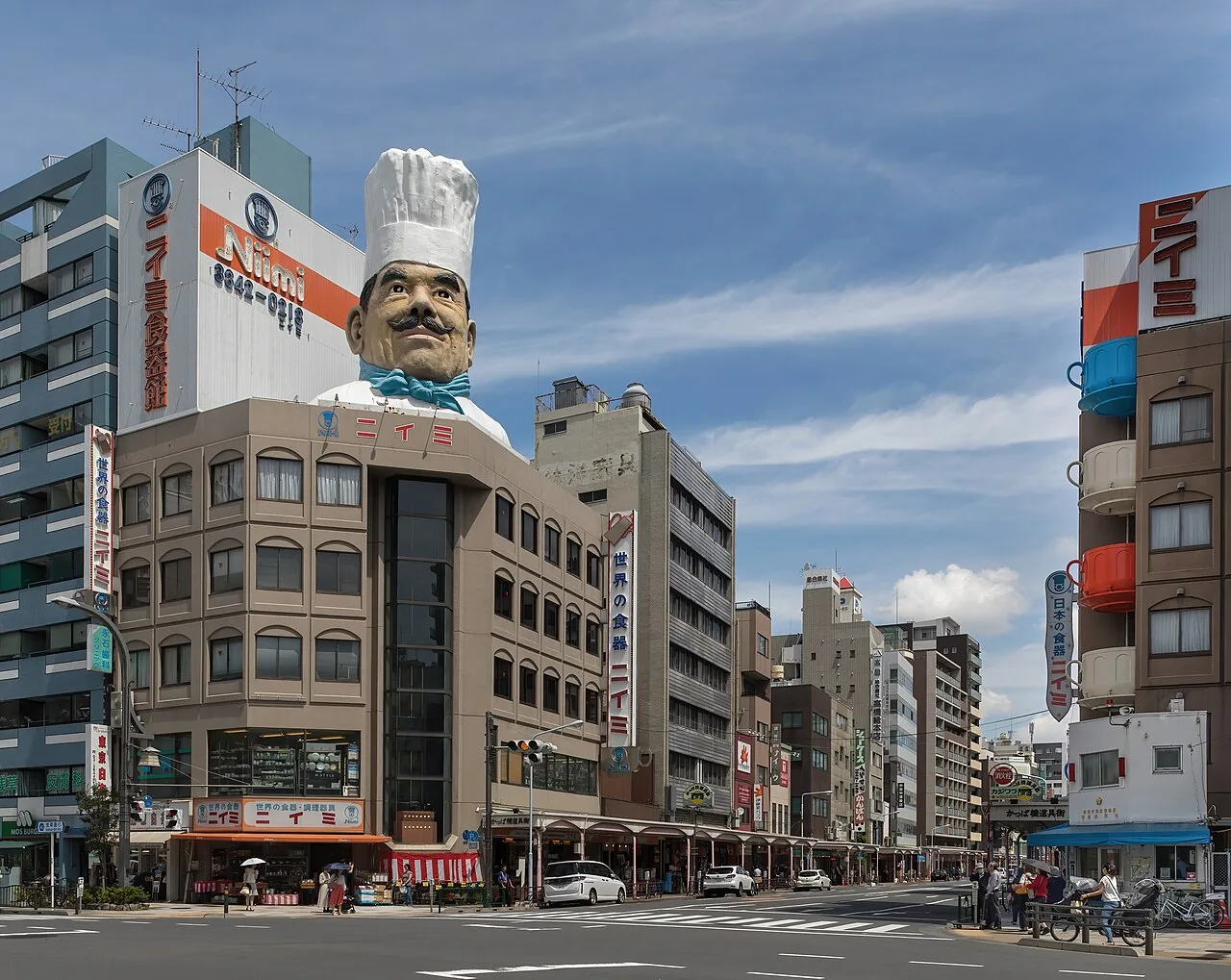
    Kappabashi is an 800-meter street of about 170 shops that exists to sell restaurants their equipment. Pots the size of bathtubs. Ten thousand identical rice bowls. The plastic sushi in every restaurant window in Japan. And, in about sixteen of those shops, some of the best kitchen knives you can buy anywhere, at prices that make the airport duty-free version look like a joke.

    It sits between Ueno and Asakusa, ten minutes’ walk from either, and most visitors do it wrong: they arrive on a Sunday, find half the shutters down, buy a knife from the first shop that speaks English, and put it in their carry-on. Here is how to do it right, in about two hours.

    The southern end of Kappabashi Dougu Street in Taito City on a sunny morning
    The Asakusa end of the street, before the shutters go up. Photo: Basile Morin / Wikimedia Commons, CC BY-SA 4.0.

    Fast facts

    • Where: Kappabashi Dougu Street, Taito City
    • Nearest: Tawaramachi Station (Ginza line) 5 min; Asakusa Station (Tsukuba Express) 5 min; 15 min on foot from Ueno or Asakusa
    • Best time: Weekdays, 10:00–17:00. Avoid Sundays, when many shops close
    • Budget: About ¥10,000 for a very good stainless gyuto or santoku; about ¥30,000 for a professional one
    • Tax-free: Over ¥5,500 with your passport
    • Flying home: Checked luggage only — ask the shop to pack it for the plane

    What is Kappabashi?

    Kappabashi Dougu Street is Tokyo’s restaurant supply district — about eight hundred metres of shops in Taito City, between Ueno and Asakusa, selling the things restaurants are made of: knives, pots, chopping boards, crockery, noren curtains, menu boards, bamboo steamers, and the plastic food samples that sit in Japanese restaurant windows. It has roughly 170 shops, sixteen of which sell knives.

    It is also the answer to “where is the knife street in Tokyo”. There is no other street like it in the city, and the knives are the reason most visitors come, although the sign painters and the steamer shop are the reason to walk the whole length of it.

    First, the rules nobody tells you

    • Not on a Sunday. This is a trade street. Most shops open Monday to Saturday, roughly 10:00 to 17:00, and many close on Sunday, including Tsubaya, one of the knife shops you actually want. Go on a weekday if you can.
    • Checked luggage only. A knife in your hand baggage will be confiscated at the airport, every time. Shops pack knives for flying; you still have to put the package in the suitcase you check in.
    • Bring your passport. Purchases over ¥5,500 at the main knife shops are tax-free (10%) for visitors, but only with the physical passport, not a photo of it.
    • Engraving is usually free. The bigger shops will laser your name or a word onto the blade while you wait or within a day or two. Decide beforehand what you want it to say; “TOKYO 2026” ages better than a joke.
    • Cash is not required but is faster. The main knife shops take cards. Some of the smaller crockery and tool shops still prefer cash.

    Which Japanese knife should I buy?

    If you cook at home and want one knife, buy a gyuto (a Japanese chef’s knife, 210 mm) or a santoku (shorter, taller, better for vegetables and small kitchens). Get it in stainless unless you already know how to care for carbon steel, which rusts if you leave it wet. A properly made stainless gyuto from a Kappabashi shop costs around ¥10,000. Around ¥30,000 buys the knives professional cooks in Tokyo actually use. Above ¥80,000 you are buying a named blacksmith and a story, which is a fine thing to do on a trip, but not necessary for dinner.

    Single-bevel knives (yanagiba for sashimi, deba for breaking down fish, usuba for vegetables) are the ones that look most “Japanese” in the window. They are also the ones most likely to sit in a drawer at home. Buy one only if you already fillet fish.

    Kappabashi knife prices, in yen

    WhatPrice on the streetWorth it for
    Stainless santoku, 165–180 mm, machine-made¥6,000–10,000A first Japanese knife, a gift, a small kitchen
    Stainless gyuto, 210 mm, good factory brand¥10,000–18,000Most people; the one knife to buy
    Clad carbon-steel gyuto or santoku¥15,000–30,000Cooks who will dry it after every use
    Hand-forged, named smith¥30,000–80,000Professionals and collectors
    Single-bevel yanagiba (sashimi)¥15,000–60,000Only if you already fillet fish
    Whetstone, #1000 and #3000 pair¥4,000–8,000Everyone who buys any of the above
    EngravingUsually free, same day or nextAnything you are keeping
    Tax-free saving10% over ¥5,500 with a passportBring the physical passport

    Those are shop prices in September 2026 and they move with the yen. Two things do not change: the same knife is cheaper here than in a department store or at the airport, and a ¥10,000 knife you can sharpen will outlast a ¥30,000 knife you cannot. Budget for the whetstone.

    Which knife shop in Kappabashi should I go to?

    You do not need all sixteen knife shops on Kappabashi Street. Three cover almost everyone; two more are for comparing.

    • Kama-Asa (釜浅商店): the easiest first stop. More than 80 knife types laid out by use, staff who explain in English (and French), free engraving, tax-free counter. It is not the cheapest, but you will leave understanding what you bought. They also sell the cast-iron pans and the copper that Tokyo kitchens use.
    • Tsubaya (つば屋): the sharpening people. A narrower, more serious shop with a lifetime resharpening promise on what you buy there. Closed Sundays. If you want a knife you will send back to be sharpened in ten years, this is the counter.
    • Union Commerce (ユニオンコマース): the shop with the biggest wall of blades on the street and the most English-speaking staff, which makes it the busiest with visitors; prices are fair, the range runs from ¥8,000 gyuto to named smiths, and it is the right place if you want to compare twenty knives in one visit.
    • Seisuke Knife (清助刃物): a small shop stocking blades from Sakai, Seki and Echizen smiths rather than one brand, with hand-forged carbon steel for people who know what that means.
    • Kamata Hakensha (かまた刃研社): began as a sharpening service and still feels like one. Good for a second opinion, good for whetstones, and the place to ask how to look after the thing you just bought.

    Walk the whole street before you pay anything. It takes twenty minutes end to end, and the plastic-food shops, the sign painters, and the shop that sells nothing but bamboo steamers are half the reason to come.

    Is Kappabashi a tourist trap?

    No — and the simplest proof is who else is shopping there. Kappabashi is a trade street. Its customers are the people who run restaurants in Tokyo, which is why most shops keep trade hours (roughly 10:00 to 17:00, Monday to Saturday) and why several of the best ones, including Tsubaya, close on Sundays. A street built for tourists would open at weekends.

    On price, it is the opposite of a trap. The same knife costs more in a department store and considerably more at the airport. A properly made stainless gyuto is about ¥10,000 here, engraving is usually free, and purchases over ¥5,500 are tax-free with your passport. Nobody is charging a visitor premium, because the shop next door is selling to a chef.

    Where you can waste money is on yourself. Two ways, and both are common:

    • Buying the knife that looks most Japanese rather than the one you will use. The single-bevel blades in the window — yanagiba, deba, usuba — photograph beautifully and live in a drawer. Buy a gyuto or a santoku unless you already fillet fish.
    • Buying at the first shop. The street is twenty minutes end to end. Walk it before you pay anything.

    The one genuinely touristy thing on Kappabashi is the plastic food — the sample-making workshops are priced for visitors and are fun rather than useful. That is a small corner of a working street, not the street.

    The honest warning is a different one: a Japanese knife you cannot sharpen is blunt within a year, and most people fly home without learning how. Budget for a whetstone and an hour of teaching, or buy a cheaper knife.

    When it is worth booking something

    Buying a knife needs no booking. Two things do, and both are better done here than anywhere else in Tokyo.

    Learn to sharpen it before you fly home

    A Japanese knife you cannot sharpen is a Japanese knife that will be blunt within a year. The skill takes one lesson to learn badly and a few years to learn well, and the first lesson is worth every yen. Two options, one long and one short:

    Use the big knife you will never buy

    The soba knife, a rectangular cleaver the length of your forearm, is the most photographed blade on the street and the least practical to own. The right way to meet it is a soba-making class: knead, roll, cut with the enormous knife, eat what you made. The Kappabashi soba-making class runs about 50 minutes, costs ¥6,900, and has 110 reviews at 5.0 with 99% of travellers recommending it (checked October 9, 2026 — it was ¥8,900 when we first wrote this, so the price has come down). It is the best thing on this street for children who are bored of pots.

    Cook with one before you commit to carrying one home

    A ¥30,000 gyuto is a strange thing to buy on the evidence of holding it in a shop for ninety seconds. If you are not sure whether you want a Japanese knife or just want the idea of one, use one first.

    The useful coincidence is that the best cooking classes for this are in the same ward. One in Iriya, ten minutes north of here in Taito, starts in a Japanese supermarket — you buy the ingredients first, which teaches you more about Japanese cooking than the cooking does — and it is the cheapest hour in the city worth having. Asakusa, a fifteen-minute walk east, has the most-booked sushi class in Japan. In both you are handed the kind of knife the shops here sell, and after two hours of using one you will know whether you want it. Cooking classes by area, with the prices and what each kitchen actually is → / Sushi classes by area →

    One warning that applies to every sushi class in Tokyo and is almost never in the listing: in most of them you never touch the raw fish. The chef cuts it; you shape the rice. If handling the fish is the point for you, ask before booking, not at the counter.

    There are also guided “knife town” walks (roughly ¥9,000 to ¥16,000 for 1.5 to 4 hours). They are fine, and they solve the language problem in the smaller shops, but the three shops above speak enough English that most people do not need one. Spend the money on the sharpening lesson instead.

    If you are here in October

    The street holds its own festival, the Kappabashi Dougu Matsuri, in the second week of October every year; the 2026 dates are October 6 to 12. Shops put out bargain bins, there are stalls in the street, and the crowds are local rather than tourist. It is the one week the street is busy on purpose.

    The rest of the day

    Kappabashi is a straight line between two places you were probably going anyway. Ten minutes east is Senso-ji and Asakusa; ten minutes west is Ueno Park. Fifteen minutes north on foot is Kozukappara and Jokan-ji, the darker end of the old city, if you want the afternoon to have some weight to it. Look up as you walk the street: the giant chef’s head on the Niimi building at the Asakusa end is the landmark everyone uses to meet.

    Related: Ramen and soba noodle classes by area — the ¥6,900 studio that makes noodles from flour is on Matsugaya, one street off Kappabashi, so you can learn the cut in the morning and buy the blade in the afternoon. Also Yanaka on a weekday: the free loop from Nippori to Nezu.

    Quick answers

    What is Kappabashi?

    Kappabashi Dougu Street is an 800-meter street of about 170 restaurant-supply shops between Ueno and Asakusa in Taito City, Tokyo, known for professional kitchen knives, cookware, ceramics and the plastic food models seen in restaurant windows.

    How much do knives cost on Kappabashi Street?

    A stainless santoku is ¥6,000 to ¥10,000, a good 210 mm gyuto ¥10,000 to ¥18,000, clad carbon steel ¥15,000 to ¥30,000, and hand-forged knives by named smiths ¥30,000 to ¥80,000. Whetstones ¥4,000 to ¥8,000. Purchases over ¥5,500 are tax-free with a passport, and engraving is usually free.

    Is Kappabashi open on Sunday?

    Mostly no. It is a trade street: most shops open Monday to Saturday, roughly 10:00 to 17:00, and many, including the knife shop Tsubaya, close on Sunday. Go on a weekday.

    How much does a good Japanese knife cost in Kappabashi?

    A well-made stainless gyuto or santoku from a Kappabashi shop costs around ¥10,000. Around ¥30,000 buys the knives Tokyo’s professional cooks use. Purchases over ¥5,500 are tax-free for visitors with a passport.

    Can I take a knife bought in Japan on the plane?

    Only in checked luggage. A knife in carry-on baggage will be confiscated. Kappabashi shops will pack the knife for air travel, but you must put it in the suitcase you check in.

    When is the Kappabashi festival?

    The Kappabashi Dougu Matsuri is held in the second week of October each year. The 2026 dates are October 6 to 12.


    Practical notes

    • Where: Kappabashi Dougu Street, Taito City. Tawaramachi Station (Ginza Line), 5 minutes; Asakusa Station (Tsukuba Express), 5 minutes; Ueno or Asakusa on foot, about 15.
    • When: weekdays, 10:00 to 17:00. Avoid Sundays. Festival: October 6 to 12, 2026.
    • Budget: ¥10,000 for a very good stainless gyuto or santoku; ¥30,000 for a professional one. Tax-free over ¥5,500 with passport.
    • Flying home: checked luggage only. Ask the shop to pack it for the plane.
    • Worth booking: the 2-hour sharpening class if your knife costs more than ¥20,000; the soba class if you have kids or two hours to spare.

    LOCAL SIDE JAPAN checked shop counts, opening patterns and festival dates against the Kappabashi Dougu Street association (kappabashi.or.jp) and the shops’ own notices on September 14, 2026. Prices for classes are quoted as ranges from the booking sites on that date and change with the exchange rate.

    Written by Kizuku. I run the Sunamachi Ginza Sumo Stable, a sumo experience in Koto City, and I write about the east side of Tokyo I live and work in. More about this site →

  • A Sumo Seat in Tokyo Costs ¥3,500. Here Is How to Actually Get One.

    A Sumo Seat in Tokyo Costs ¥3,500. Here Is How to Actually Get One.

    This article contains affiliate links to booking sites. If you book through them, LOCAL SIDE JAPAN earns a small commission at no extra cost to you. The official ticket route is described first and costs nothing extra. How this site is made →

    TOKYO / SUMIDA CITY / RYOGOKU

    A chair seat at a Grand Sumo tournament in Tokyo costs ¥3,500 from the official seller. The same afternoon, bought as a guided package, costs ¥25,000 to ¥40,000. Both are legitimate. Most guides only tell you about the second one, because that is where the commission is.

    I run a sumo experience a few stations east of the Kokugikan, so I get this question every week. Here is the honest version: when the tournaments are, how to buy the cheap seat yourself, what a day inside actually looks like, and when it makes sense to pay someone to handle it.

    Inside Ryogoku Kokugikan during a Grand Sumo tournament, looking down at the ring from the upper seats
    The Kokugikan from the chair seats. Photo: Gregg Tavares / Wikimedia Commons, CC BY 2.0.

    When sumo is actually in Tokyo

    There are six Grand Sumo tournaments a year, each 15 days long. Only three are in Tokyo, at the Ryogoku Kokugikan in Sumida City. The other three are in Osaka, Nagoya and Fukuoka. If your trip does not overlap with a Tokyo tournament, skip to the “no tournament” section below; nothing you pay for will change the calendar.

    TournamentDatesVenueOfficial tickets on sale from
    September 2026Sep 13 – Sep 27, 2026Kokugikan, TokyoAug 8, 2026 (on sale now)
    November 2026Nov 8 – Nov 22, 2026FukuokaSep 19, 2026
    January 2027Jan 10 – Jan 24, 2027Kokugikan, TokyoDec 5, 2026
    March 2027Mar 14 – Mar 28, 2027OsakaFeb 6, 2027
    May 2027May 9 – May 23, 2027Kokugikan, TokyoApr 10, 2027
    July 2027Jul 11 – Jul 25, 2027NagoyaMay 15, 2027
    September 2027Sep 12 – Sep 26, 2027Kokugikan, TokyoAug 7, 2027
    Source: Nihon Sumo Kyokai official tournament schedule. Sale dates are for general advance sales.

    The pattern is simple: Tokyo in January, May and September. Tickets go on sale roughly five weeks before day one. Weekends and the final two days sell out first; a weekday in the first week is the easiest ticket in sumo.

    The official route: buy the ticket yourself

    The Sumo Association sells tickets in English through Ticket Pia at sumo.pia.jp/en. Credit card only, first come first served, and seat numbers inside your category are assigned by draw. Purchases cannot be changed or cancelled for any reason, which is the one rule that catches people out.

    Prices for the September 2026 Tokyo tournament, including tax:

    SeatWeekdayWeekend / holidayWhat it is
    Chair Seat C¥3,500¥4,000Upper tier, back rows. You see everything; the wrestlers are small.
    Chair Seat B¥5,000¥5,500Upper tier, middle rows. The sensible choice.
    Chair Seat A¥8,000¥8,500Upper tier, front rows.
    Chair Seat S¥9,000¥9,500Best of the chairs, closest to the ring.
    Box Seat C (4 people)¥34,000¥38,000Lower tier, floor cushions in a small square. Shoes off. Tight for four Western adults.
    Box Seat S (4 people)¥56,000¥60,000Same format, closest boxes.
    Ringside (tamari)¥20,000¥20,000Floor level. Not sold on the English site; Japanese-language sales only.
    Source: sumo.pia.jp English ticket page, September 2026 tournament. Box prices are per box, not per person.

    Two costs the price table does not show. There is a ¥2,000 service fee per ticket, and tickets bought on the English site are printed at a Seven-Eleven in Japan. You cannot print at home, and you cannot collect at the arena. Any 7-Eleven will do, and the multi-function copier has an English menu, but plan to do it the day before, not on the way to the match.

    So a real weekday visit for two people on Chair B comes to ¥14,000 including fees. That is the number to compare against everything below.

    What a tournament day looks like

    Your ticket is valid for the whole day, and the day is long. Doors open around 8:00. The lowest divisions wrestle in front of a nearly empty hall through the morning. The building fills from about 14:00, when the second-highest division, juryo, enters the ring in ceremonial aprons. The top division, makuuchi, does its own ring-entering ceremony just before 16:00, the yokozuna perform theirs separately, and then the bouts that matter run until the last one at 18:00.

    If you arrive at 14:00 you see four hours of the good part and skip four hours of the quiet part. If you arrive at 16:30 you have missed the ceremonies, which is a mistake; they are the most photogenic ten minutes of the day.

    Bring cash for food. There are chanko stalls and bento inside, and you are allowed to bring your own food and drink. The Kokugikan is a two-minute walk from JR Ryogoku Station (West Exit) and about five minutes from Ryogoku on the Toei Oedo Line.

    When a guided tournament package is worth it

    The booking sites sell “sumo tournament tours”: a guide meets you, walks you to the Kokugikan, gives you a seat that was bought in bulk, and explains what is happening. They cost roughly three to five times the raw ticket. That premium buys three things, and you should pay it only if you want at least two of them:

    • A seat when the official site is sold out. Operators hold allocations. For a weekend or the final days, this is often the only way in.
    • Free cancellation. The official ticket has none. Most packages can be cancelled up to 24 hours ahead.
    • Someone explaining the ritual. Sumo rewards knowing what you are looking at. A good guide turns the salt-throwing and the staring into a story; without one, the first hour can feel like a lot of standing around.

    The three I would point a friend to, in order of how the seat quality compares to the price:

    Check the seat category before you book. “Chair seat” is honest. “Premium” or “S seat” packages at ¥40,000 and up are paying for a ¥9,000 ticket plus a guide; decide whether the guide is worth ¥30,000 to you.

    No tournament during your trip? Two real options and one staged one

    Morning practice at a stable

    Wrestlers train most mornings when there is no tournament, and some stables admit small groups to sit at the edge of the practice ring. It is silent, repetitive, sweaty, and the closest most visitors will ever get to a real rikishi. You cannot walk in; access is arranged through operators with a relationship to the stable, and the rules are strict (no talking, no flash, no leaving mid-session).

    A hands-on session with former wrestlers

    This is the part where I declare an interest. I run the Sunamachi Ginza Sumo Stable in Koto City: former professional wrestlers, a real ring, you get in it, and chanko afterwards on a shopping street that tourists have not found yet. I am not going to review my own business here. It exists, it is on the east side, and it is the reason I know the rest of this article.

    A young guest gripping a wrestler’s mawashi on the dohyo at the Sunamachi Ginza Sumo Stable, with the stable banner behind
    A room-sized ring, next to the 11,000-seat Kokugikan above: a guest with a grip on the mawashi at the stable I run in Koto City. I am declaring the interest rather than reviewing it. Photo: LOCAL SIDE JAPAN.

    The sumo “shows”

    Shibuya, Shinjuku, Ginza and Asakusa all now have 90-minute sumo shows: retired wrestlers, a demonstration, an audience member pulled into the ring, a photo, sometimes a chanko bowl. They are staged entertainment, not sport, and the operators are upfront about that. If you have one evening and no tournament, they are fun. Just do not confuse them with the Kokugikan.

    Make a day of Ryogoku

    The Kokugikan sits in Ryogoku, on the Sumida side of the river, and the neighborhood is the sumo district: stables behind ordinary house fronts, chanko restaurants run by retired wrestlers, and the occasional rikishi in a yukata on a bicycle. Come early, eat chanko for lunch on the street behind the station, walk the riverbank, then go in at 14:00. From Ryogoku it is fifteen minutes by train to Sunamachi Ginza and the ¥100 boat park if you want the rest of the east side afterwards.

    If your dates miss a tournament, the two other kinds of sumo, morning practice at a stable and the retired-wrestler shows, are compared by area in Sumo in Tokyo: Morning Practice vs Sumo Show vs the Tournament. Three minutes from the same station is the Japanese Sword Museum, ¥1,000, which is where that guide to samurai and ninja experiences starts.

    Quick answers

    How much does a sumo ticket in Tokyo cost?

    From the official seller (sumo.pia.jp), a Chair Seat C at the Ryogoku Kokugikan is ¥3,500 on weekdays and ¥4,000 on weekends for the September 2026 tournament, plus a ¥2,000 service fee per ticket. Box seats for four start at ¥34,000. Guided packages on booking sites cost roughly ¥25,000 to ¥40,000 per person.

    When are the sumo tournaments in Tokyo in 2026 and 2027?

    Tokyo tournaments are held at the Ryogoku Kokugikan in January, May and September: September 13–27, 2026; January 10–24, 2027; May 9–23, 2027; September 12–26, 2027. Official tickets go on sale about five weeks before day one.

    What time should I arrive at a sumo tournament?

    Arrive around 14:00. Doors open at about 8:00, but the top two divisions enter the ring from about 14:15 and the final bouts end at 18:00. Arriving at 14:00 gives you the ceremonies and the best four hours.

    How do I collect official sumo tickets bought online?

    Tickets bought on the English site (sumo.pia.jp/en) are printed at a Seven-Eleven in Japan using the confirmation code. They cannot be printed at home or collected at the arena, and purchases cannot be changed or refunded.

    Tomioka Hachimangu, the shrine where Edo’s first professional sumo tournaments were held, is a free stop on the Kiyosumi-Shirakawa morning, across the river from the Kokugikan.


    Practical notes

    • Official tickets: sumo.pia.jp/en. Credit card only. No changes, no refunds. ¥2,000 fee per ticket. Print at any 7-Eleven in Japan.
    • Best value: Chair Seat B on a weekday in the first week, ¥5,000 plus fee.
    • Arrive: 14:00 for the juryo ring-entering ceremony. Bouts end at 18:00.
    • Access: JR Ryogoku Station (West Exit), 2 minutes. Toei Oedo Line Ryogoku, about 5 minutes.
    • Sold out or want a guide: the GetYourGuide, Viator and Klook packages above; expect ¥25,000 to ¥40,000 per person for chair seats with a guide.
    • Etiquette inside: no flash during bouts, stay seated during the final bouts, and do not throw your cushion, whatever the crowd around you does when a yokozuna loses.

    LOCAL SIDE JAPAN checked tournament dates against the Nihon Sumo Kyokai official schedule and ticket prices against the sumo.pia.jp English sales page on September 14, 2026. Prices are for the September 2026 tournament and may change for later tournaments. Package prices on booking sites vary by date and are quoted as a range.

    Related: the Kokugikan is in Sumida City, and a tournament day leaves half the day free. Things to do in Sumida around the sumo — the free Sumo Museum is in the same building.

    Related: if your trip misses January, May and September, the alternatives are not interchangeable. We compared all nine Tokyo sumo experiences on whether you actually get in the ring — at three of them it is decided by lottery — what you wear, how close you sit and what you eat.

    Written by Kizuku. I run the Sunamachi Ginza Sumo Stable, a sumo experience in Koto City, and I write about the east side of Tokyo I live and work in. More about this site →