Kizuku

  • Sushi Making Classes in Tokyo by Area: Asakusa, Tsukiji, Shinjuku, Shibuya and the One for Kids (2026)

    Sushi Making Classes in Tokyo by Area: Asakusa, Tsukiji, Shinjuku, Shibuya and the One for Kids (2026)

    This article contains affiliate links to booking sites. If you book through them, LOCAL SIDE JAPAN earns a small commission at no extra cost to you. Classes are ranked by what you learn and eat for the money, not by what pays. How this site is made →

    TOKYO / EXPERIENCES / SUSHI CLASSES, BY AREA

    A sushi-making class in Tokyo costs between ¥6,000 and ¥20,000 and lasts between one hour and three, and the difference in price is almost never the sushi. It is whether you make nigiri or only rolls, whether the person teaching you has stood behind a sushi counter for a living, whether there are six of you or twenty, and whether the class comes with a fish-market walk or a matcha bowl or a samurai in the next room. Here are the classes you can book, by area, with what each one actually has you make, and which to choose depending on whether you want to learn, eat, entertain children, or take a photograph. Prices, meeting points and review counts were read on the booking sites on September 21, 2026.
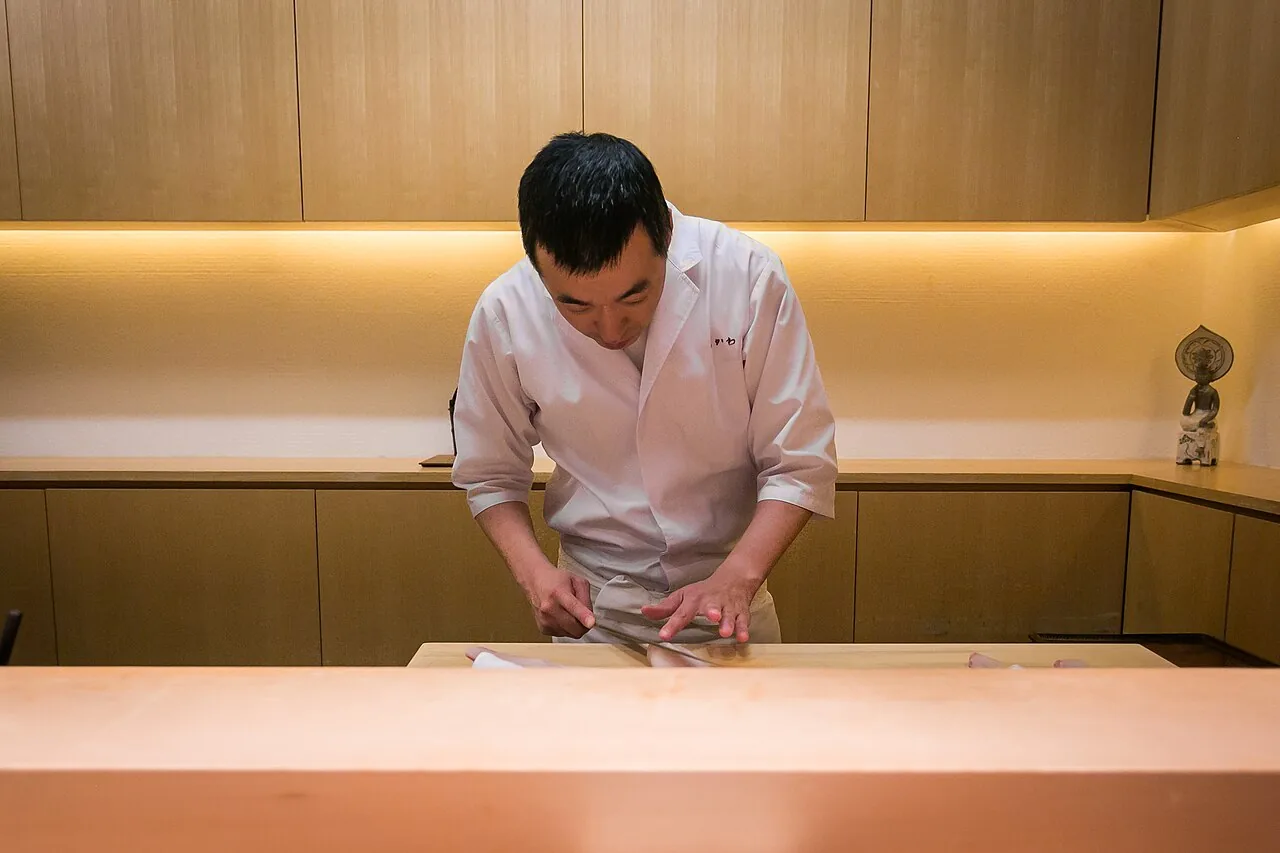
    Sushi chef in a white jacket slicing fish at a wooden counter
    The thing a class cannot teach in ninety minutes is the knife. What it can teach is the rice, and the rice is most of it. Photo: City Foodsters / Wikimedia Commons, CC BY 2.0.

    Fast facts

    • Price: ¥6,000 to ¥19,800 for a visitor class. Most sit at ¥9,000–¥11,000
    • Length: one to three hours. Ninety minutes is standard
    • Cheapest: ¥6,000, Asakusa, with sake. Most booked: ¥9,000, Asakusa, 5.0 from over 5,000
    • With children: Kita-Senju, ¥10,500, age 8 and up
    • The complaint that repeats everywhere: you shape the rice, the chef cuts the fish. Ask before booking if that matters
    • Becoming a sushi chef is a different thing entirely: ¥880,000 for five weeks. See below

    First, what a sushi class actually teaches

    Three things, in descending order of usefulness. Rice: how it is cooked, seasoned with vinegar, sugar and salt, cooled with a fan, and, above all, how little of it a piece of nigiri needs and how loosely it must be held. Everyone over-packs. Every class fixes this, and it is the one skill you will use at home. Rolls: maki on a bamboo mat, temaki hand rolls, temari ball sushi, the “Tokyo roll” invented for classes; easy, photogenic, and what the cheaper classes mostly do. Nigiri: the two-finger press that shapes rice and fish together, which is the thing sushi chefs spend years on and which a class can show you the shape of in an hour. If the listing does not say nigiri, you will be making rolls. None of the classes cut whole fish beyond a demonstration, and the ones that say “chef” mean a working or retired sushi chef, which is worth paying for; the ones that say “instructor” mean a cooking teacher, which is fine for rolls.

    Sushi classes in Tokyo, area by area

    Asakusa: the most-booked class in Japan, and the fun one

    Sushi Making Tokyo: Roll and Authentic Japanese Sushi Class, three minutes from Asakusa Station by Kaminarimon: one hour forty, about ¥9,000, rolls and temari and nigiri, and 5.0 from over 5,000 reviews, which makes it the most-reviewed cooking class in the country. It is a production line in the best sense: a big bright room, staff who have done this ten thousand times, and everyone leaves with a plate they made and a photograph of it. Not the deepest class here; the safest. Popular Sushi Making Class in Asakusa, ninety minutes, about ¥9,900, 5.0 from about 370 reviews, is the same format from the operator with the Tokyo Tower branch. The fun one is Sushi Making with Matcha and Unlimited Sake in Hanakawado by the river: ninety minutes, from about ¥6,000, a sushi-chef jacket to wear, a matcha bowl at the end and, as the name says, the sake, 5.0 from about 80 reviews. Cheapest in the district and the right choice for an evening rather than a lesson. At the top end, Sushi Making and Samurai Dining is two hours and about ¥15,000 with a samurai-themed room; you are paying for the theater.

    Tsukiji: with a real chef, and with the market

    Sushi Making Class in Tsukiji with a Professional Chef is the one for people who want to learn: ninety minutes, about ¥11,000, a working sushi chef, fish preparation and knife technique demonstrated, nigiri and rolls made, 5.0 from about 1,500 reviews. A little dearer than Asakusa’s ¥9,000, and more serious. The same operator’s Tsukiji Market Tour and Sushi Class adds a two-hour walk through the outer market first, four hours in all, about ¥15,700, 4.9 from 987 reviews. Think before you add the walk. The class on its own has 7 reviews below four stars in 1,502; the version with the market tour bolted on has 32 in 987 — six times the rate — and the complaints are about the walk, not the class. The market is also closed on Sundays, Wednesdays and holidays, and reviewers who booked those days report no substitute. The numbers are below. The short, cheap option is the one-hour Sushi Bento class, about ¥7,300, 5.0 from about 75 reviews, where you make a box to carry away rather than a plate to eat.

    Shinjuku and Shimbashi: the small groups and the long class

    Three-Hour Small-Group Sushi Class at Cooking Sun, in Shinanomachi between Shinjuku and Yotsuya: the longest class in the city, three hours, about ¥11,000 with group pricing, California rolls and tekka rolls and nigiri from scratch, 5.0 from about 175 reviews. The one that comes closest to a real cooking lesson. In Shimbashi, Tokyo Sushi Making Experience and Japanese Cooking Class does maki, temari and nigiri with tuna, salmon and flying-fish roe in ninety minutes for about ¥9,000, 5.0 from about 190 reviews, in a room that takes up to fifteen; good if you are staying around Ginza or Shiodome.

    Shibuya, Sasazuka and Nishi-Azabu: the Michelin ones

    Sushi Making and Sake Tasting at a Michelin-Listed Standing Sushi Bar in Sasazuka, ten minutes by train from Shinjuku: ninety minutes, about ¥14,000 with group pricing, you make nigiri yourself and eat pieces made by the chef with better fish, 4.9 from 77 reviews. The best fish on this page and a real counter. Confirm the piece count and the finish time when you book: in April 2026 a guest reported getting seven pieces rather than fourteen and finishing in an hour rather than ninety minutes, and the operator replied in public acknowledging the discrepancy and promising to review the description. Hand-Rolled Sushi Class in Shibuya with a Master is the cheaper Shibuya option, ninety minutes, about ¥7,700, new with a couple of dozen reviews. And the one for people who want a private lesson from someone who cooks at the top: Private Sushi Making with a Sushi Master in Nishi-Azabu, one hour forty-five, about ¥19,800, held in a Michelin-starred restaurant’s kitchen, slicing raw fish and choosing seasonal ingredients, 5.0 from about 100 reviews.

    Tokyo Tower

    Popular Sushi Making Class near Tokyo Tower: ninety minutes, about ¥9,900, 4.9 from about 250 reviews, the same format as the Asakusa branch for people staying in Roppongi or Hamamatsucho.

    The east side: Kita-Senju, and the one for children

    The only sushi class east of the river is also the best one for families. Kid-Friendly Sushi Making Class in Tokyo meets at the east exit of Kita-Senju Station at 10:30: two and a half hours, about ¥10,500, a small group, four kinds of sushi from the rice up, a quiz on sushi etiquette, and a relaxed teacher who takes children from eight. 5.0 from about 35 reviews. Do it in the morning, then spend the afternoon in the post town and let the adults have the evening in the standing bars. For the other kind of sushi morning on the east side, the public open days at Adachi Market, where you eat at the wholesalers’ counters at 8:00, are in the same guide.

    What does a sushi chef course in Tokyo cost?

    People search for this and land on pages about ninety-minute tourist classes, which is not the same product and not the same order of money. If what you mean is training to work behind a counter, here is the real number.

    Tokyo Sushi Academy runs the English-language professional courses, from its Tsukiji campus. Its published fees:

    CourseLengthFee
    International Sushi Chef Course5 weeks, 25 days, Mon–Fri 9:30–15:30¥880,000 incl. tax
    ISC Advanced Sushi Master Course2 weeks, 10 days¥550,000
    Both, booked together7 weeks, 35 class days¥1,320,000 (saves ¥110,000)
    Published on the school’s English site and read on October 11, 2026. Tuition excludes accommodation; tools and uniform are charged separately. The school notes that the Advanced course’s content, schedule and fees are still being finalised.

    Three things worth knowing before you picture yourself doing it. No professional experience is required and the five-week course is open from beginner level, so it is not gatekept. You must be eighteen and legally in Japan for the whole period, which for most visitors means a visa question, not a money question. And there is no one-day or weekend version in English with a published price — the shortest English course is the two-week Advanced one, and that is built for chefs who already work with fish. The Japanese-language courses are cheaper per week (¥165,000 admission plus ¥803,000 tuition for the two-month intensive) but require Japanese good enough to follow the teaching.

    So the honest comparison is ¥9,000 against ¥880,000, and they are not competing for the same decision. A ninety-minute class teaches you the rice, which is the part you will actually use at home. Five weeks teaches you to break down a fish and shape nigiri at speed, for a job. If you want something in between on a holiday, it does not exist in English at a published price — the closest is the three-hour small-group class further up this page.

    Which sushi class to book

    If you wantBookAreaAbout
    To actually learnSushi Making Class with a Professional ChefTsukiji¥11,000 · 90 min · 5.0 (1,503)
    The safe, famous oneSushi Making Tokyo: Roll and Authentic SushiAsakusa¥9,000 · 100 min · 5.0 (5,081)
    A market walk as wellTsukiji Market Tour and Sushi ClassTsukiji¥15,700 · 4 h · 4.9 (987) · read the reviews first
    An evening, not a lessonSushi, Matcha and Unlimited SakeAsakusa¥6,000 · 90 min · 5.0 (83)
    The longest, most thoroughThree-Hour Small-Group Class, Cooking SunShinanomachi¥11,000 · 3 h · 5.0 (175)
    The best fishMichelin-listed standing sushi barSasazuka¥14,000 · 90 min · 4.9 (77)
    Private, top chefPrivate Sushi Making with a Sushi MasterNishi-Azabu¥19,800 · 105 min · 5.0 (102)
    With childrenKid-Friendly Sushi ClassKita-Senju¥10,500 · 2.5 h · 5.0 (34) · age 8+
    Only an hourTsukiji Sushi Bento ClassTsukiji¥7,300 · 1 h · 5.0 (77)

    Questions worth asking before you book

    • Nigiri or only rolls? The listings above say which. If you want the two-finger press, it must say nigiri.
    • Is it a meal? Most classes are: you eat what you make, and it is enough for lunch. The one-hour bento class is a box to take away.
    • Vegetarian, halal, allergies: the big Asakusa and Tsukiji operators handle all three with notice; the Michelin ones are fish-only by definition.
    • Raw fish and children: every class has cooked or vegetable options; the Kita-Senju class is built around them.
    • Group size: Asakusa and Shimbashi run rooms of fifteen to twenty; Cooking Sun, Sasazuka and Kita-Senju keep it under ten; Nishi-Azabu is private.

    What the reviews say, and what they mean

    The fourteen listings on this page carry about 9,040 reviews between them — more than any other article in this series, and more than the ramen, crafts and food-tour pages combined. On 2 October 2026 I read every review rated three stars or below on the listings deep enough to show a pattern, and the operators’ replies. Eight of the fourteen have no review below four stars at all.

    Where the low reviews are

    ListingReviewsRated 3★ or below
    Asakusa, Sushi Making Tokyo5,08146 (0.9%)
    Tsukiji, with a professional chef1,5027 (0.5%)
    Tsukiji, market tour + class98732 (3.2%)
    Asakusa, Popular Sushi Making3701 (0.3%)
    Tokyo Tower2515 (2.0%)
    Shimbashi1872 (1.1%)
    Cooking Sun, three hours1750
    Nishi-Azabu, private master1020
    Samurai dining880
    Matcha and unlimited sake830
    Tsukiji bento, one hour770
    Sasazuka, Michelin-listed773 (3.9%)
    Kita-Senju, children340
    Shibuya, hand rolls260

    Two listings stand out, and they are the two this page recommended most warmly. Both recommendations above have been rewritten.

    The complaint that repeats everywhere: you never touch the fish

    This is the one thing reviewers say across different operators, different prices and different parts of the city. At the 5,081-review Asakusa class: “I was expecting more about the cutting of the fish which is the essence of sushi making”, and the rolling technique was “shown via video, not live” (a reviewer on Viator, April 2025). At the Michelin-listed bar: “We were expecting more than forming a 10g riceball onto a piece of fish. Do not expect to learn to slice and prepare the fish” (May 2026). At the Tsukiji market tour, that the ingredients were already laid out and it was “just an assembly task” (April 2024).

    This page warns about it in its first section and the warning stands: none of these classes cut whole fish beyond a demonstration. What the reviews add is how often people book anyway and are disappointed — and the Michelin operator has now publicly conceded that “our course description could be clearer”. If handling fish is the point for you, only the Nishi-Azabu private class does it, and the reason it costs ¥19,800 is in the next section.

    The Tsukiji market walk is where the complaints are, not the sushi

    The same Tsukiji operator sells the class on its own (¥11,000) and the class with a two-hour guided walk through the outer market (¥15,700). The class alone has 7 low reviews in 1,502. The version with the walk has 32 in 987. Six times the rate, for ¥4,700 more.

    And the complaints are almost all about the walk. Four of the six I read say some version of the same thing — that a guide is not needed to eat your way down an outer market, and that the stops were the ones every other tour makes. The sushi half draws separate criticism for being assembly in a crowded room, one reviewer counting thirty people in it (January 2026).

    The avoidable one is the closing days. A May 2026 reviewer found the market shut and no substitute arranged: the detail is in the listing’s fine print and, by that account, nobody in the group had seen it. Tsukiji’s outer market closes on Sundays, holidays and designated Wednesdays — the same trap the food tours page found on this operator’s other Tsukiji product. Book Monday, Tuesday, Thursday, Friday or Saturday, or book the class without the walk.

    The operator answers every critical review at length and said in one reply that it has now opened its own premises for the sushi half in order to control the experience. The ¥11,000 class is the part that works.

    Sasazuka: three low reviews, three different broken promises

    Seventy-seven reviews and three below four stars is a high rate for a small listing, and there is no single repeating fault — but all three are the same kind of fault. A booking in September 2025 arrived to find the restaurant closed, which the operator admitted was “an internal oversight on our part”. A May 2026 guest expected to learn to slice fish and did not. An April 2026 guest was billed ninety minutes and finished in sixty, and counted seven pieces where fourteen had been advertised — and the operator replied acknowledging “a discrepancy between the advertised program and your actual experience regarding the duration and the number of pieces served”.

    The fish is still the best on this page and the chef is praised in all three. Confirm the piece count, the finish time and that the booking has actually been passed to the restaurant.

    Where no complaint repeats

    Cooking Sun’s three-hour class, the Nishi-Azabu private lesson, the samurai dining room, the sake evening in Hanakawado, the Tsukiji bento hour, the Kita-Senju children’s class and the Shibuya hand-roll class have no review below four stars between them — 591 reviews with nothing under four. The Tsukiji chef class has seven in 1,502. There is no pattern to report in any of them.

    Which of these are made for foreigners

    This is the first category in this series where the answer is clearly no. The Japanese-language sushi classes cost the same or more.

    Tsukiji Tamasushi, an Edomae sushi company founded a century ago, sells a sushi-making experience to Japanese customers at three tiers (checked 2 October 2026): ¥11,000 including tax for six nigiri, a hand roll, a wasabi tasting and a tamagoyaki demonstration with the meal; ¥16,500 for the tier that adds a fish-butchering demonstration; and ¥27,500 for the one that adds knife technique. None of the three is offered in English — the page says Japanese only, bring a translator.

    Read those numbers against the complaint above and the whole thing reframes. The fish work is not being withheld from visitors; it is the expensive tier in the Japanese market too, at a 50% to 150% premium over the entry course. The one listing on this page that actually slices fish — the Nishi-Azabu private class at ¥19,800 — is priced exactly where a Japanese sushi company prices the same thing. And the entry-level tourist classes at ¥6,000 to ¥9,900 undercut Tamasushi’s ¥11,000 entry course.

    The best value we found anywhere is Japanese, and it takes foreign visitors at the same price. Tokyo Sushi School in Ikebukuro — a vocational school that trains sushi chefs — runs a half-day taster at ¥12,000 including tax for two hours, in which you make eighteen or more kinds across three servings, materials and food included. The school states that the same price applies to everyone and that, because it is almost entirely hands-on, you can do it without Japanese; supplementary materials are provided. The catches: it runs 13:30–15:30 on weekdays and Saturdays only, it is a training school rather than a hospitality product, and the language support is “you will manage” rather than a guide at your elbow.

    So the honest summary for this category: pay the tourist price for English, a fixed date and a room by Kaminarimon, and know that you are not paying a premium for being foreign. The money question on this page is not nationality. It is whether to add ¥4,700 for a guided walk round a market you can walk round yourself.

    Where this joins the rest of the east side

    The Kita-Senju class is the east side’s one entry; the ward’s fish is otherwise eaten, not made, at Adachi Market’s open days and at Toyosu, on the Koto City list. The other experiences compared by area are tea ceremony and kintsugi and kimono rental, plus ramen classes, sorted by who lets you make the noodles, , general Japanese cooking classes sorted by which kind of kitchen you stand in, and food tours, sorted by how much of the food is in the price — including the Tsukiji market walks. The knife you will want after the class is on Kappabashi — where the ¥6,900 noodle studio also is.

    Quick answers

    How much does a sushi chef course in Tokyo cost?

    Tokyo Sushi Academy’s English-language International Sushi Chef Course is ¥880,000 including tax for five weeks (25 days) at its Tsukiji campus, and its two-week Advanced Sushi Master Course is ¥550,000; both together are ¥1,320,000. Tuition excludes accommodation, tools and uniform. No professional experience is needed, but you must be 18 and legally in Japan for the whole course. A ninety-minute tourist sushi class, by contrast, costs ¥6,000 to ¥19,800.

    What is the best sushi making class in Tokyo?

    To learn, the Tsukiji class with a professional sushi chef (about ¥11,000, 90 minutes, 5.0 from about 1,500 reviews). The most-booked is the Asakusa roll-and-nigiri class near Kaminarimon (about ¥9,000, 5.0 from over 5,000 reviews). For the best fish, the Michelin-listed standing sushi bar in Sasazuka (about ¥14,000).

    How much does a sushi making class cost in Tokyo?

    About ¥6,000 to ¥10,000 for a 60 to 100-minute class where you make rolls and nigiri and eat them; ¥11,000 to ¥16,000 for three-hour classes or ones that include a Tsukiji market tour; ¥14,000 to ¥20,000 for classes at Michelin-listed restaurants or private lessons with a master.

    Is there a sushi making class in Tokyo for kids?

    Yes. The Kid-Friendly Sushi Making Class meets at Kita-Senju Station, takes children from age eight, runs two and a half hours in a small group for about ¥10,500, and includes cooked and vegetable options. The big Asakusa classes also take children with adults.

    Sushi class in Asakusa or Tsukiji?

    Tsukiji if you want to learn from a working chef and see the market; Asakusa if you want a fun, well-run class near Senso-ji with the most reviews in Japan, or an evening version with sake. Both run about 90 minutes at ¥8,000 to ¥10,000.

    Do you make nigiri or just rolls in a Tokyo sushi class?

    It depends on the class. The Tsukiji chef class, Cooking Sun, the Sasazuka and Nishi-Azabu classes and the Asakusa and Shimbashi classes all include nigiri; the one-hour bento class and some cheaper classes are rolls and temari only. Check the listing for the word nigiri.

    Is there a sushi making class in east Tokyo?

    One: the kid-friendly small-group class at Kita-Senju in Adachi, about ¥10,500 for two and a half hours. It is the only bookable sushi class east of the Sumida River.


    LOCAL SIDE JAPAN read the prices, durations, meeting points, inclusions and review counts of every class above on Viator on September 21, 2026. Prices are approximate and move with the exchange rate; several use group pricing. This is a researched comparison of the listings and their reviews, not a firsthand report on each kitchen, and the article says so here rather than pretending otherwise. Nothing was provided free by an operator.
    Written by Kizuku. I run the Sunamachi Ginza Sumo Stable, a sumo experience in Koto City, and I write about the east side of Tokyo I live and work in. More about this site →

  • Tea Ceremony in Tokyo by Area: The Real Ones, the Kimono Ones, and What They Cost (2026)

    Tea Ceremony in Tokyo by Area: The Real Ones, the Kimono Ones, and What They Cost (2026)

    This article contains affiliate links to booking sites. If you book through them, LOCAL SIDE JAPAN earns a small commission at no extra cost to you. The tea ceremonies are ranked by what you get for the money, not by what pays; the one this site recommends most costs ¥6,500 and the one it recommends least costs more. How this site is made →

    TOKYO / EXPERIENCES / TEA CEREMONY, BY AREA

    “Tea ceremony in Tokyo” now means two different products sold under one name. One is a tea ceremony: a small tatami room, a host who has trained for years in one of the tea schools, a bowl of matcha made in front of you with the movements that have not changed since the 1500s, and an hour in which nothing else happens. The other is a kimono photo session with a bowl of matcha at the end, and there is nothing wrong with it, except when you wanted the first thing and paid for the second. This is every tea ceremony you can book in Tokyo, by area, sorted into those two kinds, with what each costs and who it is for. Prices, durations, meeting points and review counts were read on the booking sites on September 21, 2026.

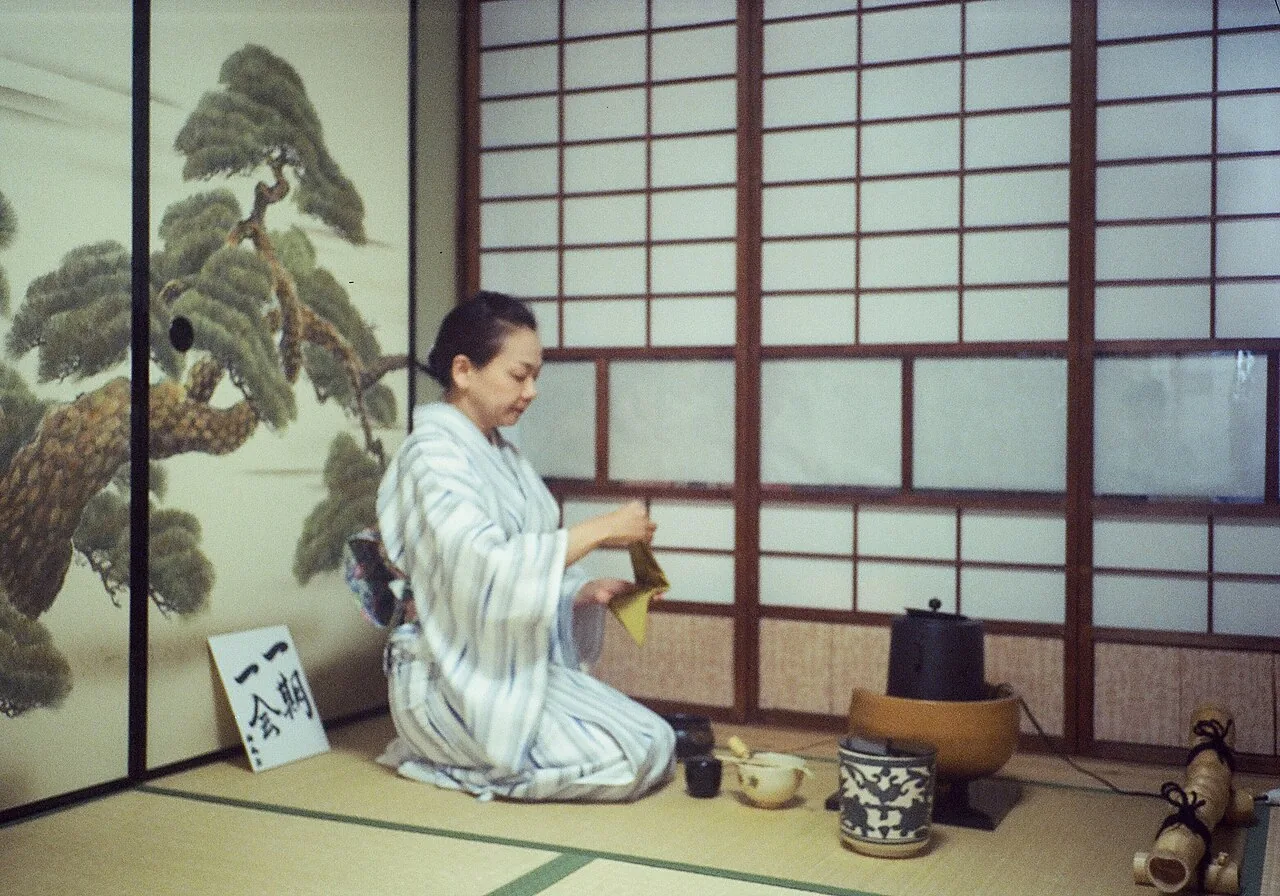
    Tea ceremony host in kimono preparing matcha in a tatami room
    A host preparing tea. The calligraphy behind her reads ichigo ichie, “one meeting, once”, which is the whole idea. Photo: Atticus Nguyen / Wikimedia Commons, CC BY-SA 4.0.

    First, the two kinds of tea ceremony you can book

    Tea first. Forty minutes to ninety in a proper tearoom, seated on tatami (a stool if your knees object), where the host makes tea for you, explains the objects, and then has you whisk a bowl yourself. A sweet, two bowls, some history, silence you did not expect to enjoy. These cost ¥3,500 to ¥8,000 and the good ones are run by people licensed by Urasenke or Omotesenke, the two big schools, and will say so.

    Kimono first. Ninety minutes of which the first thirty are being dressed in a rental kimono and the last fifteen are photographs, with a short, real tea ceremony in the middle by a host who does this twelve times a day. ¥8,000 to ¥15,000. The photographs will be good and the tea will be fine; you are paying for the costume. If that is what you want, the section below tells you which; if you want the tea, do not book these, because the ¥2,500 matcha hour in the Asakusa workshops ranking teaches you more for a third of the money, and so does everything in the “tea first” list.

    Tea ceremonies in Tokyo, area by area

    Kuramae and Asakusa: the most choice, and the best one

    Tea Ceremony Workshop by an Official Instructor is the one to book if you read no further. It is held in a private house in Kotobuki, three minutes from Kuramae Station and ten from Senso-ji, by a school licensed by Urasenke in Kyoto: ninety minutes, several kinds of tea and three sweets, ¥6,500, 4.9 from about 200 reviews. Tea first, in a real room, at a price the kimono places charge for the photographs. Nearby, on the tourist side of Kaminarimon, the Tea Ceremony Experience at Tokyo Tourist Lounge Asakusa is the relaxed version in a lounge rather than a tearoom, one hour, about ¥5,600, 5.0 from over 200 reviews, and honest in its own listing that it is designed for novices; and a 50-minute session with a tea master is the cheapest in the district at about ¥3,500, new and unreviewed. For the tea itself rather than the ritual, Matcha Experience with Japanese Tea Tasting, run by a former tea farmer in Kotobuki, tastes seven teas in ninety minutes for about ¥9,800, 5.0 from about 40 reviews.

    Kimono first, in Asakusa: Kimono Tea Ceremony at Maikoya Asakusa is the biggest operator in the category, ninety minutes, about ¥8,100, 4.9 from 727 reviews, dressing included, and it is exactly what it says: well run, formal room, good photographs, a real if brief ceremony. Two things before you book it: its cancellation policy is absolute — nothing refunded inside 24 hours, illness included, which the operator confirms in writing — and guests who paid for the private version describe a plain room with designated photo spots rather than the tearoom in the pictures. Both are below. Its two-hour version with sweets making is about ¥20,350, up from about ¥14,400 a month earlier. The small-group kimono tea ceremony near the Skytree is the same format from a smaller operator, about ¥9,800, 5.0 from over 200 reviews, and the one to choose if you want fewer people in the room.

    Yanaka and Bunkyo: the tearooms nobody advertises

    Two of the most authentic settings in the city are in the quiet wards north of Ueno. Tea Ceremony in a Small Tea Room is held at Senrakuan, a purpose-built tearoom in Sendagi, five minutes from the Yanaka Ginza steps: one hour, about ¥8,000, an English-speaking instructor, and a room the size the ritual was designed for. Do it after the Yanaka walk. Traditional Tea Ceremony with a Japanese Tea Master at OCHARU in Hongo, near the University of Tokyo, is a small-group hour with rare teas and a certificate, about ¥6,000, 4.8 from about 55 reviews. Neither has a kimono, which is the point.

    Shibuya: the cheapest, and the private one

    Shibuya Authentic Tea Ceremony: fifty minutes on the second floor of a building on Dogenzaka, small group, history and a bowl you whisk yourself, about ¥3,900, 5.0 from about 65 reviews. The best value in the city for a tea-first hour, in the least tea-like neighborhood. Private Japanese Tea Tasting and Matcha Ritual in Shibuya is the private version in a Japanese-style room, one hour, about ¥5,000, 5.0 from about 30 reviews.

    Shinjuku: kimono first, done properly

    Maikoya Shinjuku is the same operator as Asakusa in a newer room, ninety minutes, about ¥8,100, 5.0 from a smaller number of reviews; book it if your hotel is west and you want the kimono without the Asakusa crowds. Matcha Kimono Tea Ceremony in Tokyo, near Yotsuya, uses a simplified kimono you can put on yourself and spends more of the ninety minutes on the tea, about ¥9,000, 4.9 from about 110 reviews.

    Tokyo Station and Ginza: for people with an hour between things

    Private Japanese Tea Ceremony in the Tokyo Station Area: ninety minutes, private, from about ¥12,000 with group pricing, new. The price is for the privacy and the location; the tea is the same tea. Ginza’s listings are mostly thirty-minute demonstrations attached to something else, and are not worth a special trip.

    The east side: none in Sumida or Koto, and where to go instead

    There is no bookable tea ceremony east of the Sumida River; Kuramae and Asakusa, on the west bank, are the closest, and the Urasenke house in Kotobuki is a ten-minute walk from the river walk. What the east side has is the settings: Kiyosumi Garden in Koto has a tea pavilion over its pond that serves matcha and a sweet for a few hundred yen with no ceremony and no booking, and Mukojima Hyakkaen in Sumida does the same in season. Neither is a lesson; both are the thing the lesson is about.

    Which tea ceremony to book

    If you wantBookAreaAbout
    The real thing, best valueTea Ceremony Workshop by an Official Instructor (Urasenke-licensed)Kuramae¥6,500 · 90 min · 4.9 (206)
    The cheapest real hourShibuya Authentic Tea CeremonyShibuya¥3,900 · 50 min · 5.0 (65)
    A proper tearoom, quiet areaTea Ceremony in a Small Tea Room (Senrakuan)Sendagi / Yanaka¥8,000 · 1 h
    Kimono and photographsKimono Tea Ceremony at MaikoyaAsakusa or Shinjuku¥8,100 · 90 min · 4.9 (725)
    Kimono, smaller groupTea Ceremony in Asakusa with Kimono, Matcha and WagashiAsakusa / Skytree¥9,800 · 90 min · 5.0 (222)
    Nervous, first time in JapanTea Ceremony Experience at Tokyo Tourist LoungeAsakusa¥5,600 · 1 h · 5.0 (227)
    The tea itself, seven kindsMatcha Experience with Japanese Tea TastingKotobuki¥9,800 · 90 min · 5.0 (38)
    Private, centralPrivate Tea Ceremony, Tokyo Station areaMarunouchifrom ¥12,000 · 90 min

    What to know before you sit down

    • Knees: every listing above offers a stool or a chair if you ask. Ask when you book, not when you arrive.
    • Socks: you will take your shoes off. Clean socks without holes are the only dress code that matters.
    • Which school: Urasenke and Omotesenke are the two large ones and differ in details you will not notice; a host who names a school has trained for years, and that is the thing to look for in a listing.
    • The bowl: turn it twice clockwise before drinking, to avoid drinking from the front the host presented to you; turn it back after. That is the whole of the etiquette a guest needs, and the host will show you anyway.
    • Photographs: at kimono sessions, expected. At tea-first sessions, ask, and put the phone away during the making.
    • Children: the Tourist Lounge and Maikoya sessions take them; the Kuramae and Sendagi tearooms are better for anyone over ten who can sit still.

    What the reviews say, and what they mean

    The fourteen listings on this page carry about 1,782 reviews, and 727 of them sit on one operator. On 3 October 2026 I read every review rated three stars or below on the listings with a usable record, and the operators’ replies.

    Where the low reviews are

    ListingReviewsRated 3★ or below
    Maikoya Asakusa (kimono first)72711 (1.5%)
    Tokyo Tourist Lounge, Asakusa2333 (1.3%)
    Small-group kimono, near the Skytree2230
    Official Instructor, Kuramae2064 (1.9%)
    Matcha Kimono, Yotsuya1113 (2.7%)
    Shibuya Authentic660
    Maikoya Asakusa, two-hour version621 (1.6%)
    OCHARU, Hongo563 (5.4%)
    Matcha Experience, tea tasting380
    Maikoya Shinjuku320
    Private tasting, Shibuya280
    Senrakuan / 50-min tea master / Tokyo Station private0—

    Three listings have no reviews, including Senrakuan in Sendagi, which this page recommends on the strength of the room rather than the record. That is a judgement, not a measurement, and it is fair to say so.

    Maikoya: the cancellation policy is the thing to know

    Eleven low reviews in 727 is not a bad rate for the busiest operator in the category. But one of them is worth the whole section. A guest who cancelled inside 24 hours with food poisoning was refused a refund, and the operator’s public reply sets out the rule exactly: cancellations inside 24 hours are “non-refundable in all cases, except in the event of large-scale natural disasters or transportation shutdowns” (February 2026). Date changes are offered “where circumstances allow”, refunds are not.

    If you are booking a kimono tea ceremony on a day you might be ill, jet-lagged or delayed, that is the sentence to read twice. It is applied uniformly and the operator says so plainly, which is at least honest; it is also stricter than most things on this site.

    The second thing is about the room. A guest who paid ¥72,000 for a private ceremony for two in December 2025 described fluorescent lighting, “minimal decorations”, the sound of other ceremonies through the walls, and specific corners set up to photograph well with the rest of the space empty. This page says at the top that with the kimono-first bookings you are paying for the costume and the photographs. That review is what that sentence looks like at the top of the price range. Two further reviewers say solo guests get less of the host’s attention than groups.

    Where no complaint repeats

    The small-group kimono ceremony near the Skytree (223 reviews, three at four stars, nothing lower), the Shibuya hour (66), the private Shibuya room (28), the seven-tea tasting in Kotobuki (38) and Maikoya’s own Shinjuku branch (32) have no review below four stars between them. The Kuramae Urasenke workshop this page recommends first has four in 206 and no pattern among them.

    OCHARU in Hongo shows three in 56, which is the highest rate on the page, but 56 reviews is a small enough base that three can be three bad afternoons rather than a fault. Worth knowing, not worth avoiding.

    Which of these are made for foreigners

    The tea-first half of this page is priced close to the Japanese market. The kimono-first half is not, and that is the clearest split this series has found.

    The Ochanomizu Urasenke tea school, on the third floor of the Ikenobo building five minutes from JR Ochanomizu, charges Japanese students ¥3,500 a lesson for beginners and ¥4,500 thereafter, mizuya fee included, with no joining fee and no annual fee (checked 3 October 2026). Instruction is in Japanese.

    • Tea first: ¥3,500–¥8,000. The Shibuya hour at ¥3,900 is the Japanese price. The Kuramae Urasenke workshop at ¥6,500 is under twice it, for ninety minutes, several teas, three sweets and English. On any reading that is a fair price for the language and the one-off.
    • Kimono first: ¥8,100–¥9,800 for ninety minutes; ¥20,350 for Maikoya’s two-hour version with sweets making. Two to three times a Japanese lesson for the ninety-minute sessions, and the tea inside it is shorter. The gap is the kimono, the dresser and the photographs, which are real costs — a full kimono set with hair is ¥3,850 at a Japanese shop in Asakusa, so roughly ¥4,000 of the gap is accounted for and the rest is the room and the photographer.
    • ¥72,000 for two is a different product entirely and should be judged as a private photo session, not as tea.

    None of this is a foreigner surcharge in the way the word is usually meant. It is the same thing this page already says: decide first whether you want the tea or the photographs, because the two cost different money and the listings deliberately blur them. If it is the tea, a Japanese school will teach you for ¥3,500 and the English-language tea-first hours start at ¥3,900.

    Where this joins the rest of the east side

    Tea ceremony is one of the seven hours ranked in Asakusa Workshops: Which Hour Is Worth ¥7,000, where the ¥2,500 matcha class is the recommendation. The other experiences compared by area are kintsugi and sushi classes, plus kimono rental by price , samurai and ninja experiences by kind and Japanese cooking classes and the quiet crafts — whose ¥2,500 matcha-making hour in Asakusa is the cheapest way to learn the whisking without the ceremony — and the east side’s own are Edo Kiriko glass and knives on Kappabashi. Everything bookable is on the Experiences page.

    Quick answers

    Where is the best tea ceremony in Tokyo?

    For an authentic ceremony at a fair price, the Urasenke-licensed workshop in a private house in Kotobuki near Kuramae and Asakusa: ¥6,500 for 90 minutes, 4.9 from about 200 reviews. For a kimono and photographs, Maikoya in Asakusa or Shinjuku, about ¥8,100. For the cheapest real hour, the Shibuya tea ceremony on Dogenzaka, about ¥3,900.

    How much does a tea ceremony cost in Tokyo?

    ¥3,500 to ¥8,000 for a tea-first session of 50 to 90 minutes in a tearoom; ¥8,000 to ¥10,000 for a kimono-and-tea session where dressing and photographs take most of the time (about ¥20,000 for a two-hour version with sweets making); ¥12,000 and up for private sessions in central Tokyo.

    Is a tea ceremony in Asakusa worth it?

    Yes, if you choose the right kind. Asakusa and neighboring Kuramae have the widest choice in Tokyo, from a ¥3,500 fifty-minute session to the Urasenke-licensed ¥6,500 workshop to Maikoya’s ¥8,100 kimono version. Decide first whether you want the tea or the kimono.

    Tea ceremony with or without kimono?

    Without, if you want to learn about tea: the dressing takes 30 minutes of a 90-minute session and the ceremony is shortened to fit. With, if you want the photographs; Maikoya and the small-group Asakusa session are the well-run ones.

    Is there a tea ceremony in Sumida or east Tokyo?

    No bookable ceremony east of the river. Kuramae and Asakusa on the west bank are closest. Kiyosumi Garden in Koto serves matcha and a sweet in its pond-side pavilion without a ceremony or booking, for a few hundred yen.

    What should I wear to a tea ceremony?

    Anything you can sit on the floor in, and clean socks, because shoes come off. Kimono sessions provide the kimono. A stool or chair is available at every listing above if kneeling is a problem; ask when booking.


    LOCAL SIDE JAPAN read the prices, durations, meeting points, inclusions and review counts of every session above on Viator on September 21, 2026. Prices are approximate and move with the exchange rate; several use group pricing. This is a researched comparison of the listings and their reviews, not a firsthand report on each tearoom, and the article says so here rather than pretending otherwise. Nothing was provided free by an operator.
    Written by Kizuku. I run the Sunamachi Ginza Sumo Stable, a sumo experience in Koto City, and I write about the east side of Tokyo I live and work in. More about this site →

  • Senbero: Getting Drunk for ¥1,000 in Tokyo, Explained

    Senbero: Getting Drunk for ¥1,000 in Tokyo, Explained

    This article contains one affiliate link to a booking site, for the only guided version that exists. Everything else here costs ¥1,000 and needs no booking. How this site is made →

    HOW JAPAN WORKS / SENBERO

    Senbero is a Japanese word made of two others: sen, a thousand yen, and bero-bero, the sound of being drunk. Together they mean getting pleasantly drunk for ¥1,000, and they describe a whole kind of bar, a whole kind of evening, and, on the east side of Tokyo, a whole kind of neighborhood. The word is not old. The novelist Nakajima Ramo used it among friends in the 1980s and put it on the cover of a book in 2003, The Senbero Detective Goes Forth, a tour of the cheapest bars in Japan, and the bars took it up as a badge. Now a “senbero set” is a menu item: one drink and two or three small plates for a thousand-yen note, standing, no reservation, no tip, no second round expected. This is what it is, where it is best, and how not to embarrass yourself in a room of people who have been doing it since before you were born.

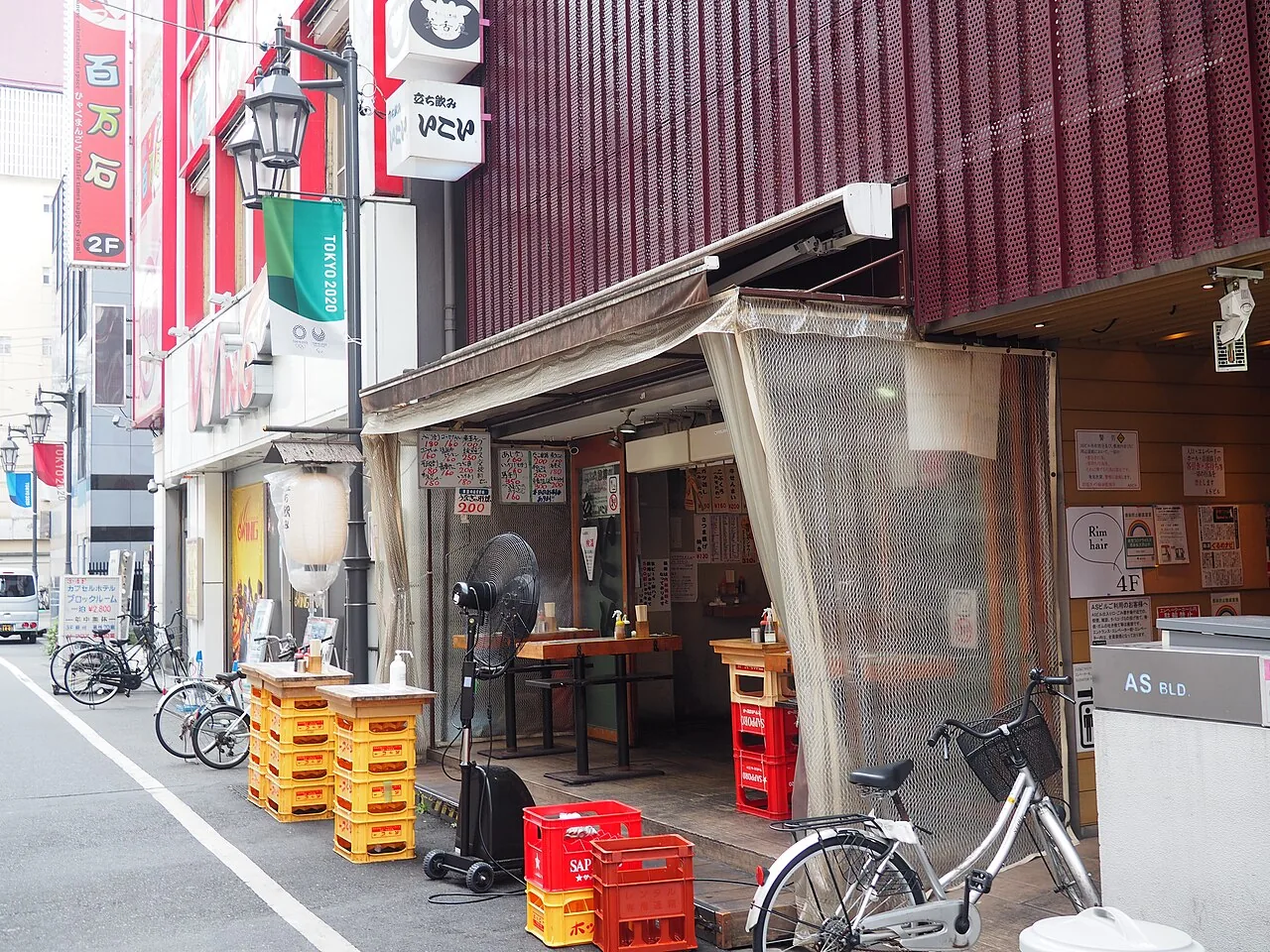
    Standing bar in Akabane, Tokyo, with beer crates as tables on the pavement
    A standing bar in Akabane: upturned beer crates for tables, the menu on the wall, prices in the low hundreds. Photo: nakashi / Wikimedia Commons, CC BY-SA 2.0.

    Fast facts

    • What it means: “A thousand yen, hammered” — a bar where one drink and a couple of plates come to about ¥1,000.
    • Prices: beer ¥400–500, chuhai ¥300–400, plates ¥150–300.
    • An evening: three or four bars, 40 minutes each, ¥3,000–¥4,000 in total.
    • Cash only, almost everywhere. No English menus. They close early.
    • Best stations: Kita-Senju and Akabane. Ueno’s Ameyoko is the easiest first one.
    • The rule that matters: order a drink first, then food. Pay at the counter. Do not linger after you finish. No tipping.

    What does senbero mean?

    Literally, “a thousand yen, hammered”. In practice, a thousand yen does not get anyone hammered in Tokyo in 2026; a beer is ¥400 to ¥500, a chuhai (shochu and soda) ¥300 to ¥400, and the plates are ¥150 to ¥300. What the word describes is the ratio: a place where a drink and a couple of things to eat come to about ¥1,000, where you stand or perch, where you are in and out in forty minutes, and where the next place is a hundred meters away. The evening is three or four of these in a row. That is the culture: not one bar for four hours, but four bars for one hour each, and a total bill that would not cover the cover charge at a cocktail bar in Ginza.

    Three kinds of place do it. Tachinomi, standing bars, the purest form: a counter, no chairs, a chalkboard. Kakuuchi, drinking inside a liquor shop: you buy a can or a cup of sake at retail price and drink it at a shelf by the door, with a bag of snacks from the same shop. And the old izakaya with a counter where the standing section is at the front and the regulars have had the same stools since the Showa era. All three are cash, all three close early, and none of them has an English menu, which is the point.

    Where is the best senbero in Tokyo?

    • Kita-Senju (Adachi): the capital. The alleys west of the station have the densest run of standing bars in the eastern half of Tokyo, with Ohashi (1877, niku-dofu) and Tenshichi (standing kushi-katsu) as the two you queue for. The full Kita-Senju evening →
    • Akabane (Kita): the other capital, and the one with the earliest opening hours in the city. The bars along the arcade south of the station open at 9:00 in the morning for people coming off night shifts, and Marukensuisan, the oden stand, sells a cup of sake topped up with oden broth for a few hundred yen, which is the most famous single drink in senbero. Akabane’s other attraction →
    • Tateishi (Katsushika): the sad one. Nonbe Yokocho, the alley of tin-roofed bars beside Keisei Tateishi Station that was the most photographed senbero street in Japan, was cleared in 2023 for a station redevelopment that will put a ward office and towers on the site. The bars on the south side of the tracks survive for now, including the motsu-yaki counter that opens at ten in the morning and closes when the offal runs out; go before the second phase.
    • Kameido (Koto): gyoza and a beer under the tracks, the gyoza shop that serves nothing but gyoza, and the standing bars along the shopping street toward Kameido Tenjin.
    • Ueno (Taito): Ameyoko’s outdoor tables, where the ¥1,000 is spent on a highball and a plate of whatever is being grilled, and where the crowd is half tourists and half men who have not been home yet. Loud, easy, and the right first senbero if you are nervous.
    • Monzen-Nakacho (Koto): the izakaya street beside Fukagawa Fudo-do, the after-work version for people who live nearby, quieter and a little dearer.

    What are the rules at a Japanese standing bar?

    Rule What it means
    One drink per person The real one. Everyone orders a drink first, before food, and keeps one going. Sitting on one beer for an hour at a standing bar is the one thing that will get a look.
    Order a drink before you order food Say the drink first (“nama” for draft beer, “chuhai”, “highball”), then point at plates. The food comes when it comes.
    Do not spread out Bags on the hook under the counter or between your feet. A standing bar’s capacity is its counter length.
    Forty minutes Not a rule anyone states; the length of a senbero visit by custom. When you are done, you are done; the next place is the point.
    Pay when you leave Cash, at the counter, no tip, and the bill is often just the owner counting the empty plates in front of you.
    No groups of six Two or three is right. Four is the limit. A party of six at a standing bar is a party the bar cannot serve.
    Talk to strangers Allowed and expected. The man next to you will ask where you are from. Answer, and buy nobody a drink; that is not done here.
    Photos Of your plate, fine. Of the counter, ask. Of the regulars, no.

    How much does a senbero evening actually cost?

    About ¥3,000 to ¥4,000, not ¥1,000. The name describes one bar, not the night. A thousand yen buys a drink and two small plates at one counter; the culture is to do that three or four times in a row, walking a hundred metres between each. Four stops at ¥800 to ¥1,000 each is the normal shape of a senbero evening.

    That is still the cheapest real night out in Tokyo. For the same money you get one cocktail and a cover charge in Ginza. And unlike a set menu, you can stop after two bars and go home having spent ¥1,800.

    Budget ¥5,000 in cash per person and you will come home with change. Almost none of these places take cards, and several do not have a machine at all.

    What do you order at a senbero bar?

    The classic senbero plate is motsu-yaki, grilled offal on skewers, ¥100 to ¥150 each, ordered by part (heart, liver, intestine, cartilage) and by sauce (tare, sweet soy; shio, salt). Then niku-dofu, beef and tofu simmered in soy, ¥300 to ¥400. Then oden in winter, ¥100 to ¥200 a piece. Then whatever the chalkboard says is today’s. The drinks: nama (draft beer, ¥450), hoppy (a beer-flavored soft drink you pour over a glass of shochu, ¥400 for the set, the definitive senbero drink), chuhai or lemon sour (¥350), nihonshu in a glass filled to overflowing into a saucer (¥400). A thousand yen buys a drink and two skewers and a niku-dofu at most of the places above. Two thousand buys the whole evening at three of them.

    Do I need a guide for a senbero crawl?

    Without, on the east side: there is no guided senbero crawl in Kita-Senju, Akabane or Tateishi, and the bars are small enough that a group with a guide would fill one. Go alone or in a pair, point at the chalkboard, and let the man next to you explain hoppy. If you want the training-wheels version first, the Shinjuku local bar and izakaya crawl on Viator does three standing bars in three hours for about ¥6,000 plus what you drink, 4.9 from over 1,300 reviews; it is in the wrong part of town for this site but it teaches the ordering, and you can take that east the next night.

    Related: If you go into Shinjuku without a guide, Golden Gai charges a seat fee and most bars ban photographs — both are where visitors get caught, and neither is printed in English at the door.

    The east-side version of a guided crawl is a ramen crawl, not a senbero one. Hidden Taverns and Ramen in Ueno runs three hours from Ueno Station through a standing bar and a tavern and finishes on ramen — which is what a senbero night does anyway, in the right order. It is the closest thing to this page that you can actually book, and it is about ¥16,500. The ramen crawls and classes in Tokyo, compared →

    Why it exists here

    Senbero is a working man’s institution and the east side was where the working men lived: the lumber yards of Koto, the factories of Sumida and Adachi, the freight yards at Akabane and the market at Senju. A standing bar is what you build when your customers have an hour between the shift and the last train and ¥1,000 in their pocket, and the ones that survive from the 1950s are the ones whose customers kept coming after the factories closed. That is also why they are going: the land under a tin-roofed bar beside a station is worth more as a tower, and Tateishi’s alley is the latest to find that out. The senbero districts that are left are the ones on this list, and they are a reason to cross the river that no guidebook gives.

    Where this joins the rest of the east side

    Start in Kita-Senju, where the post town, the fish market and a bath with a garden fill the afternoon before the bars open. This is the third explainer in How Japan Works, after pachinko and sento etiquette; the bath before the bar is the correct order. If you would rather someone else ordered for you, the guided version of this — Shinjuku’s bar crawl at ¥6,000, Ueno’s nine-dish evening at ¥16,000 — is compared in food tours by area, along with the finding that nobody runs one east of the river.

    Quick answers

    What does senbero mean?

    Sen (¥1,000) plus bero-bero (drunk): getting pleasantly drunk for a thousand yen. It describes cheap standing bars and old izakaya where a drink and two or three small plates cost about ¥1,000, and the habit of visiting several in one evening. The word spread from Nakajima Ramo’s 2003 book The Senbero Detective Goes Forth.

    Where is the best senbero in Tokyo?

    On the east side: Kita-Senju (Adachi) and Akabane (Kita) are the two capitals, with Ueno’s Ameyoko for a first try, Kameido and Monzen-Nakacho for quieter versions, and what remains of Tateishi in Katsushika after its Nonbe Yokocho alley was cleared in 2023.

    How much does a senbero evening cost?

    About ¥1,000 per bar for a drink and two or three plates, and most people do three or four bars, so ¥3,000 to ¥4,000 for the evening. Drinks are ¥350 to ¥500, skewers ¥100 to ¥150, niku-dofu ¥300 to ¥400. Cash only.

    What are the rules at a Japanese standing bar?

    Order a drink first and keep one going, keep your bag off the counter, stay about 40 minutes, pay in cash at the counter when you leave, no tipping, groups of two or three, and no photos of other customers. Talking to the person next to you is normal.

    What is hoppy?

    A beer-flavored, almost alcohol-free malt drink you pour over a glass of shochu on ice, sold as a set for about ¥400. It was invented in 1948 as a cheap substitute for beer and is the definitive senbero drink; order a second bottle of hoppy or a second shot of shochu separately.


    LOCAL SIDE JAPAN checked the origin of the word against the Japanese-language references on Nakajima Ramo’s 2003 book, the Tateishi redevelopment against Katsushika City’s project pages and 2023 press coverage of the Nonbe Yokocho closure, and the tour price on Viator, on September 21, 2026. Prices in the bars are typical ranges from the writer’s own evenings, not a menu.

    Written by Kizuku. I run the Sunamachi Ginza Sumo Stable, a sumo experience in Koto City, and I write about the east side of Tokyo I live and work in. More about this site →

  • Kintsugi Workshops in Tokyo by Area: Asakusa, Shinjuku, Shibuya, Aoyama, Ginza (2026)

    Kintsugi Workshops in Tokyo by Area: Asakusa, Shinjuku, Shibuya, Aoyama, Ginza (2026)

    This article contains affiliate links to booking sites. If you book through them, LOCAL SIDE JAPAN earns a small commission at no extra cost to you. The workshops are ranked by what you get for the money, not by what pays; the cheapest one is also the best reviewed. How this site is made →

    TOKYO / EXPERIENCES / KINTSUGI, BY AREA

    Kintsugi, the repair of broken pottery with lacquer and gold, has become the workshop everyone in Tokyo wants to book, and there are now a dozen places to do it, from a ¥1,500 hour above a whisky shop in Kabukicho to a ¥23,000 afternoon with a master in Aoyama. They are not the same thing. Real kintsugi takes months, because natural lacquer cures slowly; every workshop that sends you home the same day with a finished piece is using a fast version, and the price mostly buys the setting, the group size and how honest the teacher is about that. Here are the workshops in Tokyo by area, what each actually does, and which to book depending on what you want out of the hour. Prices and reviews were read on the booking sites on September 21, 2026.

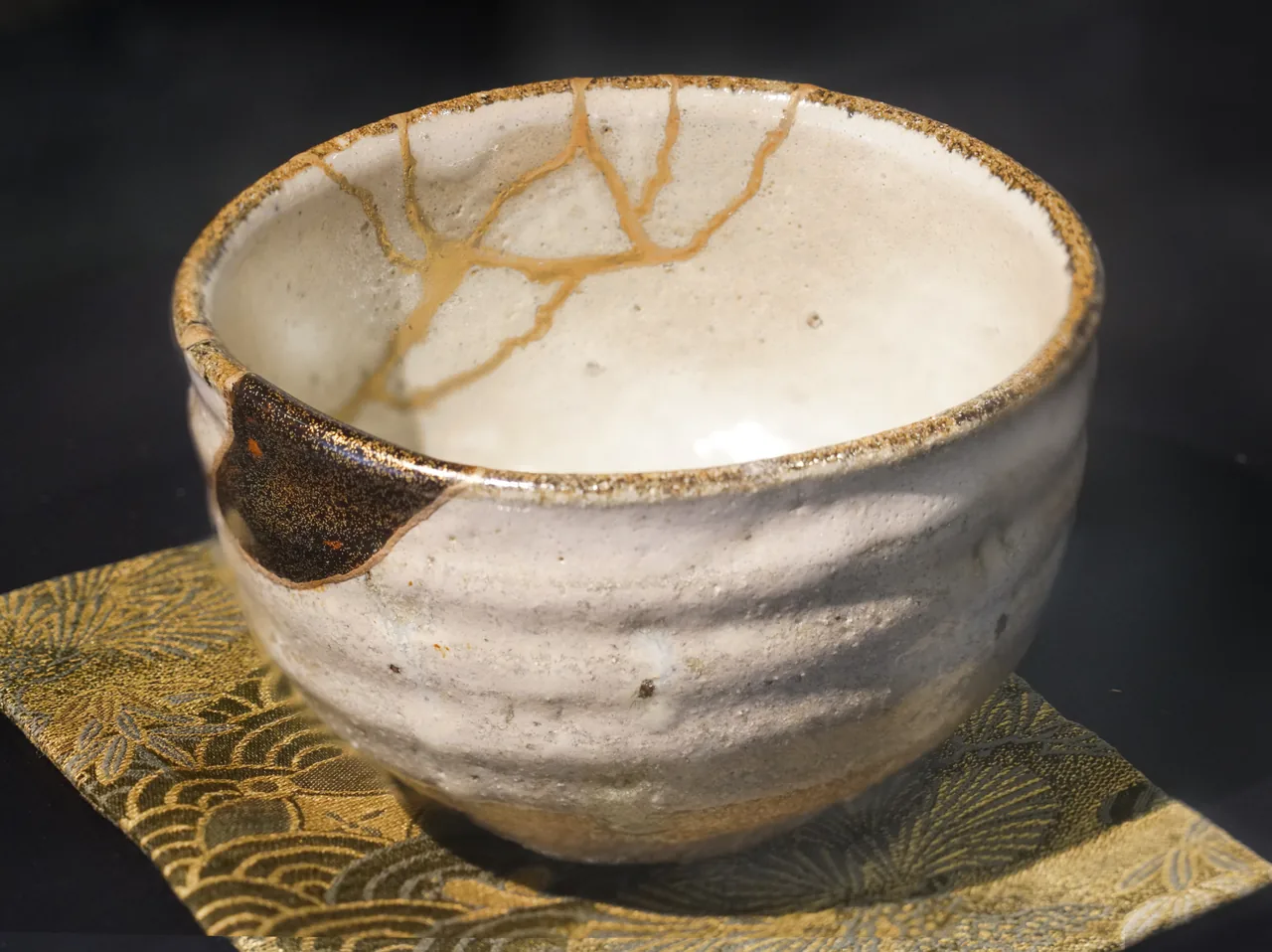
    Tea bowl repaired with kintsugi gold lacquer seams
    A tea bowl with real kintsugi: lacquer seams dusted with gold, months in the making. Your workshop piece will look like this by the end of the hour, and that is the point to understand first. Photo: Jean-Pierre Dalbéra / Wikimedia Commons, CC BY 2.0.

    Fast facts

    • Cheapest: ¥1,500, Kabukicho, Shinjuku — one hour
    • Most reviewed: Asakusa, 4.9 from over 1,200 reviews, from ¥2,400
    • Real urushi and real gold: Minami-Aoyama, ¥9,900 for an hour or ¥23,000 for two with the master
    • Dearest: ¥27,800, Dogenzaka, Shibuya — two hours, with matcha
    • Duration: one to two hours. You take the piece home the same day
    • On the east side: none. The nearest to Sumida and Koto is Asakusa
    • Booking: in advance. These are studios of six to twelve people, not drop-in shops

    What is kintsugi?

    Kintsugi is the Japanese craft of repairing broken pottery with lacquer and gold, so that the break is highlighted rather than hidden. The name means “golden joinery”. Traditionally the pieces are glued, filled and built up with urushi, the sap of the lacquer tree, each layer curing for days in a humid box, and gold powder is dusted onto the final wet layer. A full traditional repair takes six weeks to three months.

    The idea behind it is the reason people want to do it: a repaired bowl is not a damaged bowl, it is a bowl with a history, and the repair is made the most visible thing about it.

    Is a one-hour kintsugi workshop real kintsugi?

    Traditional kintsugi uses urushi, the sap of the lacquer tree, to glue the pieces, fill the gaps and build the seam, with each layer curing for days in a humid box before the next; the gold powder goes on last, onto wet lacquer, and the whole repair takes six weeks to three months. Nobody can do that in an hour. What the workshops do is kan’i kintsugi, “simplified kintsugi”: the pieces are joined with a fast-curing adhesive or a synthetic lacquer, the seam is painted, and brass or gold powder is dusted on. It looks the same across a table, it is food-safe or not depending on the materials (ask), and it teaches you the hand movements and the idea. A few workshops use real urushi for one stage and real gold for the finish, and charge accordingly. None of this makes the cheap ones a con; it makes them an introduction, which is what most people want. The honest question is whether the teacher tells you. The good ones do, unprompted.

    How much does a kintsugi workshop cost in Tokyo?

    • ¥1,500–¥2,400 — one hour, simplified method, a small provided plate. Shinjuku and Asakusa. Budget another ¥2,000–¥5,000 if you want a piece worth keeping.
    • ¥4,900–¥6,600 — an hour making a gold-seamed pendant or earrings instead of a plate. The better souvenir if you would never use a repaired dish.
    • ¥9,900–¥12,000 — one to one and a half hours in a studio or a café, Aoyama or Ginza. Still the simplified method.
    • ¥18,000–¥23,000 — two hours, small groups, tea or sake included, and in the Aoyama case the master teaching with pure gold on the finish. This is as close to the real craft as a single afternoon gets.

    For comparison, a Japanese-language studio charges about ¥8,800 for the same simplified method over two to two and a half hours — and lets you bring your own broken piece. The full price comparison is below. Real urushi is not sold as a workshop at any price: Japanese studios teach it as a course of four or five sessions over months, because each lacquer layer has to cure.

    Which kintsugi workshop is nearest to me?

    Ten studios, and they are not spread evenly: six of the ten sit in a line from Shibuya through Aoyama to Shirokanedai, and the whole east half of the city has none. Addresses below are the operators’ own meeting points, checked on October 11, 2026.

    AreaStudio and addressFromTime
    AsakusaZEN Craft Studio, Tosei Building 10F, 1-27-2 Asakusa, Taito City¥2,4001 h
    AsakusaTsugutsugu Asakusa, 1-1-2 Kaminarimon, Taito City — ground floor on Asakusa-dori, a short walk from Tawaramachi or Asakusa Station¥6,6001 h
    ShinjukuChopsticks Studio, 1-5-4 Kabukicho, 8F (liquor shop on the ground floor, take the lift)¥1,5001 h
    Shibuyamon cadeau, Nishinaya Building 4F, 1-18-8 Dogenzaka — up Dogenzaka from Shibuya¥22,0002 h
    ShibuyaZoniya Torii, B1, 2-8 Uguisudanicho (accessory version)¥4,9001 h
    AoyamaTNCA Minami-Aoyama Studio, 3-8-2 Minamiaoyama, Minato City — basement of the OG building¥9,9001 h
    AoyamaSame studio, with Master Taku and pure gold¥23,0002 h
    GinzaCafe AOU Ginza Forest, Daiwa Ginza Building ground floor, 6-2 Ginza, Chuo City¥12,0001 h 30
    ShirokanedaiSunview Heights 104, 5-4-3 Shirokanedai, Minato City — about 10 minutes on foot from Shirokanedai Station¥18,0002 h
    EbisuTsugutsugu Ebisu, 2-21-2 Ebisu, Shibuya City — just off Meiji-dori, across the river (accessory version)¥6,6001 h
    Prices are the lowest listed option at each studio. Two pairs share an operator: Tsugutsugu runs both Asakusa and Ebisu, and the two Aoyama entries are the same atelier.

    If you are staying in Asakusa, Ueno, Sumida or Koto, Asakusa is your answer and the only one that is not a train ride. If you are on the Yamanote west side, Shibuya, Aoyama, Shirokanedai and Ebisu are within a few stops of each other and the decision is about price and whether you want real gold, not distance. Kabukicho is the cheapest in the city by a wide margin and the one to take if the price is what is stopping you.

    Where can I do a kintsugi workshop in Tokyo?

    Asakusa: the cheapest and the most reviewed

    Traditional Kintsugi Workshop in Asakusa, at ZEN Craft Studio on the tenth floor of a building a few minutes from Senso-ji: one hour, about ¥2,400, bilingual staff, 4.9 from 1,214 reviews, which makes it the most-booked kintsugi workshop in Japan. It is a simplified-kintsugi class in a busy studio that also runs the chopstick and calligraphy hours, and it is the right first one on price. Two things its reviewers say that the listing does not: the piece included is one of two small mass-produced dishes that the studio has broken in advance, and a larger one is a ¥5,000 upgrade; and much of the hour goes on filing the crack wider before you fill it, which staff confirmed to one guest is not how it is traditionally done. Both are set out below. If you are doing Asakusa anyway, this is the pick, and it is why kintsugi is also in the Asakusa workshops ranking. The same operator runs a ¥3,000 version; the difference is the piece. For children, a kid-friendly accessory version makes a gold-seamed pendant instead of a plate, about ¥6,600.

    Shinjuku (Kabukicho): the cheapest in the city

    Japanese Gold Repair Kintsugi Workshop in Shinjuku: one hour, about ¥1,500, on the eighth floor above a whisky shop in Kabukicho, from the operator that runs the ¥1,000 chopstick classes. A premium plate is ¥2,000 extra. 5.0 from a small number of reviews; the same simplified method as Asakusa, in a less atmospheric room, for less money. Right if you are staying in Shinjuku and want the hour without the trip east.

    Shibuya: the relaxing one, and the accessory one

    Kintsugi and Matcha at mon cadeau, Shibuya: two hours, about ¥22,000, a maximum of six people in a small studio up Dogenzaka, with matcha and a sweet during the lacquer’s setting time and a choice of your own piece from the shelf. 5.0 from over a hundred reviews. This is the one people describe as the calmest two hours of their trip, and it is priced like it; the technique is still simplified kintsugi, so you are paying for the room, the tea and the attention. There is a version with sake tasting at about ¥27,800. For something cheaper in the same area, the Kintsugi Accessory Workshop in Shibuya makes a pendant or earrings with gold seams in an hour for about ¥4,900, 5.0 from 110 reviews, and is the better souvenir if you would never use a repaired plate.

    Aoyama: the master, and the real gold

    Two workshops at the same studio in Minami-Aoyama, in the basement of a building near Omotesando. Authentic Kintsugi Workshop in Tokyo: one hour, about ¥9,900, you put on a samue work jacket, repair a provided plate, and there is “a chance” the master, Taku, is in that day — but the studio has stated in public that the owner teaches only its advanced workshops and that this one is “an introductory class guided by trained staff”; 4.9 from 501 reviews. It also allows no date changes and no refunds, with no exceptions, which the studio confirms in writing. Read this one’s reviews before booking. Pure Gold Kintsugi Workshop with Master Taku: two hours, about ¥23,000, the same studio with the master teaching and pure gold powder on the finish, 5.0 from over 200 reviews. Between the two, the expensive one is the one to take if you want the closest thing to the real craft you can get in an afternoon; the cheap one is the Asakusa hour at four times the price with a nicer address. Personal pieces are not accepted at either.

    Ginza: in a café, on the way to somewhere

    Discover the Art of Kintsugi in Ginza: ninety minutes, about ¥12,000, held at a café on the ground floor of a Ginza office building, private groups, 5.0 from about 40 reviews. The listing itself notes that authentic kintsugi takes weeks and that this is the simplified method, which is the right kind of honesty. It is the workshop for people whose day is in Ginza and who want it between a department store and dinner.

    Shirokanedai and Ebisu: quiet, residential, new

    Kintsugi Experience in Shirokanedai: two hours in a private studio in a residential building ten minutes from Shirokanedai Station, about ¥18,000, Japanese tea and snacks, a chopstick rest as a second piece. New, so few reviews. It reads as a quieter, more personal version of the Shibuya format at a lower price, in a neighborhood no visitor otherwise sees, and it is the one I would watch. In Ebisu, the accessory operator runs the same 60-minute kintsugi-style accessory workshop as in Asakusa, about ¥6,600.

    The east side: none yet, and the reason

    There is no bookable kintsugi workshop in Sumida, Koto or the wards north of them; Asakusa, across the river, is the closest. The craft the east side does have, and does better than anywhere, is glass: the Edo Kiriko cutting workshop in Kinshicho is ¥4,400 booked direct, and it is a real technique done in real time rather than a simplified one, which is worth knowing when you are choosing where an afternoon goes.

    Which kintsugi workshop in Tokyo is best?

    If you wantBookAreaAbout
    The best value, full stopTraditional Kintsugi Workshop (ZEN Craft)Asakusa¥2,400 · 1 h · 4.9 (1,214)
    The cheapest hourGold Repair Kintsugi WorkshopShinjuku¥1,500 · 1 h · 5.0 (18)
    The calmest two hoursKintsugi & Matcha at mon cadeauShibuya¥22,000 · 2 h · max 6 · 5.0 (113)
    Closest to the real craftPure Gold Kintsugi with Master TakuAoyama¥23,000 · 2 h · 5.0 (227)
    A wearable souvenirKintsugi Accessory WorkshopShibuya¥4,900 · 1 h · 5.0 (116)
    With childrenKintsugi-Style Accessory, kid friendlyAsakusa / Ebisu¥6,600 · 1 h
    A quiet private studioKintsugi Experience, ShirokanedaiShirokanedai¥18,000 · 2 h · new
    Between shopping and dinnerDiscover the Art of KintsugiGinza¥12,000 · 1.5 h · 5.0 (44)

    Can you eat off a kintsugi plate you made in a workshop?

    Usually no, and you should assume not unless the studio says otherwise in writing. The one-hour workshops join the pieces with a fast-curing adhesive or a synthetic lacquer rather than urushi, and those repairs should not meet food, hot liquid or a dishwasher. Treat what you make as an object to look at.

    This is not a secret the studios keep — it is a price tier. One Aoyama operator states in its public review replies that food-safe repairs and more advanced restoration are offered in its higher-level classes, not in the introductory hour. If you want a bowl you will actually eat from, ask before you book, and expect to pay for a longer course.

    Questions worth asking before you book

    • Real urushi or synthetic? Only matters if it matters to you; but the answer tells you how honest the listing is.
    • Can I use the piece for food afterwards? Synthetic-lacquer repairs often should not touch food or hot liquid. Decorative is the safe assumption.
    • Can I bring my own broken piece? Usually not; the Aoyama studio says so explicitly. Some smaller studios allow it by arrangement.
    • Can I carry it home? Yes; it is dry when you leave. Wrap it in a shirt in the suitcase; hand baggage is fine too.
    • Do I need Japanese? No. Every workshop above lists English instruction.

    What the reviews say, and what they mean

    The ten listings on this page carry about 2,241 reviews, and 1,715 of those sit on the two biggest workshops. On 3 October 2026 I read every review rated three stars or below on both, plus the operators’ replies — which in this category are more useful than the reviews, because both studios answer in detail and both concede things their listings do not say.

    Where the low reviews are

    ListingReviewsRated 3★ or below
    Asakusa, ZEN Craft Studio1,21413 (1.1%)
    Aoyama, “Authentic Kintsugi”50111 (2.2%)
    Aoyama, Pure Gold with Master Taku2271 (0.4%)
    Shibuya, accessory workshop1161 (0.9%)
    Shibuya, mon cadeau1130
    Ginza440
    Shinjuku, Kabukicho180
    Kid-friendly accessory / Shirokanedai / Ebisu0—

    Three of the ten have no reviews at all. The pattern below comes entirely from the two with real records.

    Asakusa: the plate is pre-broken, and the good one costs ¥5,000 more

    Five of the six low reviews I read say the same thing, in four languages. The ¥2,400 includes one of two small mass-produced dishes — one reviewer calls it a soy-sauce dish — which the studio has broken in advance, in the same place each time, and anything larger is an upgrade quoted at ¥5,000. “The choice of plates is limited and most are extra,” as one put it (a reviewer on Viator, March 2026).

    Two reviewers also describe spending most of the hour filing the crack wider before filling it, and one reports asking whether that was traditional and being told by staff that it was not (May 2026). Three say they were given little or no explanation of what kintsugi is or where it comes from.

    None of that makes it a bad hour — 1,167 of 1,214 reviewers gave it five stars and the complaint rate is 1.1%. But the honest question this page opens with is whether the teacher tells you what you are doing, and at this one the answer from its unhappy minority is no. Budget ¥2,400 plus ¥5,000 if you want to repair something you would keep. The studio is on the tenth floor and one reviewer missed it entirely; take the building name, not the address.

    Aoyama: the operator has told us what the ¥9,900 is not

    The cheaper of the two Minami-Aoyama workshops has the worst record on this page — 11 low reviews in 501, six of them single stars — and its replies are the most informative text in this whole comparison, because the studio states plainly what the listing leaves vague:

    • It is not food-safe, and that is by design. Reviewers report joining the piece with superglue rather than lacquer. The studio’s reply: “Tableware suitable for food use, as well as more advanced restoration methods, are offered in our higher-level classes.”
    • The master does not teach it. The studio’s reply: “Direct instruction by the owner is available only in our advanced workshops; this experience is an introductory class guided by trained staff.” Two reviewers describe the owner present but working on his own pieces.
    • There are no refunds and no date changes, at all. The studio’s reply: “our confirmation message clearly states that date or time changes and refunds are not possible, and unfortunately we are unable to make exceptions.” Two of the six single stars are from people who booked the wrong date and paid twice.
    • It is in a basement and people cannot find it. Two reviewers; one missed the class having flown from the United States for it.

    The two-hour Pure Gold class with the master in the same studio has one low review in 227. If you are going to Aoyama, that is the one the numbers point at — and it is the one this page already recommended.

    Where no complaint repeats

    mon cadeau in Shibuya (113 reviews, one four-star and nothing lower), the Ginza café (44, all five), the Shibuya accessory workshop (116, one three-star) and the Shinjuku hour (18, all five). The Ginza listing is also the one that states in its own description that authentic kintsugi takes weeks and that this is the simplified method. On the evidence, saying so costs it nothing.

    Which of these are made for foreigners

    The simplified workshop is cheaper for visitors than for Japanese customers — and the reason it is cheaper is the thing reviewers are complaining about.

    Kintsugi Kurashi, a Japanese-language studio, sells a one-day simplified-kintsugi workshop at ¥8,800 including tax for two to two and a half hours (checked 3 October 2026). That is three and a half times the Asakusa price for the same method. The difference is not the gold powder. It is this: the Japanese workshop expects you to bring your own broken thing — pottery, porcelain, glass, a wooden piece, a snapped handle — and the tourist workshops hand you a pre-broken dish, because visitors do not travel with the bowl that broke.

    Which is the whole point of kintsugi, and it is the one part that cannot be sold to someone on a ten-day trip. A repaired soy-sauce dish you were given is a craft lesson. A repaired bowl you already owned is the thing the craft is actually about. If you live here, or you are coming back, bring the bowl and pay the ¥8,800.

    And real urushi is not a workshop at all, at any price. Japanese studios sell it as a course: around ¥6,600 a session, four to five sessions minimum because each lacquer layer has to cure for days, plus a joining fee of about ¥11,000 — roughly ¥38,000 to ¥44,000 spread over months. This page says at the top that nobody can do that in an hour, and the Japanese price list is the proof. The ¥23,000 Pure Gold class in Aoyama is the closest thing anyone sells in a single afternoon, and it is priced honestly against that.

    Where this joins the rest of the east side

    The same by-area comparison exists for tea ceremony and sushi classes, the kimono shops are compared by what each price includes, and the other quiet hours — calligraphy, ikebana, wagashi, washi and pottery — are sorted by what you actually take home. Kintsugi is one of the seven hours ranked in Asakusa Workshops: Which Hour Is Worth ¥7,000. The east side’s own crafts are Edo Kiriko glass in Sumida and knife sharpening on Kappabashi, and everything bookable on this side of the river is on the Experiences page.

    Quick answers

    Is there a kintsugi workshop near me in Tokyo?

    Probably, if you are west of the Sumida. Asakusa has two (from ¥2,400), Kabukicho in Shinjuku has the cheapest in the city at about ¥1,500, and Shibuya, Minami-Aoyama, Ginza, Shirokanedai and Ebisu have one each. There is no kintsugi workshop anywhere on the east side — not in Sumida, Koto, Taito east of Asakusa, Arakawa or Adachi — so from those wards Asakusa is the nearest, and it is the only one you can reach on foot from Senso-ji.

    Where can I do a kintsugi workshop in Tokyo?

    Asakusa (ZEN Craft Studio, about ¥2,400), Shinjuku/Kabukicho (about ¥1,500), Shibuya (mon cadeau, about ¥22,000 with matcha; accessory workshop about ¥4,900), Minami-Aoyama (TNCA studio, ¥9,900 to ¥23,000 with a master), Ginza (about ¥12,000) and Shirokanedai (about ¥18,000). All are bookable online with English instruction.

    How much does a kintsugi workshop cost in Tokyo?

    From about ¥1,500 (Shinjuku) and ¥2,400 (Asakusa) for a one-hour simplified class, ¥4,900 to ¥6,600 for accessory-making versions, ¥9,900 to ¥12,000 for a nicer studio, and ¥18,000 to ¥23,000 for two hours with a master or with tea and a small group.

    Is a one-hour kintsugi workshop real kintsugi?

    No. Traditional kintsugi uses natural urushi lacquer and takes weeks to months to cure. One-hour workshops use simplified kintsugi with fast-setting adhesive or synthetic lacquer and brass or gold powder, so you can take a finished piece home. A few studios use real urushi for one stage and pure gold for the finish and charge more.

    Which is the best kintsugi workshop in Tokyo?

    For value, the Asakusa workshop at ZEN Craft Studio: about ¥2,400, 4.9 from nearly 1,200 reviews. For the closest thing to the real craft, the Pure Gold workshop with Master Taku in Aoyama, about ¥23,000. For the most relaxing, mon cadeau in Shibuya with matcha, about ¥22,000, maximum six people.

    Can I bring my own broken pottery to a kintsugi workshop?

    Usually not. Most Tokyo workshops provide the piece, and the Aoyama studio states that personal items are not allowed. Ask in advance if it matters; some small studios accept them by arrangement.

    Is there a kintsugi workshop in Sumida or east Tokyo?

    Not yet. Asakusa, across the Sumida River, is the closest. The east side’s own bookable craft is the Edo Kiriko glass-cutting workshop in Kinshicho, ¥4,400 booked directly.


    LOCAL SIDE JAPAN read the prices, durations, meeting points, inclusions and review counts of every workshop above on Viator on September 21, 2026. Prices are approximate and move with the exchange rate; group-size pricing applies at several. This is a researched comparison of the listings and their reviews, not a firsthand report on each studio, and the article says so here rather than pretending otherwise. Nothing was provided free by an operator.
    Written by Kizuku. I run the Sunamachi Ginza Sumo Stable, a sumo experience in Koto City, and I write about the east side of Tokyo I live and work in. More about this site →

  • Sento Etiquette: The Written Rules, the Real Rules, and the Coffee Milk

    Sento Etiquette: The Written Rules, the Real Rules, and the Coffee Milk

    This article contains no affiliate links. The diagram is ours; reuse it with a link back. How this site is made →

    HOW JAPAN WORKS / SENTO

    Every guide to Japanese bath etiquette gives you the same list of rules, and the list is accurate, and it is also the reason most visitors never go: it makes a neighborhood bathhouse sound like an exam. Here is the thing the lists do not say. A sento is a room full of tired people who want to sit in hot water, and the entire etiquette exists to keep that water clean and that room calm. Get those two things right and nobody in Tokyo will care about the rest. This is how it actually works, the rules that are printed on the wall against the rules that people follow, in the order a visit happens, from someone who has been going to the same one in Koto City for years.

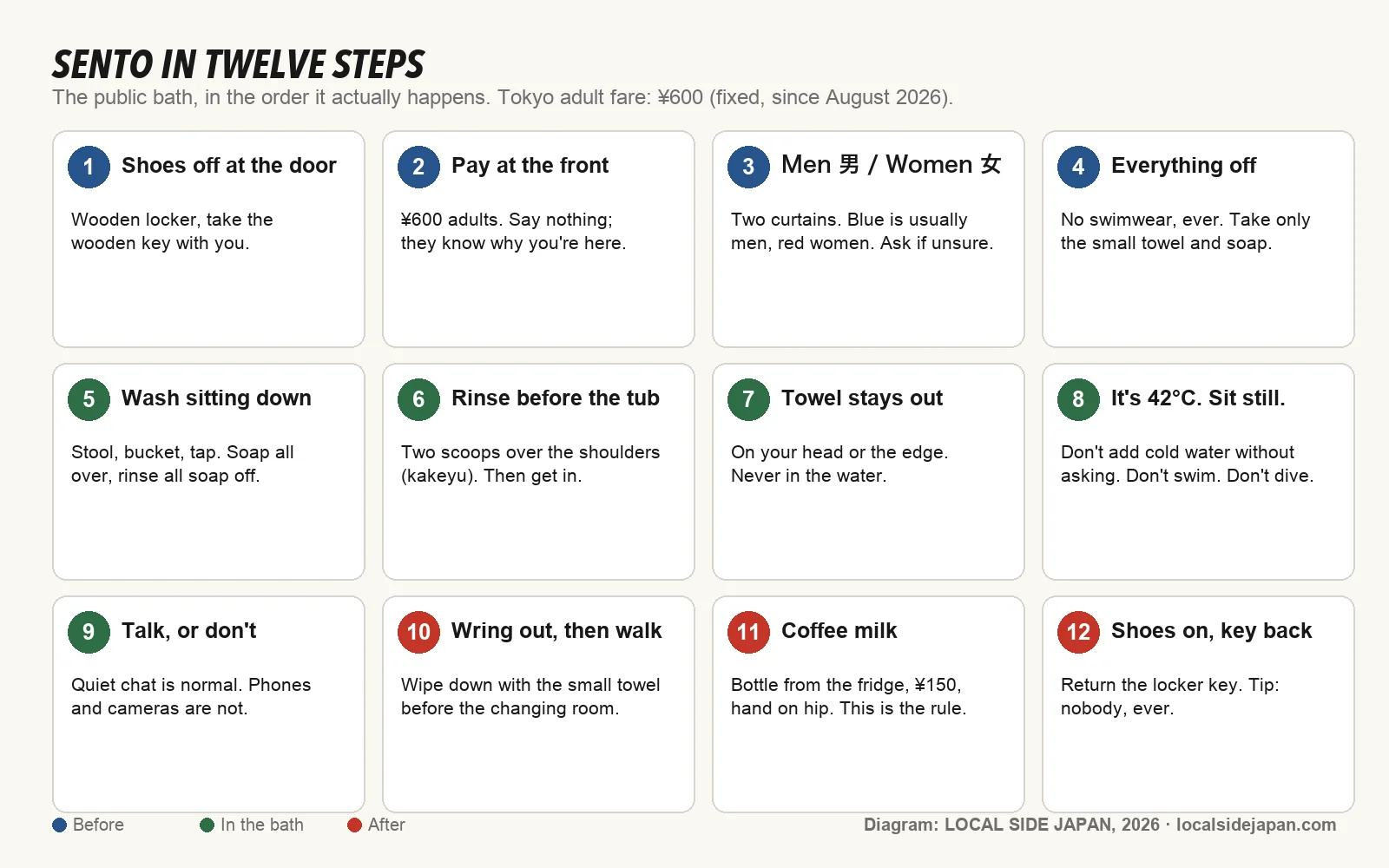
    Sento in twelve steps: a diagram of Japanese public bath etiquette from the shoe locker to the coffee milk
    The whole visit on one card. Save it to your phone.

    The written rules and the real rules

    On the signWhat it means in practice
    Wash before entering the bathThe one rule that is absolute. Soap, rinse, no suds left. Everyone is watching for this and only this.
    No tattoosAt most sento, unenforced or explicitly dropped; at large “super sento” and onsen resorts, enforced. Check the door, or the list of baths that say yes in writing.
    No towels in the bathReal. Fold the small towel on your head or leave it on the edge.
    Tie up long hairReal, and nobody has a hair tie to lend you. Bring one.
    No swimming, no divingReal, and aimed at children; adults do not need telling.
    Be quietNot real. Regulars talk. What is not done is shouting, phones, and conversation across the room.
    No photographyAbsolute, including the changing room and the lobby if anyone is in shot.
    Dry off before the changing roomReal. A wet floor in the changing room is the thing that annoys the owner most.
    No alcoholMeans do not arrive drunk. The beer fridge in the lobby is for afterwards.

    Step by step

    Before the water

    1. Shoes. Off at the entrance, into a small wooden locker; the wooden key on a string comes with you. This is where you will be if you lose it, so put it in the same place every time.
    2. Pay. Either at a front desk with a counter or, in old baths, at a bandai, a raised seat between the two changing rooms where one person, usually the owner’s mother, sees everything. In Tokyo the adult price is fixed by the metropolitan government at ¥600 (from August 1, 2026); children pay less. Say nothing. Hand over the coins. If you need a towel, say “taoru”, and a small one costs ¥100 to ¥200, a rental big one about the same. Many baths sell a ¥50 sachet of shampoo and body soap; many now provide them free at the taps.
    3. The curtain. Two: 男 (men) and 女 (women). The colors are usually blue and red but not always, so read the character. Some baths swap the two sides on alternate days; if in doubt, ask, and nobody will mind.
    4. The changing room. Lockers or open baskets. Everything off: there is no swimwear, no underwear, no cover-up, and the first ten seconds of that are the whole of the difficulty. After that nobody is looking, because nobody is. Take the small towel, your soap, and nothing else through the glass door.

    In the bath

    1. Wash first, sitting down. Take a plastic stool and bucket from the stack, sit at a tap with a shower head, and wash everything with soap, then rinse until no soap is left. Standing showers exist in newer baths and nobody minds if you use them. Do not stand at the tap and spray the person next to you. When you are done, rinse the stool and bucket and put them back where you found them, or leave them tidy at the tap if that is what the regulars do.
    2. Kakeyu. Before getting in, scoop bath water over your shoulders two or three times with the bucket. It rinses the last of the soap and warns your body about what is coming.
    3. The towel. Folded on your head, or on the edge of the tub. Never in the water. This is the second thing everyone watches for.
    4. The heat. Tokyo sento water is 42 to 44 degrees, hotter than anywhere else in Japan, and the old men in it will look at you pleasantly while you fail to get in. Go in slowly, sit still, get out after five minutes, and go back. Do not turn on the cold tap to cool the tub without asking: it is a communal bath and someone has just got it to the temperature they like. There is usually a cooler tub, a medicinal bath (the brown or green one), a jet bath, sometimes an electric bath that makes your legs twitch, and in the good ones a cold plunge and a sauna, which costs a few hundred yen extra and needs its own etiquette: sweat off before the plunge.
    5. Talking. Allowed. Regulars have been meeting in this tub for thirty years. A nod, a “konnichiwa”, a comment on the heat (“atsui desu ne”) will get you a conversation if you want one and a smile if you do not. What is not done: raised voices, groups talking across the room, and anything with a screen. Phones stay in the locker, cameras stay at home.

    After

    1. Wring out the small towel and wipe yourself down before you go through the door. The changing-room floor is meant to stay dry, and a foreigner dripping across it is the one thing that will get a word said.
    2. Coffee milk. In the lobby fridge: kohii gyunyu, coffee-flavored milk in a small glass bottle, about ¥150, drunk standing with one hand on your hip. Fruit milk is the alternative. This is not in any rule and it is the most important part.
    3. Key back, shoes on. Give the locker key back if the desk asks for it, collect your shoes, and leave. There is no tipping and there is nothing to say; “arigato gozaimashita” on the way out is enough and is more than most locals manage.

    The questions people actually have

    What if I have a tattoo? Read the door. A sign with a crossed-out tattoo means no. No sign, at a neighborhood sento, usually means nobody cares, and a growing number say so in writing; three on the east side are listed here with their policies quoted. Large bathing complexes and hot-spring resorts are the ones that enforce it. Covering a small tattoo with a waterproof plaster is accepted almost everywhere.

    Can I go with my partner? Not into the same bath. Sento are separated by sex at the curtain and there is no mixed bathing; the way couples do it is to go in at the same time and meet in the lobby afterwards. Private baths that can be rented by two people are rare in Tokyo and mostly in hotels; what exists on the east side is here.

    Can I take children? Yes, and it is the best way to do it. Small children go in with either parent; the age at which a child must use the bath of their own sex is set by the prefecture and in Tokyo is seven. They will be told off for swimming, gently, by strangers, and they will love it.

    Do I have to be naked? Yes. There is no version of this with a swimsuit. The good news is that the discomfort lasts about as long as it takes to walk from the locker to the door, after which you are one of a dozen naked people in a steamy room and the most invisible you will be in Japan.

    How long do people stay? Thirty to sixty minutes, in and out of the water. There is no time limit and nobody is waiting for your seat.

    Sento or onsen? A sento is a public bath with heated tap or well water, in the neighborhood, ¥600. An onsen is natural hot-spring water, and some Tokyo sento are onsen (the black water in Sumida and Koto is a real spring). The etiquette is the same; the price and the setting are not.

    Why the rules are the way they are

    Edo had public baths from the 1590s because it was a city of wooden houses that burned, and a fire in a private bath could take the district with it; the shogunate licensed the bathhouses and, for most of the period, forbade baths at home. So the sento was where everyone went, daily, samurai and shopkeepers in the same water, and the rules that came out of that (wash first, towel out, keep the floor dry, do not disturb the temperature) are the rules of sharing a scarce thing among strangers. The east side, rebuilt after 1923 and 1945 with tenements that still had no baths, kept the habit longer than anywhere: Sumida and Koto have more sento per square kilometer than any other part of Tokyo, and the ones that survive are the ones whose regulars kept coming. That is the room you are walking into. The rules are not a test. They are what keeps it open.

    Where this joins the rest of the east side

    Put it into practice at the tattoo-friendly baths of Sumida and Asakusa, or at Takara-yu’s garden in Kita-Senju. This is the second explainer in the How Japan Works series; the first is how pachinko is legal, which is the same story of a written rule and a real one.

    Quick answers

    What is the most important rule of sento etiquette?

    Wash thoroughly with soap, sitting at a tap, and rinse off all the soap before you get into the shared bath. Everything else is secondary. Second is keeping your towel out of the water.

    How much does a sento cost in Tokyo?

    ¥600 for adults, a fixed price set by the Tokyo Metropolitan Government from August 1, 2026, at every licensed sento in the city. Children pay less. Saunas cost a few hundred yen extra; towels and soap ¥50 to ¥200 if you need them.

    Can you talk in a sento?

    Yes. Quiet conversation is normal and regulars chat every day. Shouting, talking across the room and using a phone are not done. Photography is never allowed.

    Are tattoos allowed in sento?

    It depends on the bath. Many neighborhood sento do not enforce a ban and some state that tattoos are welcome; large bathing complexes and onsen resorts usually refuse them. Look for a sign at the door, or choose a bath that publishes its policy.

    Do you have to be naked in a Japanese sento?

    Yes. Swimwear is not allowed in any sento or onsen bath. Baths are separated by sex, and you take only a small towel into the bathing area, which stays out of the water.

    What is the difference between a sento and an onsen?

    A sento is a neighborhood public bath using heated tap or well water, ¥600 in Tokyo. An onsen uses natural hot-spring water and can be a sento, a resort or a hotel bath. The etiquette is identical.


    LOCAL SIDE JAPAN checked the Tokyo adult fare against the Tokyo Sento Association (¥600 from August 1, 2026) and the mixed-bathing age limit against the Tokyo Metropolitan Government’s public bath ordinance on September 20, 2026. The rest is what happens in the bath the writer has used for years. The diagram is original and may be reused with a link.

    Written by Kizuku. I run the Sunamachi Ginza Sumo Stable, a sumo experience in Koto City, and I write about the east side of Tokyo I live and work in. More about this site →

  • Fukagawa Edo Museum: Tickets, Hours and What Is Inside the 1840s Street (2026)

    Fukagawa Edo Museum: Tickets, Hours and What Is Inside the 1840s Street (2026)

    This article contains one affiliate link to a booking site. If you book through it, LOCAL SIDE JAPAN earns a small commission at no extra cost to you. The museum itself is ¥400 and needs no booking. How this site is made →

    TOKYO / KOTO CITY / FUKAGAWA

    The Fukagawa Edo Museum is a hangar with a town inside it. Walk through the lobby, down a staircase, and you are standing in a street of 1840s Fukagawa, at full size, with the roofs a few meters below the ceiling and a cat on one of them: a rice shop, a greengrocer, a boat landing with a boat in it, a fire tower, and a row of one-room tenements you can go into and sit on the floor of, each one furnished for the person who lived there. The lights dim to evening, a rooster crows, a vendor’s call comes from somewhere, and it is morning again. Tickets are ¥400, it is three minutes from Kiyosumi-Shirakawa Station, and it is the single best thing on Tokyo’s east side for anyone under twelve or over sixty. Everything below was checked on September 20, 2026.

    Entrance of the Fukagawa Edo Museum in Shirakawa, Koto City, with its indigo noren banner
    The entrance on Shirakawa 1-chome. Photography is allowed inside, which is why the interior is worth seeing rather than being shown here. Photo: Lionel Allorge / Wikimedia Commons, CC BY-SA 3.0.

    Fast facts

    • Price: ¥400 adults, ¥50 school students. Cash only
    • Hours: 9:30–17:00, last entry 16:30
    • Closed: 2nd and 4th Monday of the month, and New Year
    • Address: 1-3-28 Shirakawa, Koto City, Tokyo
    • Nearest station: Kiyosumi-Shirakawa, exit A3, 3 minutes
    • Time needed: 1 hour, 90 minutes with the free volunteer guide
    • Booking: none. Cash at the counter, same day only
    • Guides: free volunteer guides at the door, some with good English

    How much are Fukagawa Edo Museum tickets, and when is it open?

    • Admission: ¥400 for adults; ¥50 for elementary, junior-high and high-school students; ¥300 and ¥30 for groups of twenty or more; ¥200 and ¥20 with a disability certificate. Tickets are sold at the counter, valid that day only; bring cash. No advance booking exists or is needed.
    • Hours: 9:30 to 17:00, last entry 16:30.
    • Closed: the second and fourth Monday of each month (open if that Monday is a public holiday), and the New Year holiday. Not closed every Monday, unlike most Tokyo museums.
    • Joint ticket: a combined ticket covers this museum and Koto City’s two other history museums, the Basho Memorial Museum by the Sumida and the Nakagawa Funabansho Museum by the Arakawa. Ask at the counter; it is worth it only if you will do all three, which is a full day.
    • Address and access: 1-3-28 Shirakawa, Koto City. Kiyosumi-Shirakawa Station (Hanzomon and Oedo lines), exit A3, three minutes, past the wall of Kiyosumi Garden. Monzen-Nakacho Station is fifteen minutes on foot.
    • Time needed: an hour is enough; ninety minutes if you take the volunteer guide.

    What is inside the Fukagawa Edo Museum?

    The permanent exhibit is one large room and one idea: a block of Saga-cho, the riverside district of Fukagawa, as it stood in the Tenpo era at the end of the 1830s, rebuilt at full scale from records and from the buildings that survived into the twentieth century. There is a street with a rice wholesaler and a vegetable shop, a canal-side landing with a boathouse and a choki-bune, the narrow fast boat that took customers to the pleasure quarters, a fire lookout tower, a shrine, a public toilet, and behind them the nagaya, the wooden tenement rows where most of Edo actually lived, in single rooms of four and a half or six tatami mats.

    The rooms are the reason to come. Each tenement is furnished as a specific person’s home: a clam seller with his baskets, a woodblock carver with his tools, a widow who teaches the shamisen, a young clerk with almost nothing. You take your shoes off and go in, open the cupboards, lift the lids of the pots, sit at the low desk. Nothing is behind glass. The museum’s volunteer guides, retired locals, some with good English, will walk with you and tell you whose room it is and what they ate; accept the offer, it is free and it turns the set into a neighborhood.

    Overhead the lighting runs through a whole day in well under an hour, dawn to noon to a lantern-lit evening and a thunderstorm, with the sounds to match, so stay long enough to see the street change. On the entrance floor there is a smaller gallery on the history of the district, the canals and the lumber trade, and the Fukagawa festival’s portable shrines. Since April 2026 the museum has been staging regular rakugo and storytelling performances inside the reconstructed town, in Japanese; the schedule is on its site, and even without the language, a storyteller kneeling on a stage in an Edo street at dusk is worth timing a visit for.

    Is the Fukagawa Edo Museum worth it?

    For ¥400, yes, and the price is not really the question. The question is the hour. This is one room. You will have seen the whole street in fifteen minutes and the exhibit does not get bigger after that, so if you measure a museum by how much of it is left to walk, you will think you have been short-changed and leave.

    What you are paying for is the second half of the hour, when you stop reading and start opening things. Sit on the floor of the clam seller’s room, look at how little is in it, work out where he slept and where the baskets went, and wait for the lights to go to evening. People who do that come out saying it was the best ¥400 they spent in Tokyo. People who walk the street once and look for the next gallery come out puzzled. It is the same museum.

    Skip it if you only want Edo in the abstract, with timelines and big models — that is the Edo-Tokyo Museum, and it costs ¥800. Skip it if you are travelling with nobody under twelve and have exactly one morning in east Tokyo. Take it if you have children, if you are over sixty, if you are already in Kiyosumi-Shirakawa for the garden, or if you have ever wondered what the inside of an ordinary Edo house looked like and found that no book shows you.

    Fukagawa Edo Museum or the Edo-Tokyo Museum?

    Cost is the smallest difference between them: ¥400 here, ¥800 there. The big Edo-Tokyo Museum in Ryogoku, which reopened on March 31, 2026 after four years closed and raised its adult ticket from ¥600 to ¥800 that day, is the museum of the whole city: the Nihonbashi bridge, the daimyo mansions, the kabuki theater, Meiji and the war and the Olympics, with English throughout and half a day needed; it opens 9:30 to 17:30, to 19:30 on Saturdays, and closes on Mondays rather than on two of them. Seniors 65 and over pay ¥400, university students ¥480, high-school students ¥300, and junior high and under go free. Fukagawa is the museum of one street and the people who could not afford a house on it, and you are in it rather than looking at it. If you have one museum morning in east Tokyo, take the big one; if you have children, take this one; if you are already in Kiyosumi-Shirakawa for the garden and the coffee, this one is three minutes away and the choice makes itself.

    How do you get to the Fukagawa Edo Museum?

    Kiyosumi-Shirakawa Station, exit A3, then three minutes on foot with the wall of Kiyosumi Garden on your left. The station is on two lines, which is why the museum is easier to reach than its address suggests.

    • From Tokyo Station: walk to Otemachi and take the Hanzomon line four stops. About fifteen minutes door to door.
    • From Ryogoku: two stops on the Oedo line, via Morishita. This is the one to know if you are doing the Edo-Tokyo Museum and this on the same day.
    • From Shibuya: the Hanzomon line runs straight through, no change.
    • On foot: fifteen minutes from Monzen-Nakacho, which is the walk to do if you are also going to Fukagawa Fudo-do.

    There is no museum car park worth using and no need for one. The building is the low grey one with an indigo noren at the door, set back from Kiyosumi-dori; the sign at street level is small and in Japanese, so look for the banner rather than the name.

    What else is near the Fukagawa Edo Museum?

    • Kiyosumi Garden, ¥150, across the road: the stroll garden the founder of Mitsubishi built in the 1880s. Do it first, at 9:00, before the museum opens. The full Kiyosumi-Shirakawa morning →
    • Fukagawa-meshi: the district’s dish, clams in miso over rice, at the restaurants around the museum for ¥1,000 to ¥1,500. Fukagawa Kamasho, a minute away, is the well-known one.
    • Fukagawa Fudo-do, fifteen minutes south: the free fire ritual with taiko drums at 9:00, 11:00, 13:00, 15:00 and 17:00. The 13:00 one fits after lunch.
    • Basho Memorial Museum, ¥200, twenty minutes’ walk north-west by the river, where the poet lived in the 1680s before setting off from Senju; the second museum on the joint ticket.
    • If you want to make something after looking at it: when we went through every listing in the city, Koto had no kintsugi workshop and no tea ceremony — the whole east side has neither. The nearest tea ceremony is in Kuramae, three stops up the Oedo line, which is also where the best one in Tokyo is; for kintsugi the nearest is Asakusa, which is where the cheapest and the most-reviewed ones are. Both are a short enough hop to do in the same afternoon as this. Tea ceremonies by area → / Kintsugi workshops by area, with the prices →
    • The Fukagawa Hachiman Festival, mid-August, when the portable shrines the museum shows come out and the crowd throws water over them; the full version every third year, next in 2029.

    Do you need a guide at the Fukagawa Edo Museum?

    Without, for almost everyone: the museum’s own volunteers are the best guides it could have and they are free. The one packaged tour that includes it is a three-hour Kiyosumi-Shirakawa morning on Viator (about ¥10,000, garden and coffee included) that is really about the neighborhood, with the museum as an option; good on your first days in Japan if you want the area explained, unnecessary otherwise.

    Where does this fit on Tokyo’s east side?

    The museum is stop three on the twelve things to do in Koto City, and the boat landing inside it is the small version of the real one at the Nakagawa checkpoint down the Onagi River. The tenements it rebuilds are what burned in 1923 and 1945 and what the Shirahige-Higashi firewall was built to protect the survivors of. For the city-scale version, the Edo-Tokyo Museum in Ryogoku is two stops away.

    Quick answers

    How much are Fukagawa Edo Museum tickets?

    ¥400 for adults and ¥50 for elementary to high-school students, bought at the counter on the day; no advance booking. Groups of 20 or more pay ¥300 and ¥30. A joint ticket with the Basho Memorial Museum and the Nakagawa Funabansho Museum is available at the counter.

    What are the Fukagawa Edo Museum’s opening hours?

    9:30 to 17:00, last entry 16:30. Closed on the second and fourth Monday of the month (open when that Monday is a public holiday) and over the New Year holiday.

    How do I get to the Fukagawa Edo Museum?

    Kiyosumi-Shirakawa Station on the Hanzomon or Oedo subway line, exit A3, then three minutes on foot past Kiyosumi Garden. The address is 1-3-28 Shirakawa, Koto City. From Tokyo Station it is about 15 minutes via Otemachi.

    Is the Fukagawa Edo Museum good for children?

    Yes, the best museum on Tokyo’s east side for them: a full-size 1840s street with houses you can enter, cupboards you can open and a day-to-night lighting cycle with sound. Children’s tickets are ¥50. Allow an hour.

    Fukagawa Edo Museum or Edo-Tokyo Museum?

    The Edo-Tokyo Museum in Ryogoku (reopened March 31, 2026) costs ¥800 and covers the whole city’s history over half a day with full English; the Fukagawa Edo Museum costs ¥400 and is one rebuilt street you walk through in an hour. Take the big one for history, this one for children or if you are already in Kiyosumi-Shirakawa.


    LOCAL SIDE JAPAN checked admission, hours and closing days against the Koto City Cultural Community Foundation’s museum pages and Koto City’s tourism page on September 20, 2026, and the tour price on Viator the same day. Fukagawa Kamasho and the other restaurants are mentioned as landmarks, not reviewed.

    Written by Kizuku. I run the Sunamachi Ginza Sumo Stable, a sumo experience in Koto City, and I write about the east side of Tokyo I live and work in. More about this site →

  • Things to Do in Sumida Beyond the Skytree: 10 Places (2026)

    Things to Do in Sumida Beyond the Skytree: 10 Places (2026)

    This article contains affiliate links to booking sites. If you book through them, LOCAL SIDE JAPAN earns a small commission at no extra cost to you. Eight of the ten places below cost ¥600 or less and need no booking. How this site is made →

    TOKYO / SUMIDA CITY / THE LIST

    Everyone goes to Sumida City. Almost nobody knows they were there, because the Skytree is a place you go up and leave — for ¥1,800 if you book it properly — and the ward around its feet does not get a look. That ward has the Kokugikan and the sumo museum, two of Tokyo’s best small museums and its biggest one, newly reopened, a shopping street that has not changed since the 1960s, three bathhouses that welcome tattoos, and a river walk the tour buses skip. Here are ten things to do in Sumida beyond the Skytree, in the order I would do them, with prices and hours checked on September 20, 2026.

    Sumida River Walk pedestrian bridge at night with Tokyo Skytree behind
    The Sumida River Walk, under the railway bridge. The tower is the one thing on this list you can skip. Photo: Justin Ormont / Wikimedia Commons, CC BY-SA 4.0.

    Fast facts

    • Free: the 3 km river walk from the Skytree to Senso-ji, and the Sumo Museum inside the Kokugikan.
    • Cheap: Tobacco and Salt Museum ¥100 · Mukojima Hyakkaen garden ¥150 · Sumida Hokusai Museum ¥400 · a bathhouse ¥600.
    • Worth paying for: cutting your own Edo Kiriko glass, ¥4,400 booked direct.
    • Closed Mondays: the Edo-Tokyo Museum, the Hokusai Museum and the Tobacco and Salt Museum. Do not come on a Monday for the museums.
    • Stations: Oshiage for the Skytree, Ryogoku for sumo and the museums, Kinshicho for the baths and the glass.
    • From Asakusa: ten minutes on foot over Azumabashi.

    Where is Sumida City, and what is it?

    Sumida City — Sumida-ku, 墨田区 — is one of Tokyo’s 23 special wards, on the east bank of the Sumida River, directly across the water from Asakusa. It is 13.77 square kilometres with 287,766 people living in it, which makes it one of the small, dense, flat, residential wards rather than one of the famous ones. Taito, with Asakusa in it, is its western neighbour; Koto is south; Arakawa north-west; Adachi north; Katsushika east; Edogawa south-east; Chuo south-west across the river.

    If you have been to Tokyo you have been here, because the Skytree is in Sumida and so is the Kokugikan, the national sumo arena. Almost nobody registers the ward itself, and the reason is that it has no centre you arrive at. It has two ends, and they feel like different cities:

    • The south — Ryogoku, Kinshi, Kikukawa. Sumo, the museums, the chanko restaurants, the stables behind sliding doors on residential streets. This is the half with the history in it.
    • The north — Oshiage, Mukojima, Kyojima, Tachibana. The Skytree stands at the join, and behind it the ward turns into wooden houses, alleys too narrow for a car, and a shopping street that has not been redecorated since the 1960s. This is the half nobody writes about.

    You will see the ward written several ways in English — Sumida City, Sumida Ward, Sumida-ku, sometimes just Sumida. They are all the same place. The ward office uses “Sumida City”, which is why this page does too. Population and area are the ward’s own figures as of April 1, 2025.

    What are the best things to do in Sumida?

    1. Walk the Sumida River from the tower to Senso-ji, free

    Three kilometers on foot: the Mizumachi cafés under the railway arches, the Sumida River Walk deck hanging off the Tobu bridge, the east bank of Sumida Park with its 300-year-old cherry trees, Ushijima Shrine and its three-legged torii, the X-shaped Sakurabashi, and the west bank down to Azumabashi and the temple. An hour if you walk, a morning if you do it properly. The full route is in Sumida River on Foot.

    2. Cut your own Edo Kiriko glass, ¥4,400

    Sumida is where Tokyo’s cut glass is still made by hand, and the Sumida Edo Kiriko Museum, a working studio run by Hirota Glass, lets you cut a pattern into your own tumbler for ¥4,400 booked directly, or with an English guide for around ¥22,000 through the booking sites. The honest comparison is in the Edo Kiriko guide. Kinshicho Station.

    3. Edo-Tokyo Museum, reopened March 2026

    Tokyo’s museum of itself, the one on stilts beside the Kokugikan, reopened on March 31, 2026 after four years closed, with the full-size Nihonbashi bridge, the Edo townhouse street and the kabuki theater rebuilt and relit. It is the one museum in the city that explains why the east side looks the way it does: the fires, the canals, the tenements. Allow two hours. Admission went up with the reopening: ¥800 for adults, ¥400 for 65 and over, ¥480 for university students, ¥300 for high-school students, free for junior high and younger — it was ¥600 before it closed. Open 9:30 to 17:30, to 19:30 on Saturdays, last entry half an hour before closing, closed Mondays. Ryogoku Station. For ¥400 less, and a street you walk inside rather than look at, the Fukagawa Edo Museum in Koto is the other way to do this.

    4. The Sumo Museum inside the Kokugikan, free

    A single room on the ground floor of the sumo arena with woodblock prints, ceremonial aprons and the portraits of every champion, free, open on weekdays 10:00 to 16:30; during the three Tokyo tournaments (January, May, September) it is open only to ticket holders. The rest of Ryogoku, with the chanko restaurants and the stables you can occasionally see into, is around it. If you want to see actual sumo, the ¥3,500 official seat and how to get it is written by someone who runs a stable in the next ward and says so; the nine places you can actually do it are compared in Tokyo sumo experiences compared, and the morning-practice visits and shows in the three kinds of sumo.

    5. Sumida Hokusai Museum, ¥400

    Hokusai was born in this ward and spent nearly all of his ninety years in it, moving house ninety-three times. The aluminum museum near Ryogoku shows the Great Wave and the rest of the Thirty-six Views in the permanent collection for ¥400 (special exhibitions extra), with a life-size model of the old man drawing in his squalid studio while his daughter watches. Closed Mondays. Small; an hour.

    6. A bath at Koganeyu or Daikokuyu, ¥600

    Sumida has more neighborhood bathhouses than anywhere in Tokyo, because the wooden houses here never had baths of their own. Koganeyu in Kinshicho, with a craft-beer tap by the entrance and a DJ booth, and Daikokuyu in Oshiage, open until ten the next morning, both say in writing that tattoos are welcome. ¥600, the fixed Tokyo price since August 2026. The etiquette and the third bath are in the tattoo-friendly sento guide.

    7. Kirakira Tachibana shopping street in Kyojima, the price of lunch

    Four hundred and seventy meters of Showa-era shops five minutes from Keisei Hikifune: a bakery that has been there since the 1950s, prepared-food counters, greengrocers, and a rest room run by the shopping street where you can eat what you bought. Around it is Kyojima, one of the last dense wooden neighborhoods in the city, which the ward has been trying to make fireproof for fifty years. A two-hour walk plan →

    8. Mukojima Hyakkaen, ¥150

    The only surviving garden in Tokyo made by Edo townspeople rather than a lord: a plant collector and his literary friends laid it out in 1804 as a “garden of a hundred flowers”, with plum in February, a tunnel of bush clover in September, and haiku stones under the trees. ¥150, 9:00 to 17:00, closed at New Year. Higashi-Mukojima Station, and a short walk from the Shirahige-Higashi apartment firewall, which is the strangest building in the ward.

    9. Tobacco and Salt Museum, ¥100

    Japan Tobacco’s museum of its two former monopolies, moved from Shibuya to a warehouse district near the Skytree in 2015, and better than it sounds: the salt floor explains how a country with no rock salt made it from seawater for two thousand years, and the tobacco floor has the pipes, the packaging and the Edo tobacco shops. ¥100 for adults. Closed Mondays. Ten minutes from Honjo-Azumabashi.

    10. A yakatabune dinner boat from Azumabashi

    The lantern-hung wooden boats that leave from the pier below the red bridge are the 400-year-old way to see the river at night, and the one thing on this list worth spending real money on. Booked directly with Amitatsu it is ¥13,800 for two and a half hours with tempura and all-you-can-drink; on Viator, a 100-minute version with a show is about ¥15,800, 4.5 from nearly 600 reviews, with free cancellation. Which to pick is in the yakatabune guide.

    What else is there to see in Sumida?

    • Tokyo Skytree, obviously. Go at 18:00 on a weekday, buy the ticket online for the date-priced discount, and skip the top deck; the 350-meter floor has the view.
    • fcFA in Oshiage, three shops of football shirts beside the tower, for anyone who travels with a club. The shop guide →
    • Ekoin temple in Ryogoku, where the sumo tournaments were held before the Kokugikan, with the memorial to the 100,000 dead of the 1657 fire. Free.
    • The Sumida fireworks, last Saturday of July, a million people on both banks. Not a day for the river walk.

    What should I do in Sumida if I only have half a day?

    Walk the river one way and take the train back. Start at the Skytree at nine, walk down to Senso-ji through Mizumachi and Sumida Park, and you have seen the best free thing in the ward in about ninety minutes with the tower behind you the whole way. That is the half day.

    If it is raining, do Ryogoku instead. The Edo-Tokyo Museum, the Sumo Museum and the Hokusai Museum are within ten minutes of each other and of the station, and between them they cost about ¥1,000 and fill four hours. Not on a Monday — two of the three are shut.

    How do I spend a day in Sumida?

    Morning: Ryogoku at 10:00 for the Edo-Tokyo Museum, the sumo museum next door, chanko for lunch. Afternoon: the Hokusai museum, then the Edo Kiriko workshop at Kinshicho if you booked it, or Kirakira Tachibana and Kyojima if you did not. Evening: Koganeyu (open 6:00 to 9:00 and 11:00 to 24:30) for a bath at six, then walk the river to Azumabashi for the boat, or across it to Asakusa for dinner. Total without the boat and the glass: about ¥1,400.

    How do you get to Sumida?

    Easier than its reputation, because one subway line runs the length of the problem. The Tokyo Metro Hanzomon line starts at Shibuya and ends at Oshiage, at the foot of the Skytree, with Otemachi and Kinshicho on the way. If you are staying anywhere on that line you do not change trains at all.

    • From Shibuya: the Hanzomon line, direct to Oshiage. No transfer. This is the single most useful fact on this page for anyone staying on the west side.
    • From Tokyo Station: walk through to Otemachi, then the Hanzomon line east. Kinshicho for the baths and the glass, Oshiage for the tower.
    • From Asakusa: ten minutes on foot across Azumabashi bridge. Do not take a train. You can see where you are going.
    • For Ryogoku — sumo and the museums — note that the Hanzomon line does not stop there. Ryogoku is on the Toei Oedo line, one station from Morishita.

    The practical consequence is that Sumida is two visits, not one, unless you are prepared to cross between the ends. Ryogoku in the south and Oshiage in the north are about three kilometres apart on different lines, and the nicest way between them is not a train at all but the river walk.

    How much does a day in Sumida cost?

    About ¥1,850 for a full day of everything except the glass and the boat. That is the Tobacco and Salt Museum (¥100), Mukojima Hyakkaen (¥150), the Hokusai Museum (¥400), the Edo-Tokyo Museum (about ¥600) and a bathhouse at the end of it (¥600). The river walk and the Sumo Museum are free, and lunch on the Kirakira Tachibana shopping street is a few hundred yen a counter.

    Add ¥4,400 if you cut your own glass, which is the one paid thing on this page this site would tell you not to skip. Add ¥13,800 if you finish on a yakatabune. Everything else here is under a thousand yen, which is unusual for a ward with the tallest tower in Japan in it.

    Where this joins the rest of the east side

    Sumida is the middle of the east side. South across the Onagi is Koto City, with its own twelve-place list; west across the river is Asakusa and its workshops; north up the Tobu line is Kita-Senju. The ward also holds the Japanese Sword Museum in Ryogoku, ¥1,000 and three minutes from the station, which is the real thing behind every samurai experience sold in Tokyo. Everything in the ward is on the Sumida City page.

    Quick answers

    What is there to do in Sumida besides the Skytree?

    The Edo-Tokyo Museum (reopened March 2026), the Sumo Museum in the Kokugikan (free), the Sumida Hokusai Museum (¥400), the Edo Kiriko glass workshop, tattoo-friendly sento such as Koganeyu (¥600), Kirakira Tachibana shopping street in Kyojima, Mukojima Hyakkaen garden (¥150), the Tobacco and Salt Museum (¥100), the Sumida River walk to Senso-ji, and yakatabune dinner boats.

    Is the Edo-Tokyo Museum open again?

    Yes. It reopened on March 31, 2026 after a four-year renovation, beside the Kokugikan at Ryogoku Station. Check the museum’s site for current admission and hours; it is closed on Mondays.

    Is the Sumo Museum free?

    Yes. The Sumo Museum on the ground floor of the Ryogoku Kokugikan is free, open weekdays 10:00 to 16:30. During the January, May and September tournaments it is open only to people holding a tournament ticket.

    How do I get to Sumida City from central Tokyo?

    JR Sobu line or Oedo line to Ryogoku (museums and sumo), Hanzomon line to Oshiage (Skytree, river walk), JR or Hanzomon to Kinshicho (Edo Kiriko, Koganeyu), Tobu Skytree line to Hikifune or Higashi-Mukojima (Kyojima, Hyakkaen). Most of it is 10 to 20 minutes from Tokyo Station.

    How much does a day in Sumida cost?

    About ¥1,400 in admissions for the museums, the garden and a bath, plus food. The Edo Kiriko workshop adds ¥4,400 and a yakatabune dinner boat ¥13,800 to ¥15,800; both are optional.


    LOCAL SIDE JAPAN checked the Edo-Tokyo Museum reopening against the Tokyo Metropolitan Government’s announcement, the Hokusai Museum, Mukojima Hyakkaen (Tokyo Metropolitan Park Association) and Tobacco and Salt Museum admissions against their own pages, the sento price against the Tokyo Sento Association, and the boat prices against Amitatsu and Viator, on September 20, 2026. Prices are approximate and change; the Edo-Tokyo Museum’s post-renovation admission should be confirmed on its site.

    Written by Kizuku. I run the Sunamachi Ginza Sumo Stable, a sumo experience in Koto City, and I write about the east side of Tokyo I live and work in. More about this site →

  • Things to Do in Koto City, Tokyo: 12 Places, by Someone Who Works There (2026)

    Things to Do in Koto City, Tokyo: 12 Places, by Someone Who Works There (2026)

    This article contains affiliate links to booking sites. If you book through them, LOCAL SIDE JAPAN earns a small commission at no extra cost to you. Nine of the twelve places below are free or under ¥600 and need no booking at all. How this site is made →

    TOKYO / KOTO CITY / THE LIST

    Koto City is the ward that Tokyo’s canals built and that most visitors only touch at teamLab Planets and Toyosu Market before going back across the river. That is a mistake, and an easy one to fix, because the rest of the ward is fifteen minutes away and mostly free. Here are twelve things to do in Koto City, from the Meiji garden and the roaster district in the north-west to the bridge you can walk across at the mouth of the bay, chosen and ordered by someone who works in Kitasuna and has done all of them more than once. Prices and hours were checked on September 18, 2026.

    Kiyosumi Garden pond with stepping stones and pine trees, Koto City, Tokyo
    Kiyosumi Garden, ¥150, the best-value hour in the ward. Photo: Kakidai / Wikimedia Commons, CC BY-SA 4.0.

    The best things to do in Koto City, in order

    1. Kiyosumi Garden, ¥150

    A stroll garden built in the 1880s by the founder of Mitsubishi, who had famous stones shipped from all over Japan and set them around a pond you cross on stepping stones. Herons, turtles, carp, and at 9:00 on a weekday almost nobody. ¥150, open 9:00 to 17:00, directly outside exit A3 of Kiyosumi-Shirakawa Station. The full morning around it is in Kiyosumi-Shirakawa on a weekday.

    2. The coffee roasters of Kiyosumi-Shirakawa

    Blue Bottle opened its first shop outside the United States here in 2015, in a former warehouse, because the ceilings were high and the rent was not. Allpress Espresso is in a converted timber warehouse behind the garden; ARiSE roasts in the back of a counter with a few stools; KOFFEE MAMEYA Kakeru serves coffee as a tasting course. A pastry and a latte cost ¥1,200 to ¥1,800 at any of them. Weekday mornings; Saturday afternoons have queues.

    3. Fukagawa Edo Museum, ¥400

    A full-size block of 1840s Fukagawa rebuilt inside a hall: tenements, a rice shop, a boat landing, a fire tower, with the lighting cycling from dawn to night every twenty minutes. You go into the houses and sit on the floor. ¥400 for adults, ¥50 for children, closed the second and fourth Monday. Three minutes from the garden and the single best thing in the ward for children. Tickets, hours and what is inside →

    4. The fire ritual at Fukagawa Fudo-do, free

    Five times a day, at 9:00, 11:00, 13:00, 15:00 and 17:00, monks light a fire in the main hall and chant over four taiko drums, loud enough to feel in your chest. Watching is free; sit in the hall, be quiet, do not photograph the ritual. Next to Monzen-Nakacho Station. Tomioka Hachimangu, the shrine where Edo’s professional sumo tournaments began, is next door and also free.

    5. Sunamachi Ginza shopping street, the price of lunch

    Six hundred and seventy meters of independent food shops, prepared-food counters, fishmongers and greengrocers, and the best cheap lunch on the east side: yakitori, tempura, oden and dumplings bought from counters and eaten standing. It is a working market, not a tourist one; keep entrances clear and ask before photographing staff. Bus from Kinshicho or Nishi-Ojima, or 15 minutes on foot from Minami-Sunamachi. The walk that starts here is in the Onagi River guide.

    6. The ¥100 boats on the Yokojukken River

    A 1.9-kilometer waterside park made from an old canal, with rowing and pedal boats for ¥100 per 30 minutes and, on scheduled days, free rides in traditional wooden boats rowed by volunteers who will hand you the oar. Cash only, no change given, children with an adult. Ten minutes from Sunamachi Ginza. Details and the calendar in the boat park guide.

    7. The Nakagawa boat checkpoint, ¥200

    Edo inspected every boat entering the city from the east at a checkpoint on the Onagi River from 1661; the site was excavated in 1995 and the Nakagawa Funabansho Museum, fifty meters away, rebuilds it at scale and explains how a city of a million people was fed by water. Walk there along the riverside Salt Road from the boat park. Near Higashi-Ojima Station.

    8. The Lucky Dragon No. 5, free

    A museum built around one real wooden fishing boat, the one caught in the fallout of the 1954 Bikini hydrogen-bomb test, which inspired the opening scene of the first Godzilla film and was rescued from the Yumenoshima landfill by a citizens’ campaign. Free, closed Mondays, five minutes from Shin-Kiba Station. The story of the boat →

    9. Tokyo Gate Bridge on foot, free

    The 2.6-kilometer bridge at the mouth of Tokyo Bay that locals call the dinosaur bridge has a pedestrian deck, reached by a lift at Wakasu Park, with the whole bay, Haneda’s approach path and, on a clear day, Mount Fuji laid out from 60 meters up. Free; the walkway is generally open 10:00 to 17:00 with later hours on summer weekend evenings, so check the Tokyo Port Authority page before you go. Bus from Shin-Kiba to Wakasu Camp-jo.

    10. Museum of Contemporary Art Tokyo, ¥500

    MOT’s permanent collection is the best-value contemporary art ticket in the city, in a building at the edge of Kiba Park, whose lawns and playground are the ward’s best picnic ground. Closed Mondays. Twenty minutes’ walk from Kiyosumi-Shirakawa through the park, or Kiba Station.

    11. teamLab Planets, from about ¥3,800

    The barefoot, wade-through-water digital art museum in Toyosu is in Koto City, and it is the one thing on this list you must book ahead. Official tickets are date-priced, from about ¥3,800 on weekdays; Klook sells them at the same face value as the official site, which is the one to use if the official site’s dates are sold out. Avoid the resellers on other booking sites charging ¥7,000 and up for the same ticket. Go at opening or after 18:00; wear trousers you can roll up.

    12. Toyosu Market and the tuna auction

    Tokyo’s wholesale fish market moved here from Tsukiji in 2018. The public galleries and the sushi counters are free to enter and open from 5:00; the Senkyaku Banrai complex beside it has seventy restaurants and a rooftop hot spring with a view of the bay. Watching the tuna auction from the deck needs a lottery entry a month ahead; if you missed it, the guided tuna auction and market tour (about ¥19,000, 4.9 from 55 reviews) gets you onto the auction floor’s viewing deck with someone who explains the bidding, and is the only paid thing on this list that is worth the money for most people.

    Things to see in Koto City if you have longer

    • Kameido Tenjin: the wisteria shrine, late April, with the red arched bridge from Hiroshige’s print. Free.
    • Kiba Park’s lumber-raft demonstrations: the ward’s old timber trade, on festival days in autumn, by men who still know how to walk on floating logs.
    • The Sunamachi Ginza Sumo Stable, in Kitasuna: 90 minutes with former professional wrestlers — bouts from the edge of a real ring, then the ring itself if you want it. Adults ¥11,000, children 4–12 ¥7,700, under 4 free; 11:00 and 15:30; 3-38-16 Kitasuna. The writer of this site runs it, so this is an interest declared rather than a neutral pick — the other ways to see sumo in Tokyo, with prices, are in this comparison. Check times and book direct →
    • Ariake and Odaiba’s Koto half: the Big Sight, the Gundam, the beach. Well covered elsewhere; not what this site is for.
    A boy and his father in practice mawashi copying a wrestler through the shiko warm-up at the Sunamachi Ginza Sumo Stable
    The shiko warm-up at the Sunamachi Ginza Sumo Stable in Kitasuna, listed above. The writer of this site runs it, so the photograph is his and the entry is an interest declared, not a neutral pick. Photo: LOCAL SIDE JAPAN.

    How to do Koto City in a day

    Morning: Kiyosumi Garden at 9:00, coffee, the Fukagawa Edo Museum, fukagawa-meshi for lunch, the 13:00 fire ritual (1 to 4 above; all within a 20-minute walk). Afternoon: Toei Shinjuku line to Nishi-Ojima, the ¥100 boats, the Onagi River walk to the checkpoint museum, dinner bought on Sunamachi Ginza (5 to 7). Or: Yurakucho line to Toyosu for teamLab at 18:00 and the market’s sushi counters, if you booked. Total cost of the first two, without food: ¥750.

    Where this joins the rest of the east side

    Koto is the southern end of the east side. North across the Sumida is Ryogoku and the Kokugikan; east along the river is the buried lock at Komatsugawa in Edogawa; the Edo Kiriko workshop and the tattoo-friendly baths are two stops away in Sumida. Everything in the ward is on the Koto City page.

    The next ward north has its own list: Things to Do in Sumida Beyond the Skytree.

    Quick answers

    What is Koto City known for?

    Canals and the old Fukagawa waterfront, Kiyosumi Garden, the coffee roasters of Kiyosumi-Shirakawa, Sunamachi Ginza shopping street, Toyosu fish market, teamLab Planets, Kiba Park and the Museum of Contemporary Art Tokyo. It was the lumber and shipping district of Edo and is still cut by working waterways.

    Is Koto City worth visiting?

    Yes, for a full day. Most of the best things are free or under ¥600 and within a short walk of Kiyosumi-Shirakawa or Sunamachi; teamLab Planets and Toyosu Market are the two paid draws. It is 15 to 30 minutes from Tokyo Station by subway.

    What is free to do in Koto City?

    The fire ritual at Fukagawa Fudo-do, Tomioka Hachimangu, the Daigo Fukuryu Maru museum, walking Tokyo Gate Bridge, Kiba Park, Kameido Tenjin, the Onagi River Salt Road and Sunamachi Ginza. Kiyosumi Garden is ¥150 and the boats on the Yokojukken are ¥100.

    How do I get to Koto City from Tokyo Station?

    Hanzomon line to Kiyosumi-Shirakawa (change at Otemachi, about 15 minutes), Toei Shinjuku line to Nishi-Ojima or Higashi-Ojima for the canals, Yurakucho line to Toyosu, JR Keiyo line to Shin-Kiba for the Lucky Dragon museum and Gate Bridge.

    Is teamLab Planets in Koto City and how much is it?

    Yes, in Toyosu. Official tickets are date-priced from about ¥3,800 on weekdays, more on weekends; Klook sells them at face value. Book ahead and avoid third-party resellers charging ¥7,000 or more for the same entry.


    LOCAL SIDE JAPAN checked admissions and hours against the Tokyo Metropolitan Park Association (Kiyosumi Garden), Koto City Cultural Community Foundation (Fukagawa Edo Museum), Fukagawa Fudo-do, MOT, the Tokyo Port Authority (Gate Bridge walkway) and Koto City (boats), and ticket prices on the teamLab, Klook and Viator sites, on September 18, 2026. The writer runs a sumo experience in the ward; it is listed with that interest declared and is not one of the twelve.

    Related: Koto City has the only sumo experience in Tokyo where everyone gets into the ring in a real mawashi rather than a costume. All nine Tokyo sumo experiences compared → — including where that one loses.

    Written by Kizuku. I run the Sunamachi Ginza Sumo Stable, a sumo experience in Koto City, and I write about the east side of Tokyo I live and work in. More about this site →

  • What Is Pachinko? Japan’s ¥16 Trillion Game That Is Legally Not Gambling

    What Is Pachinko? Japan’s ¥16 Trillion Game That Is Legally Not Gambling

    This article contains no affiliate links. Nobody pays LOCAL SIDE JAPAN to send you to a pachinko hall, and nobody should. The diagrams are ours; use them with a link back. How this site is made →

    HOW JAPAN WORKS / PACHINKO

    Gambling is a crime in Japan. Article 185 of the Penal Code, fine of up to ¥500,000, and the police mean it: the raids on underground baccarat rooms make the news every month. Japan also has 6,706 pachinko halls, three and a half million machines, and an industry that rented out ¥16.2 trillion of balls in 2024, a gross figure larger than the gaming revenue of Las Vegas, Macau and Singapore combined. Every one of those halls pays out cash to winners every day, and every one of them is legal. If you can understand how, you understand something true about how this country runs: not on rules, but on agreed-upon fictions that everyone maintains with a straight face.

    Rows of pachinko machines and players inside a pachinko hall in Japan
    A hall on a weekday afternoon. Photo: KimonBerlin / Wikimedia Commons, CC BY-SA 2.0.

    What is pachinko?

    Pachinko is a Japanese arcade game, played on an upright pinball-like machine, that functions as gambling without legally being gambling. You rent small steel balls, fire them into a field of brass pins with a knob, and win more balls when they fall into the right pocket. The balls are exchanged at the counter for a prize, the prize is sold for cash at a separate booth around the corner, and because those are three different businesses, no single one of them has broken the law against gambling. The word itself is onomatopoeic: pachin, the sound of the ball striking.

    There are 6,706 pachinko parlors left in Japan, down from 17,631 in 1995. The rest of this page answers the questions people actually ask about them, one at a time: what a parlor is, how the machine works, what you win, how the winnings become money, whether any of it is gambling, whether any of it is legal, and what happens if you walk into one yourself.

    What is a pachinko parlor?

    A pachinko parlor — pachinko-ya in Japanese, usually just called a hall — is a building containing a few hundred pachinko machines in rows. It is lit like a supermarket, loud enough that regulars wear earplugs, open from roughly 10:00 to 23:00, free to walk into, and open to anyone aged 18 or over with no ID check, no membership and no dress code. Many also contain pachislot, the slot-machine cousin played with medals rather than balls. There were 6,706 parlors in Japan at the end of 2024, down from 17,631 in 1995 — roughly one closing every day for fifteen years.

    They are easiest to spot by the noise and the wall of vertical signage; in Tokyo they cluster around the big commuter stations, and there is at least one within a few minutes of almost every station on this side of the city.

    How does pachinko work?

    A vertical pinball machine the size of a fridge door, with one knob. You rent small steel balls, ¥4 each at a normal hall, ¥1 at the cheap ones; ¥1,000 gets you 250. You turn the knob, the machine fires balls up into a field of brass pins, and they fall. Most drop straight through and are gone. A few land in a pocket that spins three reels on a screen. If the reels match, a gate opens and, for a minute or so, every ball you fire into it comes back with ten or fifteen friends. That is the whole game. There is no strategy after you have found the knob angle that gets the balls to the top-left corner, which takes about ten minutes, and the result of each spin was decided by a random number before the animation started. The animation is there to make you feel something.

    Diagram of a pachinko machine: knob, pins, start pocket, screen and attacker gate, with explanations
    The five parts that matter. Jackpot odds are printed on the machine; 1 in 319 is a common figure for the high-payout type.

    The sound is the first thing a visitor notices. Several hundred machines, each playing its own anime soundtrack at full volume, plus the steel-on-steel roar of balls, in a room with the acoustics of a car park. Regulars wear earplugs. Until 2020 they also smoked, and the halls were the last indoor place in Japan where a non-smoker could not breathe; the Health Promotion Act ended that in April 2020, which many owners will tell you hurt them more than any regulation aimed at the game itself.

    What do you win at pachinko?

    Not money — legally, you win a prize. The machine counts your balls and prints a receipt, and the counter exchanges that receipt for goods: chocolate, cigarettes, snacks, household items, in some halls a rice cooker. Almost nobody takes them. What everybody takes is the special prize (tokushu keihin), which in Tokyo is a small plastic card with a sliver of gold sealed inside, issued in denominations that correspond to ¥1,000, ¥2,500 and so on.

    The special prize is the one you can sell for cash, and the way that works — and the reason the hall is not the one buying it back — is the subject of the next section.

    Is pachinko gambling?

    In every practical sense yes, and in law no. You pay money, chance decides the outcome, and you can walk out with more money than you came in with — which is gambling by any ordinary definition, and the reason Japan’s gambling-addiction problem is overwhelmingly a pachinko problem. But Japanese law defines the offence narrowly: gambling requires that the place taking your bet is the place paying you out. A pachinko hall gives you a prize and is forbidden from buying it back. A separate company, in a separate building, buys the prize. Because the bet and the payout happen at two different businesses, no single party has committed the offence.

    Every adult in Japan understands this, and the term for the arrangement — santen hoshiki, the three-shop system — is ordinary vocabulary rather than slang.

    Is pachinko illegal in Japan?

    No. Pachinko is legal and licensed. Halls operate under the Amusement Business Act, are regulated by the prefectural police, and their machines, payout rates and opening hours are all set by regulation. Article 23 of that Act is the key clause: a hall may not give cash or securities as a prize, and may not buy back the prizes it gives. Halls comply with both. The cash exchange happens at an unconnected business nearby, which is not what the Act regulates.

    Casino gambling, by contrast, has been illegal in Japan throughout — which is why the first casino resort, opening in Osaka in 2030, required its own legislation. Betting on horse racing, bicycle racing, powerboats and motorcycle racing is separately legal under its own laws. Pachinko is the one that is legal by not being called gambling at all.

    How do you turn pachinko balls into cash?

    In three steps: the hall gives you a gold card, a separate window buys the card for cash, and a wholesaler sells the card back to the hall. That is the three-shop system, and it exists because Article 23 of the Amusement Business Act forbids a hall from paying in cash or securities and forbids it from buying back the prizes it gives. The hall obeys both rules exactly.

    So you leave the hall, walk around the corner, and find a small window in a wall, sometimes with a curtain, sometimes with a sign that says nothing at all. The person behind the window buys your gold card for cash at a fixed rate. This is a completely separate business from the hall. If you ask the hall staff where the window is, they will tell you they do not know. They know. And then a third company, a wholesaler, buys the gold cards from the window and sells them back to the hall, which puts them back on the shelf for tomorrow. Three companies, three transactions, and no single one of them has taken a bet and paid it out.

    Diagram of the pachinko three-shop system: player, hall, exchange booth and wholesaler, showing balls, prizes and cash flows
    The loop. The gold card goes round; the money goes one way.

    The National Police Agency has said in the Diet, more than once, that it is “not aware” of cash exchange taking place. The courts have upheld the arrangement when it has been tested. Every adult in Japan knows how it works, most have never played, and the phrase “three-shop system” (santen hoshiki) is ordinary vocabulary. In 2007 the price of gold rose so far that in Tokyo you could briefly get more for your special prize at a jeweler than at the window, and the whole industry had to quietly reissue its gold cards. That was the closest anyone has come to admitting what the cards are.

    Pachinko began as a children’s game, a Japanese descendant of the Corinthian bagatelle boards that arrived from Europe in the 1920s. Nagoya licensed the first hall for adults in 1930. After the war a Nagoya hall owner called Takeichi Masamura reworked the pin layout so that balls could travel across the whole board, and every machine since has used a version of his design; his name is on the layout the way Doctor Diesel’s is on the engine. Through the 1950s and 60s pachinko was the working man’s evening, a few hundred yen of balls after the shift, cigarettes and chocolate at the counter, and the halls’ owners were disproportionately Korean-Japanese, who had been shut out of ordinary employment and built the industry in the gap.

    In 1980 a manufacturer called SANKYO released “Fever”, the first machine with a spinning-reel jackpot, and pachinko stopped being pinball and became a slot machine that used balls. The 1990s were the peak: nearly 18,000 halls, thirty million players, and a gross turnover that peaked near ¥30 trillion. Then the long decline. A 2007 ban on the most generous slot machines; the 2008 crash; smartphones, which gave bored men something else to do with their hands; a 2018 police regulation that cut the maximum payout by a third, in the name of addiction prevention; the 2020 smoking ban; COVID. The halls closed at a rate of one a day for fifteen years. There are 6,706 left, and the number falls by about five percent a year.

    Timeline of pachinko history from 1930 to 2020 and a chart of the number of pachinko halls in Japan falling from 17,631 in 1995 to 6,706 in 2024
    The halls, and the events that closed them. Sources: National Police Agency; Leisure White Paper 2025.

    What has not declined is the money per player. The 6.9 million people who still play spend an average of ¥89,900 a year, and a hard core spend far more. Gambling addiction is a real and undercounted problem in Japan, and the halls are its main venue; the country’s first large national addiction survey, in 2017, was commissioned precisely because the government wanted to open casinos and needed to know what it was already dealing with. The answer was about three and a half percent of adults with a lifetime history of suspected problem gambling, most of it at pachinko. The first casino resort opens in Osaka in 2030. The halls do not expect to be helped by it.

    Can tourists play pachinko, and what does it cost?

    • You will lose. The hall keeps roughly 10 to 15 percent of everything rented. Budget ¥2,000 to ¥3,000 as the cost of a strange hour, and if it turns into more, you have understood the second half of this article.
    • Anyone 18 or over can walk in. No passport, no membership, no dress code. The doors are open and the room is lit like a supermarket. You will be the only visitor and nobody will care.
    • Go to a ¥1 hall. Look for 1円 on the sign outside; ¥1,000 gets you a thousand balls instead of 250, and an hour of play instead of ten minutes.
    • Pick a machine with a low number on its display. The counter above each machine shows how many spins since the last jackpot; it does not change your odds, but a seat that says 800 will feel unfair, and one that says 40 will not.
    • Put the note in the slot to your left, press the button, turn the knob about a third of the way and hold it. Balls that reach the top-left and fall through the middle are what you want. Adjust by a millimeter. Then stop adjusting.
    • When you are done, press the call button. Staff will bring a tray or count your balls in the machine at the end of the row and hand you a receipt. Take it to the counter and say “tokushu keihin de” (special prize, please), or just hold it out; they know.
    • Find the window yourself. Walk out, look for a narrow doorway or a hatch within a hundred meters, often on a side street, sometimes with a small camera and a laminated sign in Japanese. Slide the cards under the glass. Cash comes back. Say thank you to nobody in particular.

    Why this is worth knowing even if you never play

    Because the three-shop system is not really about pachinko. It is the clearest example of a pattern you will meet everywhere in Japan: the bathhouse rules that say one thing on the sign and another in practice, the bar that is “members only” until you walk in, the tip that is refused and the “service charge” that is not. The written rule is kept immaculate and the real rule lives next to it, and both are true, and asking which one is really true is the one question that marks you as foreign. Once you have stood at a window in a wall being handed ¥6,000 for three bits of plastic by a man who is not, legally, paying you for anything, you have the key to a lot of doors.

    The east side of Tokyo has a hall at almost every station. The ones near Kita-Senju and along Kinshicho’s south exit are the big ones; the small ¥1 halls in Shibamata and Sunamachi are the gentle introduction. After an hour inside, any of the bathhouses in this list will get the sound out of your ears.

    Quick answers

    What is pachinko?

    A Japanese arcade game played on an upright pinball-style machine with small steel balls, which functions as gambling without legally being gambling: the hall pays in prizes, and a separate booth nearby buys the prizes for cash. The name comes from pachin, the sound of the ball.

    What is a pachinko parlor?

    The hall where pachinko is played: a few hundred machines in rows, free to enter, open roughly 10:00 to 23:00 to anyone aged 18 or over, with no ID or membership needed. Japan had 6,706 of them at the end of 2024, down from 17,631 in 1995.

    Is pachinko gambling, and is it legal in Japan?

    Legally it is an ‘amusement business’, not gambling, because the hall gives prizes rather than cash and does not buy them back. The cash comes from a separate exchange booth nearby (the ‘three-shop system’). Gambling itself is a crime under Penal Code Article 185; pachinko is licensed under the Amusement Business Act. Everyone treats it as gambling in practice.

    Can tourists play pachinko in Japan?

    Yes. Anyone aged 18 or over can enter a hall; no ID, membership or Japanese is needed. Insert a ¥1,000 note, turn the knob, and press the call button when you want to stop. Budget ¥2,000 to ¥3,000 and expect to lose it.

    How do you get money from pachinko?

    Have your balls counted, take the receipt to the counter and ask for the ‘special prize’ (tokushu keihin): small plastic cards containing gold. Take them to the exchange booth, a small window usually within 100 meters of the hall, which buys them for cash. Hall staff will not tell you where the booth is.

    How much does pachinko cost to play?

    Balls are rented at ¥4 each at standard halls (¥1,000 = 250 balls) or ¥1 each at ‘1-yen’ halls (¥1,000 = 1,000 balls). The maximum value of a single prize is about ¥10,000 (¥9,600 plus tax) under the Amusement Business Act, and since 2018 a jackpot is capped at 1,500 balls.

    How many pachinko halls are there in Japan?

    6,706 at the end of 2024, according to the National Police Agency, down from 17,631 in 1995. Around 3.3 million machines are installed. The Leisure White Paper 2025 counts 6.9 million regular players and ¥16.2 trillion in ball rentals for 2024.


    Practical notes

    • Age: 18 and over. Halls check young-looking faces; carry ID if you are under 25.
    • Hours: typically 10:00 to 22:45 or 23:00, set by prefectural ordinance. The morning queue at opening is regulars who believe the machines were reset generously overnight.
    • Cash only for balls at most halls; some now take IC cards. Bring ¥1,000 notes.
    • Noise: around 90 to 100 decibels. Earplugs are sold at the counter for a reason.
    • Smoking: banned on the floor since April 2020; heated-tobacco rooms are allowed, and some halls are noticeably grey in the corners.
    • Photography: generally not allowed inside. Ask, or don’t.
    • Do not leave balls unattended in the tray, touch another player’s machine, or try to carry balls out of the building. All three are taken seriously.

    LOCAL SIDE JAPAN checked the hall and machine counts against the National Police Agency’s year-end 2024 figures, the market size, player numbers and spend against the Japan Productivity Center’s Leisure White Paper 2025, the payout and prize limits against the 2018 amendment to the Amusement Business Act regulations, and the legal framework against Penal Code Article 185 and Amusement Business Act Article 23, on September 18, 2026. The diagrams are original and may be reused with attribution and a link.

    Written by Kizuku. I run the Sunamachi Ginza Sumo Stable, a sumo experience in Koto City, and I write about the east side of Tokyo I live and work in. More about this site →

  • Kita-Senju: The Post Town, the Fish Market and the ¥1,000 Drunk

    Kita-Senju: The Post Town, the Fish Market and the ¥1,000 Drunk

    This article contains one affiliate link to a booking site. If you book through it, LOCAL SIDE JAPAN earns a small commission at no extra cost to you. Everything else in Kita-Senju is free or costs the price of a drink, and is described first. How this site is made →

    TOKYO / ADACHI CITY / KITA-SENJU

    Kita-Senju is where Tokyo stops pretending. Five train lines cross here and a million people a day pass through the station, and almost none of them are visitors, because there is nothing here that a guidebook would call a sight. What there is: the first post town on the old road north out of Edo, still laid out along its original street; the bridge where Basho set off on the journey that became The Narrow Road to the Deep North; the only fish market in Tokyo that still opens its gates to the public; a bathhouse with a garden; and, after dark, the densest run of cheap standing bars in the eastern half of the city. It is a place to spend an afternoon and an evening, in that order.

    Senju-juku Oku no Hosomichi wall with Basho statue beside Adachi Market, Kita-Senju, Tokyo
    The “Senju-juku, Narrow Road to the Deep North” wall and Basho’s statue, outside Adachi Market. Photo: Aimaimyi / Wikimedia Commons, CC BY-SA 3.0.

    Fast facts

    • Where: Adachi City, north Tokyo, on the Sumida River. Ten minutes from Ueno.
    • Station: Kita-Senju — five lines (Hibiya, Chiyoda, JR Joban, Tobu Skytree, Tsukuba Express). Use the west exit for everything on this page.
    • Cost: the post town and the market are free; a bathhouse is ¥600; an evening in the standing bars is about ¥1,000–¥3,000.
    • Cash: the bars, the bath and the market are cash only. Bring ¥10,000 in small notes.
    • Adachi Market public days: 2nd Saturday of every odd-numbered month (3rd Saturday in January), 09:00–11:00, canteens from 08:00. Free.
    • Closed: Takara-yu on Fridays; Ohashi on Sundays and holidays.

    What is Kita-Senju?

    Kita-Senju is a station and a neighbourhood in Adachi City, at the top of Tokyo, ten minutes north of Ueno. Five railway lines meet there, which makes it one of the busiest interchanges in the country and one of the least visited by anyone who is not changing trains.

    Before the railways it was Senju-juku, the first post town on the Nikko and Oshu highways — the roads running north out of Edo. The Senju Ohashi bridge, first built in 1594, was for decades the only fixed crossing of the Sumida, so everyone heading north came through here and most of them stayed the night. By the 1800s it was the largest post town near Edo, with around ten thousand people in it.

    What is left of that is not a preserved street but an ordinary shopping street that never stopped being used, and — because this was always a place where travellers ate and drank before a long walk — the densest run of cheap standing bars on Tokyo’s east side.

    What is there to see in Kita-Senju?

    Senju-juku was the first stop on the Nikko and Oshu highways, the roads that ran north from Nihonbashi to the shogun’s mausoleum and beyond. The Senju Ohashi bridge across the Sumida, first built in 1594, was the only fixed crossing of the river for decades, so everyone heading north crossed it and most of them spent the night here; by the 1800s it was the biggest post town near Edo, with around ten thousand people. The street it grew along is now called Shukubamachi-dori, and it runs north from the station’s west exit as an ordinary shopping street, which is the point: it was never preserved, it just never stopped being used.

    • Yokoyama residence, the one Edo-period merchant house left on the street. It was Matsuya, a wholesaler of handmade paper, and the deep tiled roof and the lattice front are what the whole street looked like. Exterior only, free; a plaque explains it.
    • Nagura Clinic, a bone-setting practice that has been in the same family, in this spot, since about 1770. Patients used to come from across Japan; in Edo the word “Nagura” meant “bone-setter” the way “Hoover” means “vacuum”. It still operates, in a wooden building behind a gate, and you can look from the street.
    • Senju-juku Historical Terrace, a small free room in a relocated storehouse that shows maps and finds from the post town. Ten minutes.
    • The street itself: the lamp posts carry the crests of the daimyo who marched through, the pavement has tiles set into it with scenes of the road, and a few of the shop shutters are painted with the same. Look down and up rather than straight ahead.

    When is Adachi Market open to the public?

    Walk south from the station instead, fifteen minutes, and you reach the river. On May 16, 1689, Matsuo Basho stepped off a boat here, said goodbye to his friends, and started walking north on a journey of five months and 2,400 kilometers. The book he wrote about it is the most famous piece of travel writing in Japanese, and it begins in Senju. There is a statue of him by the river and a long mural wall with his opening lines, the one in the photograph above, which happens to be the wall of the Adachi Market.

    The market is Tokyo’s only wholesale market dealing in fish alone, a smaller and rougher cousin of Toyosu, and unlike Toyosu it lets the public in: on the second Saturday of every odd-numbered month (third Saturday in January), from 9:00 to 11:00, the wholesalers sell to anyone who walks in, and the market canteens open at 8:00. Entry is free. The next open days after this was written are November 14, 2026 and January 16, 2027. Sushi for breakfast at a market counter, paid for in cash, at a quarter of the Toyosu queue, is the best cheap morning on the east side; plan the whole visit around it if the dates fit.

    Is there a good sento in Kita-Senju?

    Takara-yu, twenty minutes’ walk north-west of the station or a short bus ride to Senju-Sakuragicho, is the sento people in Tokyo call “the king of the veranda”. Behind the bath is a real Japanese garden with a pond and carp, and a wooden veranda you sit on afterwards in your towel with a bottle of milk. The water is well water heated with wood, and there is a different medicinal bath each day. ¥600, open 15:00 to 23:30, closed Fridays. Bring your own towel or buy one at the counter. Tattoos: Takara-yu is listed as tattoo-friendly on the Japanese bath directories, though it does not print a policy itself; if you want it in writing, the baths in this list say yes in writing.

    Where should I drink in Kita-Senju?

    From about 17:00 the alleys around the west exit fill up. This is the senbero district, from sen (a thousand yen) and bero-bero (drunk): the idea is a beer and two or three plates for ¥1,000, standing, and then the next place (the word, the rules and the other districts are explained here). Two to know:

    • Ohashi, founded in 1877, one long counter, no menu you can read, and one dish everyone orders: niku-dofu, beef and tofu simmered in soy, for a few hundred yen. Point at the pot. It is one of the oldest izakaya in Tokyo still run as one, and the regulars have been coming for forty years. Queue outside at 17:00 opening.
    • Tenshichi, a standing kushi-katsu counter where the skewers are fried in front of you and cost around ¥100 to ¥200 each; dip once in the shared sauce, never twice. Loud, fast, and nobody stays more than forty minutes.

    Neither has an English menu and neither needs one. Cash, a few words of Japanese, and the willingness to stand next to a stranger are the entry requirements. The alleys are safe, the drunks are cheerful, and the last Hibiya line train to central Tokyo leaves after midnight.

    Where to eat in Kita-Senju, beyond the bars

    • Ohashi, the 1877 izakaya above, also does lunch, and lunch is the way to get a seat without the queue: the niku-dofu and a bowl of rice for well under ¥1,500.
    • Bird Court, a yakitori counter a few minutes from the west exit that sits at the top of the Japanese review sites for the whole ward; reservations only, evenings, and worth planning a night around if you like chicken cooked with care over charcoal.
    • Tsunahachi, on the ninth floor of the Marui department store at the station, is a branch of the 1924 Shinjuku tempura house: a tempura set at lunch for around ¥2,000, a window over the tracks, English menu.
    • A sushi class: the only one east of the river meets at the east exit at 10:30, small-group, takes children from eight, about ¥10,500; it is compared with the rest of Tokyo’s in Sushi Making Classes in Tokyo by Area.
    • The market canteens at Adachi Market, on an open Saturday, for sushi at 8:00 with the wholesalers; see above for the dates.
    • Shukubamachi-dori itself for everything else: the old post-town street has ramen, curry, a kissaten or two and a bakery, and nothing on it is a tourist restaurant.

    The one thing worth paying a guide for

    There is no Kita-Senju walking tour on the booking sites, and the post town above does not need one. What Senju has quietly become, though, is one of Tokyo’s roasting neighborhoods, with small artisan roasters in the back streets that you would never find, and one guide who lives here has built a tour around them:

    • Senju Specialty Coffee and Cafe Culture Walking Tour (Viator): three hours from the west exit with a former teacher who has lived in Japan fifteen years, three tastings (a light roast, a Showa-era dark roast from a shop that has been roasting since the 1950s, and a technical pour-over), a snack with each, and you choose green beans and watch them roasted to take home. Maximum six people. About ¥13,000, everything included, no extra spending on the day. Expensive for coffee, but it is the only English-language way into the neighborhood’s back streets and the six reviews so far are all five stars. Book it for the morning and do the post town and the bars yourself afterwards.

    Is Kita-Senju worth visiting?

    Not on a three-day first trip. Yes on a second one, and it is the best cheap evening on the east side. There is no famous sight here: no temple anyone photographs, no tower, no museum you have heard of. What there is, is a working neighbourhood where an evening costs about ¥2,000 and nobody is selling you anything.

    Three things make the trip worth making. The standing bars, which do the thing Tokyo is supposed to do and do it for a tenth of Ginza prices. Takara-yu, a bathhouse with a real garden behind the glass. And, six Saturdays a year, the fish market opening its counters to the public — sushi for breakfast at a quarter of the Toyosu price, with no queue.

    If the market dates fit your trip, plan around them. If they do not, come for the evening and arrive at about five.

    And one thing you can book in Senju itself: the only cooking class on this side of the city is here — udon, in a house behind a temple, rather than in a studio near a station. Tokyo cooking classes by area, and what each kitchen actually is →

    Where this joins the rest of the east side

    Kita-Senju is the gateway to Adachi, the ward at the top of the east side: the two-stop train to Nishiarai Daishi leaves from the next station up the Tobu line. South across the Senju Ohashi is Minami-Senju in Arakawa, with the Kozukappara execution ground and Jokanji, the “throw-in temple” of the Yoshiwara courtesans, both a fifteen-minute walk from the bridge. The Sumida River walk starts at the Skytree, one stop and a change away. No company runs a food tour here, which is looked at in food tours by area — the guided equivalents are all in Shinjuku and Ueno, and cost six to sixteen times what a night here does.

    Quick answers

    Is Kita-Senju worth visiting?

    Yes, for an afternoon and evening rather than a day. The old Nikko highway post town (Shukubamachi-dori), the Basho departure point by the Senju Ohashi bridge, the Takara-yu bathhouse garden and the standing-bar alleys around the west exit are all free or cost the price of a drink.

    When can the public visit Adachi Market?

    On the second Saturday of every odd-numbered month (third Saturday in January), 9:00 to 11:00, with the canteens open from 8:00. Entry is free and cash is needed. After September 2026 the next dates are November 14, 2026 and January 16, 2027.

    What is senbero in Kita-Senju?

    Senbero means getting pleasantly drunk for ¥1,000: a drink and a couple of small plates at a standing bar, then moving on. The alleys by Kita-Senju’s west exit are the best-known senbero district in east Tokyo. Ohashi (est. 1877, niku-dofu) and Tenshichi (standing kushi-katsu) are the two classic stops. Cash only, no English menus.

    How much is Takara-yu and when is it open?

    ¥600 for adults, open 15:00 to 23:30, closed Fridays. It is the bathhouse famous for its Japanese garden and veranda, about 20 minutes on foot north-west of Kita-Senju Station or by bus to Senju-Sakuragicho.

    Where did Basho start The Narrow Road to the Deep North?

    At Senju, on May 16, 1689, after arriving by boat up the Sumida. A statue of Basho and a mural wall with the opening lines stand beside the Senju Ohashi bridge and Adachi Market, about 15 minutes’ walk south of Kita-Senju Station.

    The big halls by the west exit are pachinko; if the noise and the queue at the little window round the corner make no sense, this is how pachinko works, three-shop system and all.


    Practical notes

    • Getting there: Kita-Senju Station, on the Hibiya line (from Ginza, Roppongi, Ueno), Chiyoda line, JR Joban line, Tobu Skytree line and Tsukuba Express. Use the west exit for everything in this article.
    • Order of the day: post town 14:00–16:00 → river and Basho 16:00 → Takara-yu 17:00 → bars from 18:30. On a market Saturday, start with the market at 8:00 and reverse the rest.
    • Money: the bars, the bath and the market are cash. Bring ¥10,000 in small notes.
    • Bar manners: order a drink first, then food; do not linger after you finish; pay at the counter; no tipping.
    • Closed: Takara-yu Fridays; Ohashi Sundays and holidays; check Tenshichi’s hours on the day.

    LOCAL SIDE JAPAN checked the Adachi Market open-day schedule against the market’s own site, Takara-yu’s price and hours against the Tokyo Sento Association (adult fare ¥600 from August 1, 2026), the post town details against Adachi City’s cultural-property pages, and the tour price and inclusions on Viator, on September 18, 2026. Prices are approximate and change with the exchange rate. Nothing here was provided free by an operator.
    Written by Kizuku. I run the Sunamachi Ginza Sumo Stable, a sumo experience in Koto City, and I write about the east side of Tokyo I live and work in. More about this site →